REVIEW: “The Apprentice” (2024)

We live in a day where there is no shortage of big screen biopics. That’s because deep down most of us are drawn to human stories of all kinds. Combine that with our love for the art of cinema and it’s no surprise that we get so many. But biopics are susceptible to a number of traps. An overreliance on formula, representing fiction as facts, or as in the case of “The Apprentice”, letting personal crusades mar what could have been a piercing and insightful study.

In a nutshell, “The Apprentice” is a movie that works so hard to demonize its subject that it forgets to make him human. Director Ali Abbasi’s politically driven misfire seeks to paint New York businessman and former President Donald J. Trump as unflattering as possible. His more rabid detractors will consider that a strength and embrace the movie despite its glaring issues. The overly sensitive Trump acolytes will hate it and immediately cry foul over the timing of its release. As for the more grounded viewer, it’s not hard to see through the film’s flimsy facade.

In reality, Donald Trump has provided plenty of real-life material worth dissecting in his business, personal, and political lives. But Abbasi adds too many fictional twists to serve his film’s message. He paints a wildly one-sided portrait that barely registers a human pulse. It’s a shame considering how ripe the subject matter is for exploration. But instead, “The Apprentice” comes across as misguided, lazy, and self-important.

Image Courtesy of Briarcliff Entertainment

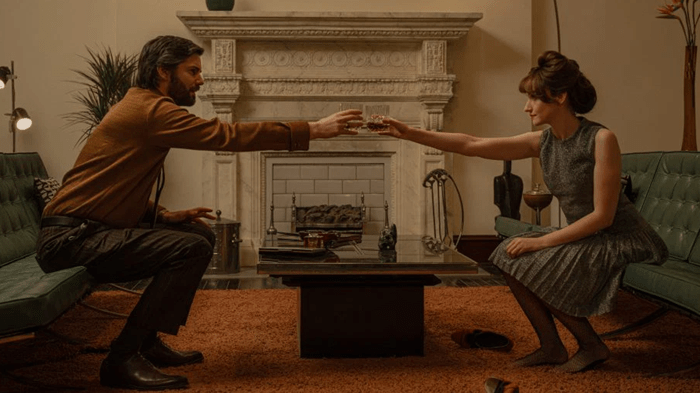
Trump is played by a firmly committed Sebastian Stan who often looks as if he’s trapped in a prolonged Saturday Night Live sketch. He’s adorned in an assortment of glaringly bad wigs that he’s always primping. And outside of the occasional intonation, his voice rarely sounds like the real thing. Getting past these distractions can be a chore.

Written with more purpose than principle by Gabriel Sherman, “The Apprentice” hones in on Trump’s rise as a New York City real estate developer. The story kicks off in 1973 with Trump meeting attorney Roy Cohn (brilliantly played with cold precision by Jeremy Strong). Cohn is revealed to be a New York power-player who uses a variety of legal and illegal tactics to bend the system to his will. His list of clients includes politicians, media moguls, and mob bosses. With Trump facing prosecution for violating the Fair Housing Act, Cohn agrees to take his case.

From there Cohn takes the young businessman under his wing, serving as the mentor and father figure Trump never had with his dad, Fred (Martin Donovan). But Cohn also gives Trump a crash-course in using the system, basing it on three ruthless principles that Trump later adopts as his own. Their relationship is the centerpiece for much of the film, moving from mutually beneficial to something genuinely personal.

Image Courtesy of Briarcliff Entertainment

But as Cohn’s villainy is well established in the film’s first half, Abassi and Sherman want their audience to know that Donald Trump is much worse. This really comes through in the final act where the filmmakers seem to lose any sense of restraint. They pack in every negative claim whether substantiated or not. From more troubling accusations such as Trump raping his wife Ivana (played by an underused Maria Bakalova) to more petty jabs such as alleged liposuction, scalp reduction surgery, and erectile dysfunction. These things again expose motives that consistently derail the movie.

As mentioned, Donald Trump is not beyond critique and the film is at its most compelling when examining his place within the corrupt New York City system of the 70s and 80s. But the movie can’t stay on track. It can’t sustain any drama nor build any suspense. Most of the supporting characters are mere sketches and even Stan’s Trump veers into caricature, especially during the film’s near farcical final half-hour.

“The Apprentice” is a movie that seems at odds with itself from the get-go. It wants to be serious-minded and candid, but it also has a very clear position it wants to advance at any cost. That leaves us wondering what’s true and what isn’t. The filmmakers aren’t much help with Abassi telling The Wrap that his movie “is very much fact-based and fact-checked” while Sherman tells The Hollywood Reporter “This is a work of art. It’s fiction.” Whatever you call it, “The Apprentice” fumbles what could have been a captivating and pertinent biopic. I’m sure it will please the one political camp and infuriate the other. For everyone else, it’s nowhere near as provocative or illuminating as its creators believe it to be.

VERDICT – 1.5 STARS

First Glance: “The Order”

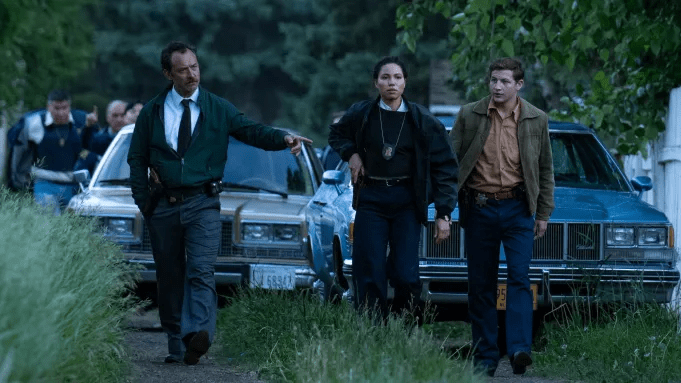
Jude Law, Nicholas Hoult, Tye Sheridan, and Jurnee Smollett star in “The Order”, a period crime thriller directed by Justin Kurzel. The film is based on the 1989 non-fiction book “The Silent Brotherhood” by Kevin Flynn and Gary Gerhardt. The movie premiered in August at the Venice International Film Festival. Now its prepping for its official release by dropping a harrowing and action-packed first trailer.

Set in 1983, the story follows and FBI agent (Law) who assembles a team to help investigate a series of bank robberies and armored car heists across the Pacific Northwest. But rather than find some standard-issue robbers, the agents follow a trail leading to a white supremacist group known as The Order. The movie looks to follow two storylines destined to intersect. And from what we see, both lead to violence. Everything about this looks and sounds great – the cast, the period design, the true-crime element. I can’t wait to see how it comes together.

“The Order” releases in theaters on December 6th. Check out the trailer below and let me know if you’ll be seeing it or taking a pass.

REVIEW: “Saturday Night” (2024)

“Live from New York, it’s Saturday Night!” Those words have echoed down the halls of comedy since they were first uttered by Chevy Chase on October 11, 1975. That’s when the immensely popular and long-running sketch comedy show Saturday Night Live (then called NBC’s Saturday Night) made its small screen debut. And as they say, the rest is late-night television history.

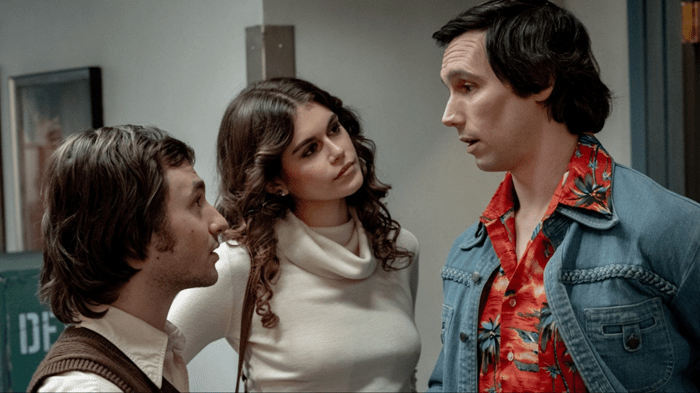
With the aptly titled “Saturday Night”, director Jason Reitman attempts to recreate the chaotic 90 minutes leading up to SNL’s 1975 live debut. Reitman puts together a mammoth ensemble and tasks them with portraying an equally mammoth array of SNL cast members, show writers, NBC executives, comedians, musicians, and personalities.

The origin story of Saturday Night Live is a fascinating one. NBC was in the middle of an contract squabble with the king of light-night TV Johnny Carson. Since 1965, the network had been running re-runs of Carson’s mega-popular The Tonight Show on Saturday and Sunday nights. After nearly ten years, Carson requested they be pulled so that he could use them during the week allowing the host more time off. Much to the chagrin of several affiliates, NBC puts a young Lorne Michaels in charge of creating a show to fill the Saturday night time slot.

Image Courtesy if Sony Pictures Releasing

Reitman (who also co-wrote the script with Gil Kenan) begins his movie 90 minutes before the show is set to go live. On the 17th floor of NBC Studios at Rockefeller Plaza, creator and producer Lorne Michaels (played by Gabriel LaBelle) scrambles to get everyone and everything ready to go. But that’s easier said than done. His rambunctious cast of relatively unknown twenty-somethings are impossible to corral. Scripts for sketches remain unwritten. There are constant technical difficulties. And he still can’t give away enough free tickets to fill a studio audience.

But worst of all, he has network executives breathing down his neck, most notably NBC’s Vice President of Talent Relations David Tebet (played by a terrific Willem Dafoe). Tebet is anxious to pull the plug on Lorne’s show and continue pumping out Carson re-runs. But Lorne has an ally in Dick Ebersol (Cooper Hoffman), the Director of Weekend Late Night Programming. Dick works as a middle-man between the network and Lorne, deflecting a lot of the heat and doing what he can to save the show. It’s work that Lorne doesn’t immediately appreciate.

Reitman plunges us headfirst into the moment-to-moment chaos, leaning on a beat-the-clock tension and even incorporating a reoccurring clock to remind us that time is the biggest enemy. Obviously we know how it ultimately ends. And considering that the entire movie is about the mayhem, the film’s big final moment comes together a little too neatly. But Reitman’s crisp dialogue and swift pacing keeps us on our toes and genuinely invested in what’s at stake.

But it’s the wealth of talent behind the supporting cast that gives the movie its energy. With so many involved, no one outside of LaBelle gets a ton of screen time. But that works in the film’s favor. There’s no overexposure and it allows Reitman to bounce back-and-forth across the studio and highlight the overwhelming stress and sheer pandemonium.

Image Courtesy of Sony Pictures Releasing

The acting is strong throughout and there are some uncanny physical likenesses that only enhance the performances. The SNL cast members are especially good with Cory Michael Smith playing Chevy Chase, Dylan O’Brien as Dan Aykroyd, Ella Hunt as Gilda Radner, Kim Matula playing Jane Curtin, Matt Wood as John Belushi, Lamorne Morris as Garrett Morris, and Emily Fairn as Laraine Newman.

And that’s just a small sample of the people we meet. Rachel Sennott is outstanding as Rosie Shuster. Nicholas Braun is a lot of fun playing both Jim Henson and Andy Kaufman. Tommy Dewey lets loose as Lorne’s pompous and abrasive head writer Michael O’Donoghue. Jon Batiste gets some good scenes playing Billy Preston while also composing the movie’s score. And J. K. Simmons is a blast as Milton Berle.

As “Saturday Night” blitzes forward we’re treated to a number of nostalgic callbacks that SNL enthusiasts will love. And sprinkled throughout are some pretty big laughs, most of which are organically generated by the show’s anarchic spirit. It still only feels like we’re getting a sketch of the behind-the-scenes experience. Reitman conflates and exaggerates while offering practically no buildup to his fairly skimpy plot. But none of that keeps us from being swept up in the creative madness, the revolving door of characters, and the sheer force of will that birthed a revolutionary show that’s still going today. “Saturday Night” is in theaters now.

VERDICT – 3.5 STARS

REVIEW: “Terrifier” (2016)

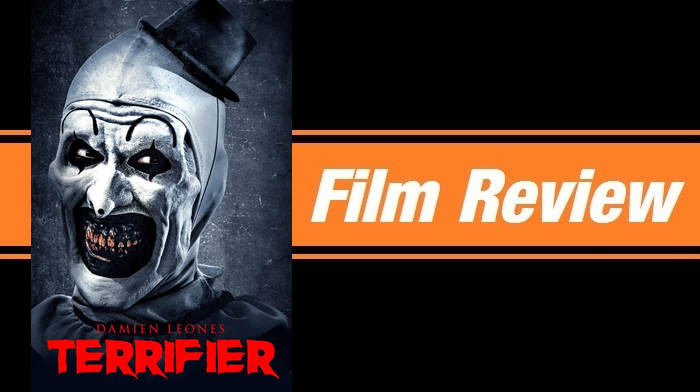
Whether or not you’re a fan of horror movies, and more specifically its splatter film subgenre, it’s hard not to be both impressed and inspired by what the Terrifier movies have accomplished. This truly is an independent film success story. With hardly any money but a big and bloody vision, Terrifier has become a full-fledged franchise. And it was born from the twisted but ingenious mind of its creator, Damien Leone.

Released in 2016, “Terrifier” was a stand-alone feature written and directed by Leone. It focused on a character Leone highlighted in his 2013 anthology film “All Hallows’ Eve”. It’s been said that he made “Terrifier” as a way of showcasing his work in practical effects. He also saw it as a means of introducing more people to his maniacal antagonist Art the Clown.

Image Courtesy of Dread Central

“Terrifier” is a remarkable achievement especially when considering it was made on a shoestring budget of just over $35,000. Leone took on the duties of director, writer, producer, editor, and effects supervisor. It took time, but the film eventually earned a strong cult following which opened the door for a sequel that released in 2022. And now we’re only days away from a third installment hitting select theaters.

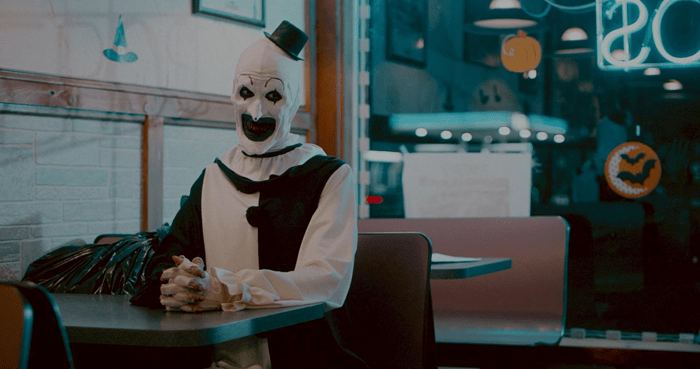
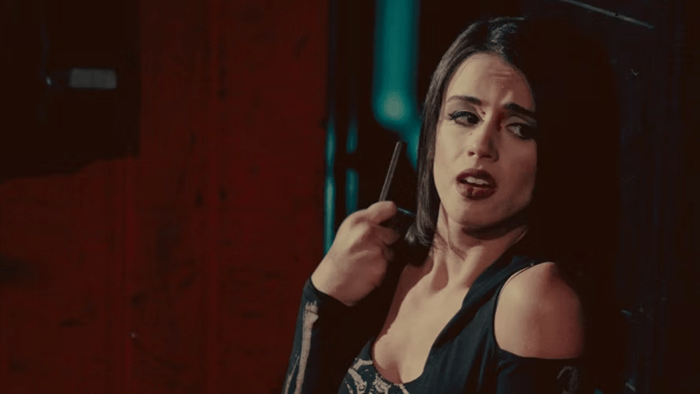
With “Terrifier”, Leone meets every splatter film expectation. You can almost sense the grindhouse giddiness as he bathes his audience in blood and gore, often doing things to the human body that will shock some and repulse others. At the same time, it’s often so outlandish that you can’t help but have fun. Art (gleefully played by David Howard Thornton) is a big reason why. Part mime and part party clown, the demented murderer stabs, shoots, saws, stomps, clubs, gouges, dismembers and disembowels with a childlike elation.

Though wacky in its excess, the film still generates some legitimate chills. Once he establishes Art as a genuine threat, Leone creates some unnerving tension as his terrified cast sneaks, crawls, runs, but mostly succumbs to an assortment of grisly deaths. Several other details add to the experience from the exploitation era film grain to the killer score from composer Paul Wiley.

Where the movie falls short is in its bare-bones story and shallow characters. Basically two intoxicated friends, Tara (Jenna Kanell) and Dawn (Catherine Corcoran) leave a late-night Halloween party and stop at a pizzeria to sober up. They’re followed inside by Art the Clown who is quickly kicked out by the restaurant owner for creeping out Tara. The girls decide to leave but discover the tires slashed on Dawn’s car. Still too drunk to drive, Tara calls her sister Victoria (Samantha Scaffidi) to come pick them up. But as they wait, Art reappears and the terrorizing begins.

Image Courtesy of Dread Central

The rest of the movie is literally Art stalking Tara and an assortment of disposable human characters who exist solely as fodder for a madman and to show off Leone’s insanely imaginative effects work. It’s bookended by a couple of scenes that tease us with an interesting twist. But for the most part, neither the story or the people in it (outside of Art the Clown) will leave an impression on you.

But that doesn’t keep “Terrifier” from being a blood-drenched blast. It’s pure and unbridled sub-genre filmmaking and a testimony to the possibilities offered by independent cinema. It is most certainly not for those with an aversion to gore. Nor will it impress those who are unable to look past its obvious limitations. But for others, Leone’s passion and craftsmanship come together to make an effectively eerie, occasionally shocking, and surprisingly funny splatter film that set the table for the unlikely franchise that we have today.

VERDICT – 3.5 STARS

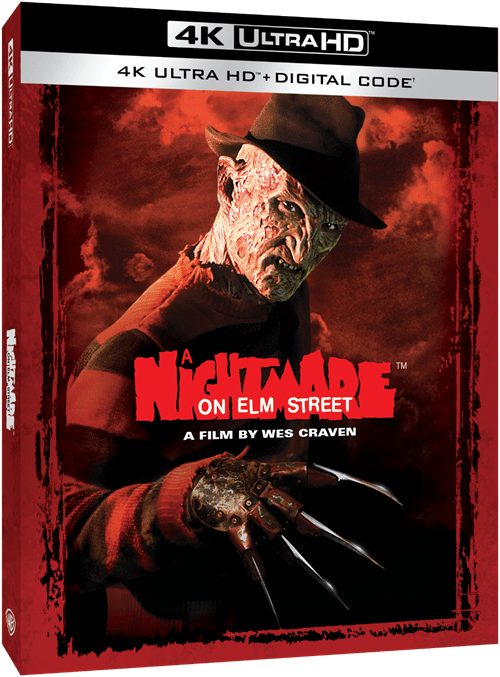
New on Home Video: “A Nightmare on Elm Street” on 4K Ultra HD + Digital

Warner Brothers Home Entertainment is celebrating the 40th anniversary of “A Nightmare on Elm Street” by bringing the film to 4K Ultra HD for the very first time. Wes Craven’s 1984 horror classic was a hallmark of its decade and the movie’s iconic antagonist, Freddy Krueger found a permanent place in pop culture. This critically acclaimed supernatural slasher spawned a franchise of nine feature films and a television series along with several comic books and novels.

This killer new 4K Ultra HD edition of “A Nightmare on Elm Street” includes a digital copy of the film and will be available to purchase on October 15th. See below for a full synopsis and release information including special features.

About the Film:

Year: 1984

Runtime: 91 Minutes

Directors: Wes Craven

Screenwriters: Wes Craven

Cast: Heather Langenkamp, Robert Englund, Johnny Depp, John Saxon, Ronee Blakley, Amanda Wyss, Nick Corri, Leslie Hoffman, Joseph Whipp, Charles Fleischer, Lin Shaye

Rating: R

Can your nightmares be fatal? In this classic of the horror film genre that launched a movie franchise, a hideously scarred man who was murdered by a lynch mob returns years later in the terrifying nightmares of his killer’s teenage children… and the dreaming teenagers are starting to die in their sleep.

Special Features:

“A Nightmare on Elm Street” Digital release and 4K Ultra HD Blu-ray disc contain the following previously released special features:

  • Ready Freddy Focus Points
  • Commentary with Wes Craven, Robert Englund, Heather Langenkamp, Ronnie Blakely, Robert Shaye, and Sara Risher.
  • Commentary with Wes Craven, Heather Langenkamp, John Saxon, and Jacques Haitkin.
  • Alternate endings
  • The House that Freddy Built: The Legacy of New Line Horror
  • Never Sleep Again: A Nightmare on Elm Street
  • Night Terrors: The Origins of Wes Craven’s Nightmares

REVIEW: “Apartment 7A” (2024)

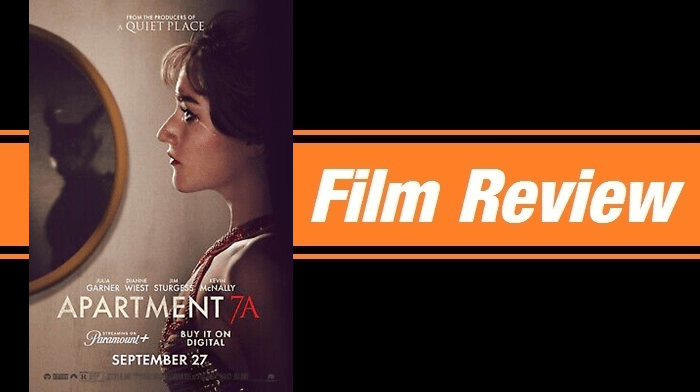
With “Apartment 7A”, director Natalie Erika James makes an ambitious attempt at delivering a prequel to Roman Polanski’s highly regarded “Rosemary’s Baby”. This psychological horror thriller takes an interesting approach to the 1968 film and Ira Levin’s original 1967 novel. It works best as a compelling appendix that fills in holes rather than expand the lore. And it does more to pay homage to Polanski’s classic than plow new ground.

Those familiar with “Rosemary’s Baby” may have a good idea of what to expect after hearing one name – Terry Gionoffrio. She’s a young woman who has a small but memorable role in Polanski’s earlier film and is the centerpiece of James’ prequel. Set in 1965, Terry (capably played by Julia Garner), is an aspiring dancer who came to New York City from Nebraska with big dreams of one day seeing her name in lights. Her career seems to be taking off, but she has a gruesome setback after breaking her ankle during a live performance.

Image Courtesy of Paramount Pictures

Terry is forced to endure a lengthy and painful recovery leading her to start popping pain meds. She attends several casting calls but loses out due to her noticeably weak ankle. But good fortune (or misfortune) comes her way after Terry meets the kindly Castevets, Minnie (Dianne Wiest) and Roman (Kevin McNally). They’re a wealthy elderly couple who live in The Bramford, a Renaissance Revival apartment building in Manhattan.

The Castevets explain to Terry that they have no children of their own. They like to help struggling young people get on their feet, so they offer to let her stay rent-free in their neighboring apartment. Things immediately start turning around for Terry. One of her new neighbors, Mrs. Gardenia (Tina Gray) gives her an herbal home remedy that fully heals her ankle. And after a blurry evening with another tenant, Alan Marchand (Jim Sturgess), she’s hired to be on the chorus line of a musical he’s producing.

But Terry soon learns that her big breaks are too good to be true. The Castevets go from sweet to weird to all-out intrusive. Strange sores begin to appear on her body. And more questions arise about her night with Alan. Of course with this being a direct prequel, the first film has already set the table and served the full meal. That ends up stripping “Apartment 7A” of its mystery and suspense. We know where things are going and have a good idea of how they get there.

Image Courtesy of Paramount Pictures

Yet James makes several good choices and adds her own unique touches that keeps us interested. Thematically she maintains a fascinating balance in depicting a young woman’s obsession with fame. Terry may have put herself in a bad position, but she’s unquestionably a victim. Garner artfully manages these tricky tensions, showing us ambition that leads to regret and later vulnerability that gives way to resilience.

Among James’ creative flourishes are two dramatically different but equally potent dance scenes. One is an elaborately staged musical number and the other a more intimate and calculated dance sequence. Both come from very different places and have significantly different purposes. But they’re part of what energizes this unavoidably predictable yet well-made, well-paced, and well-acted “Rosemary’s Baby” companion piece. “Apartment 7A” is now streaming on Paramount+.

VERDICT – 3.5 STARS