Henri-Georges Clouzot is a name rarely mentioned among the great French filmmakers. In a way it’s understandable since Clouzot never had the career of a Truffaut, Bresson, Resnais, or Godard. He has never been considered as prominent or as influential. But his signature movies, most notably “Diabolique”, reveal a shrewd cinematic prowess often reserved for the most gifted of his craft.
Clouzot was known for his iron-fisted approach to filmmaking. He was hard on his cast and crew which often led to frustration and animosity. For Clouzot suffering on screen could best be depicted by a suffering cast. He’s been called a tyrannical director who was always angry and who let everyone know who was in charge of the production. But off the set he was different and revealed a surprisingly gentler side.
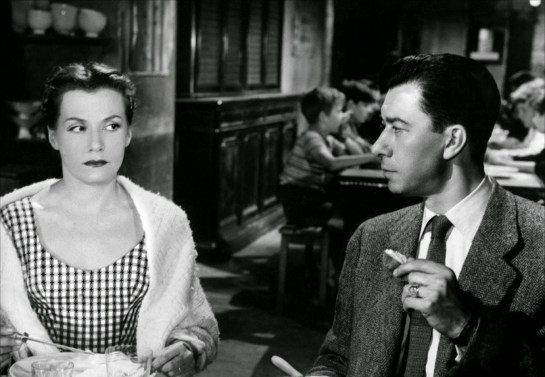
Practically all of Clouzot’s films toyed with the darker sides of human nature. Many of his characters were devious and manipulative. Much of his subject matter was dark and depraved, often drawn from his own troubled life experiences. It’s all personified in “Diabolique”, a twisted tale of abuse and betrayal that would fit perfectly among any of Alfred Hitchcock’s movies.
The story revolves around a truly messed up situation. Michel Delassalle (Paul Meurisse) is the headmaster of a boarding school for boys outside of Paris. His wife Christina (played by Véra Clouzot, the director’s wife at the time) actually owns the school but her serious heart ailment and his iron hand keeps her from running the place. To make things weirder, Michel’s mistress Nicole (Simone Signoret) also works at the school. What could possibly go wrong?
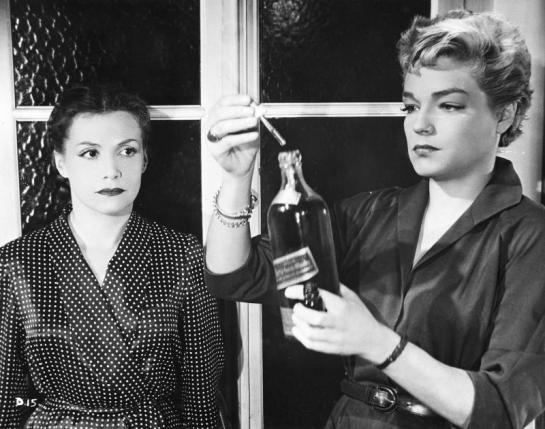
But there’s a twist (one of many), Christina and Nicole are aware of each other and the roles they play in Michel’s life. Michel is a detestable man, not just due to his infidelity. He is demeaning and abusive to both women which sparks an unusual friendship between them. Eventually Christina and Nicole get their fill of Michel’s mistreatment and together they concoct the perfect crime to knock him off.
Clouzot co-wrote the screenplay which is based on a 1951 French novel that Alfred Hitchcock had intended to adapt. Clouzot beat Hitch to the screen rights and his film became a huge box office success. Another spike in the movie’s popularity would come a few years later when Véra Clouzot died of a heart ailment at age 46. But unlike the malicious, self-absorbed Michel from “Diabolique”, Clouzot was devastated and fell into a deep depression. He would only make one more film after his wife’s death.
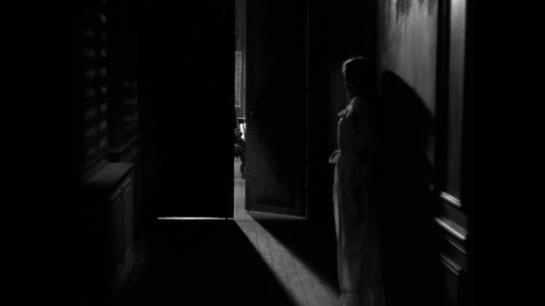
“Diabolique” reveals so many layers as it maneuvers from a domestic drama to a psychological thriller. There are even distinct horror elements that show up the further the story spins out of control. There are a couple of particularly haunting scenes made more effective by Clouzot’s strong visual emphasis. But just as unsettling is Michel’s cruelty which the film never softens or tones down. Call it a collective ugliness that works really well.
Even with the moral muck of its story, “Diabolique” is a delight – a tense thriller boiling with suspense. It’s driven by three wonderful central performances and an artful approach by a director known for his adamant demands from his cast. For Clouzot projecting mood and emotion were pivotal in developing the darker tones of his subject matter. “Diabolique” shows just how effective his approach could be.
VERDICT – 4.5 STARS