REVIEW: “The Master” (2012)

The last time we saw acclaimed director Paul Thomas Anderson was in 2007 with his sensational drama “There Will Be Blood”. With it he solidified his position as a film critic favorite. Now he’s back with his next movie, “The Master”. As with every other feature film Anderson has made, he both wrote and directed this audacious drama that bounces between captivating and utterly frustrating. There are some award-worthy performances and loads of ambition, just as you would expect from a PTA feature. But while there were moments where I couldn’t take my eyes off the screen, there are others where the story bogs down in the deliberate pacing and slight self-indulgence. Nonetheless Anderson presses all the right critic’s buttons so this will has a good chance to be an awards season contender.

No one can deny Anderson’s filmmaking skills. “The Master” looks every bit of an epic, landmark film. There are a number of scenes that stand out due to their framing and camera work alone. Anderson uses several amazing tracking shots, sometimes shifting focus three or four times while still maintaining a single fluid shot. He also uses several fantastic locations which he captures through his stylish and precise lensing. I also have to mention the way he recreates America in 1950 both narratively and visually. The wardrobes, hairstyles, furnishings, etc. all fit perfectly, right down to the smallest details. Anderson takes no shortcuts on selling the audience on the period and that’s one of the reasons it’s so easy to connect with the story.

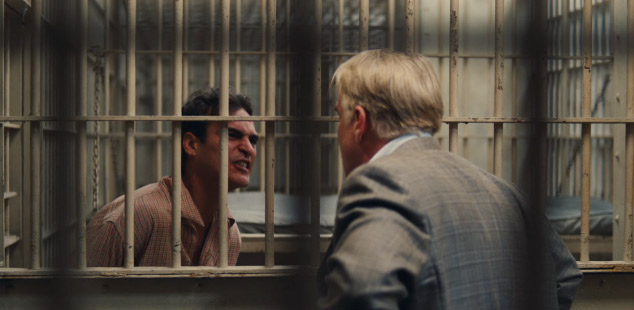
It’s in this 1950 America that we are introduced to Freddie Quell. He’s played by Joaquin Phoenix who gives the performance of his career. While not as breathtaking as Daniel Day-Lewis in “There Will Be Blood”, Phoenix is magnetic portraying a man emotionally scarred from his time in World War 2, or at least that’s what I presume. Freddie’s life is in shambles. He’s a raging alcoholic who resorts to drinking his own concoctions made from paint thinner and any other chemical he can get his hands own. He also has a twisted sex disorder that pops up here and there. His alcoholism is destroying his life and ends up playing an important part in the film. On the other hand, his sex addiction felt terribly underwritten and is only explored by adding a handful of uncomfortable scenes that quite frankly I could have done without. But as I said, Phoenix is brilliant and should be in prime position for an Oscar nomination.

Freddie ends up crossing paths with the charismatic leader of a group called “The Cause” named Lancaster Dodd (wonderfully played by Philip Seymour-Hoffman). Dodd is a self-proclaimed philosopher and intellectual with a steady and devoted group of followers. He also has a way with words which draws Freddie to him and his movement. Dodd takes a special liking to Freddie, at one point calling him his guinea pig but clearly growing more fond of him. Dodd is able to suppress Freddie’s mental issues to the point where Freddie begins to buy into his teachings. But his inner turmoil resurfaces on several occasions making him more and more conflicted.

The story often moves with an amazing rhythm and Phoenix and Hoffman share some mesmerizing scenes together. But for such a hyped picture, I was surprised to see the overall lack of plot. “The Master” features some of the best scenes you’ll see in the theaters this year, but honestly, there’s not a lot that happens within the film’s long running time. But a bigger problem with “The Master” is that for the entire film Anderson keeps the audience at arm’s length from what we are seeing. We’re never allowed to fully get to know the characters who truly are the driving forces behind the entire story. Anderson wants us to do a lot of guesswork and come to our own conclusions. But for me, a little less ambiguity and more intimacy with the characters would have been a big plus.

Overall there is a lot to like about “The Master”. Anderson’s style of filmmaking is about as good as you will find and it really stands out here. The movie looks and feels right at home in post-World War 2 1950 and the cinematography will blow you away. The film is also helped by tremendous performances from Phoenix and Hoffman and I didn’t even talk about Amy Adams’ strong work. Expect to hear all of their names when the Oscar nominations are announced. But while Anderson’s story is good, it doesn’t pack the punch that it’s going for. While it’s fascinating to watch these characters, I couldn’t help but want more. That, combined with a few pacing issues and a couple of scenes it could have done without, keep this from being the Best Picture frontrunner many are touting it as.

VERDICT – 3 STARS

REVIEW: “Moonrise Kingdom”

Going into a Wes Anderson film there are several things you know to expect: a healthy dose of dry and sometimes offbeat humor, a unique visual style, and familiar aesthetics that permeate each of his movies. “Moonrise Kingdom” is no different from other Anderson efforts in terms of it’s storytelling style and visual presentation.  This is his first film since 2009’s Oscar winner “Fantastic Mr. Fox” but it’s clear from the opening credits that his dedication to his style of filmmaking is still as strong as ever.

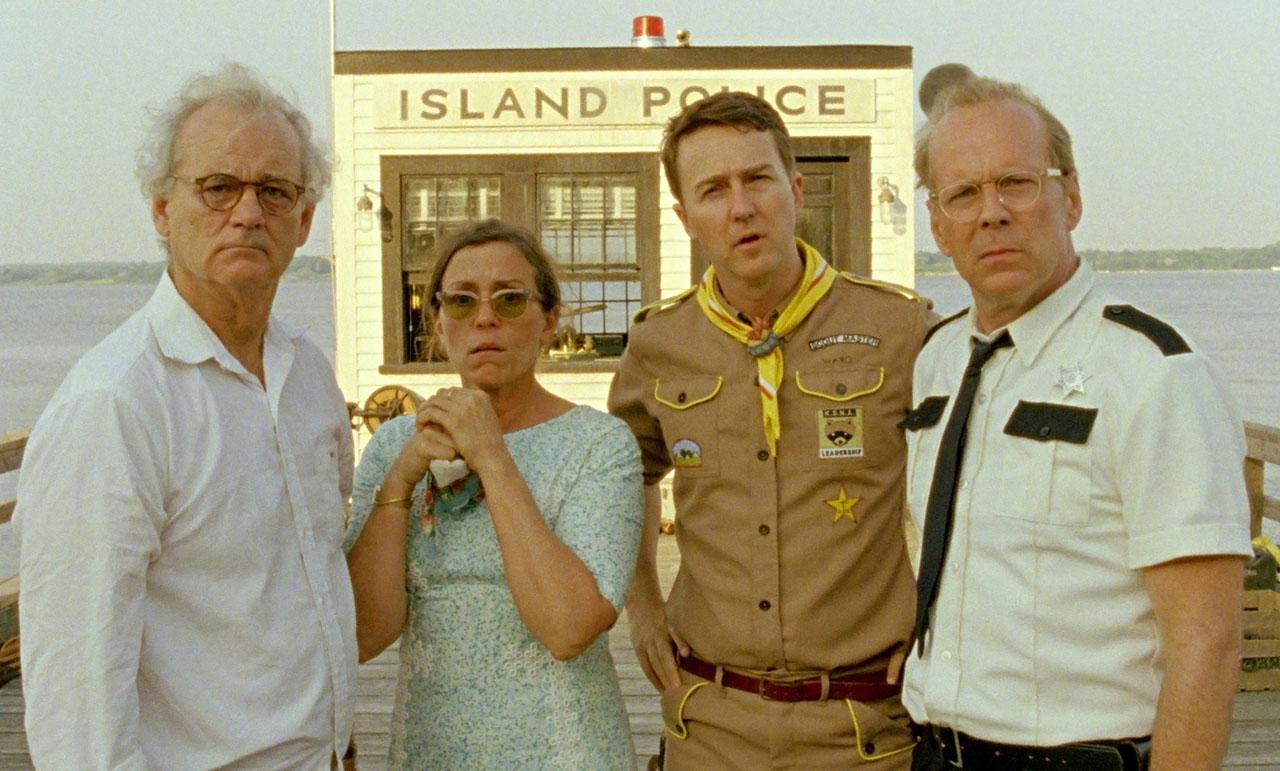
“Moonrise Kingdom” takes place in a small community on a New England island in 1965. A very Wes Andersonish  narrator sets the table for us and we meet several of the community folks including Scout Master Ward (Edward Norton) the leader of the island’s branch of the Khaki Scouts. While doing morning inspections, he discovers that 12 year-old Sam (Jared Gilman), a picked on, eccentric young boy has run away from the camp. Elsewhere on the island young Suzy Bishop (Kara Hayward) lives at Summer’s End, her home shared with her parents and three young brothers. Suzy is a reserved introvert who has no friends and finds refuge by retreating into her fantasy novels and looking through her binoculars – something that she pretends gives her super powers. It’s through her binoculars that she discovers her mother Laura (Frances McDormand) meeting secretly with the community policeman Captain Sharp (Bruce Willis). Her father Walt (Bill Murray) is impervious to the signs of his wife’s secret fling mainly due to their fractured relationship.

Suzy ends up running away from home and through a flashback we learn that it’s something she and Sam had been planning since they first met at a local church play the year before. The two meet in a meadow then set out on a journey together through the rugged and rainy island terrain. Sam flexes his extensive outdoor knowledge before Suzy by pitching tents, building fires, and catching and cooking fish. Meanwhile, after discovering the kids are gone, the dysfunctional community sets out to find them.

Anderson has several interesting dynamics at work, the first being the relationship between the two kids. It’s easy to see why they are drawn to each other. Both feel detached and out-of-place. There’s a void in their lives and they find solace in the fact that they no longer feel alone in the world. Both Gilman and Hayward are stunningly good especially considering this is the first feature film for both. Anderson’s childlike deadpan dialogue flows naturally from the two characters and he really gives them a believable foundation for the budding adolescent romance. Some have argued that the romance between the two was lacking and never provided the spark to drive the relationship. I argue that there’s no huge passionate spark mainly due to the children’s age and the newness of love and romance. I feel that their attraction to each other is based more on their personal, emotional, and social similitude. Being in each other’s presence fills a substantial emptiness in their lives and let’s them know they aren’t alone. A form of love sprouts up from that and Anderson depicts it with tenderness even amid the laugh out loud moments and the hilarious, straight-faced dialogue.

My biggest problem with the way Anderson handles the children’s relationship is the way he handles his child actors in one particular scene. Intended to show a sexual curiosity and almost unwanted compulsion, there is a brief scene where Gilman and Hayward are asked to engage in something that I have no problem saying I was uncomfortable with. At the time of filming, both actors were 12-years old and the willingness of Anderson to shoot this particular scene is disappointing. It’s certainly not graphic but it’s also not appropriate and that fact that it’s used more for comic effect is even more frustrating.

But while the story of Sam and Suzy drives the main narrative, perhaps the biggest microscope is put on the community and the fact that they are each flawed individuals forced to make important and sometimes redemptive decisions. As you look at each character you see situations unfold that bring them to the point of either doing the right thing and changing the direction of their lives or watching as things crumble in around them. In a very real sense, the disappearance of Sam and Suzy is the catalyst for some pretty real and important character transformations in Captain Sharp, Scout Master Ward, Laura, and Walt. Even Sam’s fellow Khaki Scouts are faced with their own moment of truth.

I talked about Gilman and Hayward’s performances but they’re surrounded by some equally strong work. I was particularly drawn to Bruce Willis who delivers some great laughs but through a very controlled performance that’s perfectly fitting for Wes Anderson material. Willis occasionally gets to show his acting range and this is a good Oscar caliber example of that. And I have to say, as someone who isn’t the biggest Edward Norton fan, that he was a lot of fun here. He’s goofy, nerdy, and his delusion of control that’s evident in some of the early scenes results in some of the films funnier moments. Frances McDormand is perfectly cast and Bill Murray is funny as always. I also thought Anderson favorite Jason Schwartzman was funny running around in full Khaki Scout attire.

“Moonrise Kingdom” is another Wes Anderson picture that’s a side-splitter to some but a head-scratcher to others. I laughed a lot through the film but I was also touched by its tenderness and care in addressing struggling children with feelings of isolation and insecurity. Anderson does get careless and I feel irresponsible in one brief scene but there are still several undercurrents that touch on important themes without fully diving into them. We not only see it with the children but in the community and it really worked for me. “Moonrise Kingdom” may not be for everyone but I loved its full package and stylish presentation. It’s a breath of fresh air in a comedy genre filled with raunchy movies and lazy humor. I’ll take this over them any day.

VERDICT – 4.5 STARS

“MAN ON A LEDGE” – 2 1/2 STARS

Some movies can take a pretty preposterous concept and still make a fun and entertaining film out of it. There’s no denying that “Man on a Ledge” has a pretty preposterous concept. The question is, is “Man on a Ledge” a fun and entertaining movie? Well…kinda. Underneath the surface the movie has a fairly interesting premise. But it gets bogged down in it’s occasionally lame dialogue, it’s run-of-the-mill characters, and some truly head-scratching moments.

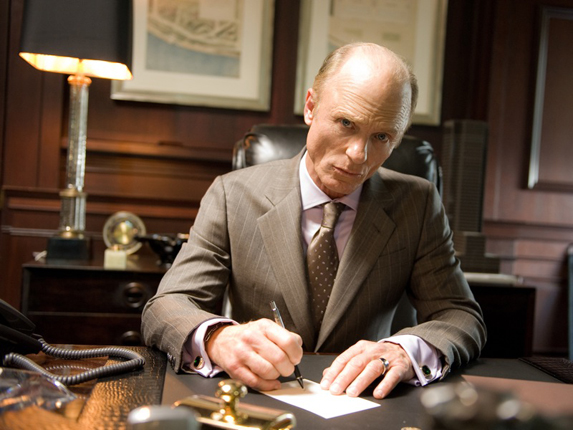
Sam Worthington plays Nick Cassady, an ex-New York City Policeman who is serving a 25-year prison sentence for stealing a $40 million diamond from a shrewd and unscrupulous businessman named Dave Englander (played by an alarmingly thin Ed Harris). After being notified of his father’s death, Nick is allowed to attend the funeral where he evades the guards and sets out to prove his innocence. His plan? To check into the Roosevelt Hotel, have a final meal, then climb out on the ledge of the building prepared to jump. It’s certainly not the normal approach one would take in trying to prove their innocence. Officer Marcus (Titus Welliver) arrives and takes charge of the scene and, at the request of Nick, calls in negotiator Lydia Mercer (Elizabeth Banks).

Now it’s clear that there is more going on than just a man about to jump to his death. Nick has a bigger plan in motion that hinges on Lydia’s cooperation, the craftiness of his brother Joey (Jaimie Bell) and Joey’s girlfriend Angie (Genesis Rodriguez), and the rabid crowd that has gathered below. The story takes several different turns and throws a few twists at the audience, but it’s hard to fully invest in them. Things get a little outlandish and it’s pretty hard to believe at times. Now in the defense of director Asger Leth, he’s well aware that he’s working with some wild material. He keep things moving at a crisp pace and he doesn’t drag the movie out longer that it needs to be. Also, Leth really uses the camera well and I had read where they filmed several scenes with Worthington actually out on the ledge. Unfortunately the good looks of the film isn’t enough to save it from it’s glaring flaws.

There are numerous instances where the writing left me scratching my head. Some scenes will leave the audience asking themselves “Can the NYPD really be this inept?” and “Is the movie making fun of New Yorkers or are we really to believe that 99% of them are bloodthirsty animals?”. There are also several cheesy exchanges between characters that either feel out-of-place or are just plain goofy. The film also features some of the same character types that we’ve seen in so many other movies. We have the wicked, wealthy corporate businessman. We get the typical corrupt cop. We even have the self-serving reporter who is more interested in getting the story that public safety. We’ve seen them all before.

You have to be impressed just looking at the movie’s strong cast. I like Sam Worthington even though he’s yet to really show much range in his performances. He’s actually quite good here even though the role doesn’t require as much from him as you might think. His New York accent does give way to his natural Australian accent in some scenes but he still gives a solid performance. Banks is also pretty good as is Edward Burns as a fellow negotiator. But the biggest problem is none of these performers can truly rise above the material which lets them down on numerous occasions. The always strong Ed Harris and Anthony Mackie as Nick’s former partner are terribly underused and should have been given more to do.

If you can put aside the flaws and suspend disbelief, there is some enjoyment to be found in “Man on a Ledge”. It’s impossible to take seriously and I have no doubt you’ll be shaking your head more than once. But “Man on a Ledge” is a harmless film with some cool action and fun moments. And while it’s a decent little afternoon diversion, it’s an action thriller that’s ultimately forgettable. Check it out if you have some free time. Otherwise, you can probably find something better to watch.

REVIEW: “Men in Black 3”

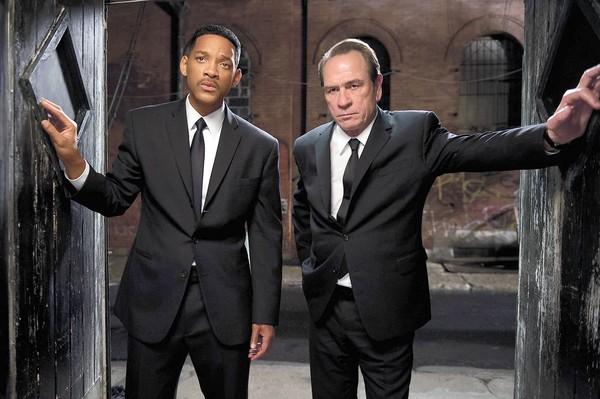
Let me preface this review by saying that I wasn’t the biggest fan of the previously two “Men in Black” movies. But I was certainly in the minority. The first “Men in Black” earned just under $600 million at the box office. The sequel brought in another $440 million. Obviously expectations are high for this third installment and it’s $300 million budget. Both Will Smith and Tommy Lee Jones are back as is director Barry Sonnenfeld and Steven Spielberg as Executive Producer.

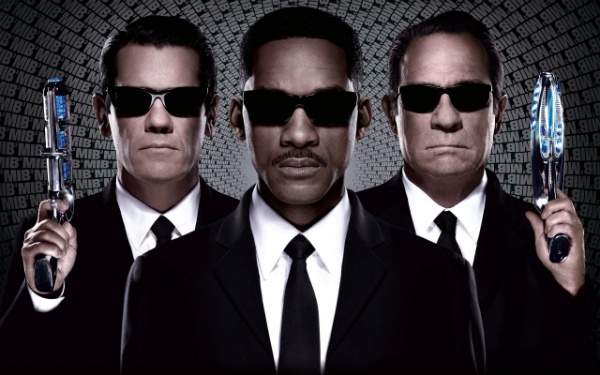
It’s been almost 10 years since we last saw Agent K (Jones) and Agent J (Smith). K is still the stiff-as-a-board, emotionless, straight-shooter, J is still a rapid-fire wisecracker with attitude to spare, and aliens are still on earth masquerading as humans. They both still serve as operatives working for a secret agency commissioned to protect the Earth from alien threats. This time their main threat is an alien named Boris (Jemaine Clement). Agent K apprehended Boris back in 1969 and put him in a lunar prison designed specifically for him. But Boris escapes and travels back in time to kill Agent K before he is able to thwart his original plan. After noticing K’s absence and a difference in the timeline, J travels back to 1969 a few days prior to K’s death to protect him from Boris.

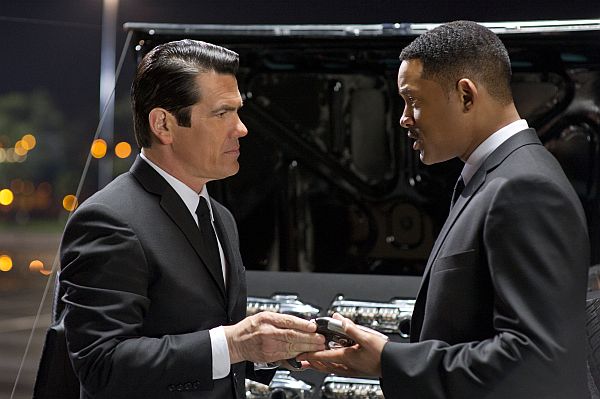
The movie starts off looking and feeling just like a “Men in Black” film. Funny exchanges between K and J and alien confrontations get the movie off on the right foot. There’s also a really cool time travel sequence as J heads back to 1969. It’s here that the movie both introduces it’s biggest asset as well as hit it’s biggest speed bumps. Josh Brolin plays the younger Agent K and he is fantastic. I swear there were times where I completely believed I was watching a younger Tommy Lee Jones instead of someone doing a Tommy Lee impersonation. Whether it’s his accent, his nicknames, or facial expressions, Brolin nails a 29-year old Agent K.

But while Brolin shines, the story really spins it’s wheels. There are a few back-in-time set pieces and late 60’s details that are fun but they get lost in the story that’s really pretty flat and lifeless. The humor loses it’s pop and seems to rely much too heavily on Will Smith’s quick wit. There’s great chemistry between Brolin and Smith but even it gets bogged down in the sometimes drab exposition. I have to admit, I found myself struggling to stay focused and interested in what was going on especially when an all-knowing alien named Griffin (Michael Stuhlbarg) enters the picture. I did enjoy Emma Thompson and Alice Eve as the older and younger Agent O and the movie is a visual delight. I just wish there was more energy and substance to go with the movie’s stronger points.

While I did have issues with the middle of the movie, it was almost made up for by a really good and surprisingly tender ending. There’s no way I can go any further without spoiling things, but I’ll just say that it makes you look at all three “Men in Black” movies from a different perspective. The ending is well conceived and even though there were a few questions that immediately came to mind, it really worked for me.

“Men in Black 3” most certainly isn’t a great movie but it’s definitely an upgrade over the almost unwatchable second film. Then again, that’s not really saying a much. MiB3 starts off strong and has a nice ending but it’s what’s in between that keeps it from being as good as it could be. Brolin is the highlight and he’s a lot of fun to watch. There are also some other pretty good performances. As I mentioned, the visuals are high quality, exactly what you would expect. But none of these pluses can outweigh the minuses. There’s just not enough substance or humor to make this anything more than an okay movie.

VERDICT – 2 STARS

REVIEW: “The Maltese Falcon” (1941)

Classic Movie SpotlightMALTESEA good argument could be made that The Maltese Falcon is Humphrey Bogart’s best film. It’s a movie that seems to get better each time I watch it and has earned its recognition as a film noir classic. It’s also a film featuring two notable firsts. This was Sydney Greenstreet’s first feature film and it was John Huston’s directorial debut. Huston also wrote the story which is based on Dashiell Hammett’s novel of the same name. It’s said that Huston extensively planned everything in the script, even to the most minute detail. It certainly shows. The movie is smart, well written, and deftly made.

Bogart plays Sam Spade, a San Francisco private investigator. He and his partner Miles Archer (played by Jerome Cowan) meet with an attractive new client, Ruth Wonderly (Mary Astor), who hires them to help find her missing sister. Archer volunteers to follow her as she meets with Floyd Thursby, an acquaintance of her sister. Later that night Spade receives a call that Archer has been murdered. Spade weaves through a gnarly web of lies and an assortment of shady characters to find that it all revolves around a priceless statuette of a bird covered in jewels.

Bogart wasn’t Huston’s first choice to play Sam Spade, but after George Raft turned down the part Bogie was brought in. This was the beginning of a great friendship between Bogart and Huston that spawned many other wonderful films such as “The Treasure of the Sierra Madre”, “The African Queen”, and “Key Largo”. Bogart’s performance is simply brilliant and it’s hard to imagine anyone else in the role. Mary Astor gives a strong performance and sets the table for some of Bogart’s best lines in the film. Toss in the terrific Peter Lorre and Greenstreet, both of whom add their own flavors to the story. Also keep an eye out for a cool cameo from Walter Huston, John Huston’s father.

MALTESE1

The film’s is also helped by some fine cinematography. The movie features some crafty camera work, low-level lighting, and use of shadows which adds to the picture’s mood and tone. Cinematographer Arthur Edeson plays around with the angles and camera locations which give the movie a cool, sleek look.  It’s a technically sound and stylish movie and Huston’s accomplishment is really profound considering this was his first picture.

The Maltese Falcon epitomizes what high level filmmaking and storytelling is all about. Bogart’s performance became the model for other film noir detective roles and the supporting cast is nothing short of brilliant. The movie was nominated for three Academy Awards but it’s contribution to filmmaking  can’t be measured by that alone. This is a true cinema classic and it should be considered mandatory viewing for any fan of the art form. And despite being over 70-years-old, “The Maltese Falcon” still hits every beat.

VERDICT – 5 STARS

5 STARSs

5STAR K&M

“MY WEEK WITH MARILYN” – 2 STARS

One thing that can be said for “My Week with Marilyn” is that it’s not your run-of-the-mill biopic. The movie is based on Colin Clark’s book about the making of “The Prince and the Showgirl”, a 1957 comedy starring Marilyn Monroe and Laurence Olivier. Said to have been a troubled set, “My Week with Marilyn” gives us an interesting glimpse at what it must have been like. But the movie mainly focuses on Colin Clark’s week-long relationship with Marilyn Monroe during the shoot. We spend a lot of time seeing the different sides of Marilyn through Adrian Hodges screenplay and the Oscar nominated performance of Michelle Williams. But while the film and especially Williams has received high praise, I found the movie lacking and in many ways missing the energy you would expect it to have.

The film starts with Colin Clark (Eddie Redmayne) leaving home in hopes of landing a job in the film industry. He ends up getting on with Laurence Olivier’s (Kenneth Branagh) new movie “The Prince and the Showgirl”. Marilyn Monroe (Williams) will be arriving to work on the picture and Colin’s first job is to find a home for her to stay in while she’s in London. Marilyn and Laurence get off on the wrong foot after she is late to the first script reading. This is a trend that continues throughout the filming of the movie and soon Laurence (who is also directing the picture) reaches his breaking point. Branagh is very good here and it’s quite obvious that he’s having a lot of fun with the role. He’s a likable character but very by-the-books when it’s time to work, something even his lovely but insecure wife Vivien Leigh (Julia Ormand) points out.

It’s during the stressful filming that we see Marilyn as extremely nervous and lacking any confidence in her acting abilities. In fact, she is almost always seen with her acting coach Paula Strasberg (Zoe Wanamaker) who actually serves more as a stabilizing mechanism to keep Marilyn from flying off the rails. Judi Dench plays Sybil Thorndike, a calm and soothing co-star who has sympathy for Marilyn and helps her build her confidence. But Marilyn doesn’t show up to the set one day and Colin is sent to check on her. A few days later Marilyn calls Colin to come over and see her. Colin is warned of Marilyn’s ways but his infatuation with her grows and grows. The relationship between the two is supposed to be unusual but I had a hard time finding any spark between them. Redmayne has the naive puppy dog thing working well but it was almost impossible to buy into their relationship.

I also thought the story, much like Colin and Marilyn’s fling, lacked any energy or vitality. I found my mind wandering during several scenes particularly when Marilyn is mumbling to Colin after taking to many pills. The movie just seems to hit an emotional flatline and I had a hard time staying interested. There were also times when Marilyn comes across as too childlike. I understand that the movie was trying to convey a type of childlike dependency in Marilyn but there were a couple of scenes where the script takes it too far.

But everything in this film comes back to the performance from Michelle Williams. She won a Golden Globe for the role but I have to say that I wasn’t as enamored with her work as most others have been. She certainly gives it everything she’s got and to be fair her biggest problem is that she’s let down by the material. But I never really felt like I was watching Marilyn Monroe. I always felt like I was watching someone play her. Now that may be expecting too much from Williams and it may be unfair. But this film hinges on the audience buying into Williams as Monroe and I only partially could.

When it comes down to it, “My Week with Marilyn” is pretty lightweight. It starts off strong but hits a rut at the midway point and spins its wheels for most of the second half of the film. Williams certainly isn’t bad here but she also isn’t Marilyn Monroe. I can see where if you buy into her performance completely, you’ll probably enjoy this film more than I did. But even with that, I would still have a hard time buying into this week-long lifeless fling. As I said at the beginning, this isn’t your run-of-the-mill biopic. But unfortunately it doesn’t use its uniqueness to create something special.