REVIEW: “River Wild” (2023)

A whitewater rafting getaway turns deadly in “River Wild”, the taut new thriller from director and co-writer Ben Ketai. Based on the 1994 film “The River Wild” (written by Denis O’Neill and directed by Curtis Hanson), this new reimagining makes several significant changes to the characters and their stories while maintaining the beautiful yet treacherous setting that plays such an integral part in the film’s success.

The movie opens by introducing us to Joey (Leighton Meester), a doctor from the city on her way to meet her brother Gray (Taran Killam). He gives rafting tours down Idaho’s Salmon River. Joey is looking forward to some time away due to some slightly alluded-to tension between her and her boyfriend. So she joins Gray as he’s preparing to take two young women, Karissa (Olivia Swann) and her free-spirited best friend Van (Eve Connolly) on an excursion down the river.

Image Courtesy of Universal Pictures

Joey’s hope for some quality brother-sister bonding time is squashed after she learns Gray has invited his longtime friend Trevor (played by Meester’s real-life husband Adam Brody). Fresh off a three-year prison stint, Trevor is uncomfortably nonchalant and clearly bad news. Joey is leery of his presence which offers the first of several hints at some history that may or may not find its way into the story.

Things start great as the five rafters set out down the mostly docile river which snakes through some truly gorgeous wilderness. Filmed in Eastern Europe, DP Gevorg Gev Juguryan captures scene after scene of stunning natural beauty with Hungary, Bosnia, and Slovakia filling in nicely for Idaho. It’s an exquisitely shot film.

But the trip takes a turn after the group set up camp for the night. Van falls and sustains a skull fracture. The circumstances surrounding her fall are vague but we’re fed some pretty clear suspicions. One thing is for sure – they must get Van medical attention and they can’t wait until morning to do it. Their only option is to get back on the river and head towards the nearest ranger station, navigating both the night and the challenging rapids that lie ahead of them.

Image Courtesy of Universal Pictures

Of course over time the rafters learn that their biggest threat isn’t from nature at all. It’s from within their group. Even more suspicions arise, relationships grow more complicated, and motivations shift from sketchy to sinister. The screenplay (penned by Ketai and Mike Nguyen Le) leaves out a few too many details, but it maintains a razor-sharp focus. And along with Ketai’s unflinching direction, it does a good job steadily ratcheting up the tension.

From the very start you can’t help but notice that “River Wild” is edgier and more grounded than its 1994 inspiration. It has its head-scratching moments when characters do (or don’t do) things that’ll have you yelling at the screen. But the film’s grittier tone, kinetic pacing, and terrific performances more than make up for it. Throw in the expected yet utterly thrilling river rapids sequences and you have a movie that grabs your attention and keeps you locked in, all while surprising you in a number of ways. Most importantly, it’s not some meaningless rehash. It comes with its own ideas and ambitions. And that’s something I can always appreciate. “River Wild” is out on Blu-ray and streaming on Netflix.

VERDICT – 3.5 STARS

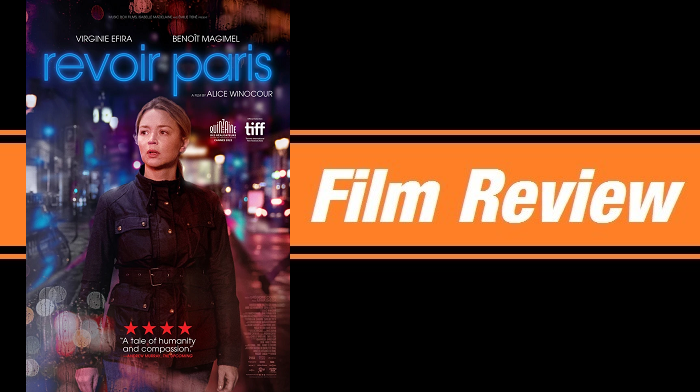
REVIEW: “Revoir Paris” (2023)

“Revoir Paris”, which is translated “Paris Memories”, is a sensitive and quietly powerful adult drama written and directed by Alice Winocour. The film’s events are fictional, but they’re inspired by the 2015 Paris terrorist attacks where members of the Islamic State carried out a string of coordinated assaults on popular soft targets across the French capital, killing 130 and injuring over 400 people.

When putting together “Revoir Paris” Winocour pulled from her own family’s experiences (her brother survived the massacre at the Bataclan theater on that horrific November evening). Her film doesn’t exaggerate the tragedy or overdramatize the trauma it left behind. Instead Winocour takes an emotionally honest and grounded look at the pain of coping and the desperate need of human connection in such trying circumstances.

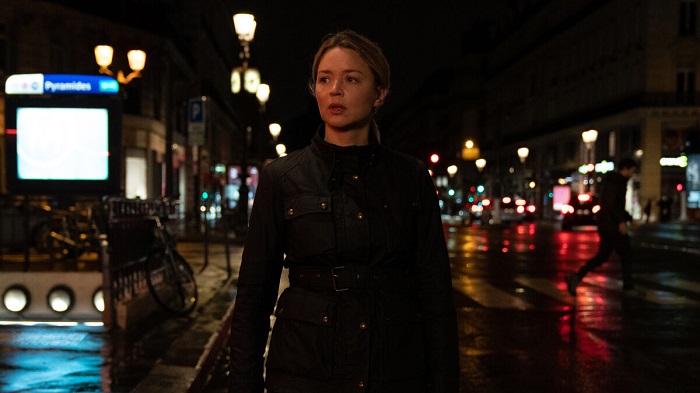
While “Revoir Paris” is well directed, exquisitely shot, and features a smart and thoughtful screenplay, the film is propelled by a tremendous leading turn from Virginie Efira. The 46-year-old César Award winner gives an illuminating performance that communicates the wide range of emotions associated with such destabilizing trauma. It’s such well calibrated work that sees Efira conveying so much feeling, not just through her dialogue but also her expressions and body language. She’s a key reason the movie works so well.

Image Courtesy of Music Box Films

Efira plays Mia, a forty-something journalist and translator whose life trajectory dramatically changes following the horrifying events of one November evening. Mia is having a late-night dinner at an area restaurant with her partner Vincent (Grégoire Colin) when he’s called back to the hospital where he works. On her way home Mia ducks into a busy bistro to wait out a rainstorm.

What we get next are a few carefully crafted minutes where Winocour strategically scans the inside of the eatery, honing in on specific details and logging them into our minds. They may seem insignificant, but they’re details that will play a big part in how the story unfolds.

Suddenly shots ring out, screams fill the air, and the lifeless bodies of innocent patrons lay everywhere. The terrorist attack sequence is truly harrowing in large part due to Winocour’s approach to it. She shoots it from Mia’s perspective offering us a visceral first-person point-of-view. Through her eyes we catch glimpses of the horror, but the sound design is just as crucial. The echo of gunfire, the shattering glass, the cries of the frightened and wounded.

Image Courtesy of Music Box Films

But Winocour (wisely) doesn’t linger on the attack itself nor is there any gratuitous bloodshed. Instead the majority of the story takes place three months later with Mia trying to put her life back together. While the well-intentioned Vincent tries to make things as back-to-normal as possible, Mia struggles to put together the pieces of that day. She’s haunted by fragments of suppressed memories but no clear picture.

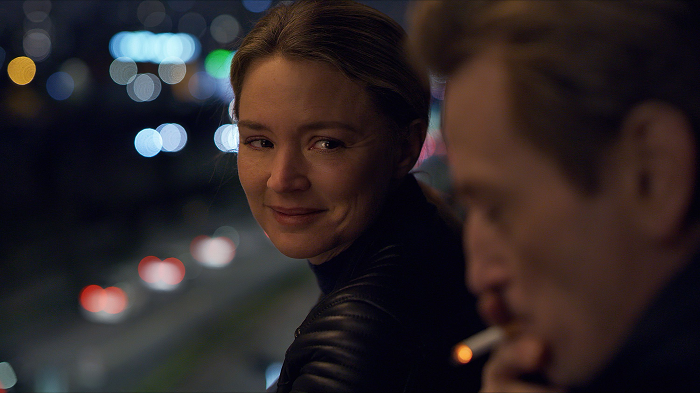
Her search for answers leads her back to the scene of the crime which has reopened for business but that holds support group meetings for survivors and family members of those lost. There she meets and connects with Thomas (Benoît Magimel), a fellow survivor who was seriously wounded that night. Unlike Mia he vividly remembers everything about that night, even seeing her prior to attack. A relationship blossoms around their shared trauma and the two find unexpected comfort in each other.

There’s also a detective story element as Mia searches for a former waiter at the restaurant (Senegalese-born actor Amadou Mbow) who may or may not have helped her survive that fateful evening. But even then Winocour emphasizes and never loses sight of the emotional toll and the essentiality of human connection. It’s that laser focus, along with Efira’s tremendous restraint and Stéphane Fontaine’s striking cinematography that invigorates this powerful study on trauma, coping, and ultimately resilience.

VERDICT – 4.5 STARS

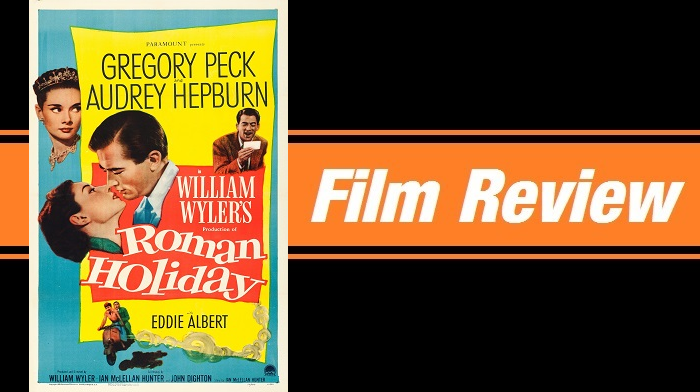
70 Years Later: “Roman Holiday”

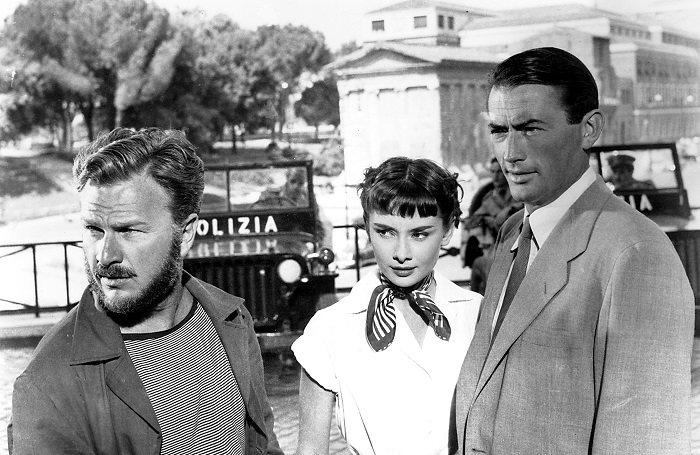
At the risk of sounding cliche, they just don’t make movies like this anymore, especially romantic comedies. The 1953 classic “Roman Holiday” from director William Wyler remains a blueprint for a genre that notoriously struggles with originality these days. The beloved film turns 70 this year and to celebrate its anniversary, “Roman Holiday” is having special screenings at select theaters all around the country. And on the eve of Valentines Day, what better time to see it.

“Roman Holiday” brought together the unlikely pair of Gregory Peck and Audrey Hepburn. It was a star-making role for a young Hepburn who at that point had mostly appeared in bit parts. But her performance in “Roman Holiday” caught the world’s eye. Her co-star Gregory Peck played a big part. He recognized Hepburn was going to be a star and was instrumental in getting her name out. Interestingly Peck wasn’t Wyler’s first choice. The director wanted Cary Grant, but Grant turned it down believing he was too old for the part (Peck once famously said that anytime he received a comedy script he knew Grant must have turned it down first).

The story for “Roman Holiday” was written by Dalton Trumbo but it was credited to Ian McClellan Hunter. At the time, Trumbo was one of the Hollywood Ten and had been blacklisted for his “communist ties” and failure to cooperate with Congress. To make things even more interesting, “Roman Holiday” won the Academy Award for Best Story (as the category was known at the time). Hunter would accept the award and it wasn’t until 2011 that Trumbo received full credit for his work.

Trumbo’s fairytale follows Ann (Hepburn), a princess of an unmentioned country who is on a European tour-stop in Rome. Ann is young and adventurous and has had enough of the strict itineraries and stuffy hobnobbing. She wants to experience life outside of her tightly controlled confines. One evening, after the royal family doctor gives her a sedative to calm her anxiety, she sneaks out before it kicks in, ready to take in the sites and sounds of Rome on her own.

Enter American reporter Joe Bradley (Peck). He stumbles across Ann who has fallen sound asleep next to a fountain. He doesn’t recognize her at first, but after a comical series of events he learns her identity and sees her as a big story and a potential career boost. One that could land him a coveted job back in New York.

Joe doesn’t reveal to Ann that he recognizes her, and Ann tries to keep her identity secret. He calls on a photographer friend of his, Irving Radovich (Eddie Albert), to secretly snap some photos of Ann for their big story as the three spend a playful day exploring Rome. But true to rom-com form, Joe begins to have feelings for Ann. So he’s faced with a decision: does he give in to his feelings or cash them in for a big payday?

The film was shot entirely in Rome by DPs Henri Alekan and Franz Planer. Shooting on location wasn’t quite as common as it is today, and the expense increased the budget so much that the original plans to shoot the film in color were scrapped. Regardless, it was the right choice. Rome, with all its history and beauty, plays a significant supporting role, and some of the movie’s more magical scenes feature Ann and Joe at some of the city’s famous locations. (A favorite is a playful moment at the famed Mouth of Truth where Peck pretends his arm is stuck in the monument and lets out a scream. It’s said Hepburn knew nothing of the gag and was genuinely startled, letting out a scream of her own. It was completely spontaneous and Wyler captured it in one take).

“Roman Holiday” would go on to earn 10 Academy Award nominations. Aside from Trumbo’s win, it was also awarded for Best Costume Design, and perhaps most notably for Best Actress. The win would catapult Audrey Hepburn, who was relatively unknown at the time, into the spotlight and open the door to what would be a stellar career. Peck was right with his appraisal of the young actress and she was always appreciative. The two remained close friends for the rest of their lives. The roots of their shared admiration is clearly seen in “Roman Holiday”, and is a big reason they’re such a memorable on-screen couple.

I still love “Roman Holiday” – the sparkling chemistry of its leads; its keen sense of humor; how it captures and incorporates the beauty and vibrancy of Rome. To this day it continues to be a movie easy to get lost in, which is what you want, especially from a romantic comedy. I want to be swept away with the characters. I want the story to be inviting, the humor to be smart, and the romance to be genuine. We get all of that and more in “Roman Holiday” which is a big reason why it’s still considered an all-time great, even after 70 years.

REVIEW: “Renfield” (2023)

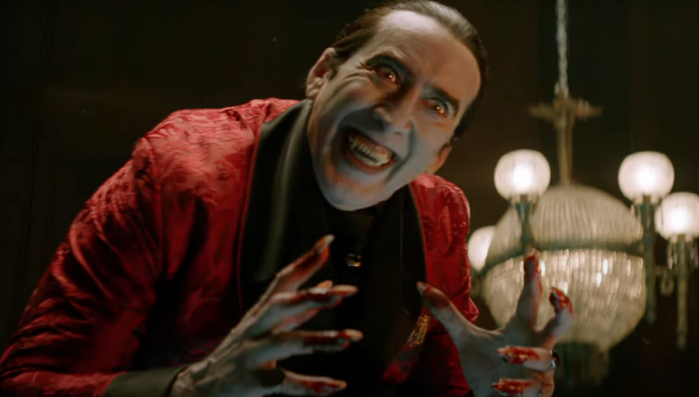
Riding on the wacky idea of Nicolas Cage playing the iconic Count Dracula, the blood-drenched vampire movie “Renfield” looked to have the markings of a potential sleeper hit. But after a grim opening weekend at the box office, it looks as if Universal Pictures has a major bomb on their hands. It’s hard to put much blame on the studio. They’ve had a nice run of successful surprises and they’ve certainly promoted this film. But I think it’s safe to say that something about “Renfield” hasn’t clicked with audiences.

What went wrong is anyone’s guess. Maybe there actually aren’t many folks out there smitten with the idea of Count Cage. Perhaps it was hard for some people to get a good read on this action-horror-comedy mashup. Whatever the reason, people haven’t turned out and its first-week numbers are dreadful. And it’s only amplified by the film’s hefty $65 million budget (before advertising).

I hate to kick a movie when it’s down. I really wish I could be a positive force and say it’s worth a trip to theater. Sadly “Renfield” is a unexpectedly limp and frustratingly hollow experience that squanders most of the potential it had. It starts with promise, setting up its goofy premise in a fun and imaginative way. But once it establishes itself it really has nothing else to offer. Instead it sputters along, milking its one good joke dry and leaving us to ponder what could have been. Even the unflappable Nic Cage can’t ham it up enough to save the movie from its many self-inflicted wounds.

It’s sad to say, but once you get past that initial setup it’s hard to find much to latch onto. There’s probably enough good material for a few SNL sketches, but the bulk of the rest is pretty tough to endure. The film is plagued with issues such as uninteresting side stories, revelations that come with poor buildups and (in some cases) no resolutions, humor that often lands with a deafening thud, and gory action that resembles what you would see in a cheap splatter film rather than a $65 million studio project.

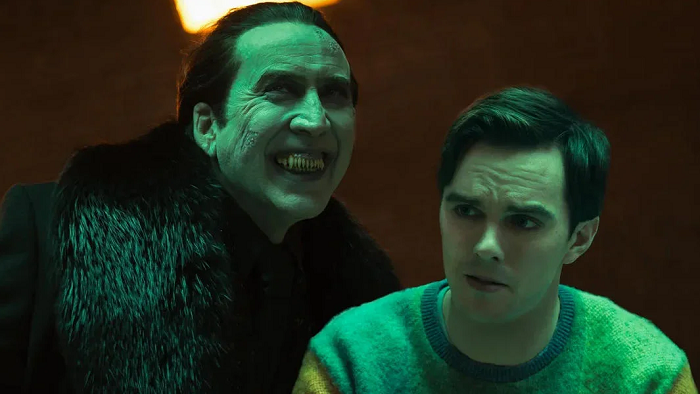
For a while Cage is the film’s saving grace. His manic charm and giddy theatrics imbues his version on Dracula with the kind of preposterous spin we’re looking for. He completely goes for it which is a key reason he is so enjoyable. The bummer of it all is that he isn’t in the movie nearly as much as you might expect. And the movie certainly struggles whenever he’s away from the screen.

“Reinfield” comes from director Chris McKay (“The Lego Batman Movie”, “The Tomorrow War”). It’s written by Ryan Ridley who’s working from a story pitched by Robert “The Walking Dead” Kirkman. The script follows Robert Montague Renfield (Nicholas Hoult), the indebted and long-suffering servant of the Prince of Darkness himself. Renfield is tasked with supplying his master with human blood, the more innocent the tastier. But Dracula’s penchant for blood-sucking benders means the pair are constantly having to move from city to city. Their latest stop – New Orleans.

Dracula has blessed (or cursed) Renfield with immortality as a reward for his faithful service. Renfield also has been granted superpowers that are activated whenever he eats a bug (???). Yet despite the ‘benefits’, Dracula’s demanding personality and unbridled narcissism puts a strain on their relationship. So much so that Renfield wants out. He wants a normal life. He has joined a support group to help people with codependency, but so far it hasn’t helped him muster the courage leave his oppressive master.

The best material is found in the main storyline where Renfield tries to find the strength to stand up to Dracula. Unfortunately we have to endure all of the side stuff which really weighs the movie down. Awkwafina is woefully unconvincing playing a dutiful New Orleans cop named Rebecca Quincy. She has an axe to grind with a local crime family ran by matriarch Bellafrancesca Lobo (Shohreh Aghdashloo) and her obnoxious son Teddy (Ben Schwartz playing one of the most insufferable characters I’ve seen on screen all year). There’s nothing remotely fun or interesting about these characters, and their ill-conceived stories offer little more than dead weight.

I will say Hoult gives a good performance. His ingratiating timidity is both endearing and humorous, and the film is at its best when he and Cage are sharing the screen. But the movie’s misfires are aplenty – the half-baked storytelling; the flat and uninspired humor; the wildly inconsistent action sequences; the even more inconsistent visual effects. They take what should have been a goofy, over-the-top good time and turns it into a 90-minute slog. “Renfield” is in theaters now.

VERDICT – 1.5 STARS

SUNDANCE REVIEW: “Run Rabbit Run” (2023)

Creepy kids continue to be all the rave in modern horror. The latest to tap into them is “Run Rabbit Run”, a haunting psychological horror film from director Daina Reid that premiered at this year’s Sundance Film Festival. The Australian made film stars Sarah Snook (“Succession”) as a mother dealing with the suddenly strange behavior of her 7-year-old daughter. In the process she’s taken back to deeply repressed memories from her childhood.

Written by Hannah Kent, “Run Rabbit Run” has a patience that sets it apart from the standard-issue horror fare we’ve grown accustomed to. It leans into the psychological aspect of its story as it examines a range of familiar themes, some better defined than others. And while you can’t help but recognize a few familiar horror movie tricks, Reid and Kent use them in a variety of ways that cleverly service their story.

After Elizabeth Moss dropped out due to a scheduling conflict, Sarah Snook was cast in the lead. She’s terrific playing a single mother named Sarah who’s still grieving the recent passing of her beloved father. She puts on a good show for her daughter Mia (Lily LaTorre), but deep down she still struggles with her loss. Her ex-husband Pete (Damon Herriman) and his new wife Denise (Naomi Rukavina) show concern, offering our first hint that something else might be going on with Sarah and Mia. It’s some really good table-setting from Reid and Kent.

Things take a wicked twist after a white rabbit suddenly shows up at their Melbourne home. Mia is intent on keeping it, but immediately begins acting peculiar upon its arrival. Her demeanor completely changes. She makes a crude bunny mask out of pink construction paper and wears it everywhere. She starts drawing ghoulish pictures on the back of her homework. Even stranger, Mia insists on being called “Alice” and demands to see Joan (Greta Scacchi), a grandmother she’s never met. “I miss people I’ve never met all the time,”she tells her concerned mom.

Several other things surface as the story unfolds, much of it to do with Sarah’s troubled past. We learn more about her broken relationship with her estranged mother Joan. And there’s a particularly painful loss from her past that resurfaces and begins chipping away at her psyche. Of course it’s all maneuvering towards several big final-act reveals, some of which become pretty obvious. But Reid holds enough of her cards close to the vest, and she doesn’t let her film get bogged down in genre routines.

Comparisons to Jennifer Kent’s “The Babadook” seem all but inevitable. And a few of the movie’s tricks (such as the metaphorical use of a festering wound that won’t heal) may seem a tad too familiar. But “Run Rabbit Run” carves out its own identity through its meticulous pacing and its backstory mystery. Reid’s prowess with the camera gives the film an unnerving sensation, especially in the second half. And then you have Snook who’s able to sell every scene, even the ones we feel like we’ve seen before.

VERDICT – 3.5 STARS

REVIEW: “Room 203” (2022)

Something creepy is going on in room 203. And wouldn’t you know it, that’s just the apartment that two lifelong friends move into in this interesting horror film from director Ben Jagger. Based on a Nanami Kamon’s novel of the same name, the Japanese horror influence can be seen all over “Room 203”. You see it most in the slow, patient tension-building and in how its scares are often rooted in the psychological as much as the supernatural. And of course mood and atmosphere are essential.

But what surprised me most about “Room 203” was its welcomed patience. The trio of co-writers (Jagger, John Poliquin, and Nick Richey) clearly have something sinister at the center of their story. But they’re very deliberate and take their time getting there. In fact, for most of the second act, “Room 203” is more of a mystery movie than straight-up horror. Perhaps it’s a constraint brought on by the strict COVID-19 safety protocols and a limited budget. But it feels like a gutsy creative choice – one that works both for and against the film.

Image Courtesy of Vertical Entertainment

Shot and (I think) set in Shreveport, Louisiana, the movie introduces us to Kim (Francesca Xuereb), a journalism major ready for her first year of college, and her best friend Izzy (Viktoria Vinyarska), a boisterous aspiring actress. The two friends come with their own sets of baggage. Kim is at odds with her disapproving parents who see Izzy as a bad influence. Izzy is still struggling to cope with the death of her mom – a loss that took her to some dark places.

Problems aside, Kim and Izzy are all set to become roommates, renting an apartment together in a historic former commerce building. Upon arriving at the property they’re greeted by their pasty-faced and glaringly weird landlord, Ronan (Scott Gremillion) who shows them #203. It’s a dated but cozy pad with “vintage” furnishings and accented by a beautiful but strange stained glass window. He wraps up his tour with a warning, “The basement is off limits to residents”. That’s always an indicator that we’ll end up there at some point.

The one detail Ronan left out was the apartment’s blood-soaked history (It’s no wonder rent is so cheap). Of course it soon comes to haunt the new tenants. Before long Kim and Izzy begin noticing a rash of unexplainable occurrences. There’s the ugly hole in Kim’s bedroom wall and the growing stench emanating from it. There’s the appearance of an old necklace and music box – totems that are clearly channeling some kind of malevolent force. And then there’s Izzy’s sudden sleepwalking (that’s never good, especially in a horror movie).

Image Courtesy of Vertical Entertainment

Kim begins suspecting something’s not quite right with the apartment and recruits the help of her fellow journalism student and potential love interest, Ian (Eric Wiegand) to help her dig deeper into the building’s history. Along the way, Jagger sloooowly ratchets up the horror elements, never shying away from using a number of well-known horror tropes – figures scampering by in the shadows, mysterious foul smells, creaking floors, milky eyes, etc.

In a way I really appreciated the slow-burn and how it gave the characters more room to develop. But the movie does reach a point where the wait for the horror to kick in starts to feel long. And like so many other movies in its vein, “Room 203” leaves a lot of questions unanswered. But these are hardly dealbreakers, and the movie’s strong points are enough to offset, and in several cases overcome, its shortcomings. “Room 203” is now streaming on Hulu and on VOD.

VERDICT – 3 STARS