REVIEW: “San Andreas”

ANDREAS POSTER

It looks like this is the big one – earthquake that is. You know, the massive ‘mother of all earthquakes’ that leaves epic-scaled devastation which is prime fodder for a summer popcorn audiences. And trust me, “San Andreas” has the summer popcorn movie cred. It is loud, often silly, filled to the rim with corny lines and CGI destruction, and it stars The Rock. Yet at the same time it also manages to entertain – an accomplishment that many summer blockbusters can’t claim.

Disaster movies have always managed to find an audience and if you look at the catalog of film history you’ll see that almost every disaster imaginable is represented. Earthquakes are no different. Quake disaster picks have been around for a while as evident by the great Clark Gable film “San Francisco” from 1936 and Charlton Heston’s “Earthquake” from 1974. “San Andreas” certainly doesn’t fall into the same category of those films in terms of quality, but I would be lying if I didn’t say I had fun with it.


ANDREAS1

The movie starts in typical fashion – with an introduction to the players. Dwayne Johnson plays Ray, A helicopter rescue pilot for the Los Angeles Fire Department. He is in the middle of a divorce with Emma (Carla Gugino) who has moved in with her wealthy real estate broker boyfriend (Ioan Gruffud). Their daughter Blake (Alexandria Daddario) is seemingly caught in middle and maintains a strong relationship with her father. Meanwhile seismologist Lawrence Hayes (Paul Giamatti) and his team are studying small tremors in hopes of perfecting their earthquake prediction theories. And we are also introduced to a young engineer named Ben (Hugo Johnston-Burt) who has eyes for Blake and his younger brother Ollie (Art Parkinson).

I don’t need to tell you but an earthquake hits and the epicenter is near the Hoover Dam. But little does everyone know that it is simply a precursor to a bigger quake – one unlike any we’ve seen before (how’s that for dramatic effect). It just so happens that when ‘the big one’ hits the central family is separated and Ray sets out to save his estranged wife and daughter. The story bounces back and forth between each group of characters as they navigate an assortment of perils and close calls.

The city of San Francisco is the computer generated ground zero of “San Andreas” and the special effects crew leaves no street undamaged and no landmark unscathed. This reveals some of the film’s strengths and its weaknesses. Visually the film shines. Watching this there is no question that modern special effects are capable of capturing almost anything. Even the film’s more ridiculous and absurd sequences were impressive due to the spectacular visuals. On the other hand the barrage of CGI destruction is relentless to the point of becoming almost numbing. And there are times when you question whether the filmmakers are even considering the catastrophic death toll resulting from their visual artistry.

ANDEAS2

But my biggest mixed reaction centers around the characters. Unquestionably the movie features several throwaway characters and some prototypical cookie-cutter characters that you’ve seen in a hundred other movies. I won’t spoil who is who, but the sheer lack of imagination in some of the character development is ridiculous. On the more surprising side, I actually found myself liking the family dynamic as cliché as it was. Even amid the sometimes lame dialogue and laughably cheesy lines I liked the three main characters. And the performances were generally good. They are nothing that you will  remember but they’re able to weather the occasional hackneyed writing that can sometimes leave you shaking your head. It’s a pretty solid cast some of whom feel a bit wasted.

When watching movies like “San Andreas” I feel you sometimes need to have a discernment switch you can flip off in order to enjoy the movie. It’s that critical switch that when flipped on keeps us from seeing past a film’s negatives so that we enjoy the positives. Many summer blockbusters stink regardless of whether the switch is flipped on or off. But I found “San Andreas” to be entertaining in its own cheesy, summer blockbustery way. The predictability is undeniable. The corny lines are too many to count. The CGI devastation and last second rescues are aplenty. But at the same time “San Andreas” kept me engaged thanks to its visuals, its cast, and even the occasional unintended humor which I count as part of its charm. I can see where some may pile on or dismiss “San Andreas”, but for me it was good throw-away summer fun.

VERDICT – 3.5 STARS

3.5 stars

REVIEW: “Selma”

SELMA POSTER

The process to bring “Selma” to the big screen began in 2008. Since then “Selma” has had director changes, producer changes, cast changes, and script rewrites. But now it has finally hit theaters with director Ava DuVernay at the helm. As expected the film has generated a lot of buzz, critical acclaim, and its share of controversy. Going into the film I was excited to see how well the story would be told. I was also cautious and concerned about how the historical liberties I’ve been reading about would effect the film’s impact.

“Selma” doesn’t set out to be a comprehensive biography of Dr. Martin Luther King Jr. Instead it focuses on the events surrounding the 1965 voting rights march from Selma to Montgomery, Alabama. I appreciated the film’s disregard for the standard biopic blueprint. MLK’s entire life isn’t crammed into one story. This movie has a very specific story to tell, yet it allows us to glean much about this influential figure. We learn of his motivations, his faults, his fears, and his uncertainties all through observation. We also learn of his bravery, his sacrifice, and his determination.

SELMA1

This chronicle of the Selma march starts with Martin Luther King Jr’s (David Oyelowo) desire to secure true and unhindered voting rights for black Americans. We see him going to President Lyndon B. Johnson (Tom Wilkinson) and urging him to give immediate attention to the matter. We see the festering racial tensions in the south particularly in and around the town of Selma, Alabama. We see King visiting Selma with his fellow SCLC members. He speaks in churches and spreads the message of change through peace and offers encouragement to the black community. We also see the violent backlash against the peaceful protests – something that weighs heavily on Dr. King’s heart.

“Selma” has the big showcase scenes that you would expect, but DuVernay also gives us the smaller more intimate moments. These personal strokes paint a much more detailed portrait of King. There’s a fun scene where he and his SCLC buddies arrive at a female friend’s house for breakfast. It’s a great scene filled with playful banter and jests. There is also a piercing scene between King and his wife Coretta (exquisitely played by Carmen Ejogo). It’s a low-key but intense family moment that DuVernay films with subtle but brutal honesty. We get a number of these touches which are much more than just emotional gimmickry.

SELMA2

And you can’t have a discussion about “Selma” without talking about the performance of David Oyelowo. The British actor loses himself in the role of Dr. King. He is a great match in terms of physical appearance, but he gives us so much more. I was blown away by the steadiness of his voice and his near perfect accent. He also conveys the passion and charisma that I imagine from Dr. King. We see this most in his speeches/sermons at a church in Selma. Oyelowo’s performance is graceful, committed, and nuanced.

“Selma” has so many important things to say and it hits head-on the disgraceful racism that was prevalent at the time. It’s a film that could be taken as an important historical reflection. Unfortunately it loses a portion of its credibility due its historical liberties. I generally stay away from controversies surrounding historical inaccuracies, but for me “Selma” genuinely suffers due to decisions made by DuVernay and writer Paul Webb. It has nothing to do with the racism and violence shown in Selma. All of that was shown with such power and potency. Instead it’s the decision to cast Lyndon B. Johnson as an antagonist, something that simply wasn’t true.

History has shown that Johnson had King had disagreements. But they also had a deep respect and worked together to accomplish the shared goal of equality. Even some close to King have come out to defend Johnson from the film’s characterization. The movie shows Johnson as an obstructionist who grows more and more annoyed with King’s efforts towards equal voting rights. But it doesn’t stop there. The film stops just short of calling Johnson a racist. It also shows Johnson callously using the FBI to hurt King and his family. Many have said this never happened and it depicts Johnson as cold and pernicious. And when he does finally put voting rights legislation forward, the film shows him to be motivated more by his legacy than doing what’s right.

Selma3

But why did this hurt the film for me? Historical inaccuracies happen all the time in biography movies. For me it hurts the film because it strips it of a potentially strong and relevant message. I mean which would have more impact and resonance, the movie’s characterization of an obstructive and self-serving sitting white President or the true depiction of a white and black man standing side-by-side working towards true and meaningful change? The power and relevance of that message in the current climate is undeniable. Why did DuVernay choose the direction she did? Some of her comments about the making of the film may shed light on her motivations. Regardless it is a frustrating decision that seems unnecessary.

Sadly the “controversy” surrounding “Selma” isn’t without some merit. A lot of people, particularly younger viewers, may look at the film and take it entirely as historical fact. While that may not be completely true, the majority of the movie serves as a forceful and unflinching reminder of the faith and courage shown by Martin Luther King, Jr. and the persecuted black community of that day. The film forces us to experience the undeserved attitudes of hatred commonly thrown at black Americans at the time. It also raises our spirits by showing the determination of a brave community unwilling to sit by and have their rights trampled. The true story of Selma, Alabama has an inspirational power. “Selma” the movie also has that power except when it wanders off into its own revisionist world.

VERDICT – 3.5 STARS

REVIEW: “The Spectacular Now”

Spectacular poster

It’s rare to find a teen movie that actually treats teens like real people with real problems and real emotions. So often these films peddle juvenile humor and exaggerated stereotypes in place of stronger and meatier stories. That’s why it’s refreshing to find a movie like “The Spectacular Now”. This intelligent and nuanced coming-of-age story steers clear of cliches and gimmickry by respecting its characters and portraying their circumstances in a thoughtful and naturalistic way.

Miles Teller plays Sutter Keely, a popular and hard-partying high school senior. He has a hot girlfriend, a great personality, and no real ambition for the future. Sutter tells several people he lives in the now, not worrying about anything other than the moment. But that attitude proves to be destructive – something he can’t see through his fog of hedonism. His girlfriend Cassidy (Brie Larson) finally has enough and breaks up with him. He is warned by a concerned teacher that he may not have the grades to graduate. And his constant drinking becomes a growing concern. Sutter’s life “in the now” isn’t the happy, sunshiny place he projects. It’s just a facade to hide the truth of a troubled and conflicted life.

SPECTACULAR1

Sutter’s life takes an unexpected turn when he meets Aimee (Shailene Woodley). She’s a shy and studious ‘good girl’ whose reserved lifestyle is in stark contrast to Sutter’s. The two opposites hit it off but it takes some time for their relationship to blossom. But several of Sutter’s issues get in the way – his ego, his ‘cool guy’ reputation, his fixation on old flame Cassidy, and his self-destructive behavior. We never really know how Sutter and Aimee’s relationship will turn out. The film doesn’t lay out a standard formulaic plot line and a big part of its success is the experience we have watching this authentic relationship play out.

The story is also helped by some nice performances by the two leads. Teller and Woodley have noticeably different acting styles yet they seem to gel nicely with these two characters. For Teller this film is wedged in between two run-of-the-mill raunchy comedies so I was pleasantly surprised at his work here. Woodley’s nice performance is no surprise. Her film debut in Alexander Payne’s “The Descendants” received rave reviews and here she delivers another eye-catching performance. The supporting work is also uniformly good. Larson, Jennifer Jason Leigh, Mary Elizabeth Winstead, and especially Kyle Chandler each have some strong screen time.

One of the interesting things about “The Spectacular Now” is how it employs several familiar plot points, but it treats each of them with a fresh and prudent sincerity. There are moments where you can guess how certain things will play out, but the film also steadily surprised me by not going the conventional route. More importantly it is all grounded in a realistic portrayal of these two teenaged characters which separates this film from the bulk of teen pictures we get. That alone is something I welcomed with opened arms.

VERDICT – 4 STARS

REVIEW: “Snowpiercer”

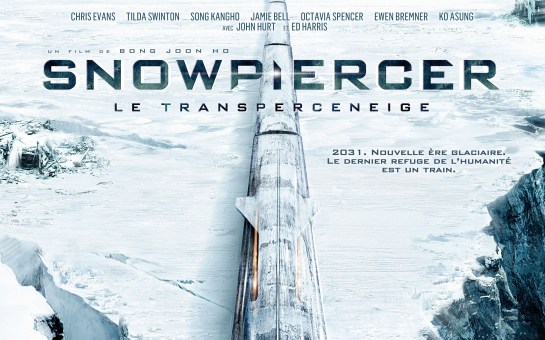
SNOW POSTER

Every revolution has a cost and the cost is high in Bong Joon-ho’s sci-fi action flick “Snowpiercer”. This is the Korean filmmaker’s first feature since “Mother” from 2009. “Mother” was my first exposure to Bong Joon-ho and my christening of sorts into the art of Korean cinema. “Snowpiercer” is a much different film yet it doesn’t stray too far away from the style and approach which lies at the heart of this auteur.

Despite the efforts of blowhard extraordinaire Harvey Weinstein, “Snowpiercer” has finally made its way to the United States. Weinstein acquired the North American rights for the film with a wide release planned. But the pompous film mogul demanded that 20 minutes of footage be cut and when Joon-ho rightly refused, Weinstein sabotaged the movie by delaying it for almost a year and severely restricting its release. But word of mouth and positive reviews eventually earned it a broader release although nothing like what was originally planned.

The story is taken from a 1982 French graphic novel and as with any good science fiction, the premise is everything. To stonewall the effects of global warming mankind injects the atmosphere with an experimental agent that instead brings on a second ice age. Humanity’s last inhabitants live within the Snowpiercer, an enormous train in constant motion powered by the “eternal engine”. Onboard the train a social order has been created. The affluent upperclass live in the lavish head section while the poor and needy inhabit the tail. Now at first the movie appeared to be a climate change and class warfare lecture, but once we begin to meet the blend of interesting and eccentric characters, we realize there is more under the hood.

SNOW1

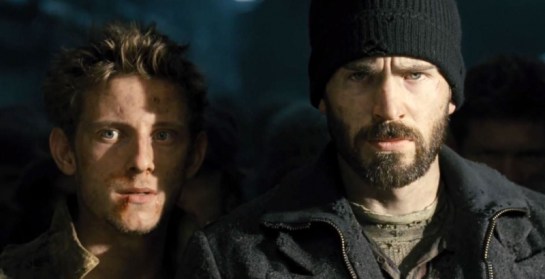
After several failed attempts the tail section puts together another revolt against the privileged and the armed soldiers who defend them. Curtis (Chris Evans) is quickly established as the strongest link and the man many look to for leadership. His mentor Gilliam (John Hurt) is grooming him to be the leader once they are able to take over the train. Curtis is a complex character. He often shows heart particularly in his dealings with his fellow tail-sectioners. Evans continues to grow as an actor. He’s mostly been known for playing goofballs or superheroes but I love seeing him open himself up as an actor. He once again flexes his action star muscle, but it’s nice to see him digging deeper into a character and doing it well.

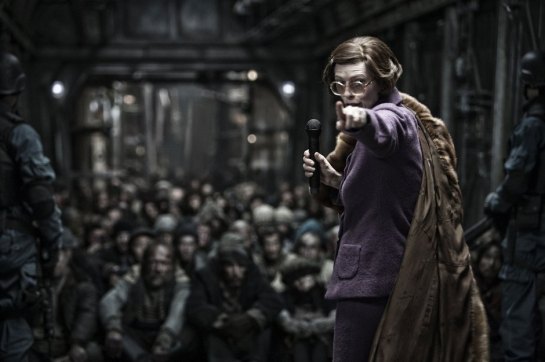
Evans is helped out by an incredible supporting cast. Jamie Bell is good as a character who starts out as a standard sidekick but evolves into something more. Oscar-winner Octavia Spencer plays a mother determined to get her son back after he is taken by the upperclass authority. A Joon-ho favorite Song Kang-ho plays the drug addicted designer of the train’s many doors separating the cars. The fabulously quirky Alison Pill is great as a character simply titled Teacher, and the always exceptional Ed Harris pops up in a significant role. But the true scene stealer has to be Tilda Swinton. She plays Minister Mason, an overseer of sorts who is really a glorified lacky. Swinton has a ball playing such a wacky and neurotic character. Everything from her appearance to her ways of expressing herself works to inject a bit of humor while never derailing the movie’s more prominent tone.

SNOW2

All of these characters work to energize Joon-ho’s engaging story. To be honest it’s hard to deny the absurdity of it all, and a surface reading would make this sound like a pretty standard action romp. But when the story is this well told and it moves at such a fluid and dynamic pace, it’s so easy to get completely caught up in it. I had a blast with its central conceit and the stylized storytelling. The careful mix of action and character development is well done and the setting is superb. It ranges from beautiful and colorful to dark and dirty while always maintaining a sense of claustrophobia. And as with almost every other sci-fi film, we get plenty of commentary here. Joon-ho paints a parallel portrait of the modern societal standard which is sometimes effective and other times ham-fisted. His climate change theme was the most compelling showing an awareness while also showing the dangers of overreacting. His class warfare approach is a little more uneven. But other themes such as drug abuse, political power, and revolutions are laced throughout the story in intriguing ways.

“Snowpiercer” also looks amazing from its wide assortment of environments within the train to its ice-ravaged world outside. The variety of action we get is also a treat. It may be intense close quarters shootouts or hand-to-hand combat in precarious situations. Some of it dances close to the edge of brutality, but so often Joon-ho pulls back his camera just as the violence is happening sparing the audience from the gore while keeping the sheer intensity of the scene. It’s a mark of the creative Korean style and it gives the movie a particular look that I absolutely loved. It’s a visual delight.

Thanks to Weinstein “Snowpiercer” hasn’t gotten the release it deserves but word of mouth is spreading. Let me happily add to its positive press. This is a fantastic science fiction picture that sounds similar to many other films yet feels completely unique and fresh. It’s a film with many strengths and as a lover of good sci-fi, I had an absolute blast with it!

VERDICT – 4.5 STARS

REVIEW: “The Sundowners”

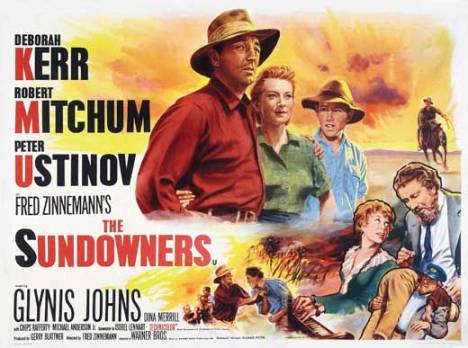
SUNDOWNERS poster

What is a sundowner you may ask? In this film from 1960 one character defines a sundowner as “someone whose home is where the sun goes down.” It was an Australian term used for roamers who traveled across the countryside taking one job at a time. They would pitch their tent wherever they were at the end of the day and that was their home for the night. Richard Zinnemann’s film follows a family of sundowners who move from place to place taking sheep herding jobs. The film bombed in the United States but did well overseas and would go on to earn five Oscar nominations including one for Best Film.

Robert Mitchum plays Paddy Carmody, a nomad at heart who has no desire to settle down in 1920s Australia. He is perfectly content with being constantly on the move and working small jobs here and there. But over time Paddy’s insatiable wanderlust begins to clash with the desires of his wife Ida (Deborah Kerr) and his teenaged son Sean (Michael Anderson). They believe the time is come to consider settling down. They’ve grown tired of constantly being on the go and Sean is at an age where he wants to experience life and set out on his own path. Paddy’s stubbornness and his family’s patience provide the film its central contention.

SUNDOWNERS1

Some critics pointed out that there isn’t a lot of plot in “The Sundowners”. That’s essentially true although the film’s intent is to be a sprawling tale of the family’s lives, love, and rugged endurance. We follow them along the Australian backcountry as they drive a large herd of sheep, contend with a sweeping wildfire, and live off what the land provides. This allows for some truly beautiful, sweeping scenes that vividly capture the Australian countryside. The film was originally set to be shot in Arizona, but Zinnemann petitioned hard to spend the extra money and shoot it on location. It was a good decision. The landscapes are anaccurate setting and the story feels perfectly in place. And some scenes, like the aforementioned wildfire are shot with such tenacity and skill. Simply put, the movie looks great.

The family encounters several interesting people along the way. They hire and befriend an Englishman and fellow roamer named Rupert. Peter Ustinov would receive an Oscar nomination for the role. There are also several other interesting faces that pop up when Ida convinces Paddy to take on a stint at a sheep shearing station. She hopes the time in one place will soften him to the idea of settling down here. It’s at this remote station that their family dynamic takes some dramatic turns which sets up the rest of the film.

SUNDOWNER2

As for the performances, Mitchum is rock-solid as always. His Paddy is a tough, salt-of-the-earth fellow, but one whose stubbornness threatens to alienate the family the holds most dear. Mitchum fits right into the character although his Aussie accent is a bit erratic. Kerr is as brilliant as always. Her Isa puts off tough and rugged pioneer vibes but also maintains a distinct femininity. Kerr would earn one of the six Oscar nominations of her career for this role. Amazingly she never won an acting Oscar but the Academy did give her the honorary “Whoops, We Screwed Up” award in 1994. The supporting work was uniformly strong and it too gained critical praise.

“The Sundowners” does run a tad too long and there is an occasional lull or two. The absence of a more defined plot may be an issue for some as well. But the movie does a great job of selling its characters and drawing us to them. I really liked the family and I wanted to see how their story plays out. I also appreciated how grounded the story feels. The film never embraces the sentimentality that many family dramas are consumed by. It just wants us to get to know these people and to experience the life they live. Personally that was enough for me.

VERDICT – 4 STARS

REVIEW: “Short Term 12”

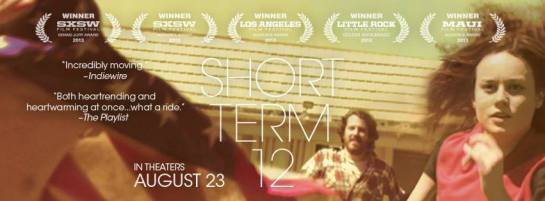
SHORT TERM POSTER

“Short Term 12” opens up with a great scene featuring a supervisor from a group home for troubled teens telling a story involving a past patient to a new employee. We are dropped into this conversation as an observer and we get a brief introduction to the main characters. But without a moment’s notice the scene changes dramatically. A young boy bursts through the door and takes off towards the front gate. He’s screaming, waving his hands, and clearing he is deeply upset. The workers subdue him and the emotionally complex setting of “Short Term 12” is realized.

The movie is written and directed by Destin Daniel Cretton who was inspired by his real-life experiences of working in a group home for teens. He first made this into a 2009 short film, but later developed it into a feature length picture. This was only Cretton’s second feature length movie which makes his accomplishment all the more impressive. You see, “Short Term 12” is a really good movie and much of its strength and potency can by traced back to Cretton’s pen and his raw use of the camera which perfectly captures the tone and intensity of his setting.

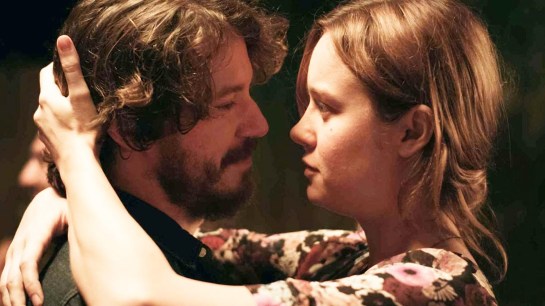
Short Term 12Brie Larson and Keith Stanfield

Brie Larson is unquestionably superb as the lead character Grace. She is a supervisor at the teen group home (called Short Term 12). She works alongside her boyfriend Mason (John Gallagher, Jr.) to both mentor and council a group of teens with an assortment of problems. Along the way we are introduced to them and watch as Grace interacts with them on both procedural and personal levels. Larson’s performance blew me away and there is such a natural quality to what she’s doing as an actress and within the character she is portraying. We also get some interesting scenes between Grace and Mason away from the home. At first these moments seem flimsy but they really payoff later on as the story develops.

Grace never lacks control and she is a compassionate professional when it comes to taking care of these kids. But she is especially invested in a new resident, a troubled young girl named Jayden (Kaitlyn Dever). This is where we see a different side and an interesting turn in Grace. There is a stunning and vivid dichotomy within her. She is a strong and determined woman, but she is also scarred and emotionally fragile. This adds an entirely new layer to the character and the film that I really responded to.

SHORT2

At no point does “Short Term 12” feel fabricated or overly melodramatic. There is a stinging realism that permeates the entire picture. It constantly draws out raw emotion from its characters and the situations and circumstances are believable and often times troubling. There are a couple of characters than dance dangerously close to stereotypes and their stories take some fairly predictable turns. But overall the film sucks you in and exposes you to truths about these teens and the people gifted with the patience and will to help them.

I tip my hat to Destin Daniel Cretton for crafting a movie that doesn’t lose itself in the typical Hollywood contrivances and forced melodrama that we get these days. I also applaud Brie Larson who not only showed she can act, but she gives an incredible performance that is grounded and always feels true. There are waves of emotions that flow throughout the movie and the story keeps you thoroughly invested. “Short Term 12” is another great example of the strength of independent cinema and the impact these films can have on the movie-making landscape.

VERDICT – 4 STARS