REVIEW: “Conan the Barbarian” (2011)

For the past few years Hollywood has been consumed with remaking movies from the 1980’s. I have to admit, “Conan the Barbarian” was one I could see being remade with satisfying results. I’m a fan of the original 1982 fantasy film starring Arnold Schwarzenegger. It was a gritty and violent movie jammed with swordplay and sorcery. This time Jason Momoa takes on the role of Conan and while he does a good job channeling the Barbarian’s grunts, growls, and muscle flexes, ultimately the movie’s story runs out of gas and the special effects don’t live up to what you would expect from a 2011 movie.

We’re introduced to Conan at the time of his birth on the battlefield during an intense attack. His mother dies and he is raised by his father Corin (Ron Perlman), the leader of a tribe of barbarians. Conan grows into a young boy who’s agility and skills with the blade are beyond his years. It’s during this time that his village is attacked by an evil warlord Khalar Zym (Stephen Lang) who is seeking the pieces to an ancient mask he believes will resurrect his deceased wife and eventually lead to his rule over Hyboria. Doesn’t it always come down to that?

Zym and his army destroy young Conan’s village and leaving the boy to witness his father’s death. The story then catapults ahead to an adult Conan working as a mercenary. Still thirsty for revenge, he finds a trail that he hopes will lead to Zym. Zym still hasn’t figured the mask out and now is seeking a monastery that houses a pure-blood descendant (Rachel Nichols), blah, blah, blah. Conan ventures from location to location before tracking Zym down, falling for the descendant, and getting caught between saving her and carrying out his revenge.

The story has promise especially for those who love these types of fantasy films. It has moments that captures what made the original film a cult favorite particularly during the first half. But it hits a point where it begins to lose steam, turning into becomes a conventional and predictable fantasy tale. There are plenty of action scenes featuring snarls, sword twirling, and blood splatters. Some of them work well, but much of the action lacked context and seemed like nothing more than dressing. And I also found the finale to be as underwhelming as the buildup to it.

It’s also surprising to see how bland the special effects turned out to be. Many of the location shots look like hazy paintings instead of lived-in lands. There is also a creature battle close to the end that certainly doesn’t stand up to the visual accomplishments of today’s effects. But there is a really good effects-driven sequence where Conan is battling a group of sand warriors conjured up by Zym’s witch daughter Marique (Rose McGowan). It’s clearly the best the movie offers.

As I mentioned, Momoa is a soild Conan and Nichols is a good match for him on the screen. Perlman is a nice choice for Conan’s father even though it’s a relatively small role. Stephen Lang isn’t as bad as he was in “Avatar” but once again he seems to be following the “How to Play a Movie Villain” handbook. He overplays several scenes and he’s never the slightest bit menacing. McGowan, his co-antagonist, feels like a bigger threat even though her character is pretty shallow and forgettable.

Forgettable is also a good way to describe “Conan the Barbarian”. It’s not a terrible movie but it squanders a lot of potential. It does do a few things right especially in the first half. There are also moments that made me reflect back to the original film and how I responded to it as a kid. Unfortunately this one can’t sustain a compelling story and the visuals don’t feel like a worthy enough upgrade. This was one remake that I expected a lot more from.

VERDICT – 2 STARS

2-stars

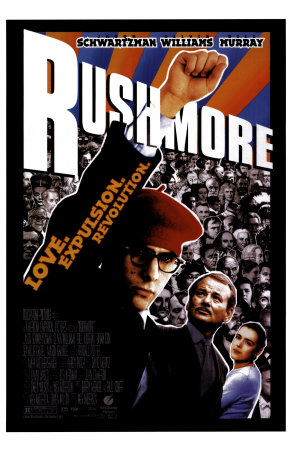
“RUSHMORE” – 4.5 STARS

Whenever you’re watching a Wes Anderson movie, there’s no denying that you’re watching a Wes Anderson movie. The writer and director has made a number of films that feature profound uniqueness that set them apart. His quirky humor is unique in itself but Anderson is also known for his own visual style and presentation, his clever use of music, and familiar reoccurring themes that you can’t help but notice. In 1998, Anderson released “Rushmore”, his second feature film and one of his many collaborations with old friend and co-writer Owen Wilson. “Rushmore” is a perfect introduction to Anderson and his special brand of humor. And while the movie – just like all of Anderson’s pictures – won’t appeal to everyone, I found it to be an infectious comedy from start to finish.

“Rushmore” was the film that launched Wes Anderson’s career. He and Wilson began working on the story a few years prior to the release of his first film “Bottle Rocket”. The two took memories and experiences from their childhoods to form the foundation of this truly hilarious story which also flirts with some darker underlying themes. The movie also launched the career of Jason Schwartzman who plays Max Fischer, an eccentric and egocentric 15 year-old student at Rushmore Academy. Max is a underachiever in the classroom but is by far the most extracurricular student in the school. He’s the leader of school groups ranging from the French Club and the Debate Team to the Calligraphy Club, the Rushmore Beekeepers, and a goofy dodgeball club called Bombardment Society. It turns out Rushmore is his life but he finds himself in jeopardy of expulsion due to his horrible grades.

Max develops an unusual friendship with a wealthy but disenchanted business man named Herman Blume played by Bill Murray. Murray is fantastic and he delivers some of the story’s more straightforward laughs but he also adds lots of humor through his straight-faced, deadpan performance. Blume is a miserable fellow not at all happy with his life. But despite his troubles, particularly with his whacked out kids, he’s drawn to Max, so much so that he offers him a job and funds some of Max’s outlandish school “projects”.

But Max and Herman’s friendship takes a hit when they both end up falling in love with the same woman, Ms. Cross (Olivia Williams), a 1st grade teacher at Rushmore. Ms. Cross becomes aware of Max’s infatuation with her and tries to head it off. But Max is impervious to the truth that she is too old for him. It’s here that the movie is really intriguing. Their “relationship” leads to some really funny moments in the picture. But on the flip side, it’s here that we do get hints of a darker more troubling component to the story. There were several scenes where the internal struggle within Max felt real and in turn made him into a really sympathetic character. But Anderson would then draw out a good laugh from the most unexpected place. So it’s safe to say that “Rushmore” had the uncanny ability to make me laugh out loud in one scene and then feel uncomfortable in the very next one. In other words, there’s much more going on underneath the surface.

Anderson also employs several visual gimmicks that I’ve noticed in the handful of his other films that I’ve seen. Some people don’t really respond to his approach but I thoroughly enjoy it. He never frames an ugly shot and while some of “Rushmore” quick snippets may seem jarring to some, I think they brand the film with a quirkiness that I love. Helping out “Rushmore’s” presentation is the interesting choices of music including a selection of 60’s pop songs that feel surprisingly at home even though there doesn’t seem to be a single connection to the story. But again (at the risk of sounding like a broken record), this is typical for a Wes Anderson picture.

True comedy is subjective and that is never more obvious than with “Rushmore”. Many people wrestle with Anderson’s unique sense of humor and visual flair. But I found myself laughing all through this movie and the style of storytelling really helped the quirky humor. The cast is superb and it’s easy to see why Schwartzman took off from here and why this helped rejuvenate Bill Murray’s career. “Rushmore” is a genuinely funny movie laced with some darker undertones that will cause you to laugh and squirm during the same scene. Considering the majority of modern comedies, that’s something I can really appreciate.

REVIEW : “Cloud Atlas”

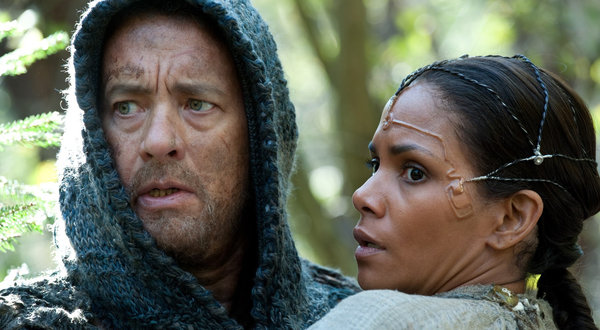
“Cloud Atlas” has already stirred up quite a discussion between moviegoers. It’s safe to say the film has earned its fair share of fans. But it’s also true that it has its share of detractors. To be honest I can see where people could either love it or hate it. It’s a highly ambitious picture that pulls off an incredibly clever storytelling technique. But it could also be viewed as a three-hour grind that features many of the Wachowski’s familiar self-indulgences. So how was it for me, a groundbreaking cinematic accomplishment or an epic sized disaster? Well neither, But I did find it a chore to sit through despite the things it does right.

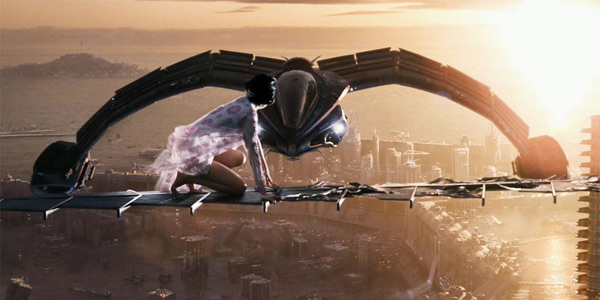
It’s practically impossible to give any kind of brief synopsis of the plot of “Cloud Atlas”. It’s basically six individual stories that take place at different points in time. The first story is set in the 1800s and follows a young lawyer handling business for his father on a voyage across the Pacific. The second story takes place in England during the 1930s as a young unfulfilled composer is hired to help an older accomplished composer create his music. The third story is set in the 1970s as an investigative reporter finds herself in danger after uncovering a nuclear energy conspiracy. The fourth story, set in 2012, follows a writer and publisher who finds himself in debt and in deep with some local mobsters. The fifth story jumps to a futuristic high-tech Seoul, Korea where a clone is believed to hold the keys to the future. The final story leaps further into the future where mankind is left to live in a barbaric caveman-like world.

Now there’s a process to watching “Cloud Atlas”. First the audience must adjust to the fractured form of storytelling. The Wachowski’s and co-writer and co-director Tom Tykwer don’t tell the six stories separately. Instead, the movie jumps from one story to another requiring the audience to keep up. For this to work, we first have to get to know the characters. For the most part the introductions work pretty well although I did struggle to connect with some of them. Once the characters and their stories are laid out then the audience can sit back and watch things unfold. This is when the movie was most effective. In fact, I found myself completely absorbed in what I was seeing during the middle of the film. Then the audience has to piece each of the stories together, some through more obvious and straightforward connections and others through more cryptic and allegorical meanings. This is another place where I felt the film really stumbled.

I want to start with the positives. The storytelling technique employed in “Cloud Atlas” could have potentially been a disaster. Earlier I used the word ambitious and for good reason. Taking pieces of six individual stories, breaking them up, and interweaving them together while maintaining a good strong narrative is an incredible challenge. I was blown away with how well it was done in this movie. We seamlessly move back and forth from story to story and the filmmakers are able to keep total control of the narrative. Even later when the transitions seem to come quicker and quicker, the broader story never loses its sense of cohesion. It’s intelligently crafted and executed and it serves as a great reminder of the power of cinematic storytelling.

There are also some amazing special effects and spectacular cinematography. The overall visual presentation of “Cloud Atlas” gives it a true epic motion picture feel and it beautifully captures the various time periods that it dabbles in. I loved the period-perfect look of the 1800s as well as the futuristic landscapes and technologies from the later period. Every place we visit in time looks and feels perfect. It also helps to have such a superb cast involved. The movie is loaded with strong performances from actors and actresses playing multiple roles. Tom Hanks, Halle Berry, Jim Broadbent, Hugo Weaving, Susan Sarandon, Keith David, Hugh Grant, Bae Doona, and Jim Sturgess all do great work in bringing this complex story to life. Each play a variety of different characters in the different storylines often in heavy prosthetics and sometimes in full drag. This is a good lead-in to some of my questions and concerns about “Cloud Atlas”. I’m not certain why it was necessary to have these actors play multiple roles. I’m assuming the filmmakers felt it added a sense of connection between the stories. Or maybe there was another underlying intention that I just don’t care to figure out. Regardless, do we really need to see Hugo Weaving dressed up as a husky female nurse?

Then there is the issue with how some of the individual stories end. There are a couple that I found quite satisfying. But then there are those that feel a little too tidy and borderline conventional as well as one that’s just flat-out silly. Also I never felt as though I made the full connections between some of the storylines. The movie simply doesn’t tie them together sufficiently. Now to be fair, a movie like this almost begs to be viewed a second time. I’m certain there are little nuggets of information that I missed. But the problem is that I’m not sure I want to tackle it again and that’s in large part due to the sometimes laborious 3-hour running time. Now I don’t mind long movies, but there were stretches in “Cloud Atlas”, particularly in the first and third acts, where the film seemed to be spinning its wheels. This isn’t unusual for the Wachowskis and I had a similar problem with their Matrix series. Much like those movies, this film at times feel bloated and self-indulgent. I also found the social commentary to be obvious and heavy-handed. Even in the instances where the message is good, they sometimes come across as blatant and contrived. Now to be perfectly honest, I’m not at all familiar with the source material, but I can’t imagine it being as glaringly in-your-face as the film can sometimes be.

“Cloud Atlas” is a difficult movie to process. It can sometimes be exhilarating cinema and at other times a frustrating chore. From a technical standpoint the film is astonishing. Both the visuals and sound design are phenomenal and the ability to capture the uniqueness of each time period is quite amazing. Even more impressive is the artistry involved in the unconventional storytelling method. There’s a crisp lyrical harmony to how we’re moved back and forth from one story to the next. Unfortunately there are a host of other problems, including those mentioned above, that keeps “Cloud Atlas” from being a really good film. But I haven’t asked the bigger question surrounding this movie. What’s it really about? Is it above love conquering all? Is it about choices and the blessings or consequences that follow them. Is it about a deep interconnection that all mankind share? I’m not sure, but in the end “Cloud Atlas” is a relatively small movie hidden underneath its lavish ambition and grandeur. It’s an exercise in style over substance that has enough flaws and misguided conceits to overshadow the things it does really well. That’s a shame.

VERDICT – 2.5 STARS

“Sinister” – 3.5 STARS

Tis the season for horror movies and this year Hollywood has already given us several underwhelming entries into the genre. So along comes “Sinister”, a new supernatural horror thriller that may not break any new ground but fills the need for a fun horror movie experience during the Halloween season. “Sinister” is a small and relatively straightforward horror picture that uses several familiar devices yet is able to keep you a little uneasy in your seat. And even though I was hoping for more I’ve seen a lot worse efforts than this.

It was a nice surprise to see Ethan Hawke starring in this type of picture. He plays the role of a true-crime author named Ellison who moves his family into a new house in a small rural area. We quickly learn that the family who last owned the home were brutally murdered there. We also learn that one child from the family was never found. The murders were unsolved which serve as Ellison’s inspiration for what he hopes will be a can’t-miss best seller. I love how Hawke handles his character. There are several layers to Ellison. He’s deeply concerned that his 15 minutes of fame is up yet he refuses to accept it. His bullheaded insistence on finishing the book blinds him to the toll it’s taking on his children and marriage even as things begin to get really weird around the house.

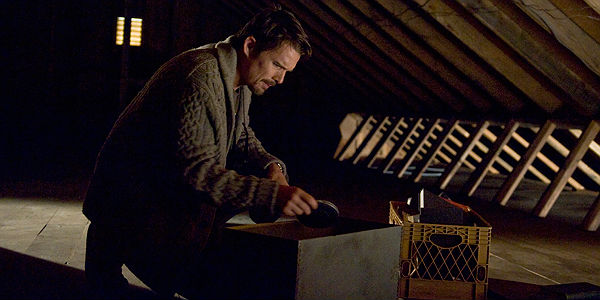
The weirdness really begins when Ellison finds a box filled with several reels of Super 8 films and a projector in his attic. The films feature several brutal murders of different families in different years including the family killed in his new home. Ellison begins investigating the murders, connecting them In hopes of making a big discovery that would make his book I sure-fire hit. Of course it wouldn’t be a horror movie if everything went as planned. Ellison begins seeing visions, hearing bumps, and grows increasingly unnerved by his findings. But if the current trend in modern horror movies has shown us anything, it’s that you can never assume that things are as they seem.

“Sinister” plays in the sandbox of both psychological and supernatural horror. Even though the trailer gives away too much, there are moments where you wonder if Ellison’s mind is playing tricks on him or if he has unleashed an incredible force of evil. The movie establishes and then keeps the tension amped up as its mystery unfolds. It deals with some tough subject matter and throws some pretty haunting imagery at the audience. Speaking of the imagery, some of the films creepier moments are when Ellison is sitting alone in his home office watching these old films. The darkness, the steady sound of the projector, and the grisly images he’s seeing create a delightfully eerie atmosphere. But this also opens the movie up to some of it’s more conventional approaches.

You can’t help but notice some all-to-familiar devices that “Sinister” milks dry. There are plenty of cheap scares via sudden bursts of loud noises or music. We get the bumps in the attic, the slow walks down long, dark halls, and the very in-fashion creepy kids scenes. In fact, while watching this movie I could’ve kept a checklist of all the things horror fans have seen before. Creepy house with a haunted past? Check! A sometimes head-scratchingly dumb main character? Check! Slamming doors, power outages, a well-timed storm? Check!

But here’s the good news. Despite the well-worn formulas and clichés, “Sinister” still manages to be an entertaining and eventually disturbing horror picture. A large part of it’s success is due to Ethan Hawke’s strong performance and compelling character (despite his sometimes bonehead decisions). I bought into the conflict between his love for his family and his desire to write another bestseller as well as the repercussions that his clouded judgment brings on them all. But more importantly “Sinister” works because there is a genuine sense of unease to everything you’re seeing. And while it does require the audience to wait a while for things to unfold, the ending is frighteningly satisfying.

As I mentioned earlier, “Sinister” doesn’t break any new ground in the horror genre. It depends on several of the same techniques that we’ve seen over and over. But there is some meat to its story and as you get deeper into the film the tension gets higher all the way to the finale which is perfectly fitting for a good horror picture. “Sinister” won’t make anyone’s horror top 10 list. But it maintains its moodiness and delivers in the end. That’s more than I can say about some of Hollywood’s more recent horror efforts.

REVIEW: “The Third Man”

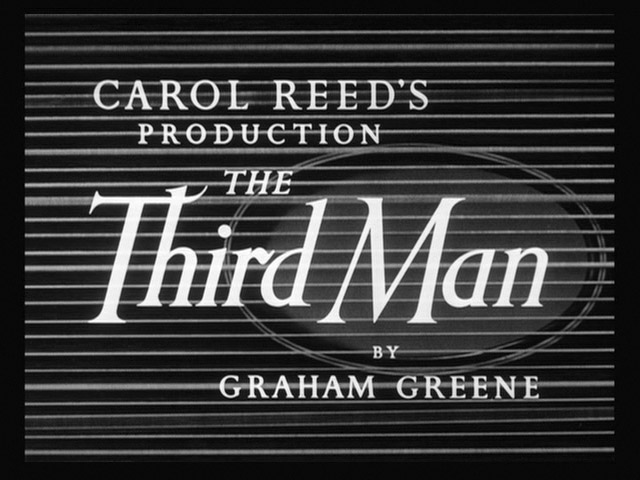
“The Third Man” is a stunning British film noir from 1949 directed by Carol Reed and starring Joseph Cotten. It’s a film featuring a tight Hitchcockian story and some extremely clever uses of cameras and lighting. Novelist Graham Greene wrote the screenplay that takes place in a battered post-World War 2 Vienna. The city has been broken up into sectors, each owned by different countries. This plays a big part in Greene’s story. Throughout the film we see shells of buildings, burnt out cars and piles a debris left from the war and it creates one of the most believable atmospheres. This is in large part due to the incredible cinematography from Richard Krasker but more on that later.

This is the Vienna that novelist Holly Martins (Joseph Cotten) enters into. He arrives there at the request of his friend Harry Lime who has offered him a job. But he finds out that Harry had just been killed after being struck by a car. Curious about the circumstances surrounding his death, Martins begins to suspect that Harry was murdered. Along the way he runs into several characters including a cryptic British military policeman (Trevor Howard), Harry’s girlfriend (Anna Schmidt), a couple of Harry’s suspicious “friends” (Ernst Deutsch & Siegfried Breuer), Harry’s doctor (Erich Ponto), and an eyewitness to Harry’s death (Paul Horbiger). Martins sets out to piece together the tidbits of information he gets from each of these people and soon finds out that the truth may be a hard thing to handle.

The story moves at a perfect pace while nicely delivering all the elements you would expect from a high quality mystery and film noir. Cotten is fabulous as always and the supporting cast does a marvelous job of creating the shady and hard-to-read characters that give a movie like this such energy. It’s also necessary to mention that Orson Welles has a small but pivotal part in the movie and, just as you would expect, he is superb. The story never hits a lull nor does it ever overplay it’s hand. It’s intelligent and well constructed and I was consumed by both the narrative and the environment in took place in.

Getting back to Krasker’s cinematography, it’s impossible to watch this picture and not be struck by it. His work was ahead of its time and serves as an object lesson on creative camera angles and the use of lighting. The film was shot almost entirely in Vienna. Krasker goes to great lengths to capture the historical beauty of the city although it’s often shrouded in the darkness of night. But his impeccable use of lighting and shadows draws out the attraction of the statues, architecture, and cobblestone streets as well as the devastation left by the war. Also, you can’t talk about the presentation without mentioning the lovely score by Anton Karas. It features some great tunes none better that the beloved “Third Man Theme”.

I love “The Third Man”. Everything from its production value to the performances to the mesmerizing story works for me. This is great example of classic film noir and it had me hooked from the opening moments until that perfect final shot. This is a film that may have slid under some people’s classic movie radar. But this film excels in both visual presentation and intelligent storytelling. “The Third Man” is a real gem and it’s a movie that simply must be seen.

VERDICT – 5 STARS

5 STARSs

5STAR K&M

REVIEW: “Argo”

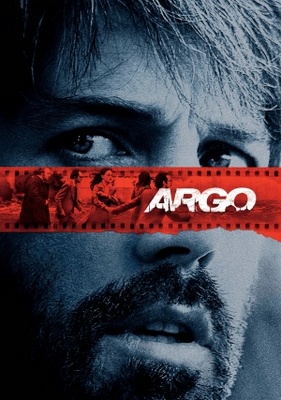
And you thought movies were for entertainment only! “Argo” is the third feature film directed by Ben Affleck. It’s also his best work to date. “Argo” takes place during the 1979 Iran hostage crisis and is loosely based on CIA exfiltration specialist Tony Mendez’s bizarre but daring rescue attempt of six US diplomats. For the most part Affleck steers clear of politics instead choosing to focus more on the intensity of the events. This results in a well conceived and focused story that sizzles from the opening scene to the end credits.

The film opens up with what’s arguably the best 20 minutes in cinema so far this year. Affleck instantly sets the stakes high by showing the immediate causes of the unrest in Tehran through a brief but effective opening montage. In 1979 Iran was in chaos after the people had overthrown their unpopular Shah and replaced him with an Islamic Republic. Anti-American sentiment boiled over after the United States granted asylum to the deposed leader. Led by Islamic militants, a mass of people break into the US Embassy and begin taking hostages. Six diplomats manage to escape and find refuge at the home of the Canadian ambassador. The protesting and subsequent storming of the US Embassy is packed with tension and it’s brilliantly visualized through a mix of old news footage and clever camera work. And I’m not just speaking of the hostile crowd outside of the gates. We see diplomats inside, fully expecting a breach, frantically gathering sensitive documents to incinerate and shred. We see last-minute contacts being made which sends Washington scurrying. All of this is realized as truly riveting, edge-of-your-seat cinema.

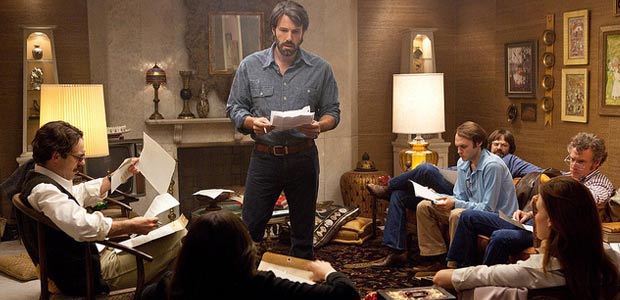
As mentioned, six American diplomats manage to escape and hide in the home of Canadian ambassador (Victor Garber). Knowing the militants will soon realize that six Americans are unaccounted for, the State Department brings in Tony Mendez (played by Affleck) to come up with a plan to get them out. He convinces his superiors to allow him to enter Tehran, meet up with the hidden diplomats, and leave the country with them posing as a Canadian film crew scouting out a location for a sci-fi movie. Knowing how thorough the militants will investigate the ruse if suspicious, Mendez is sent to movie make-up artist John Chambers (John Goodman) and Lester Siegel (Alan Arkin), a semi-successful Hollywood film producer. Together they put all the pieces in place for their fake movie including a title (“Argo”), a script, a production company, and even a movie poster, all intended to give credibility to Mendez’s cover.

The film then follows the planning of the mission, the anxiety of the diplomats in hiding, and the ever-present uncertainty in Washington from those who don’t fully buy into Mendez’s plan. All of this is told by the able hands of Affleck who has certainly established himself as a skilled storyteller. His style fits perfectly with Chris Terrio’s sharp and layered screenplay. Terrio crafts a potent dramatization by adding just enough to the real events to give the narrative a real dramatic pop. A couple of fictional characters are thrown in and there are moments that are purely for dramatic effect. But that’s what cinema does and I can’t imagine this story playing out any better than it does here. It also has the sharp sting of relevance. I couldn’t help but think of the recent Benghazi embassy attack During the film’s opening sequence.

You also can’t help but be impressed by the movie’s impeccable attention to detail in creating a believable late 70s and early 80s atmosphere and vibe. The movie opens with the old late 70s Warner Bros. logo which perfectly set the table for me. Then there are the obvious things – the cars, the clothes, the hairstyles, the technology. But Affleck also employs several clever devices such as original news footage featuring the likes of Tom Brokaw, Dan Rather, and Ted Koppel. We see archived footage of President Jimmy Carter as well as authentic newscasts of the turmoil in Iran at the time. It blends in perfectly with the fictional additions to give a true credence to everything we see on-screen.

“Argo” is a rock-solid movie that does all of these things well, and I haven’t even gone into the fantastic performances. Some have said otherwise, but I found Affleck to be a compelling lead. Then you have the incredible supporting work of Bryan Cranston, Kyle Chandler, Titus Welliver, and Michael Parks. And of course Goodman and Arkin are a blast. The performances are just another strength and this gripping and well-made film. It grabs you and holds you right through to its nail-biting finale. And be sure to stay through the credits for some great images of the real people involved in this amazing rescue attempt. It’s just icing on the cake of one of the better films of 2012.

VERDICT – 4.5 STARS

4-5-stars