“JOHN CARTER” – 4 STARS

After seeing the mixed reviews for Disney’s $250 million “John Carter”, I wasn’t sure what to expect. It’s the kind of movie that you automatically expect to receive some unfavorable reviews. It’s a large-scaled science fiction epic and they simply don’t appeal to a certain group of people. I’m a pretty big sci-fi fan but even I had concerns going in to “John Carter”. Being someone completely unfamiliar with the source material, could the movie pull me into its enormous, sprawling world? Could Taylor Kitsch headline such a huge, ambitious project? Let me just say I was thoroughly drawn in right from the start of the film and Kitsch, while certainly not profound, does enough to get the job done.

“John Carter” is based on of the Edgar Rice Burroughs novel “A Princess of Mars”, the first book of the 11-volume “Barsoom” series. The movie starts with Edgar Burroughs (Daryl Sabara) arriving in Richmond, Virginia after inheriting the estate of his recently deceased uncle, John Carter (Kitsch). Edgar hasn’t seen his uncle in years but he’s always cherished the wonderful stories he used to tell. Edgar is given a private journal that John Carter said was to only be read by his nephew. It’s through Edgar’s reading of the journal that we’re whisked away on the interplanetary journey that makes up the majority of the story.
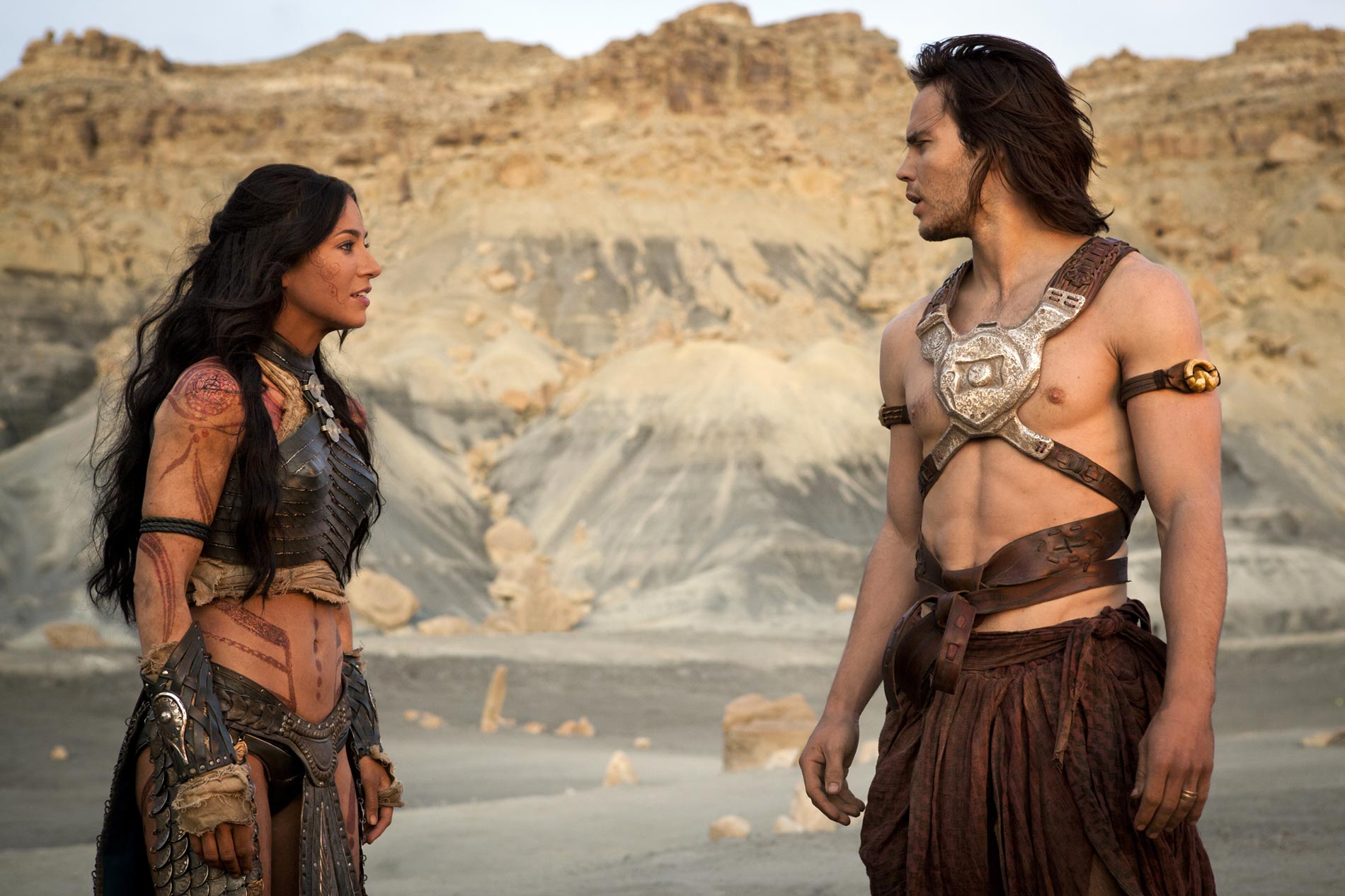
In the journal John Carter writes of his time prospecting for gold in the Arizona Territory after the Civil War. He’s taken into custody by a U.S. Calvary officer (Bryan Cranston) who wants to recruit him to join their fight against the Apache. Carter finds himself caught in the middle of a shootout between the Calvary and the Apache. He takes shelter in a cave where he finds not only gold but a mysterious medallion that ends up transporting him to what he later finds out to be Mars. He quickly finds that the planet is inhabited by a race of four-armed aliens called Tharks. Their leader, Tars Tarkas (Willem DaFoe) takes a liking to him and is especially intrigued by Carter’s newfound gravity-manipulating leaping abilities. We also learn that two humanoid cities, Helium and Zodanga, are at war with each other. At the center of the conflict is the beautiful Princess Dejah (Lynn Collins). Her father and Helium leader (Ciaran Hinds) is pressured into giving his daughter in marriage to an evil Zodanga general (Dominic West) in hopes that it will bring peace between the two groups. Dejah wants no part of it and of course John Carter finds himself right in the middle of it.

The movie puts together a solid supporting cast of quality actors. In addition to DaFoe, Hinds, West, and Cranston we also get Mark Strong  as the leader of the god-like Holy Therns, a sinister group of shape-shifting eternals who have been manipulating historical events on several planets. Strong is good here and he adds yet another solid “bad guy” performance to his resume. Thomas Haden Church has a lot of fun playing an evil Thark who desperately wants to overthrow Tarkas and gain power over the Alien tribe. But the main focus is on Taylor Kitsch. The first thing you notice is that he has all the physical attributes needed to play John Carter. He’s quite believable and he certainly knows how to handle a sword. The one thing I noticed is that he didn’t have a very wide range of emotions. The character is intended to be cold and reserved. But there are scenes that call for more emotion and Kitsch doesn’t add much to them. He’s not bad, but he doesn’t have a lot of charisma. I did buy into the chemistry between him and the lovely Lynn Collins. While her character is given a few pretty cheesy lines, she’s still pretty good and she shares some really fun scenes with Kitsch.

While Kitsch may not necessarily stand out, the special effects certainly do. “John Carter’s” assortment of creatures look impressive and its alien technologies are a cool cross between futuristic and archaic. I was blown away by the detailed structure of the solar-powered air ships. I also really liked the CGI design of the Thark creatures. Director and co-writer Andrew Stanton, better known for his work at Pixar Animation, creates a planet that’s full of life yet that looks barren and on the verge of death. And while the landscapes do look fitting, they resemble an Arizona desert far more than what you would expect Mars, The Red Planet, to look like.

Stanton’s Mars is also a place of a strained but structured social order. There are a lot of politics at work between the two humanoid cities and we even get a bit of rather corny social commentary along the way. Mars also has its system of theology that ends up helping Carter and Dejah along the way but I would be lying if I said I understood exactly how. But together, the politics and theology of the planet do make it more than just a wasteland full of monsters and little green men. It makes it’s inhabitation feel more structured and complex and I actually bought into it (with a slight bit of suspension of disbelief).
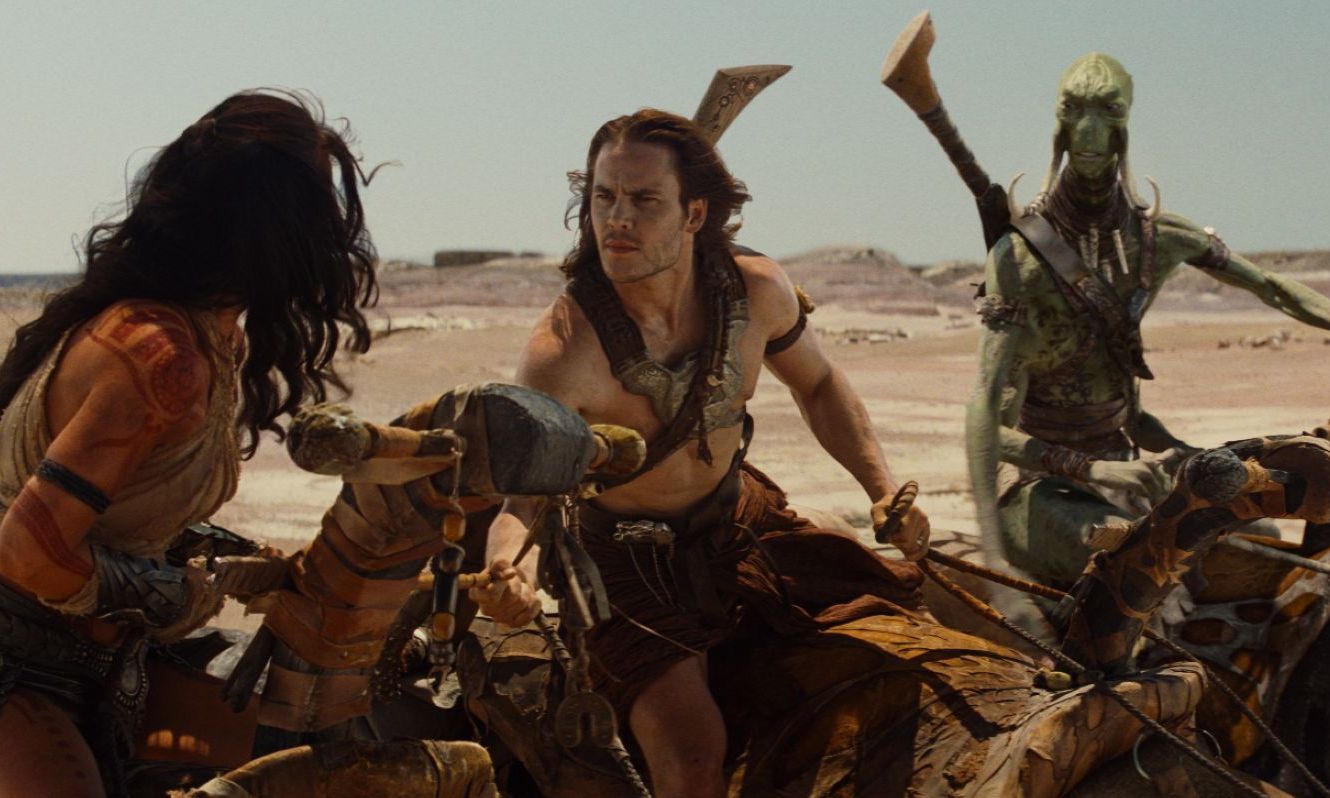
“John Carter” is the first big blockbuster of 2011 and it’s already been viewed as a “flop”. It’s mediocre opening weekend at the box office did little to cover the film’s $250 million price tag. But I have to say that I had a lot of fun with the film. I enjoy good science fiction and I feel this qualifies. “John Carter” isn’t without its faults but it overcomes them by creating a huge new world that I had never experienced. I’ve never read Wright’s books but I think I could, and I certainly wouldn’t mind seeing “John Carter” become the full trilogy it was intended to be. I’m certainly not calling this the best movie of the year. But I’m also not calling it the terrible movie that some are. For me it was a creative and entertaining motion picture experience – the type of thing that makes the movies fun.
REVIEW: “The Last of the Mohicans”

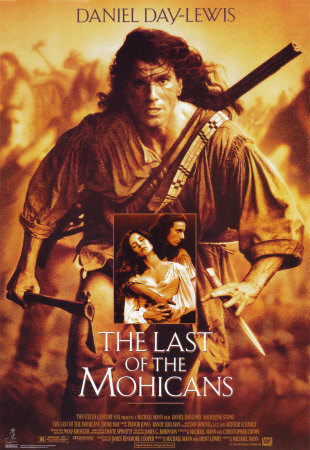
James Fenimore Cooper’s novel “The Last of the Mohicans” was first adapted for the big screen in 1912. Other versions of the story appeared at theaters in 1936 and 1963. But then in 1992 Michael Mann delivered not only the best version of the classic story but also one of the most well-crafted and cinematic period piece films you’ll find. Mann gives us a gritty frontier action picture placed in a beautiful yet worn-torn setting. But an equally strong component of the film is the passionate love story interwoven throughout the picture. It’s a romance that never feels tacked on or disingenuous. In fact, it fuels much of what drives the narrative all the way to its powerful final 10 minutes.

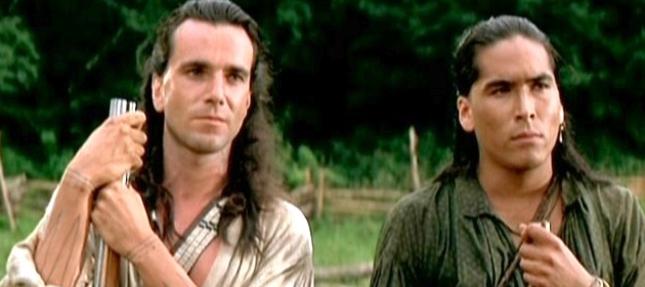
The film stars Daniel Day-Lewis as Nathaniel Hawkeye, adopted white son of Chingachgook (Russell Means). Joined by Uncas (Eric Schweig), Chingachgook’s only blood son, the three find themselves involved in The French and Indian War that they are desperately trying to avoid. After tracking a Huron war party the three rescue Cora (Madeleine Stowe) and Alice (Joghi May) Munro, daughters of a British Colonel stationed at Fort William Henry. Realizing more Hurons will be coming, they agree to lead the daughters and Major Duncan Heyward (Steven Waddington) to the fort. From there relationships develop, jealousy and deception is revealed, and the horrors of a new kind of war take center stage.

The casting is proven good by some truly wonderful performances throughout the movie. Lewis is fantastic as Nathaniel and his onscreen chemistry with Stowe is quite good. Their romance feels genuine even though it feels a little hurried. Lewis is also good in the action sequences as is Schweig and Means. The action is beautifully shot and choreographed and the three actors have absolutely no trouble selling it. Also fun to watch is the great Wes Studi as Magua, a twisted Huron warrior who wants to kill as many “grey hairs” as possible. Everyone is good in the film and even the smaller performances ting with authenticity.

This film version isn’t ardently faithful to Cooper’s novel but in many ways it’s an improvement on it. Mann and co-writer Christopher Crowe put together an energetic and fast-paced adaptation. It ruggedly portrays the demanding and taxing frontier life and sharply contrasts that with the aristocratic, prim and proper attitudes of the English and French. It’s that monarchist arrogance and sense of entitlement that meets the sharp and violent reality of the frontier. It also doesn’t shy away from giving the action a gritty and sometimes bloody presentation. But with the exception of one particular scene, the violence never feels gratuitous. Instead it feels like an accurate representation of what that crude and sometimes brutal combat would be like.

I also have to mention how wonderful the movie looks. I mentioned how beautifully shot the action sequences are but the same could be said for the entire picture. Filmed in North Carolina’s Blue Ridge Mountains, the movie features so many scenes of natural beauty that it’s impossible not to be drawn in. The gorgeous locations mixed with Dante Spinotti’s stunning cinematography gives the setting an uncharted and untouched look. And it’s impossible not to be impressed by his clever camera angles and perfectly executed long shots that give so many scenes an undeniable cinematic flare.

And speaking of presentation, I have to mention the incredible score by Trevor Jones and Randy Edelman. Of all of the movie scores I have heard, and there are plenty of great ones out there, none has added as much to a film or effected me more that Jones’ and Edelman’s work here. From the percussion-driven music during the battle at Fort William Henry to the emotional period string arrangement playing during the finale, every note hits perfectly. But most importantly, the score adds to the mood and tone of almost every scene.

Michael Mann’s “The Last of the Mohicans” is an example of wonderful filmmaking from title to credits. Some may not respond as strongly to its straightforward storytelling or its occasionally intense violence. But I love it’s fast and fluid pacing, realistic frontier depiction, and heartfelt romance. The performances are great throughout led by more strong work Daniel Day-Lewis. It’s also a technical achievement featuring stunning visuals, remarkable sound, and a soundtrack that still moves me to this day. This is a unique historical period film that has a feel all its own. It won me over when I first saw it in the theater in 1992 and it’s one of the few movies that I can watch again today anytime or anywhere.

VERDICT – 5 STARS

5 STARSs

5STAR K&M

REVIEW: “The Boy in the Striped Pajamas”

PJsPOSTER

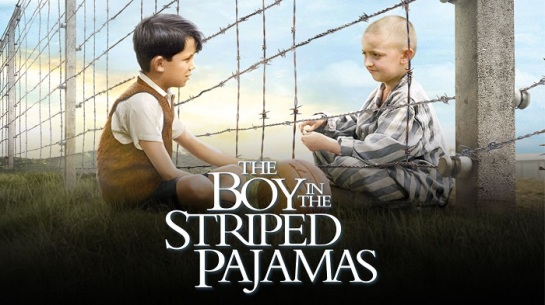
Obviously there have been several powerful films that have dealt directly with the Holocaust. “The Boy in the Striped Pajamas” is a unique look at this murderous and genocidal scar on world history. It’s based on John Boyne’s 2006 novel of the same name and looks at the subject through the eyes of an 8-year-old boy. It’s a tender but crushing tale of the loss of innocence as we watch this young boy discover the truth about the world around him. Some critics have said it exploits or trivializes the Holocaust with others going as far as to call it offensive. I found it to be a careful yet devastating drama that ultimately succeeds in the end.

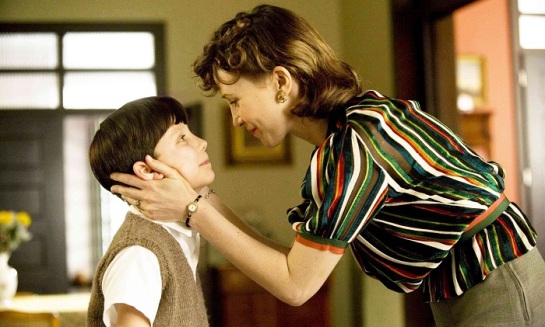
Asa Butterfield, better known for his more recent starring role in “Hugo”, plays Bruno. His father Ralf (David Thewlis) is a Nazi SS officer who gets a new assignment requiring him to move with his family from Berlin to the countryside. Bruno’s mother Elsa (Vera Farmiga) supports her husband’s decision. But Bruno finds himself alone and missing his friends back in Berlin. His loneliness and boredom spurs his curiosity and he begins noticing several interesting things about his new location. One is a mysterious “farm” in the distance that he sees from his bedroom window but is forbidden to visit or ask about. He’s also intrigued by a house servant who he notices is wearing what looks like striped pajamas. Of course we know the servant is Jewish and a captive, but through young Bruno’s eyes things are more confusing.

PJ1

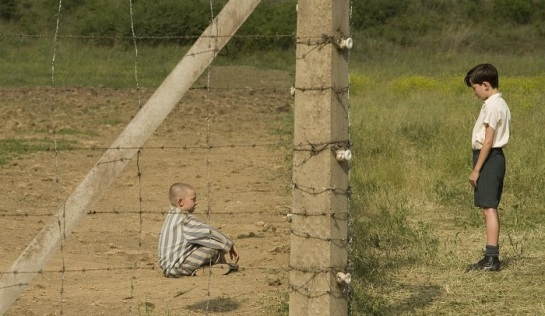
One of the most engaging things about the movie is that writer and director Mark Herman is able to keep us inside of Bruno’s head even though we know exactly what’s going on outside of his knowledge. I found the film to be very effective at conveying the feeling of discovery as Bruno learns more. Perhaps his biggest lessons come not from his twice-a-week tutor who bombards him with all sorts of Nazi propaganda and revisionist history, but from a young Jewish boy. Bruno encounters the boy after sneaking away from his house and stumbling across the “farm”. Of course it’s actually a Nazi execution camp and the boy, named Shmuel (Jack Scanlon), sits on the other side of an electrified fence. The two quickly develop a friendship. It is Shmuel who begins to shed light on what this “farm” really is and causes Bruno to question both his father and his cause.

The movie never loses sight of the fact that Bruno is only 8-years-old. He struggles with what he’s seeing and his attempts to reconcile certain things with his desire to see his father as a good man is heartbreaking. Even when his mother finds out why they’ve moved to the country and furiously confronts Ralf, we still witness these things through Bruno’s child-like reasoning. But there is an emotional balance. While we spend most of our time with Bruno, we know of the atrocities that are taking place almost entirely off-screen. Yet these atrocities are relayed to us very well in often subtle ways.

PJ2

The performances throughout the film are fantastic. Farmiga is one Hollywood’s better actresses and she shows that here. I also appreciated Thewlis’ portrayal of a man who often times puts his role of father in complete subjection to his duties as a Nazi soldier. But it’s young Butterfield who gets the vast majority of the screen time and he is quite good. He draws a lot of sympathy and emotion  and it’s always great to see a young actor able to pull that off. I also enjoyed his scenes with young Scanlon. While Butterfield is better in their scenes, they both handle the material nicely.

I can see where “The Boy in the Striped Pajamas” may put off some people. It’s hard to watch especially as everything comes to a head at the end of the film. In fact, it’s a movie I’m in no rush to see again. That isn’t due to any major shortcomings with the picture. It’s due to the film’s intense emotional punch that stuck with me for several days. I was incredibly moved and while there are some legitimate questions that could be asked about the story, the movie’s main point resonated with me. “The Boy in the Striped Pajamas” asks several powerful questions about war, family, and morality. It also gives us a glimpse into a part of our world’s history that is still hard to look at but should be reckoned with.

VERDICT – 4 STARS

4-stars

“THE VERDICT” – 4 1/2 STARS

I really enjoy courtroom dramas and “The Verdict” is a good one. It’s directed by Sidney Lumet and stars Paul Newman in one of his finest performances. David Mamet adapted the Barry Reed novel of the same name. The film received high praise from critics and Newman, Lumet, and Mamet each received Oscar nominations. It’s unique compared to other courtroom pictures in that the main case isn’t a huge unfolding mystery. In fact the case at the center of the film is pretty cut and dry. It’s the organizing of their defense, the fighting through the legal process, and the presentation of the case that fuels the narrative.

But “The Verdict” is also the tale of redemption. Underneath the courtroom drama is the story of a man who has watched his life crumble and but now sees a chance to get his life in order. Paul Newman plays Frank Galvin, a boozing Boston lawyer who has found himself resorting to ambulance chasing in order to pick up clients. In fact, he’s only had four cases in three years and lost them all. Just like his practice, his personal life is in shambles and he finds his only destructive solace at the bottom of a bottle. Newman nails this character and his Oscar nomination for the role was well deserved. It’s a nuanced performance that shows Frank as more than just a down-on-his-luck alcoholic. Newman expertly conveys the inner conflict within Frank and it’s that internal, personal struggle that drives one of the picture’s most compelling components.

Frank’s luck appears to change when an old friend and former partner Mickey (Jack Warden) hooks him up with a medical malpractice case that should be a slam dunk. But what kind of movie would this be if everything was all sunshine and flowers? Frank decides to take the case to trial and turns down a substantial settlement which baffles everyone including his clients. He then finds himself up against a biased judge and a prominent law firm led by Ed Concannon (played wonderfully by James Mason). It’s a legal David and Goliath story with Frank running into one complication after another. Add to it his personal and emotional fragility and you have the ingredients for a top-notch story.

David Mamet’s screenplay is intelligent and razor-sharp. The dialogue is well written and the pacing is methodical. While Mamet’s story intentionally moves deliberately, it does seem to spin its wheels a little during the middle of the film. And some people may argue that the movie isn’t the most detailed and cohesive courtroom drama. But Mamet doesn’t use the courtroom as his main focus. It’s a vehicle that allows this tired and broken man to try for redemption by doing the right thing. Lumet’s direction is fantastic and his ability to capture emotion and intensity through silence is impressive. He also gives the movie a gritty edge and authenticity that perfectly fits.

While Lumet and Mamet’s work is solid and there is a wonderful supporting cast, everything comes back to Paul Newman. Almost always seen on-screen as the handsome and vibrant performer, here he looks old, worn-down, and defeated. He perfectly captures this character and we never doubt him for a second. There’s no hard-to-believe miracle transformation. Instead we see someone taking one step at a time trying to dig himself out of the hole he made. Newman sells all of this with a down-to-earth genuineness that is easy to buy into. “The Verdict” may not be the most highly polished courtroom movie but it certainly holds its own. It’s an emotionally charged drama with a redemptive subtext that worked for me on so many levels. And how can you not love watching Newman dominate the screen in what is arguably his greatest performance.

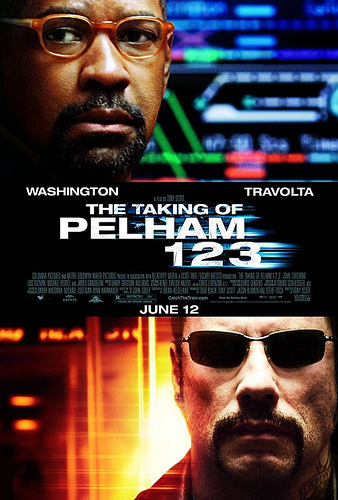
REVIEW: “The Taking of Pelham 123” (2009)

I bet these guys didn’t expect their day to go like this? That seems to be a reoccurring question in Tony Scott’s “The Taking of Pelham 123”, a stylish but sometimes preposterous remake of the 1974 film. At its core this is a pretty formulaic, run-of-the-mill action thriller that takes no chances but also never wastes a moment. It moves at a quick and fluid pace which makes overlooking it’s shortcomings a little easier but not impossible.

“The Taking of Pelham 123” has all the bells and whistles of a Tony Scott production. The quick camera jerks, clever angles, and showy pyrotechnics work well to create an intense environment. In fact often times his camera adds more tension than the screenplay can muster. Scott has a recognizable style and can sometimes be called self-indulgent. He flirts with that label here but as a whole his high-tech machinations work just fine. It often times overcomes the story which is pretty basic material.

The movie starts with four heavily armed men walking into a New York subway station and taking control the Pelham 123 train. The film won’t do anything to enhance your view of post-911 security. There’s no elaborate well executed plan at work. The hijackers simply walk in and take the passenger-filled train. The leader is a man we come to know as “Ryder” played by John Travolta. Sporting a crew cut and fake neck tattoo, Travolta is clearly having fun with the role even though he goes a little over the top sometimes. “Ryder” soon contacts the Subway Control Center and connects with dispatcher Walter Garber (Denzel Washington), a middle-aged husband and father of two who ends up completely out of his element. Washington has played some rough and tough roles but he also has a wonderful knack for playing these “everyday man” characters. Here he’s subtle yet expressive and I loved watching how he handles the role. John Turturro is good as a head hostage negotiator and James Gandolfini is fine as the mayor even though his character is pretty poorly written.

Pelham

While the story is fast paced and it does have its moments of tension, sometimes it’s just plain silly. For example we get a key scene involving an accidental sniper rifle discharge due to a rat bite and there’s a head-scratching sequence involving the cops transporting ransom money through the city. It’s beautifully filmed but utterly ridiculous. The story is also fairly conventionally and predictable. But the movie is also let down by a really flat and lifeless ending. It seems hurried and it packs absolutely no punch whatsoever.

In spite of the movie’s flaws, Tony Scott manages to pack some entertainment into this linear, straightforward action thriller. Washington and Travolta’s CB radio chemistry is compelling even if they aren’t saying much and Scott’s cinematic style gives the story energy and drives the tension in the scenes that do work. But the sub par material is too much to overcome. I especially hate to see such a strong Denzel performance go to waste but in reality there just isn’t enough here to make this anything more than an average movie.

VERDICT 2.5 STARS

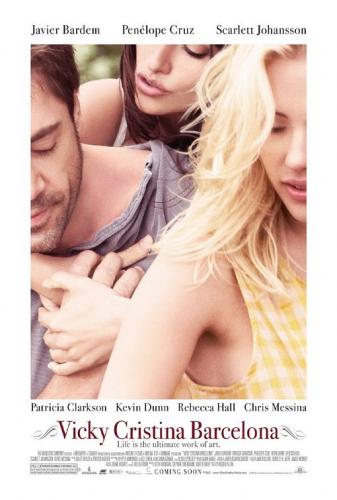
REVIEW: “Vicky Cristina Barcelona”

Many critics touted “Vicky Cristina Barcelona” as Woody Allen’s return to quality filmmaking after a few clear misses. I have to say I was with them, at least for the first half of the film. But that’s when Allen’s story started to undo everything I had bought into. His sharp locational eye beautifully captures the Spanish architecture and countryside and his good-looking characters lay the groundwork for a promising story. But the movie is never as funny or as clever as it tries to be and it ultimately falls apart in its nonsensical third act.

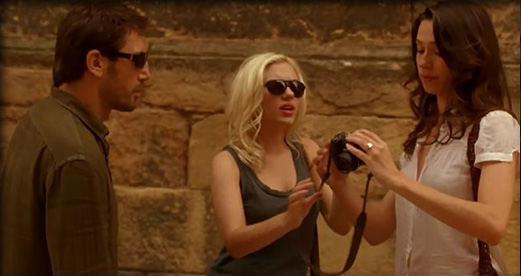
“Vicky Cristina Barcelona” is a romantic comedy that takes a rather cynical look at romance. Vicky (Rebecca Hall) and her friend Cristina (Scarlett Johansson) are spending the summer in Barcelona. Vicky holds what you might call a more traditional look at relationships. She is grounded, sure of what she wants, and engaged to a preppy young business man back home. Cristina is somewhat of a free spirit, prone to dive into love and life headfirst regardless of the consequences. One of the more compelling things about the friends is that they are so opposite at first. Hall and Johansson have some great moments together bouncing their own perspectives and idiosyncrasies off each other. They start off as genuinely interesting and believable best friends.

VICKY 1

Their summer takes an interesting turn when they meet Juan Antonio Gonzalo (Javier Bardem), a struggling artist who invites the girls to spend the weekend with him in the city of Oviedo. Vicky is against the idea but Cristina sees it as intriguing. The stronger spirit wins out and the three take off. Over the weekend the relationships between the three grow more complex. But things go from complex to nutty when Juan Antonio’s neurotic ex-wife María Elena (Penelope Cruz) enters the picture. All four of the main stars are fantastic. Cruz, who won the Best Supporting Actress for the role, gives the movie some energy just as it was starting to lag. But even she is undermined by Allen’s off-the-wall final act which seems to make everything earlier feel disingenuous.

VICKY 2

For me the biggest casualty of Allen’s uneven story is the unique difference between Vicky and Cristina. By the end of the film I didn’t feel that were that unique at all. Even when Cristina becomes involved in an absurd love triangle, the Vicky character, who I thought was more grounded and level-headed, responds in a way that seemed inconsistent with who she has been. Some may attribute that to an evolution of her character but I think the movie goes on to show that she isn’t as deep of a character as she appears to be at first. I also didn’t find the film nearly as funny as others. Sure it has a few dry quirky moments, but it’s real attempt at humor falls flat particularly in the second half of the film. This truly is a tale of two movies in one.

Some have felt the movie promotes the pursuit of love and happiness and the idea that romance may be fleeting but it’s worth the effort. I feel it looks at love through a very pessimistic and sometimes skewed lens. There’s no denying that “Vicky Cristina Barcelona” is a beautiful movie. The gorgeous Barcelona sights and sounds and the attention to the culture creates the perfect environment for what could have been. For me “Vicky Cristina Barcelona” wasn’t the summer to remember. Although it might have been if the second half of the film was as good as the first.

VERDICT – 2 STARS