REVIEW: “The Lego Movie”

LEGO POSTER

Let me start off by saying Everything is Awesome! My wife and kids are awesome. My mom’s spaghetti and meatballs are awesome. Paris, France is awesome. A ballpark hotdog is awesome. And guess what else, “The Lego Movie” is pretty awesome! Yes even a picky old fogey like me, who finds it hard to find a satisfying animated picture, loved this crazy film based on (of all things) toy building blocks. Who says you can’t make a great movie out of almost anything?

“The Lego Movie” comes from the multifarious minds of Phil Lord and Chris Miller. A Lego movie in some form has been in the works at Warner Brothers since 2008. In 2011 Lord and Miller were brought on board to both write and direct the project. The two had previously worked on the brain-dead “21 Jump Street” and the fairly fun “Cloudy with a Chance of Meatballs”. But “The Lego Movie” reveals a sharp and clever wit that stays consistent throughout the entire film. So many animated movies start promising but loses their focus in a deluge of schizophrenic slapstick or dumbed down humor (I’m looking at you “Wreck-It Ralph”). That’s never the case with this film. It occasional gets close but ultimately the same charm and humor runs consistently through the movie.

LEGO1

The story centers around a very average construction worker named Emmet Brickowski (voiced wonderfully by Chris Pratt). He is an ordinary by-the-book guy who has no interesting or unique qualities at all. He lives in a Lego city named Bricksburg where everyone follows the same routine, everyone watches the same TV show (think Benny Hill), and everyone sings what must be the national anthem “Everything is Awesome”. Emmet is a lonely fellow but he is too busy following the instructions on how to live to even notice.

But one afternoon by sheer chance he stumbles upon a mysterious object called the Piece of Resistance and an even more mysterious woman named WyldStyle (Elizabeth Banks). Eventually he learns that the Piece is the key to stopping the dastardly Lord Business (Will Ferrell) who is actually a wealthy businessman and tyrannical President of Bricksburg. His ultimate goal – world domination by squashing the independent creativity of the people and maintaining the world in his image alone (oh yes, the evil capitalist corporation jab). Emmet discovers that he may be the fulfillment of a prophecy which states that one known as the “Special” would use the Piece to thwart Business’ plans. In other words, Emmet’s undistinguished life could be changed forever.

Emmet’s adventure takes him to a number of far away lands. It also introduces him to an number of different people voiced by a host of Hollywood names. There is a policeman with Multiple Personality Disorder (Liam Neeson). There is a blind wizard who first tells of the prophecy (Morgan Freeman). There is the one and only Batman who also happens to be a Master Builder (Will Arnett). There is such a fun assortment of other characters voiced by the likes of Alison Brie, Nick Offerman, Shaquille O’neal, Channing Tatum, Jonah Hill, Charlie Day, Will Forte, Cobie Smulders, etc. etc. etc.

LEGO2

But what separates this from the usual, run-of-the-mill animated feature? I get back to the goofy yet sharp wit of the script and the consistency it maintains from start to finish. I also think it does a marvelous job of straddling the line of comedy aimed at adults and comedy aimed at children. I laughed just as much as my two kids. In fact, we watched it in a packed theater where the boisterous laughs of children were rivaled by the laughs of their parents. That’s not an easy feat for a filmmaker to accomplish. And then there is the entire look of the film. Everything is Lego from the opening and closing credits to the vast colorful landscapes. The motions make you think Lego and even the action sequences stay within the crazy building block bounds. I loved the visual flare.

There are a few things in “The Lego Movie” that I could nitpick, but honestly those minor gripes did nothing to dampen my overall experience. For me this was a rare animated treat but more than that it was a rare modern comedy that actually delivered the goods. Great voice acting, sharp writing, and a wonderful story all the way down to its core. With the bazillions of dollars this movie is making, a sequel is all but guaranteed. I only hope it’s as funny and infectious as this first one because this is a hard act to follow.

4.5 2

REVIEW: “Philomena”

PHILOMENA POSTER

When making a movie based on an emotionally-charged true story there are certain obstacles and temptations that filmmakers must avoid. Time after time we’ve seen movies succumb to dizzying melodrama and cheap emotional tugs. Actors and actresses sometimes go big which can drown out the true heart of their characters. But some films get it right. They balance grounded emotion with smart and crisp storytelling. For the most part “Philomena” is one of the films that gets it right.

“Philomena” tells the touching true story of Philomena Lee and her search to find her son after 50 years of separation. The unquenchable Judi Dench plays this mother who is haunted by thoughts and visions of her long-lost son which drives her to find him. Her daughter introduces her to a journalist named Martin Sixsmith (Steve Coogan) in hopes that he will investigate and tell her remarkable but heartbreaking story. But he’s not without baggage. He was recently unfairly fired from a government position and his journalism career is floundering. He thinks a human interest story is beneath him but he takes it and hoping of getting back on track.

PHILO-01

We learn Philomena’s story along with Martin. Through flashbacks we see that a young Philomena was left at a convent in Ireland by her father after she becomes pregnant. Later on the sisters force her to work seven days a week in a hot laundry room as some sort of twisted act of penance. They allow her and other mothers to see their children once a day but then, without the mother’s consent, they give the children up for adoption. This is what happened to her son. Philomena and Martin’s search begins at the convent and eventually takes them to the United States.

While this is a story of a mother searching for son, it’s also about two very different individuals who form an unlikely friendship. Along the way they have many fascinating conversations that pull the curtain back and reveal more about them. For example Martin is sour and cynical while Philomena is gentle and optimistic. There are also reoccurring discussions on faith. Martin sees faith and the belief in God as pointless. Philomena finds strength in her faith and it permeates every part of her being. Their discussions never fall into sermonizing. They feel natural and believable.

Steve Coogan is mostly known for his comedic work but this is unquestionably a serious role. There is some good humor in the film which works really well, but most of it comes at Philomena’s expense. Coogan mostly plays everything straight and he is fantastic. I’ve often overlooked and underappreciated Steve Coogan as an actor. This performance makes me a true believer. And as expected Dench is amazing. She is such a wonderful actress and she works with an effortless brilliance. In this film she tells more in a close-up expression than some can say with two pages of dialogue. Needless to say her Oscar nomination is well deserved.

PHILO 2

Unfortunately Philomena isn’t criticism proof. Despite all of its strengths, there are moments where the script stumbles or Stephen Frears’ direction undermines the great performances. Most of the film’s emotion is earned, but there are tearjerker moments that feel a bit staged. The script also tosses in some glaring ham-fisted political jabs. They come out of the blue without an ounce of smarts or subtlety behind them. These quibbles may not seem major but they are a distraction.

Still “Philomena” is quite the story. While several dramatic liberties were taken with the actual true account, most of them help make this a better film. There are a few missteps and personally there are several films I would rather see get a Best Picture Oscar nomination. But “Philomena” features two sparkling performances and enough humor and heart to win me over.

VERDICT – 3.5 STARS

REVIEW: “The Square”

SQUARE

2013 was an interesting year for documentaries. It gave us gripping and unsettling exposés, intriguing characters studies, and attention-getting activist films. But perhaps my favorite documentary of the year was the Egyptian-American film “The Square”. It comes from Jehane Noujaim and focuses on the recent Arab Spring specifically the Egyptian Revolution and the events surrounding it. “The Square” is an enthralling film told with a discerning eye and it has rightly earned an Academy Award nomination for Best Documentary.

“The Square” refers to Cairo’s Tahrir Square. It’s a location that became the central hub for a revolution. The film picks up in the spring of 2011 as the Egyptian people, tired of the corrupt and oppressive Mubarak controlled government, rise up and let their voices be heard. These people are from every Egyptian walk of life, each sharing the common desire to be free from the regime’s grasp. Change comes but it is accompanied by lies, defections, violence, and the realization that change isn’t always for the better.

Square1

What makes “The Square” so absorbing is that it’s told from the ground. Noujaim chronicles the events starting with the initial protests that led to the military overthrow of Mubarak. From there if shows the military’s dictatorial stranglehold of the Egyptian people and their violent responses to the next wave of revolutionary protests. Then there is the presence of the Muslim Brotherhood which adds more layers of complexities to the already volatile landscape. And it’s all visualized through the cameras of those present at the time. It’s vividly documented and some of the raw footage we see is incredible.

While telling this story, Noujaim introduces us to several fascinating individuals from different backgrounds who form a united bond. One young man has known nothing but Mubarak’s rule. He uses his passion to give speeches at protests and rallies in hopes of growing the revolution. Another man is a popular actor who follows his convictions and leaves his comforts to join his people in their stands against the government. And then another man who is a member of the Muslim Brotherhood and ends up torn between them and his revolutionary friends. These and several other people help put faces to this fluid and intense three years.

Square2

Noujaim chronologically lays out everything from the mindsets to the events and she does it by putting us there. But the magnificence of the film isn’t just found in the capturing of shocking scenes of military violence. We listen in on spontaneous street debates which reveal the confusion, frustration, optimism, and in some instances naïveté of the people. We also hear private discussions about tactics and organization. All of these things develop an amazing sense of place and give us an unprecedented look at the true heroes behind the revolution.

“The Square” is a remarkable piece of documentary filmmaking that is both riveting and eye-opening. It educated me from a perspective that was missing from the news articles and reports I had seen. Jehane Noujaim deserves a ton of credit for bringing this together through a style that required great skill. This could have been just another political documentary but instead it’s a gripping experience that is sure to draw you to the cause of these passionate and hungry people.

VERDICT – 4.5 STARS

REVIEW: “Labor Day”

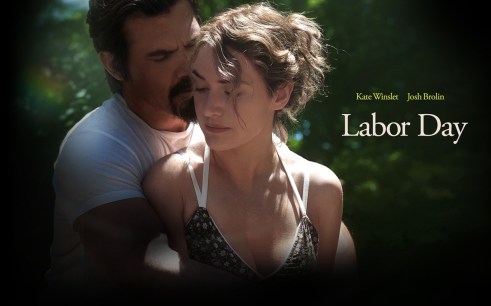
LABOR POSTEREven though the plot of “Labor Day” sounds like something plucked right out of Lifetime’s primetime television lineup, I was still optimistic considering the talent involved in the project. I greatly respect Jason Reitman as a screenwriter and a director. It also features Kate Winslet and Josh Brolin – two very capable performers who have done some great work during their careers. But I approached the film with a level of skepticism. Could Reitman deliver an intelligent romantic drama or would it be formulaic mush befitting a Harlequin novel?
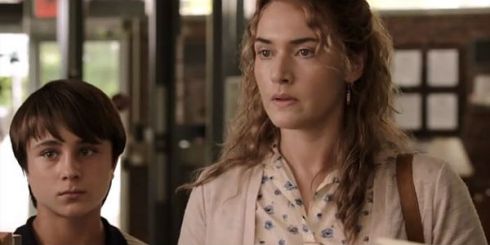
First the story. The film takes place in the fictional town of Holton Mills, New Hampshire during a hot Labor Day weekend in 1987. 13-year old Henry (Gattlin Griffith) is a sweet and responsible boy who takes care of his severely depressed single mother Adele (Winslet). A number of terrible misfortunes have left her an emotional wreck so much so that their once-a-month trips to the supermarket triggers her anxiety. During one of those trips they encounter an escaped and injured felon named Frank (Brolin) who “convinces” them to drive him to their home. Once there he hopes to lay low until his wounds heal and he can skip town.

LABOR1

As every trailer and television commercial has already shared, Frank isn’t a terrible guy. We get some threatening vibes from him, but as escaped convicts doing time for murder usually go, he is pretty docile. He quickly connects with Adele and Henry, filling all sorts of fatherly and husband-like voids in their lives. He begins fixing things around the house, he teaches Henry how to throw a baseball, and a romance is sparked with Adele. The three create a beautiful fantasy-like world within the homeplace, but right outside is the reality of Frank’s past and his status as a wanted man.

In lesser hands this could have ended up a mushy, clichéd mess. Fortunately Reitman handles the material in a way that keeps that from happening. But not completely. There are a few incredibly sappy bits that hit us head-on. For example there is one scene where Frank reveals his culinary aptitude. In it we get a sequence ripped straight from the signature scene in “Ghost” except here the clay is replaced by peaches. We also get some schmaltzy lines of dialogue such as Frank saying in just the right romantic tone “I’ve come to save you Adele”.

There are also a couple of narrative choices that didn’t really work for me. There is an odd little diversion that gets into Henry’s pubescent struggles. Through it we meet an eccentric young girl who serves as his introduction to puberty. Both she and the entire story angle is underdeveloped and tacked on. We also get the old tried-and-true method of telling Frank’s backstory through a series of random flashbacks. They get the job done but it is a pretty conventional approach.

LABOR2

But despite all of these jabs I’ve thrown its way, “Labor Day” still manages to work. Other than the few hiccups, Reitman creates a small-scale intimacy that I connected with. Most importantly he gives us three main characters that we genuinely care about. This is important because when the film stumbles I still wanted to stay with these characters. I also love how Reitman uses the camera. He frames some beautiful shots and I love his visual perspective. And of course there are the two lead performances. Winslet has always been great at playing women in some form of anguish. Here she does it again with striking authenticity. Brolin’s rugged looks and charming sincerity are perfect for the role and helps their chemistry.

So clearly “Labor Day” has some issues but it also has some undeniable strengths. It can be a little too sappy and the melodrama can be extremely heavy. But it also has a sweet story with a lot of heart at its core. It all comes down to your ability to just go with it and get lost in the story. If you’re able to do that there is enough here to like. If you can’t then more than likely the film’s flaws will be all too glaring.

VERDICT – 3 STARS

REVIEW: “The Act of Killing”

KILLING POSTER

A film like “The Act of Killing” is almost indescribable. It is strikingly unique and it certainly can’t be labeled or put in a box. Director Joshua Oppenheimer calls his film a “documentary of the imagination”. It’s bizarre, unsettling, and at times impossible to comprehend. It’s horrifying, repulsive, and unflinching in its focus. It’s an overused statement but “The Act of Killing” is unlike anything you have seen before and digesting what we are fed isn’t all that easy.

To understand this documentary you must first look back to 1965 in North Sumatra, Indonesia. A splinter group’s failed coup d’état led to a military takeover of the government. The new leadership blamed the Indonesian Communist Party (PKI) and soon sanctioned the wholesale massacre of communists across the region. But the killings weren’t restricted to alleged communists. There were also brutal mass murders rooted in racism and religion. It is said the killings have been overlooked in most Indonesian history books and by the international community, yet a CIA report called them “one of the worst mass murders of the 20th century”.

killing1

With that historical backdrop in place, the film spotlights some of the authors of the murders and we are told of their atrocities from the men themselves. Anwar Congo and Adi Zulkadry went from movie theater ticket scalpers to heads of military death squads responsible for thousands of brutal killings in 1965 and 1966. Even more appalling, they have never been punished or even found guilty of any crime. In many ways they are celebrated among the ignorant or sympathetic. These are the men we spend two hours with in “The Act of Killing”. Their words, their candor, their lack of remorse, their impunity. These men openly discuss their parts in the anti-communist purge in uncomfortable detail and often with smiles on their faces.

These men also have an unusual infatuation with western cinema which finds its way into the movie on several occasions. They constantly refer to themselves as ‘gangsters’, a term stemming from their love of American gangster movies. But it also seems that some of their real-life killings were patterned after these films. Anwar especially seems to treat the title of gangster as a badge of honor.

Killing2

But their love for movies also plays into the stories they tell. Throughout the documentary we listen in on pointed and detailed recollections of some purely evil murders. But these men also tell their stories through dramatic reenactments for the cameras intended to glorify their atrocities. Their scenes borrow from their favorite mob movies, westerns, and musicals. It’s these uneasy sequences of boastful self-aggrandizement that reveal the true evil dwelling within these people. As we get deeper into the movie the reenactments become more bizarre and surreal possibly a result of Anwar’s desire to squash any feeling of guilt that may be surfacing.

It took Joshua Oppenheimer over five years to make “The Act of Killing” and during that time he accumulated 1200 hours of footage. The result is a potent exposé that unveils one of the darker secrets of our world. I knew nothing of this horror which made the film all the more enlightening and disturbing. At times I did feel disconnected from the more absurd and unintelligible mini-productions from Anwar and company. But there are far more times where I sat in silent shock due to what I was watching. This is audacious filmmaking and there are several scenes carved into my memories. I would be surprised if others didn’t have that same experience.

VERDICT – 4 STARS

REVIEW: “August: Osage County”

AUGUST POSTER

“August: Osage County” is a hard pill to swallow. It’s based on a Pulitzer Prize-winning play of the same name and could be categorized as a dysfunctional family drama with pinches of dark comedy. It features a star-studded cast led by Meryl Streep and Julia Roberts and a premise that may have a lot of appeal to some audiences. But underneath all of the big acting from big stars lies a coarse and abrasive film that never knows when to pull back the reins. It ends up being a movie I could never wrap my arms around.

Tracy Letts (who also penned the play) writes the screenplay and John Wells (better known for his television work) directs the film. It’s set in Osage County, Oklahoma during a sweltering hot August. Violet (Streep) is a mean and contentious women suffering from mouth cancer and a heavy addiction to pain pills. Her husband Beverly (Sam Shepard) is a calmer sort who seeks refuge in his books and liquor. One day Beverly hires a caretaker for his wife and soon after disappears.

AUGUST1

Distraught over her husband’s disappearance, Violet calls in her family and a parade of family dysfunction follows. First to arrive is her sister Mattie Fae (Margo Martindale) and her husband Charles (Chris Cooper). Shortly after, Violet’s three daughters come. Barbara (Julia Roberts) is a shrill carbon copy of her mother. She’s at odds with her mom for leaving home and moving to Colorado. Karen (Juliette Lewis) is the spacy middle daughter who hasn’t been home in years. And there is Ivy (Julianne Nicholson), the youngest daughter and the only one who lives close to home. Each of these characters have a wheelbarrow full of flaws and baggage that all comes into play as the film moves along.

But if that assortment of maladjusted individuals wasn’t enough, we also have Barbara’s husband Bill (Ewan McGregor) who apparently has an eye for younger women and their daughter Jean (Abigail Breslin) who is bearing the fruits of their horrible parenting. Then there is Karen’s fiance Steve (Dermot Mulroney), a phoney and moral-free Florida businessman. Oh and then there is Charles and Mattie Fae’s awkward son Little Charles (Benedict Cumberbatch) who may have a weird little secret.

It’s almost impossible to like any of these people. With the exception of the caregiver, practically every character reveals an appalling secret, spits out hateful insults, or does something vile. And the film is relentless. It bludgeons you to death with one dysfunctional family scene after another. I found it to be smothering. The story never allows any breathing room or provides any variation with its characters. And the constant barrage of bad behavior and disgraceful revelations is a bit ridiculous. It’s as if Letts wants to trump one disgraceful act or insult with another. And so on and so on…

AUGUST2

Again, the cast is a laundry list of big names and the performances are good. However many of the scenes are so big and the characters so loud that it can be difficult to really appreciate the performances. It’s one of those cases where the material hurts what the actors are doing. Streep is fine as the venom-tongued Violet but she is so big and brash. It’s definitely how the character is written but Streep does her share of scene chewing. Julia Roberts has been applauded for her work but it too is a loud and showy performance. Roberts is never overmatched by the character and she shows brilliance in some scenes. But the character is crassly written and some of her dialogue is so over the top. The other performances aren’t getting the same attention, but they’re generally good when the screenplay allows them to be.

I’ve heard that the stage version of “August: Osage County” is very good. Sadly I don’t think it has translated well to the big screen. This is a crude and unyielding adaptation that has a powerful and potent potential. The idea is appealing and every so often we get glimpses of what I hoped the film to be. Unfortunately I was put off by these characters, their endless dysfunction, and their profane spite. This was a tiresome watch and tough movie to endure. It’s a shame because with this much talent I was expecting more.

VERDICT – 2 STARS