REVIEW: “Snowpiercer”

SNOW POSTER

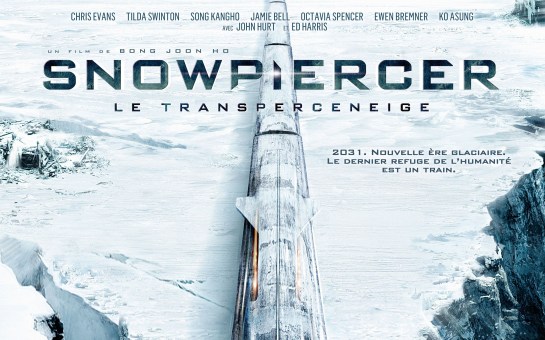
Every revolution has a cost and the cost is high in Bong Joon-ho’s sci-fi action flick “Snowpiercer”. This is the Korean filmmaker’s first feature since “Mother” from 2009. “Mother” was my first exposure to Bong Joon-ho and my christening of sorts into the art of Korean cinema. “Snowpiercer” is a much different film yet it doesn’t stray too far away from the style and approach which lies at the heart of this auteur.

Despite the efforts of blowhard extraordinaire Harvey Weinstein, “Snowpiercer” has finally made its way to the United States. Weinstein acquired the North American rights for the film with a wide release planned. But the pompous film mogul demanded that 20 minutes of footage be cut and when Joon-ho rightly refused, Weinstein sabotaged the movie by delaying it for almost a year and severely restricting its release. But word of mouth and positive reviews eventually earned it a broader release although nothing like what was originally planned.

The story is taken from a 1982 French graphic novel and as with any good science fiction, the premise is everything. To stonewall the effects of global warming mankind injects the atmosphere with an experimental agent that instead brings on a second ice age. Humanity’s last inhabitants live within the Snowpiercer, an enormous train in constant motion powered by the “eternal engine”. Onboard the train a social order has been created. The affluent upperclass live in the lavish head section while the poor and needy inhabit the tail. Now at first the movie appeared to be a climate change and class warfare lecture, but once we begin to meet the blend of interesting and eccentric characters, we realize there is more under the hood.

SNOW1

After several failed attempts the tail section puts together another revolt against the privileged and the armed soldiers who defend them. Curtis (Chris Evans) is quickly established as the strongest link and the man many look to for leadership. His mentor Gilliam (John Hurt) is grooming him to be the leader once they are able to take over the train. Curtis is a complex character. He often shows heart particularly in his dealings with his fellow tail-sectioners. Evans continues to grow as an actor. He’s mostly been known for playing goofballs or superheroes but I love seeing him open himself up as an actor. He once again flexes his action star muscle, but it’s nice to see him digging deeper into a character and doing it well.

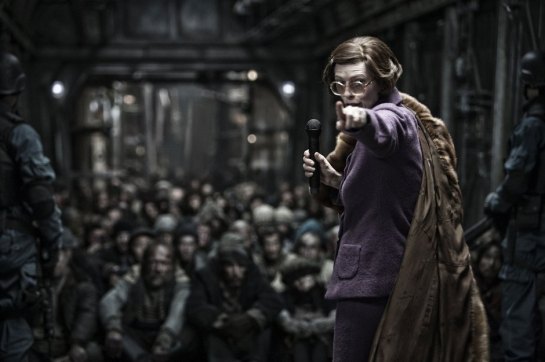
Evans is helped out by an incredible supporting cast. Jamie Bell is good as a character who starts out as a standard sidekick but evolves into something more. Oscar-winner Octavia Spencer plays a mother determined to get her son back after he is taken by the upperclass authority. A Joon-ho favorite Song Kang-ho plays the drug addicted designer of the train’s many doors separating the cars. The fabulously quirky Alison Pill is great as a character simply titled Teacher, and the always exceptional Ed Harris pops up in a significant role. But the true scene stealer has to be Tilda Swinton. She plays Minister Mason, an overseer of sorts who is really a glorified lacky. Swinton has a ball playing such a wacky and neurotic character. Everything from her appearance to her ways of expressing herself works to inject a bit of humor while never derailing the movie’s more prominent tone.
SNOW2

All of these characters work to energize Joon-ho’s engaging story. To be honest it’s hard to deny the absurdity of it all, and a surface reading would make this sound like a pretty standard action romp. But when the story is this well told and it moves at such a fluid and dynamic pace, it’s so easy to get completely caught up in it. I had a blast with its central conceit and the stylized storytelling. The careful mix of action and character development is well done and the setting is superb. It ranges from beautiful and colorful to dark and dirty while always maintaining a sense of claustrophobia. And as with almost every other sci-fi film, we get plenty of commentary here. Joon-ho paints a parallel portrait of the modern societal standard which is sometimes effective and other times ham-fisted. His climate change theme was the most compelling showing an awareness while also showing the dangers of overreacting. His class warfare approach is a little more uneven. But other themes such as drug abuse, political power, and revolutions are laced throughout the story in intriguing ways.

“Snowpiercer” also looks amazing from its wide assortment of environments within the train to its ice-ravaged world outside. The variety of action we get is also a treat. It may be intense close quarters shootouts or hand-to-hand combat in precarious situations. Some of it dances close to the edge of brutality, but so often Joon-ho pulls back his camera just as the violence is happening sparing the audience from the gore while keeping the sheer intensity of the scene. It’s a mark of the creative Korean style and it gives the movie a particular look that I absolutely loved. It’s a visual delight.

Thanks to Weinstein “Snowpiercer” hasn’t gotten the release it deserves but word of mouth is spreading. Let me happily add to its positive press. This is a fantastic science fiction picture that sounds similar to many other films yet feels completely unique and fresh. It’s a film with many strengths and as a lover of good sci-fi, I had an absolute blast with it!


VERDICT – 4.5 STARS

REVIEW: “Dawn of the Planet of the Apes”

DAWN POSTER

While it may have one of the clunkiest movie titles of 2014, that hasn’t stopped “Dawn of the Planet of the Apes” from raking in loads of praise from critics and even more cash at the box office. I have to admit I’m surprised at how this franchise has found life again. I love the original 1968 classic, but frankly this doesn’t seem like the type of series that would appeal to the modern movie sensibilities of many of today’s moviegoers. The 2011 franchise reboot along with its $480 million box office grab proved me wrong. And of course when you make that kind of money you know there is going to be sequel.

I liked the first installment of this reboot but I didn’t see it as the gem that many did. This time around we have a new director and an overhauled cast but the writing team stays intact which you can sense from the first act. In what has become a very familiar way to setup these types of films, the movie opens with snippets from newscasts explaining the state of the world since the events of the first film. Human civilization has collapsed, ravaged by the effects of a deadly simian flu which decimated the population and triggered near apocalyptic after-effects. In other words things on earth are pretty bad, that is unless you are an ape.

DAWN1

Caesar (Andy Serkis) now leads a large colony of apes who live in the forests outside of what was San Francisco. These apes share the intelligence of Caesar which we see exhibited in a variety of ways. Many of the apes believe that humans are now extinct, that is until they encounter a small group of them in the forest. The group turns out to be part of a pocket of survivors living in the city. Their energy supply is almost gone and a hydroelectric dam in the forest could supply them for years. But as they learn, the dam is smack dab in the middle of ape territory which presents a very big problem.

One of the most fascinating aspects of this film are the political wranglings that take place both between humans and between the apes. Internal debates, distrust, and dissensions plague both camps as each try to figure out how to handle the other. Malcolm (Jason Clarke), the head of the small group, recognizes something special about Caesar and tries to form a bond with him. Dreyfus (Gary Oldman) is more skeptical and he prepares the humans for war in case Malcolm fails. Similarly Cesar believes peace is the best option but his second in command Koba (Toby Kebbell) has personal animosity towards all humans and he wants to be proactive.

All of that is constructed in a way that shows the similarities between the humans and apes. In fact, that’s a central theme that runs throughout the picture. Whether it be tender family relationships or fear-driven warmongering, we see it all in both the humans and the apes. But what may be the most amazing feat accomplished by this film is its incredible way of translating emotion from the apes. Every display of love, hate, disappointment, frustration, anger, or sympathy that we get from them is incredibly…well…human. Much of it is due to the brilliant makeup and special-effects. But the true credit goes to the stunning motion caption mastery. I love hearing from people who are finally recognizing the genius of Andy Serkis. But folks let me just go ahead and say it – this is Oscar-worthy work. And Kebbell isn’t too far behind him.

XXX DAWN-PLANET-APES-MOV-JY-3806-.JPG A ENT

Now while the story is entertaining and never boring, it still has a few things that keep it from being truly phenomenal. There are so many familiar plot angles that we get throughout the entire movie. Honestly, I was amazed at how many things I saw that I had seen in other films. I don’t want to spoil anything , but it really stood out and it made many plot lines predictable. I also thought several of the emotional tugs were a bit obvious and gimmicky. What’s amazing about it is that they still worked for me. I knew I was having my heart-strings yanked during these instances yet I still went with them. Effective but still obvious.

Despite those gripes “Dawn of the Planet of the Apes” is still a highly entertaining picture. Regardless of its familiar directions the story still kept me engaged. It easily kept me attached to these characters and the film moved at an almost perfect pace. There is some great action, awesome effects, and the performances are strong (none better than the stunning work of Andy Serkis). This is yet another big budget 2014 blockbuster that delivers. I just wish the story itself went out a little more on its own.

VERDICT – 3.5 STARS

REVIEW – “Life Itself”

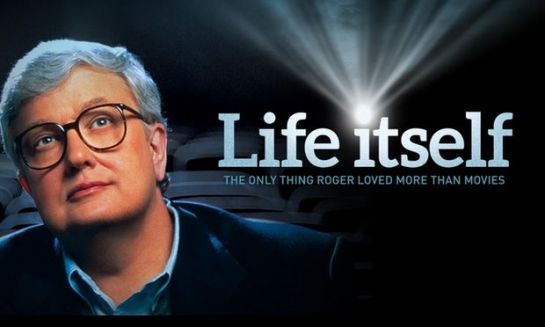
LIFE ITSELF POSTER

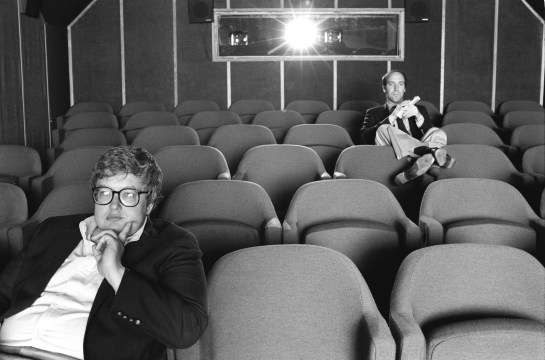
A countless number of aspiring couch critics have spoken of the role that Gene Siskel and Roger Ebert played in nurturing their desire for film criticism. The various incarnations of their groundbreaking and one-of-a-kind movie review program entertained, broadened, and inspired generations of film fans. Siskel and Ebert became synonymous with film criticism and while they weren’t the only talented and knowledgeable movie critics during their day, they were instrumental in bringing it to the mainstream and creating a wider appreciation for it as a whole.

I was one of those kids they influenced. It was during the early 1980s that I was first exposed to their weekly television show. I watched them any opportunity I had and I made them part of my weekend. To say I was obsessed would be an understatement and almost instantly I wanted to be a movie critic. Eventually I began to favor Gene Siskel and the way he talked about movies. But over time my appreciation for Roger Ebert and his unmatched knowledge and passion for movies grew tremendously. While we were sometimes at odds concerning things outside the world of cinema, I considered him a wealth of information and his reviews were like fascinating lessons that increased my understanding of movies and of the people of make them. That’s one reason his passing last year had such an effect on so many people.

“Hoop Dreams” director Steve James brings the life of Roger Ebert to the big screen in “Life Itself”, a documentary based on Ebert’s memoirs. It’s a unique but heartfelt mixture of biographical information and poignant emotions. James began his documentary before Ebert’s death and when the beloved film critic passed away James pledged to the family that he would finish his joint venture with Roger.

LIFE ITSELF

“Life Itself” follows Ebert during what turned out to be his final months. We spend a lot of time with him in rehabilitation centers following his debilitating battles with cancer and a fractured hip. Some of what he is going through is sobering and uncomfortable but, as he conveyed to Steve James, to omit the reality would be to do a disservice. His wife Chaz serves as his rock and it is impossible not to be moved by her love and dedication to her husband. I also appreciated the truth that she shares in so many of the interview bits we get.

Throughout the film we get many breaks that look into Ebert’s past. We learn a little about his family and his early forays into the newspaper business. And of course we see his jump into film criticism for the Chicago Sun-Times and eventually alongside his local rival Gene Siskel of the Chicago Tribune. The film has a genuine sense of honesty which shows itself in its dealings with Ebert’s past struggles with alcohol and his off-putting arrogance. But it also reveals deep passions that he possessed and how is life was forever altered for the better when he met Chaz. Personally I was drawn to his relationship with Siskel which was far more competitive and combative in its early stages that I realized. Watching the evolution of their relationship shined a new light on two men who I watched so religiously for so many years.

“Life Itself” is a solid documentary that will certainly appeal to anyone who appreciated Roger Ebert’s work and his contributions to motion pictures. I do think Steve James loses his rhythm midway through the film and his jumps to different events in Roger’s past are jarring due to a lack continuity. But the last act gets back on track and it leaves you with a lump in your throat and an even greater appreciation for a man who meant so much to movies and the art of film criticism. As the final credits scrolled across the screen I reclined in my chair and shook my head. I just can’t believe both Roger and Gene are gone.

VERDICT – 4 STARS

REVIEW: “Night Train to Lisbon”

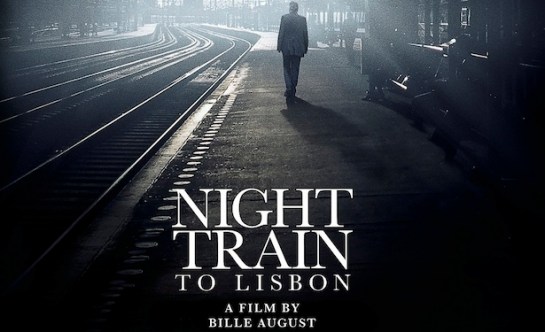
LISBON POSTER

It was considered a talky and drawn out bore by a handful of critics, but I found Bille August’s 2013 drama “Night Train to Lisbon” to be a soothing and almost cathartic film despite its occasional lapses. It’s a swirl of mystery, romance, self-examination, and character study that does at times trip over itself and its subtle but clumsy preachiness. But ultimately the film dives into themes and reflections that I found fulfilling.

The film is based on Pascal Mercier’s 2004 novel about a man lost in his loneliness and plagued by feelings of unfulfillment and unimportance. The great Jeremy Irons plays Raimund Gregorius, a language professor at a college in Bern, Switzerland. The film’s opening scene tells us scores about its main character. We see Raimund in a meager, dimly lit apartment. The walls are covered with books portraying what almost seems like an obsession. Raimund stirs around but there’s no one else there. No voices. No vibrancy. Nothing lively or colorful. It’s a portrayal of his loneliness.

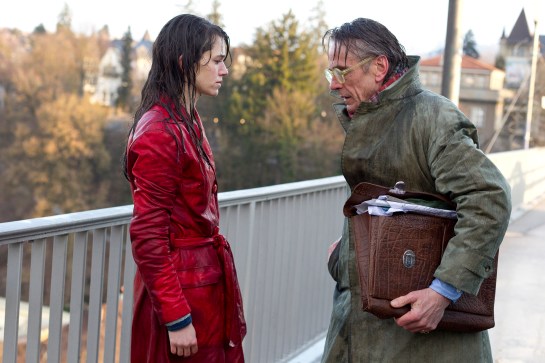
Later that rainy morning, while walking to school, he comes across a young woman standing on a bridge about to commit suicide. He’s able to grab her before she jumps and then takes her to his classroom to gather her thoughts. As he begins teaching his class she wanders off leaving behind her raincoat with a book in the pocket. Raimund immediately sets off to find the mysterious young woman using the book as a guide which leads him to Lisbon, Portugal.

NTTL_00403_1.jpg

The story quickly moves away from Raimund’s search for the young woman and to his fascination with the book. It was written by a man named Amadeu do Prado. Raimund is mesmerized by the life depicted in the memoirs and he ventures across Lisbon putting the story together through the people who knew Amadeu. Along this personal journey, Raimund finds some people who are eager to help him. He also finds some who are reluctant to revisit the painful and tumultuous past they shared with Amadeu.

Through Raimund’s conversations with people we get flashbacks to Amadeu (portrayed by Jack Huston) and his life. We see his difficult childhood and his complicated relationship with his family. We witness his venture into a left-wing resistance movement that went against the Salazar administration. We see scarred friendships and fragile romances. It’s a truly compelling life story even though it sputters at times and its historical account is clearly told from a strict and persuaded point of view. This occasionally strips the film of its genuineness and makes it the film a bit like a lecture.

Lisbon2

While I found Amadeu’s unfolding story interesting, it was Raimund who kept me enthralled in the movie. With every peeled back layer of Amadeu’s past Raimund realizes how unfulfilling his own life is. Through the book he tries to experience the life that he has never had. Jeremy Irons navigates this journey with such temperate and emotional precision. It’s not a loud or showy performance. Instead he uses a more reserved approach which serves the character and his state brilliantly. I truly felt for Raimund and completely bought into his plight.

These dual stories are also helped by a fascinating assortment of wonderful actors and actresses. There are so many rich supporting performances from Huston, French actress Mélanie Laurent (a favorite of mine), Charlotte Rampling, Christopher Lee, Martina Gedeck, Auguest Diehl, Bruno Ganz, Tom Courtenay, and several others. Each have their specific role in Raimund’s journey and Amadeu’s story and the strength of the acting brings both vividly to life.

There is also plenty of beautiful scenery, wonderful locations, and interesting camera work to talk about, but this really comes down to the story and your ability to latch onto it. I had no problem with this mainly because of the film’s centerpiece Jeremy Irons and the story he tells. There is the occasional rough patch and a few hints of odd one-sided lecturing. There is also an intriguing human drama that sucked me in and had me genuinely caring about the characters. That’s an essential piece of any good drama and “Night Train to Lisbon” has it.

VERDICT – 4 STARS

REVIEW: “Jules and Jim”

JULESPOSTER

I consider François Truffaut’s “Jules and Jim” to be one of the acclaimed French director’s great films. Released in 1962, this movie was one of the pivotal films in the French New Wave movement. In fact, you can’t watch it without sensing that it’s doing something bold and new in terms of filmmaking. There’s such an energy and a freshness in both the technique and in the storytelling itself. More importantly it’s a fantastic bit of cinema that would go on to influence many other films including “Bonnie and Clyde” and “Thelma and Louise”

I really appreciate the filmmakers of the French New Wave. They left an unmistakable mark on motion pictures, and their styles and creative approaches stand out in every film they made. It was a movement of experimentation and of bucking the trends of moviemaking that they believed had grown stale. “Jules and Jim” showcases this in every facet of the movie. It’s playfully neorealistic both in its use of the camera and in its strikingly grounded narrative. But aside from its influential methods and techniques, I found the story itself to be an utterly fascinating look at friendship and the bumpy road that sometimes accompanies it.

JULES JIM

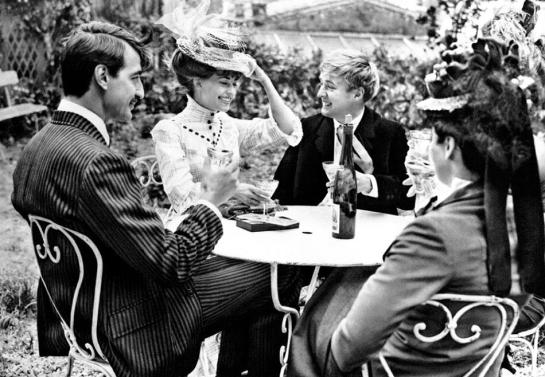
Jules and Jim first meet in Paris in 1912 and they immediately become friends. A narrator whisks us through their early days as young men in Paris and we watch as a foundation is laid for what should be a lifelong friendship. Jules (Oskar Werner) is a shy and reserved Austrian who can’t seem to find the right girl. Jim (Henri Serre) is just the opposite. He’s a confident and outgoing Frenchman whose never had a problem with the ladies. Both enjoy art and poetry and they spend a lot of time just sharing the good things from their cultures with each other. All of their earlier and happier days fly by in the opening few moments of the film but that’s okay. Truffaut is clearly setting the table for the more important part of the story that lies ahead. Yet while brief, these opening moments are beautifully woven together and Truffaut’s camera allows us to perfectly comprehend how close these two friends are.

Through a series of events the two cross paths with the free-spirited Catherine (Jeanne Moreau) who takes their lives down an unpredictable road. Eventually their jobs, a war, and other things separate Jules and Jim, but it’s Catherine who always serves as the new centerpiece to their friendship and it’s the complicated relationship between the three that keeps bringing them back together. Moreau is superb and her character is a difficult one to place. At times she’s energetic, vibrant, and full of life. But at other times she’s disconnected, neurotic, or in states of depression. The different dynamics she brings to her already complex relationships with Jules and Jim makes for incredible cinema.

The twists that the film applies to relationships and love are profound and almost feel experimental. Things take such unorthodox and unconventional turns and they seem destined to end badly. The most obvious casualty would seem to be the friendship between Jules and Jim yet no matter what trial or contention the two face, their loyalty to one another stands. I’m not sure how much sense all of this makes because I’m desperately trying to dance around the details and I refuse to spoil it for anyone. Let’s just say Truffaut takes Jules and Jim down some roads that few people could or would endure.

Jules Jim1

All of this is told through the lens of a true visionary. Truffaut and other influential groundbreakers like Godard and Chabrol were forging new paths into cinematic storytelling. You see it in every frame of “Jules and Jim”. Truffaut’s camera adheres to no common or popular formula of the time. It’s living and moving and so many times he captures the perfect angle or presents a new technique. It’s the picture of what the French New Wave was all about. It’s such a departure from the traditional moviemaking of the time both in terms of style and story.

“Jules and Jim” may not always be mentioned in the same breath with Truffaut’s own “The 400 Blows”, Godard’s “Breathless”, or Chabrol’s “Le Beau Serge” but it deserves to be considered as one of the French New Wave’s best. It’s a film that’s lively and spirited while at the same time being a bit disturbing and perplexing. There are layers to peel back and new things to discover. In other words “Jules and Jim” offers a wonderful experience both technically and emotionally. Moreover it’s a firm reminder of why we still go to the movies.

VERDICT – 4.5 STARS

5 Phenomenal Movie Voices

movie_theatre - Phenom 5

Have you ever watched a movie and heard a distinct voice that you immediately recognized even before you saw the actor? Throughout movie history there have been certain voices that are undeniably memorable and they often times can add to the strength of the character or the movie. Sometimes they are just incredibly cool and are automatically associated with the actors themselves. Today I’m looking at five of the best and most recognized voices in cinema. These are five voices that I could recognize regardless of the role. Now with so many great ones I wouldn’t call this the definitive list. But there is no denying that these five movie voices are phenomenal.

#5 – George Clooney

CLOONEY

Some may scoff at this pick but I think Clooney’s voice is one of the most distinct in modern cinema. Clooney often gets hype for his good looks and sex symbol appeal. He’s also a really good actor with a voice that is undeniable. The gravelly voiced Clooney has used his voice in a number of ways from playing romantic pretty boys to dense-headed backwoods Southerners. But perhaps the best use of his distinguished voice came in Wes Andersons’ animated treat “Fantastic Mr. Fox”. Again, some may laugh at this choice, but I think it fits onto this list nicely.

#4 – Liam Neeson

narnia 4 301110

Liam Neeson is an actor who has had an incredibly diverse career. But there has always been one constant – that amazing voice. The 63-year old Neeson has used his Northern Irish voice to portray men of high distinction as well as hard-as-nails tough guys. It simply doesn’t matter what film he is in, Neeson is almost always good. But along with good acting chops comes that voice which is simply one of the best. And I can promise you this, if I hear him telling me about his “particular set of skills” I’m certainly going to be intimidated.

#3 – Vincent Price

VINCENT

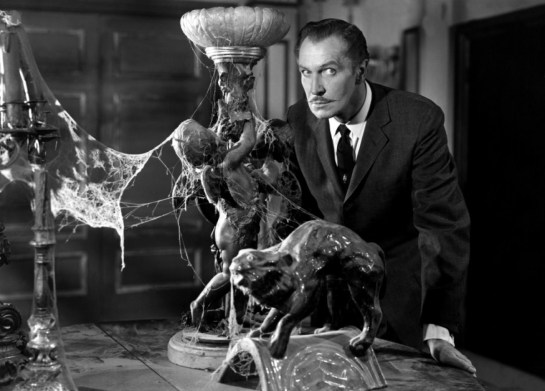
Whenever I think of Vincent Price a huge grin spreads across my face. Price is known as a horror picture icon but he actually started out as a character actor. He would soon find his true home in the horror and suspense genres and helmed many great classic horror films in the 1950s and 1960s. His most well known feature was his incredible voice. It was eerie and ominous and with it he was able to frighten audiences or at least make them squirm. He often played characters who were mysterious and slightly off and he would use that unforgettable voice to soak them with suspense. For me Vincent Price is a true film great who did more for a movie genre than some today realize.

#2 – James Earl Jones

JONES

Now c’mon folks, you had to know that the great James Earl Jones would have to be on any list mentioning great motion picture voices. The 83-year old Jones has had an incredible career winning Tony Awards, Golden Globe Awards, and garnering an Oscar nomination. But whenever I think of Jones I will always think of his voice. Armed with one of the most powerful and towering voices ever, Jones has played a huge variety of roles. He’s played small but pivotal supporting roles as well as iconic ones in landmark franchises. Remember, this is the man who voiced Darth Vader! James Earl Jones is a legend and that great voice is one reason why.

#1 – Jeremy Irons

IRONS

I realize that this may sound utterly ridiculous, but Jeremy Irons has one of those rare voices that absolutely entrances me. It’s poetic, soothing, and pristine. But as with every great actor armed with an incredible voice, it can also be menacing, threatening, and unnerving. Irons’ English accent mixed with a graveled deepness is as distinguished as any other voice ever to grace the big screen. He has used it in such a wide range of ways while never once losing the qualities that makes it so recognizable. Irons is a stellar film actor and stage actor. He has also read a number of audio books. Just another testament to how magnetic his glorious voice is.

So there are my five phenomenal movie voices. See any you disagree with? Who would make your list? I would love to hear your selection in the comments section below.