REVIEW: “Steve Jobs”

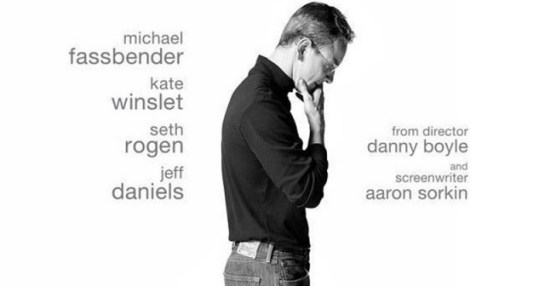
JOBS poster

Michael Fassbender may be the busiest man making movies. The guy is always working. To give you an idea, he appeared in three movies last year and has a whopping five movies slated for a 2016 release. But here’s the great thing – whether he is starring in a huge superhero franchise or smaller independent cinema, Fassbender always delivers rock solid performances. “Steve Jobs” adds to that reputation.

This is the second Steve Jobs biopic within a three year span and the upgrades we get in this film are significant.  Fassbender takes the lead role. Danny Boyle directs. Word wizard Aaron Sorkin writes the screenplay. The story is adapted from Walter Isaacson’s authorized biography and mixes in information gathered from Sorkin’s numerous interviews with Jobs’ associates.

The film wisely steers clear of being an exhaustive biopic. Instead it functions in a three chapter structure, each coinciding with a new product launch from the Apple co-founder. First is the Macintosh launch of 1984. Second is his NeXt computer of 1988. The last chapter jumps to 1998 with the unveiling of the iMac. Between these three pivotal moments in his life, Steve Jobs is faced with a number of professional and personal hurdles. Boyle and Sorkin manage to weave together so many narrative threads most of which rely on relationships that grow (or in many cases fester) as the film moves forward.
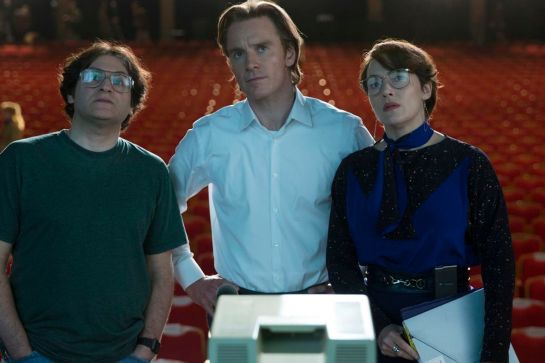
JOBS1

Much like with “The Social Network”, Sorkin doesn’t coddle his subject. He paints Jobs as the creative visionary he was, but our backstage access also shows an insufferable, insecure bully obsessed with total control. He constantly badgers his underlings and can’t bring himself to give anyone else the slightest bit of credit or consideration. The person who has an inside communication line with him is Joanna Hoffman (Kate Winslet), a marketing executive who is the only person besides himself he seems to depend on. It is a key relationship with Fassbender and Winslet each bringing needed levels of intensity.

Other relationships suffer at the hands of Jobs’ ego. Seth Rogen, an actor whose performances I generally find repellent, steps out of his norm and is great playing Steve Wozniak, Jobs’ old friend and Apple co-founder. I also enjoyed every scene featuring the naturally subdued Michael Stuhlbarg. He plays Andy Hertzfeld, an original Mac team member and “family friend” of Jobs. Jeff Daniels is really good as John Sculley, the CEO of Apple. All three chapters show each of these relationships in various stages of disrepair.

Perhaps the most damning scenes feature Jobs with his daughter Lisa. We first meet her at five years-old and she serves as a small window into Jobs’ private life. Jobs shamelessly denies he is her father and, despite his net worth, leaves her and her mother (Katherine Waterston) living on welfare. While Lisa showcases the more despicable side of Jobs, she also offers the one thin chance at redemption.

Boyle’s high-energy direction is a nice compliment to Sorkin’s dialogue. Boyle is known for pulling all sorts of visual tricks out of his hat. Here he shoots the 1984 segment in grainy 16mm, 1988 in 35mm, and 1998 in full digital. It’s such a cool way of distinguishing the time periods aside from the standard new haircuts and age-worn faces. Other than that Boyle doesn’t go overboard. We still get a few of those signature showy strokes, but otherwise he keeps everything nicely situated within the script’s theatrical boundaries.
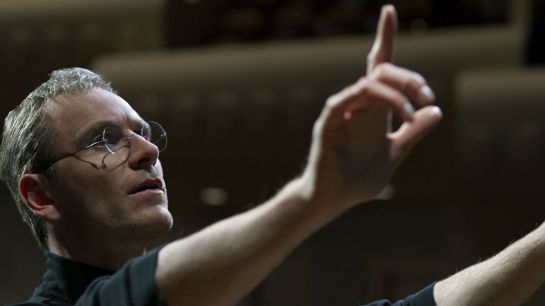
JOBS2

And then we come back to Fassbender, critically praised and with an Oscar nomination to match. He handles Sorkin’s thick, tricky dialogue with profound surety. It’s a commanding performance that manages to make you admire him in one scene and detest him in the next. And aside from his great delivery, Fassbender channels his character’s complexities through every insecure smirk, every cut of the eyes, and every defiant stare.

There are a few things that left me curious. As with “The Social Network” Sorkin takes some enormous liberties depicting Steve Jobs all for the sake of drama. While Sorkin is never one to shy away from that fact, its understandable how some might take issue. And is it that common for everyone to have their meltdowns and emotional face-offs 30 minutes prior to every major technology presentation? That is certainly the case in all three chapters of “Steve Jobs”.

Aside from that “Steve Jobs” got its hooks in me right off the bat and kept me captivated for the duration. Despite the questions I had, it is so satisfying to watch good actors work with a whip-smart script and under very assured direction. All of these pieces do their parts in making “Steve Jobs” an usual but thoroughly entertaining biopic.

VERDICT – 4 STARS

Retro Review : “Tootsie”

TOOTSIE POSTER

I was 11 years-old in 1982. During that year the main movie conversation revolved around Steven Spielberg’s intensely popular “E.T.”. A bit surprising, the second biggest movie of 1982 was “Tootsie”. Now this was prior to the advent of the PG-13 rating so my parents took me with them to see “Tootsie”. I don’t remember a single thought or impression left in my young mind, but after watching it several years later and again just recently, it is a lot easier to appreciate what “Tootsie” is going for.

I mentioned its huge box office office appeal, but “Tootsie” was generally praised by critics as well. It would go on to be nominated for a whopping 10 Academy Awards (interestingly, it would only win one – Jessica Lange, Supporting Actress). That’s a pretty big success especially for a film that went through a number of delays, director changes, and recastings.

Tootsie1

Dustin Hoffman is the face we most associate with “Tootsie” and rightfully so, but one of the most important creative geniuses behind the film’s success was Sydney Pollack. He directed, co-produced, and gave a superb supporting performance. The script was finalized by a collective effort which featured Larry Gelbart, Murray Schisgal, and uncredited assistance from Hoffman favorite Barry Levinson and comedy great Elaine May.

But when talking about “Tootsie” you inescapably come back to Hoffman and his absurd but deeply committed two-sided performance. He plays Michael Dorsey, a talented but insufferable actor who has burned every bridge in the New York and Hollywood acting community. No one will hire him which stresses his relationship with his agent George Fields (Pollack). After months of no work and to prove his agent wrong, Michael auditions for a part in the daytime soap opera “Southwest General”. Here’s the catch – the part is for a woman.

Tootsie2

Michael dresses up and creates the persona of Dorothy Michaels in hopes of winning the part and earning $8,000 to help finance the play of his best friend (Bill Murray). Dorothy not only wins the part but she becomes a soap opera sensation. Dabney Coleman is so good as the smug, sexist director who Dorothy constantly butts heads with. Lange plays a co-star who Michael quickly falls for, but she only knows him as Dorothy which makes for some obvious complications.

Dorothy’s popularity makes it impossible for Michael to cleanly end his charade. But at the same time Dorothy brings about some needed self-reflection. This is the heart of the story, but “Tootsie” is still a comedy. Along the the way we get all sorts of comical, pinpoint jabs at sexism particularly in show business. There is also some hilarious satire aimed at popular Soaps particularly “General Hospital”. It also gives us quirky but revealing observations on relationships. “Tootsie” is a funny movie, but its sense of humor is anchored in its surprising intelligence.

Tootsie3

Hoffman is key. He gives 100% commitment despite the absurdity and without it the entire film would fall. He never winks at the camera. He never mugs. But the supporting cast is just as good. I mentioned Lange, Pollack, Coleman, and Murray. All are perfect fits. But I also loved George Gaynes as an air-headed veteran actor and Teri Garr is a lot of fun playing the manic and fragile Sandy. We also get good work from Charles Durning and Geena Davis in her motion picture debut.

“Tootsie” has held up surprisingly well in the 34 years since it was released. It was a tricky thing to pull off. It could have easily misfired and resulted in just another wacky comedy. But there are brains behind the film which allow it to be funny and provocative in its observations on gender roles and women’s equality. “Tootsie” manages it all very well without being too silly or too heavy-handed.

VERDICT – 4 STARS

REVIEW: “Sinister 2”

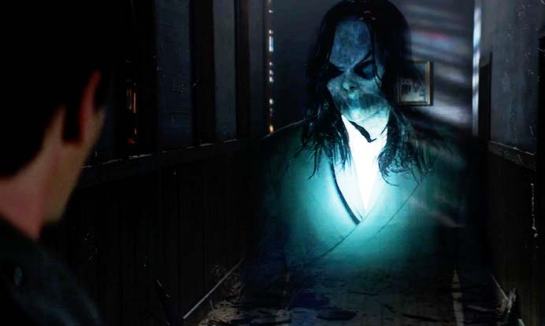
Sinister2 posater

2012’s “Sinister” was a rare surprise. While it did depend on a number of common, run-of-the-mill gimmicks, “Sinister” had enough smarts behind it to succeed where many modern horror movies fail. It slowly built a compelling story. It never went overboard. It had some unsettling but satisfying twists. It was a huge hit meaning a sequel was inevitable in this money-starved movie climate. Unfortunately “Sinister 2” has none of the ingredients that made the first film enjoyable.

C. Robert Cargill and Scott Derrickson return as co-writers but you certainly can’t tell. I don’t know if they used up all their tricks in the first film, but “Sinister 2” is a flat and uninspired retread that feels like one big cash grab. Nothing about it sets it apart as uniquely its own and nothing comes close to living up to its predecessor.

IL1A7110.CR2

James Ransone is back but his character has turned in his deputy’s badge after the gruesome events of the first film. Now he works as a private detective investigating a series of murders each connected to the monstrous Bughuul (aka The Boogieman). His research leads him to a single mother named Courtney (Shannyn Sossamon) who is on the run from her abusive husband along with her two young sons. They’ve taken up residence in an isolated farmhouse, but the detective isn’t the only one to find them. Bughuul and his band of macabre kiddies have a special connection there which isn’t a good thing.

I will give the story a little credit. It does try to expand on the premise created in the first film. But literally nothing in the sequel sparks any interest or has the same creepy effect as before. The scares are nonexistent. The film can’t create any legitimate tension. There isn’t an interesting character in the entire thing. And by the time we get to the end it has flown completely off the rails.

Sinister2

And then there are the performances. I hate to be too critical but James Ransone left me dumbfounded. I have absolutely no idea what he is going for, but he gives one of the most unsure and tone-deaf performances I’ve seen in a long time. He seems completely out of tune with his character and doesn’t show confidence in conveying any of his character’s emotions. It doesn’t help that all of the child performances are wobbly and Lea Coco is especially awful as the over-the-top abusive father and husband.

So basically what I’m saying is “Sinister 2” is a profound mess of a movie. It stumbles around in a constant state of lethargy failing in every category that the first film nailed. Sadly the movie made money well above its budget which means we could get another one of these. But after this sloppy cash-in I can’t see me wasting my time on it.

VERDICT – 1.5 STARS

REVIEW: “Jafar Panahi’s Taxi”

TAXI poster

It’s hard to gain full appreciation for Jafar Panahi’s latest film without knowing a bit about his personal story. Panahi cut his filmmaking teeth by working with the great Abbas Kiarostami. He showed himself to be a major component of the Iranian New Wave movement with his 1995 acclaimed film “The White Balloon”. But while recognized as a brilliant and highly influential filmmaker, Panahi quickly found himself in the crosshairs of the Iranian government.

In 2010 Panahi was arrested along with his wife and daughter. He was charged with making propaganda films against the Iranian government and for committing crimes which threatened national security. He was sentenced to six years of house arrest, was forbidden to leave the country, and was given a 20 year ban on making movies or documentaries. Despite his steep sentencing, Panahi has continued to secretly make films and address many of his society’s ills.

TAXI1

“Taxi” is another bold movie where Panahi makes clever use of his obvious constraints. All conventional methods of filmmaking are out the window yet “Taxi” feels just as revealing and just as organic. It is basically a documentary but with a sly touch of drama. Its main focus is to show the varying degrees of life, personalities, ideals, hardships, and persecution in modern day Tehran society.

Panahi does this by simply posing as a cab driver. He drives around Tehran picking up as assortment of people and filming their conversations through carefully placed dash-cams. They cover all age groups, male and female, and come from a variety of unique (and sometimes troubling) perspectives. None are trained professional actors, but each offer some truly compelling insight into elements of the culture that Panahi clearly wants people talking about.

TAXI2

Panahi’s interaction with the people is often fascinating. Some are just quirky individuals who he allows to carry on. Take a fellow who sells pirated DVDs. At one point he actually recognizes Panahi, but that doesn’t stop him from his shady dealings. Other characters unknowingly offer Panahi the opportunity to indict certain mindsets without the director saying a word.

There are some interactions that feel a bit too scripted even though they have strong messages, and there are a couple of moments where the pacing sputters a bit. But at the same time “Taxi” always kept my attention, and it had me absorbing every encounter to find how they fit with Panahi’s vision. This wasn’t an easy project to pull off, but its strengths testify to the brilliance of its maker.

VERDICT – 4 STARS

4 Stars

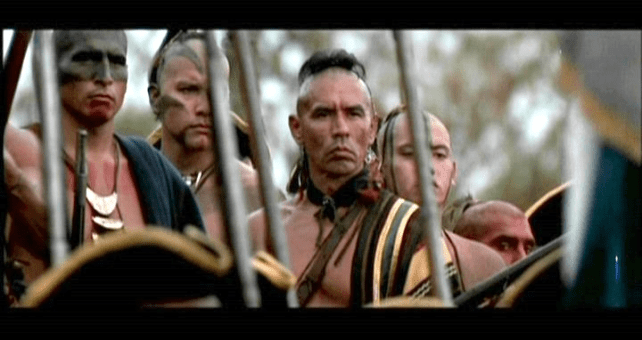
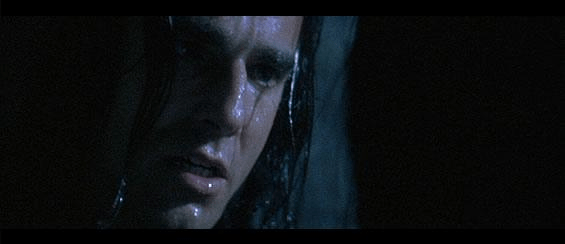
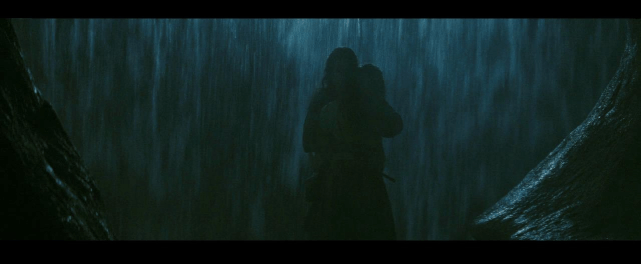
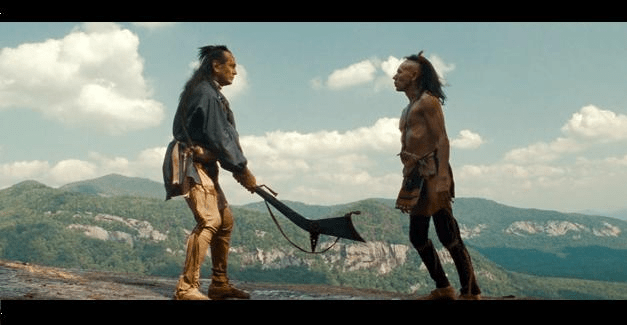
Great Images from Great Movies (5) – “The Last of the Mohicans” (1992)

MOHICANS GREAT

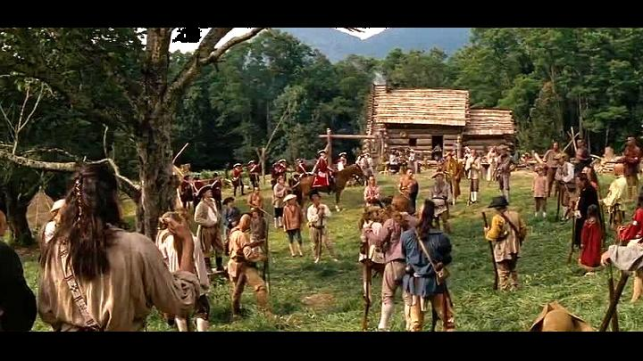
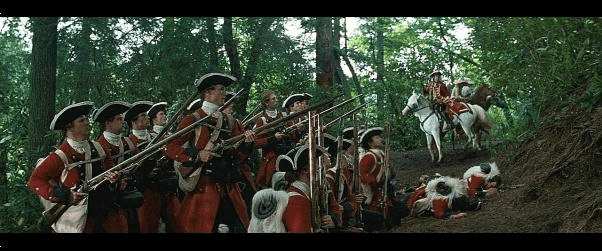
Truly great movies leave indelible marks. It may be through an emotional connection to the story. It may be through a remarkable performance or a signature scene. But it could also be through the brilliant imagery that films carves into your mind. That’s what this feature is all about – highlighting great images from great movies.


MOH1

MOH13

MOH14

MOH15

UNCAS

MOH2

MOH10

MOH6

MOH11

MOH20

MOH17

MOH18

MOH19

MOH9

MOH16

MOH3

MOH5

MOH8

MOH12

THE END


REVIEW: “Trumbo”

TRUMBO POSTER

Everything about Dalton Trumbo’s life seems ready-made for a big Hollywood movie. There is certainly plenty there to tell an intriguing story. Trumbo was a complex character with incredible writing talent and strong, divisive political persuasions. His headbutting with Congress and the major studios offers plenty of material for a fascinating biopic. Unfortunately “Trumbo” is a glossed-over account that seems most interested in only presenting half of the story.

The centerpiece of the film is Bryan Cranston as Trumbo. His performance is big, showy, and certainly something the Oscars would feel compelled to nominate. But I don’t want to shortchange him. Cranston is very entertaining and he often keeps the film afloat. His postures, tone, and mannerisms are a lot of fun.

TRUMBO1

The story looks at Trumbo’s life as a screenwriter and family man. But its main focus is on his confrontation with the House Committee on Un-American Activities due to his pro-Communist position and how it led to a prison sentence and a spot on the Hollywood Blacklist. Director Jay Roach and writer John McNamara paint Trumbo as a martyr for free speech by concentrating on the persecution he and his family went through at the hands of the government, entertainment figures, and the public.

To do this a wild variety of fictional and true-life characters are brought into the story. Most are there to make Trumbo look more heroic. Take the clownish, cartoony portrayal of gossip columnist Hedda Hopper (played by Helen Mirren). Every scene she is in aims to make her the most sinister person on the planet and Trumbo more sympathetic. John Wayne (David James Elliot) is there to show Trumbo’s bravery. Edward G. Robinson (Michael Stuhlbarg) is there to show Trumbo’s unwillingness to cave under the most unfair threats of persecution. So many characters seem present to serve a specific purpose instead of bringing any real humanity to the people or the story.

The one place where it is different is at home. The pressures eventually bleed over into his family life as Trumbo shuts himself off from his wife and children. This is the one place where Trumbo isn’t portrayed as a saint. Diane Lane if good as Trumbo’s wife Cleo. She is depicted as the anchor who keeps the family together, but at the same time she is written as quiet and subservient. I wish she had been given a little more to do. Elle Fanning plays Trumbo’s daughter. She is a fireball and is given much more personality.

TRUMBO2

There is a host of other supporting cast members including Louis C.K., John Goodman, Alan Tudyk, Dean O’Gorman, and Christian Berkel among others. They are all fine but basically get lost in the film’s biggest problem – its lethargic story. “Trumbo” is such an up-and-down experience. It can be smart and surprisingly funny. At the same time it lacks a consistent energy that you would expect from such a story. There are a number of dull runs where the story just sits and spins its wheels.

Aside from its lack of spark “Trumbo” fails to dive into the character and story complexities which would have made this an interesting biopic. Instead the film chooses to make a statement by painting Trumbo as the innocent, persecuted hero free of any possible culpability. They certainly have the right to tell that kind of one-sided story, but considering the lulls the story suffers through I can’t help but think a more truthful telling would have resulted in a better and more compelling drama.
VERDICT – 2.5 STARS

2.5 stars