REVIEW: “The Water Diviner”

WATER poster

Russell Crowe has long been one of film’s most reliable actors. His work has earned him the reputation for giving strong and steady performances. This has allowed him to dabble in a number of different movie types and genres. But the 51-year old Oscar-winning Australian has watched his career truly flourish in period pieces covering everything from the Roman Empire to 1950s Los Angeles. Regardless of the time period or setting, Crowe always seems perfectly cast.

“The Water Diviner” places Crowe in 1919 following the end of World War I. He plays Joshua Connor, a farmer and water diviner living on the rugged Australian Outback. I knew practically nothing about the practice of water ‘divining’ but the film takes care of that in a fine opening sequence. From there we learn that recently Joshua’s life has been as hard as the ground he works. His three sons were presumed killed during the Battle of Gallipoli and his emotionally fractured wife Eliza (Jacqueline McKenzie) found it impossible to cope with the loss.

The grieving yet determined Joshua sets out to keep a promise to his wife – to find his sons and bring their bodies back home for burial. Along the way he is tortured by painful flashbacks, but his search is also assisted by guiding visions. He also encounters several key people along the way. He meets Ayshe (Olga Kurylenko), a war widow raising her son and running a hotel in Constantinople. Jai Courtney shows up playing an Australian officer tasked with finding lost Australian soldiers left on the battlefields. But the greatest help comes from an unexpected source, Major Hasan (Yılmaz Erdoğan), a Turkish officer deeply sympathetic to Joshua’s plight.

WATER1

Crowe not only stars in the film but makes his directorial debut. His direction may not instantly mirror that of an auteur, but it’s clear he is no novice and he understands the craft. In many ways Crowe’s approach hearkens back to a classic form of directing. We see it in much of his structural and camera decisions but also in the simplicity of the direction. I also think Crowe should be commended for giving the film a grand, near epic look and feel despite having a less than epic budget. The budget restrictions show themselves in the handful of action sequences but overall it feels like a sweeping, expansive story.

“The Water Diviner” is an entertaining and emotionally satisfying drama but it has sparked some intense controversy. Many people were offended by the film’s failure to address the Armenian genocide. Some pretty heavy allegations were hurled at Crowe and boycotts were called for. But were those feelings justified? Is this the type of film that demands the genocide be addressed? While offering the utmost respect for those effected by the slaughter, I would argue the answer to both questions is no.
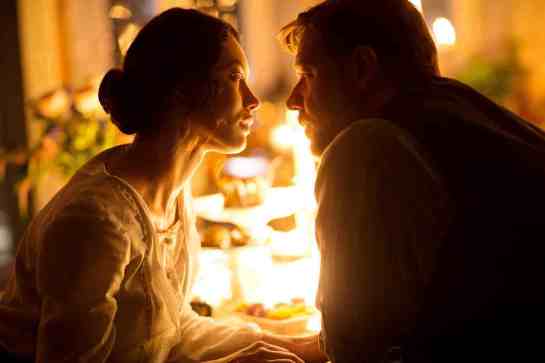
“The Water Diviner” doesn’t aim to be a historically thorough film. The story takes place after the war and the central focus is on a father’s loss of his three sons. In many ways the film highlights the futility of war and the devastating personal costs that follow. Crowe shows the post-war through several different perspectives while never taking a side or forming any conclusion. But all of that serves as a backdrop. It’s truly a story of loss and a father coping the best way he can while also struggling with his complicity in his son’s fate. That is the emotional current that drives the film which is why I think the controversy is unwarranted.

Crowe’s direction is solid but even more could be said about his performance. I feel Crowe is sometimes overlooked because we know he is always going to give a strong performance. In this film he is the linchpin and the emotion center. I always enjoy Kurylenko and she is good here. Unfortunately her character is restricted to a fairly obvious side story. Not so for Yılmaz Erdoğan. The Turkish actor and filmmaker gives us an incredibly compelling character and he tells so much through his tired, war-weary eyes.

Some may consider “The Water Diviner” to be a bit too melodramatic and some may struggle with the film’s shifts in tone. Others may get caught up in the well-publicized controversy. Instead I found myself caught up in the story that lies at the heart of the film and I was completely invested in the central character. Russell Crowe has given us a fine movie that once again spotlights his talents as an actor while also introducing us to his talents as a director. It definitely impressed me and he has certainly earned more opportunities behind the camera.

VERDICT – 4.5 STARS

TEST star

REVIEW: “Minions”

Minions_Revision_PROOF

There is such a thing as shamelessly milking a profitable idea for all its worth. There is also such a thing as a guilty pleasure. These two ideas collided for me in “Minions”. Maybe I’m being a bit unfair. Perhaps these mischievous yellow pills haven’t reached the point of being “shamelessly milked”. But there is no doubt Universal Pictures sees profit in these silly little creatures. There is also no doubt that I have fallen victim to their charm. I find them funny. They are a guilty pleasure of mine. But do they have enough to carry a feature film on their own?

We first saw the minions on the big screen in 2010’s “Despicable Me”. A sequel followed and now they have their own spinoff. “Minions” starts off with a brilliant telling of the creatures’ history narrated by Geoffrey Rush. We learn the minions have been around since the prehistoric times and they exist only to serve villainous masters. Their masters have included cavemen, Dracula, and Napoleon just to name a few. The problem is their waggish incompetence constantly lead to the deaths of their masters and eventually drives them to start a new life in solitude. This early sequence is easily the film’s funniest. From there things get pretty inconsistent.

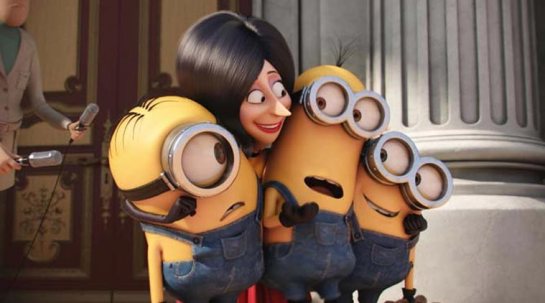
Minions1

Many years pass and the minions fall into a deep state of depression. A determined minion named Kevin realizes the only way for them to survive is to find a new villain to serve. Along with minion pals Bob and Stuart, Kevin sets put to find a new master and save his kind. It’s a truly noble task. Their quest takes them around the world until they eventually land a job with the world’s most famous villain Scarlett Overkill (Sandra Bullock). She and her eccentric husband Herb (Jon Hamm) head to London where their new minions are to pull of the grandest heist of them all.

While the opening is easily the funniest part, there are still laughs sprinkled throughout the rest of the film. This is mainly because I find the minions inherently funny. They offer several funny fish-out-of-water moments, lots of good-hearted ineptitude, and plenty of quirky sight gags. But the question remains – are they capable of carrying a full movie? “Minions” makes it hard to say yes.

Minion humor can be really funny, but this film shows they need other good characters to work with. Unfortunately they don’t get them. There isn’t a single non-minion character who is the slightest bit interesting or entertaining. Bullock’s Scarlett isn’t funny and much of her dialogue consists of long, drawn out ramblings. Herb is a throwaway character who offers nothing other his weird appearance. Most of the other non-minions basically run around, yell a lot, and act crazy.

Minions2

So that leaves the minions to their own devices and neither they nor Brian Lynch’s script has enough to carry the film. While funny in doses, the normal minion routine runs its course. Eventually we need more than their chirpy, unintelligible chatter and their cute and lovable incompetence. Eventually we need more than a seemingly endless stream of slapstick. But the movie does fall into this rut and the smattering of good gags aren’t enough to keep it afloat.

The youngster target audience will probably love every minute of “Minions”. I was with them to a point, but once the story abandoned the quest to find a master it bogged down and the humor grew inconsistent. I guess it makes sense. In the “Despicable Me” films minions exist to serve and support other characters. Maybe that’s why they were so good in those films but struggle here. Or maybe it’s the script that fails them and leaves the minions to fend for themselves. Whatever the case, these are still funny creatures and we see it in “Minions”. They just deserve better characters to work with especially if you’re making them the centerpiece of a feature length film.

VERDICT – 3 STARS

3 Stars

REVIEW: “Mission: Impossible – Rogue Nation”

Mission poster

After a couple of shaky early installments the “Mission Impossible” franchise seems to have found its stride. Personally I’ve never considered any of the films bad, but a couple definitely showed a dip in quality. But 2011’s “Ghost Protocol” gave the series a new and stable identity. It was an action-packed blockbuster anchored by an entertaining story and an almost self-deprecating sense of humor. Now we have the fifth film “Rogue Nation” which embraces everything right about its predecessor and then elevates it.

Say what you want about Tom Cruise but he is an actor who has redefined himself and he remains successful because he knows who he is at this stage of his career. His Ethan Hunt character in “Rogue Nation” perfectly encapsulates his current state. Gone are the cheesy “Top Gun” grins, the “Risky Business” dances, and the “Jerry Maguire” flamboyance. In this film Ethan is still an IMF super agent, but he is also overmatched, fragile, and often dependent on others. It’s a refreshing approach that makes Ethan less of a superhero and more of a human being.

The story begins with two separate battles taking place. The first is before a Senate oversight committee. CIA Director Alan Hunley (Alec Baldwin) is seeking to shut down IMF due to their reckless and damaging tactics (see the Kremlin from the last film as an example). Agent Brandt (Jeremy Renner) defends the group but to no avail. IMF is shut down and all field agents are to be placed under CIA control.

MISSION1

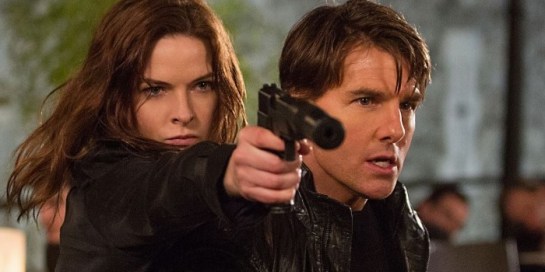
But Ethan Hunt is involved in another battle – a covert operation intended to expose a global crime consortium known as the Syndicate. Ethan is lured into a trap and captured by the Syndicate’s mysterious leader Solomon Lane (deviously played by Sean Harris). But an equally mysterious British operative named Ilsa (Rebecca Ferguson) helps Ethan escape without revealing her reasons or motives. Convinced more than ever that the Syndicate must be stopped, Ethan sets out to stop Lane while avoiding the hounding CIA and determining which side Ilsa is fighting for.

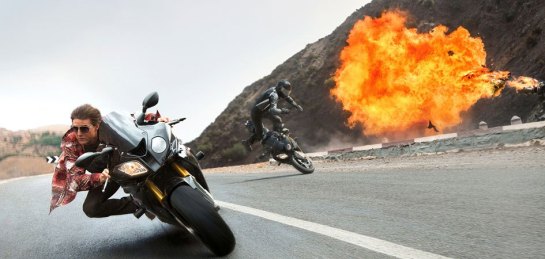
Cruise has a lot of input into these films and he wisely surrounds himself with quality filmmakers. Christopher McQuarrie directed, wrote the screenplay, and is a regular collaborator with Cruise. You may remember he won an Oscar for writing the brilliantly verbose “The Usual Suspects”. Here his script features the adrenaline-fueled action sequences, but it also services its characters with good dialogue and smart humor. Then there is the wonderful cinematographer Robert Elswit, an Oscar winner for his work on “There Will Be Blood”. His camera never frames a bad shot and it never lands in a bad place. His action scenes may be the biggest treat particularly an exhilarating car and motorcycle chase through the streets of Casablanca.

Mission2

Getting back to the story and particularly Cruise’s Ethan Hunt, I can’t say enough about how refreshing it is to see this type of lead character in this type of movie be so dependent on others. So many cliches and overused tropes are tossed aside to give us a more human Ethan Hunt even amid his crazy stunts and top-notch spy work. We repeatedly see him being rescued or him relying on the strength and wisdom of others.

This is mostly seen in his relationship with Ilsa. So often she bests him and at other times she saves his life. He’s no knight in shining armor. Actually I think it could easily be said that Ilsa is the toughest character in the film. Cruise’s performance often highlights her strengths. Plus it helps to have such a great performance from Rebecca Ferguson. What’s best about their relationship is that McQuarrie and Cruise don’t force a run-of-the-mill romance on us. I kept waiting for the movie to strike that all-too-familiar note. After all this is Tom Cruise, right? Instead the film deviates from yet another overused story development which was so satisfying.

There are so many other things I could say about “Rogue Nation”. I could talk about the beautiful locations and the global feel. I could talk about the rest of the supporting cast and the strong work they do. I could talk more about the story and its aversion to cliches while still being a big budget blockbuster. Instead I’ll just say “Rogue Nation” is a very good movie from a franchise that doesn’t always get the credit it deserves. It definitely rises about most of the other summer tent pole pictures we’ve seen. Now bring on MI:6.

VERDICT – 4.5 STARS
TEST star

5 Phenomenal Star Wars Lightsaber Duels

PHENOM 5

With the buzz for Star Wars growing as the new film approaches, I thought it would be cool to sprinkle in a few Star Wars related Phenomenal 5 lists leading into “The Force Awakens”. To start it off I wanted to look at one of the more unique things about the franchise – lightsaber duels. Whether it is the Jedi or Sith, lightsabers and the cool folks who use them have become a staple and a key component to the mythology. So today I’m spotlighting five of the very best lightsaber duels. Now with so many Star Wars opinions out there I wouldn’t call this the definitive list, but there is no denying that these five duels are nothing short of phenomenal. (Some spoilers included)

#5 – Yoda vs Count Dooku (Episode 2: Attack of the Clones)

YODA

This is certainly a lightsaber duel that lacks the weight of the others on this list, but Yoda’s encounter with Count Dooku deserves its place here. Obviously the duel wins points just for the fact that we finally get to see Yoda do more than lift an X-Wing out of a swamp. Actually we see the Jedi Master do ALOT more. Yoda sets aside his cane, pulls out his Yoda-sized lightsaber, and unleashes an offensive barrage of strikes, slashes, and flips. Afterwards he grabs his cane falling back into his humble, low-key image. I still remember the wild reaction this duel received from the theater crowd.

#4 – Obi-Wan vs Darth Vader (Episode 4: A New Hope)

OBI WADER

When comparing the lightsaber duels on this list this is the one that is the least impressive in terms of visual flare and physicality. But it is impossible to dismiss the gravity of this duel and how it effects the events that would follow. With young Luke Skywalker watching from a distance, Obi-Wan buys his comrades time to escape the Death Star by sacrificing himself to his old friend and former apprentice Darth Vader. The duel sent the Star Wars story in several new directions and the prequel trilogy added to it a new level of importance. It is truly a pivotal moment in the franchise.

#3 – Luke vs Darth Vader (Episode 6: The Return of the Jedi)

LUKE JEDI

Now we get to a point on the list where any of the final choices could be #1. Here I’ve chosen the unforgettable final face-off between Luke Skywalker and Darth Vader as the Emperor looks on, his evil plan working out to perfection. Luke and Vader duke it out on the newly rebuilt and fully operational Death Star and we know at the onset that the duel will be the final one. The three-way conversations, the manipulation, the betrayal, the redemption, the reconciliation. It is all interwoven throughout an intense and incredibly satisfying lightsaber duel between two of cinemas most iconic characters.

#2 – Darth Maul vs Obi-Wan and Qui-Gon (Episode 1: The Phantom Menace)

DARTH

This is without a doubt and without hesitation my very favorite lightsaber duel when it comes to physicality and fight choreography. It is the most exciting and most intense duel of them all, highlighting the Jedi and the Sith in their prime. It also doesn’t hurt that it includes one of the franchise’s coolest villains, Darth Maul, who is played by the immensely talented martial artist Ray Park. The duel is so fierce and fluid and the end result proves to be a key turning point in the lives of Obi-Wan, a young Anakin Skywalker, and the entire Jedi Order. This is one of my favorite sequences in the entire series and when the hanger doors open, Darth Maul lights his duel-ended lightsaber, and “Duel of Fates” from composer John Williams kicks in, I literally get chills.

#1 – Luke vs Darth Vader (Episode 5: The Empire Strikes Back)

LUKE VADER1

How do you beat this epic lightsaber duel? Simple – you don’t. The iconic first clash between Luke and Vader had been building and building. It finally takes place on Cloud City after Vader lures the young Jedi into his web. The duel itself is fascinating and it spans several different locations within the guts of the city. But what is even more fascinating is the conversation between Sith and Jedi, hero and villain, father and son. Yes, it is during this monumental Star Wars sequence that Vader reveals himself to be Luke’s father. I will never forget the shock I felt as a young kid sitting in the theater. Watching an overmatched Luke fight for his life and then be blindsided by a shocking revelation. It is a pinnacle moment in Star Wars and in this incredible duel.

So there are my choices. What do you think? Agree or disagree? I would love to read your thoughts in the comments section. Also be on the look out for a few more Star Wars related Phenomenal 5’s leading up to this winter’s big movie event.

2015 Blind Spot Series – “The Bicycle Thief”

BIKE POSTER

“The Bicycle Thief” came out during a difficult time of recovery and transition. It was November of 1948 and World War 2 was over. Italy was in political and economic turmoil. It was this setting that inspired the filmmakers of Italian neo-realism. Director Vittorio De Sica was first known as an actor but began directing films in 1940. “The Bicycle Thief” was a drastic change from his first films and the shifting Italian social structure along with the influence of friend and screenwriter Cesare Zavattini lead De Sica to embrace the neo-realist perspective on filmmaking.

“The Bicycle Thief” has long been considered the masterpiece of movement and the film received an honorary Academy Award at a time when there was no category for  foreign language films. The film is a clear example of Italian neo-realism. It deals in humanity and truth allowing the drama to come naturally through these things. There is no emotional manipulation or deception. Every scene in “The Bicycle Thief” feels grounded in reality at times to the discomfort of the audience.

Another neo-realist signature found throughout the film is the avoidance of sound stages and studio sets. De Sica shot his scenes on location which was partially due to budget, but it also took this truthful story to the places where it was happening. Every scene is grounded in the paralyzing poverty that the Italian people of the time would undoubtedly relate to. This gets back to the truth and humanity of the movement which sought to reveal, expose, and enlighten. Currents of social politics and commentary flow throughout the film energized by the ground-zero locations and realities.

BIKE1

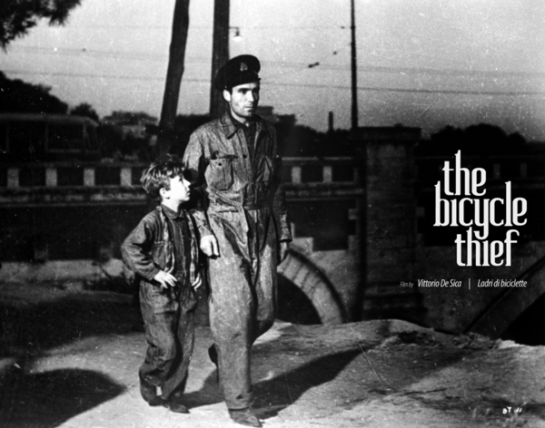
Sticking with the neo-realism approach De Sica avoided using professional actors for his roles. His star Lamberto Maggiorani was actually a factory worker who had brought his son to the set to try out for the role of young Bruno. Enzo Staiola, the boy eventually cast as Bruno, was spotted on the street corner watching the film being made while selling flowers with his father. For De Sica a real-world authenticity could be brought from untrained actors that you would never get from trained professionals. His perspective reminded me a lot of French auteur Robert Bresson.

The simplicity of the story may surprise you. It is very basic and direct yet its succinct 93 minutes never feel lightweight. In fact it translates human emotion and experience in ways that few movies have. Maggiorani plays Antonio, a husband and father desperate to find work in post-war, poverty-plagued Rome. We first see Antonio standing in an employment line filled with anxious men trying to provide for their families. Antonio lands a job offer pasting movie posters and advertisements around town. For him it’s the chance to finally get his family on the right track.

Bike2

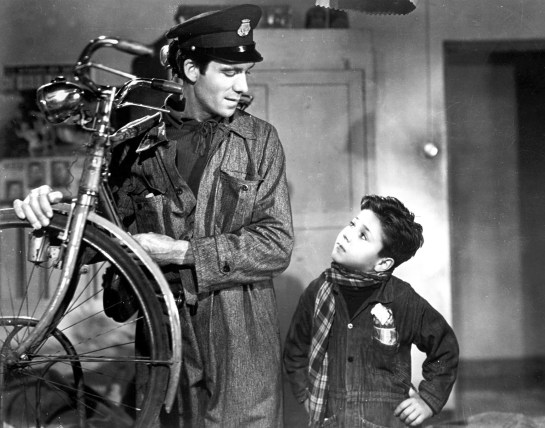
Unfortunately the job requires a bicycle and Antonio recently pawned his to put food on his table. His understanding and hardworking wife Maria (Lianella Carell) pulls the sheets from the beds and takes them to the pawn shop in order to get the bike back. A proud Antonio heads out to work the next morning. But as you can guess the bicycle is stolen leaving Antonio in a terrible position. Along with the help of his adoring son Bruno (Staiola) Antonio sets out to find the bicycle – a difficult task spanning different neighborhoods around the city.

The story follows a very straightforward path and Antonio encounters people with similar desperate circumstances. At times we see things through the eyes of a follower – a simple observer of Antonio’s determined attempt to reclaim his bike and his dream of providing a better life for his family. Other times I felt as if we were seeing things through the eyes of young Bruno – having the hardships of life opened up to him without a filter and watching his heroic father find what is rightfully his. But De Sica snaps us back to reality with several scenes between father and son that are truly heartbreaking. We realize that this isn’t a lighthearted affair and real life is hard and uncompromising.

In the end “The Bicycle Thief” paints a bleak picture of a troubling cycle. It takes abject poverty and theft and links them together to form a depressing revolving door. Some have used the film strictly for social commentary. Others have criticized the film saying it needed more of an edge. Personally I think “The Bicycle Thief” is better served as a story – one rooted in truth and one that holds up a mirror to the human experience and compels us to see the reality of it. Movies that can do that are rare, especially these days. That is why films like “The Bicycle Thief” remain timeless and special.

VERDICT – 4.5 STARS
TEST star

BIKE end

REVIEW: “What We Do in the Shadows”

SHADOWS poster

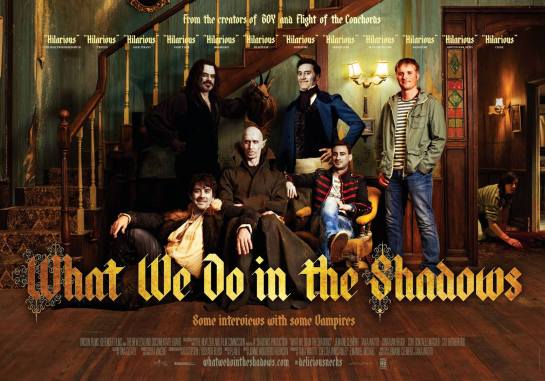
These days good comedies are a rarity which makes finding one all the more special. The genre’s landscape is overloaded with obnoxious raunchy comedies and shallow Sandler-esque toilet humor. If you aren’t a fan of those two brands finding an enjoyable modern comedy may be a chore. But “What We Do in the Shadows” is one of the rare exceptions – a highly original comedy that is also smart in its open embrace of absurdity.

Calling the film “smart” may be stretch for some, but I think the filmmakers are devilishly perceptive. Co-writers, co-directors, and co-stars Taika Waititi and Jemaine Clement are very well aware of the type of humor they are employing. The Wellington, New Zealand duo create a concept so ridiculous on the surface yet pulsing with focused energy and a satiric edge. It shows smarts in its concept, smarts in its execution, smarts in its structure, and perhaps most importantly smarts in its ability to maintain a genuinely funny premise from start to finish.

SHADOW1

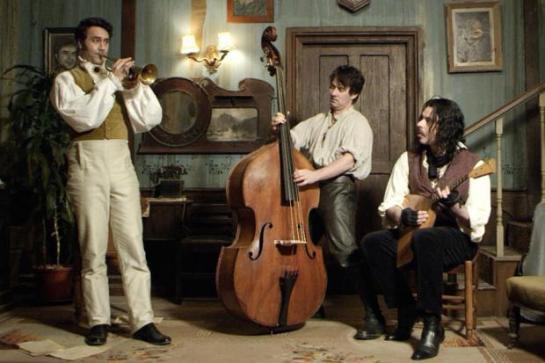
While pondering a way to describe the film I kept coming back to ‘a vampire mockumemtary meets “The Real World”. It presents itself as a found-footage reality show and/or documentary. The first thing we see is a cheap, grainy production graphic from “The New Zealand Documentary Board”. From there we are immediately injected into the world of four vampires living together in a Wellington flat. Our perspective is through the lens of a documentarian’s camera.

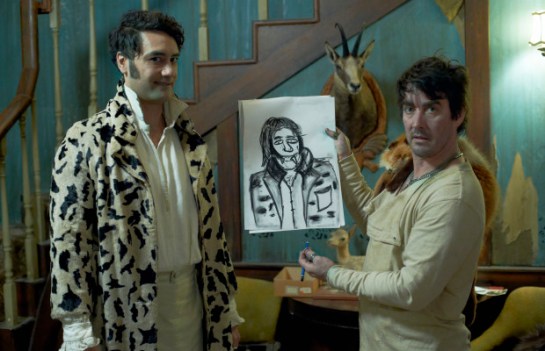
First we are introduced to the four vampires. The 379 year-old Viago (Waititi) is a good-hearted 16th century neat-freak. Vladislov (Clement) is an 862 year-old medieval fashionista. Deacon (Jonathan Brugh) is the youngster of the bunch – 183 years-old and a bit of a rebel. And then there is 8,000 year-old Petyr (Ben Fransham) who hisses more than speaks and has an uncanny resemblance to Count Orlok from “Nosferatu”. All four are uniquely funny which makes their quirky camaraderie a real treat.

It doesn’t take long to recognize the vibe Waititi and Clement are shooting for. The dry, deadpan humor. The constant awareness and conversations with the camera. The straight-faced approaches by the actors regardless of a scene’s nuttiness. All of it contributes to a movie which genuinely feels like a reality show or a documentary. It just happens to be spotlighting vampire roommates from different eras with very limited connections to the modern world outside their doors.

SHADOW2

Occasionally they go out to enjoy a socially awkward night on the town. Other times we see them having a “flat meeting” to discuss house duties. There are an assortment of camera confessionals talking about everything from lost loves to frustrations with roommates to favorite torture practices. And there are several funny bits after the boys are introduced to the wonders of YouTube, eBay, and Skype. Most of these scenes are given to us in pinches which are the perfect portions. They also toss in a very small handful of side characters who serve the story nicely.

“What We Do in the Shadows” is such a breath of fresh air. It’s a comedy that consistently delivers laughs without clinging to unfunny cliches or the hot current genre trends. Rarely does the movie miss a beat and its cleverness shows itself in a host of ways. It is subtly subversive, subtly satirical, and openly absurd. Waititi and Clement craft one very funny movie that clearly isn’t a film for the movie masses. I can see some people rolling their eyes and some people dismissing it altogether. I found it to be a hysterical reminder that there are comedies willing to do their own thing and do it very well.

VERDICT – 4.5 STARS
TEST star