REVIEW: “The Fault in Our Stars”

FAULOT POSTER

It’s a shame that the modern movie culture in Hollywood automatically causes me to be leery of films like “The Fault in Our Stars”. Sure it’s based on a novel loved by millions, but countless times Hollywood has shown its ineptitude in realizing these kinds of stories on screen. Well this film turned out to be a huge success raking in over $300 million at the box office. But we all know that a hefty box office take doesn’t always signify a quality movie. Thankfully “The Fault in Our Stars” tells a better story and features a compelling lead performance.

Shailene Woodley plays Hazel Grace Lancaster, a smart and witty teenager who happens to have stage four lung cancer. Her illness started in her thyroid at an early age and she has fought it since. There is no build up towards the severity of her illness. All of the cards are put on the table at the very beginning. We quickly know that she is dying. We quickly sense her day-to-day struggles. She can’t walk long without shortness of breath and we never see her without her oxygen. This is her life and we are given just enough exposition to ground us and prepare us for this story.

FAULT1

Her parents are played by Laura Dern and Sam Trammell and they are a breath of fresh air. There is no family dysfunction. There is no abuse. There is no absentee dad. They are stable and loving parents, something rarely depicted in Hollywood these days. Overprotective and obvious? Perhaps. In fact in an early scene Hazel’s mother is convinced her daughter is depressed. She encourages Hazel to join a support group. As fate would have it, she meets a hunky fellow named Gus Waters (Ansel Elgort). At first he reminded me of a stalker, but he soon wins Hazel over with his charming personality and his pearly white smile which the camera captures over and over and over….

Despite being a bit corny, Gus is a good, earnest guy. He lost part of his leg to bone cancer, but it doesn’t seem to dampen his spirits. That’s exactly what Hazel needs. She needs his honesty, his positivity, and of course his love. It’s not that she doesn’t resist. She does show hesitation, but thankfully the film doesn’t wander down that overused and familiar path. Instead it actually presents us with situations and a relationship that feels genuine yet uncertain because of the dark cloud hanging over it.

There is something else I found refreshing about “The Fault in Our Stars”. It was nice to see two teenaged characters without the same hackneyed problems and attitudes that we often get in teen movies. Aside from cancer, Hazel and Gus are smart, well adjusted teens without a host of personal or emotional problems. It was a nice change from the routine damaged bad boy or smart, sharp-witted loner girl. The characters of Hazel and Gus are quite different than that.

FAULT2

Overall the film tells a good story, but it doesn’t mind flipping a few conventional switches. There are a handful of scenes that are so clearly intended to bring on the tears. Some were incredibly cheesy and felt out of place and false. One particular contrivance appears at the end and is too much of a stretch. Then there is Elgort’s performance which is uneven and sporadic. For the most part he has an undeniable charm, but there are also moments where he looks stagy and uncertain. It also doesn’t help that he shares scenes with Woodley. She’s a fabulous young actress who manages this material with conviction and wit. She makes Hazel feel true and authentic even during those few times when the movie doesn’t.

“The Fault in Our Stars” will definitely have many people reaching for their tissue. In fact even I got a bit misty during the moments that played out naturally. Unfortunately the movie doesn’t always feel natural. But I still give it a lot of credit. It has some refreshing components that distance it from the normal teen tripe. It also handles a very difficult subject tenderly and responsibly. And it is yet another showcase for Shailene Woodley, a young actress who seems to get better with every role she takes.
VERDICT – 3.5 STARS

REVIEW: “The Theory of Everything”

THEORY POSTER

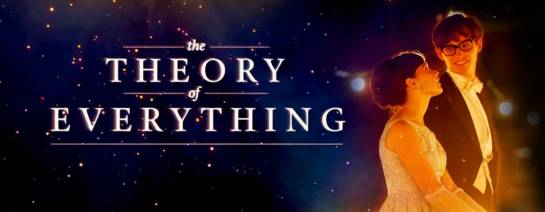
Renowned theoretical physicist Stephen Hawking has often found himself the object of a rather unusual fascination from the entertainment industry. Beyond the number of documentaries made about his life, he also appeared in everything from “Star Trek” to “The Simpsons”. But surprisingly there hasn’t been a biographical feature length drama until James Marsh’s “The Theory of Everything”. The film offers a unique romantic perspective by putting its main focus on the relationship between Stephen and his first wife Jane Wilde Hawking.

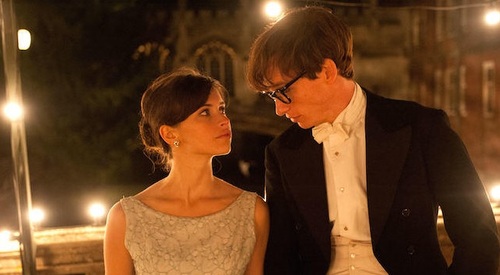
The film is based on Jane Hawking’s book “Travelling to Infinity: My Life with Stephen”, an updated version of her previous released biography. The story begins in 1963 when a young cosmology student named Stephen (Eddie Redmayne) meets a literature student named Jane (Felicity Jones) at a Cambridge University party. The two are clearly opposites but there is an undeniable attraction between them. There relationship grows as Stephen excels in his studies of science and mathematics. He is particularly encouraged by his professor (David Thewlis) who sees the amazing potential in Stephen’s intelligence and ideas.

THEORY1

Redmayne and Jones have a surprisingly good chemistry which makes the relationship between their characters easy to buy into and digest. Stephen approaches Jane much like he does everything – systematically and very matter of fact. But she offers the perfect personality and balance to the unorthodox Stephen. Watching the relationship grow and flourish is the film’s most compelling dramatic component. But their affection is almost derailed after Stephen learns he has motor neuron disease. He is given two years to live and closes himself off from everyone especially Jane. But her love and determination not only keeps them together but gives Stephen the needed feeling of normalcy and the inspiration to keep fighting.

“The Theory of Everything” chronicles Hawking’s debilitating disease and the punishing toll it takes on his body and life. But it also highlighted his inspiring resilience and emphasized the unquestioned devotion of Jane. Redmayne is just superb offering several emotional levels to his character while also capturing the increasing physical impairments that end up leaving him bound to a wheelchair and unable to speak. The film is respectful in its handling of the illness and doesn’t exploit it for dramatic effect. But it’s Redmayne who makes it work by immersing himself into the character and avoiding many of the trappings that accompany this kind of role.

I was also surprised at just how much I enjoyed Felicity Jones. She’s charming, genuine, and energetic. Even more, there are times where she actually lifts up the material and makes a line of dialogue or emotional interaction work despite the occasional shortcomings of the script. James Marsh is a skilled documentarian and his work here shows that to be both an asset and a liability. This truly is a beautiful film to look at. There are a number of eye-grabbing shots and some interesting camera tricks. I particularly liked how the camera would sometimes move as if inspired by Hawking’s thorough perspective. It would scour a room or individual soaking up information much like Hawking himself.

THEORY2

But sadly the film isn’t without its problems. It does avoid drawn out discussions of thermal dynamics and cosmology while still representing Hawking’s scientific specialty. But there were moments where the science felt shoehorned in. The film also uses several common biopic devices which keeps it from being anything fresh in the crowded genre. And then there is the last 15 minutes which felt terrible rushed and seemed to cover a few random events meant to tidy everything up. It comes off feeling like the film ran out of time necessitating a quick and clunky ending.

There is still a good story to be found in “The Theory of Everything” despite its standard biopic flavor and rushed ending. In fact it has moments where it absolutely shines. But the performances are the real treat especially from Redmayne who gives us the best work of his young career. It’s hard to watch him and not be impressed with the effort and earnestness he puts into every facet of the Stephen Hawking character. For someone like myself it was a surprise performance and it is hard to argue with his Oscar nomination and win. Now let’s just hope that his “Jupiter Ascending” performance didn’t undo the recognition this film has earned him.

VERDICT – 3.5 STARS

REVIEW: “Anchorman 2: The Legend Continues”

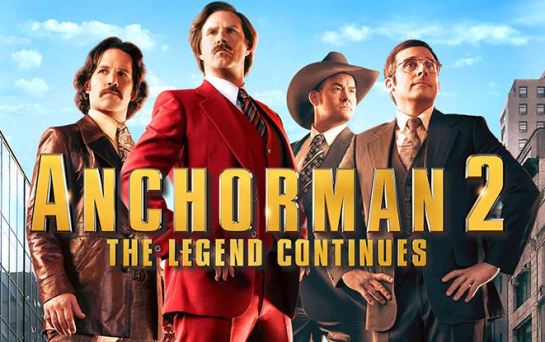
ANCHOR POSTER

I’ve never shared in the enthusiasm or admiration for “Anchorman: The Legend of Ron Burgundy”. The 2004 comedy was a box office success but it gained most of its following in the subsequent years. To my surprise the film has a legion of devoted fans who adore these characters and can quote line after line. For me the first “Anchorman” film had its moments but ultimately it milked its gimmick dry and it grew old fast.

Surprisingly it took almost 10 years for a second installment to hit theaters. That’s unheard of in this modern movie era of churning out cash grab sequels by the gross. This time around we get more of the same familiar gimmick, many of the same gags, and the same wild sporadic storytelling. This is probably good news for fans of the first film, but for me it was another mediocre experience with even less laughs than the first movie. To make matters worse it’s almost 30 minutes longer making it a grinding endurance test for those not smitten with its humor.

ANHCOR 1

Seven years have passed since the events of the first film. Ron Burgundy (Will Ferrell) and Veronica Corningstone (Christina Applegate) are married and living in New York City. Both are successful co-anchors at a popular local news station, at least until Veronica is offered a prominent evening news position and Ron is fired. Ron’s ego takes over and he gives her an ultimatum – the job or him. The couple separate and Ron takes up petty jobs and heavy drinking.

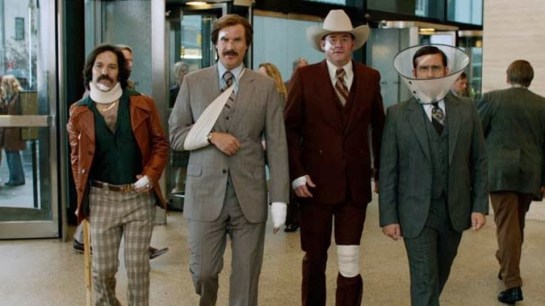
But opportunity knocks when Ron is approached by Freddie Shapp (Dylan Baker). He offers Ron a job at the first ever 24-hour news network. Ron searches out his old news team of Champ Kind (David Koechner), Brian Fantana (Paul Rudd), and Brick Tamland (Steve Carrell). The four get back to work and turn things upside down with their barrage of juvenile, racist, and sexist stupidity. Some of these moments do provide some good laughs. But honestly there are so many back-to-back jokes that some were bound to land. Eventually they all but disappear and the movie seems to repeat variations of the same gags over and over and over and over.

ANCHOR2

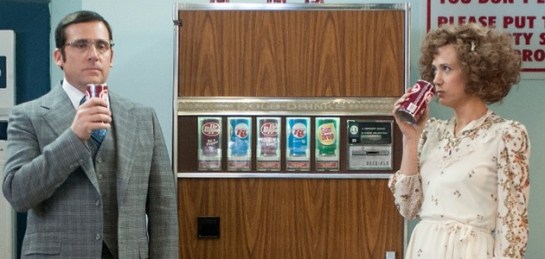
Ferrell is certainly comfortable playing Burgundy and he has never been ashamed to make himself look ridiculous in order to get a laugh. Often times it’s the sheer earnestness of his idiocy that is the most effective. But after a while I just wanted him to go away. Rudd and Koechner are the same – funny for a spell but then they sputter. My personal favorite character is Steve Carrell’s Brick. He’s a lovable imbecile whose humor mainly consists of spontaneous statements that make no sense whatsoever. Carrell is so good in the role but even he eventually becomes repetitive and tiresome.

“Anchorman 2” has the expected surprise cameos (most of them crammed within one small sequence) and a couple of intentionally absurd musical numbers. None of these can save this overly long and monotonous sequel. Eventually I had had enough of the toilet humor, body part gags, and rehashed jokes. Ferrell and frequent collaborator Adam McKay have had plenty of success putting things like this together and this film certainly registered with the “Anchorman” faithful. Personally I wouldn’t be sad if I never saw Ron Burgundy again.

VERDICT – 2 STARS

5 Phenomenally Horrible Movie Fathers

movie_theatre - Phenom 5

One of my great joys in life is being a father. It’s a blessing that is beyond expression. As with many wonderful things in life, the movies have a way of capturing them and reminding us of their beauty. On the flip side cinema can also show us darker things. When it comes to fathers movies have shown us the good and the bad. This list looks at some of the more abominable fathers of the big screen. There have been a number of detestable movie dads over the years so I wouldn’t call this the definitive list. But I have no problem calling these five movie fathers phenomenally horrible.

#5 – Royal Tenenbaum (“The Royal Tenenbaums”)

DAD ROYAL

Over the years Wes Anderson has come up with a wide assortment of characters. One of them is a father who is right at home on this list. Royal Tenenbaum (played by Gene Hackman) has all of the characteristics of a horrible dad plus a few. He steals money from his kids, shows obvious favoritism, belittles them, and always thinks of himself first. If that doesn’t convince you how about faking stomach cancer in order to get back in their good graces? Yep, Royal Tenenbaum definitely belongs on this list.

#4 – Wade (“Joe”)

JOE

I had a very unique impulse while watching Wade in David Gordon Green’s “Joe”. I wanted to jump through the screen and strangle the guy myself. Wade is a vile and detestable drunk who abuses his family both mentally and physically. And this only scratches the surface of his sickening behavior. I won’t spoil it, but lets just say he does some things that will make you cringe. Wade was played by Gary Poulter, a real life homeless man who was found dead before the film was ever released. It was a sad development for someone who gave a great performance.

#3 – Jack Torrance (“The Shining”)

LYNCH

It’s really a shame that Jack Torrance had to make this list. He has a loving wife and a sweet (but unique) little boy. They get a gorgeous mountain resort all to themselves for the winter which is a perfect place for Jack to continue his writing. But there is something about chasing your son around the hotel with an axe that will get you on this particular list. You know the story, Jack goes insane. We see his mental slide reveal itself in his relationship to his family but once he reaches the point of murdering them…well, lets just say he won’t be winning any “Father of the Year” awards.

#2 – Daniel Plainview (“There Will Be Blood”)

DANIEL

I think Daniel Day-Lewis’ performance in “There Will Be Blood” is one of the greatest single acting performances of all time. That’s pretty high praise, right? Well I think it is earned. His Daniel Plainview is a self-centered and unscrupulous businessman who uses his young son H.W. as a tool to persuade land owners to allow him to drill for oil on their property. We get vague signs that Daniel has some form of affection for the boy. But ultimately his negligence and business approach to his son is a most devious form of abuse. It all comes to the surface in a final confrontation between the two close to the end. Daniel Plainview is a fascinating but ultimately horrible father.

#1 – Darth Vader (“Star Wars” trilogy)

VADER

I’ve offered up an assortment of terrible fathers who have a number of detestable vices, but none of them can be called a galactic tyrant. Well, not until now. It could be said that Darth Vader (aka Anakin Skywalker) gets a little pass because he didn’t know Luke and Leia were his children. I object. Just look what he did after he uttered those famous words “I am your father”. He tortured his son’s best friend and sent him off with a bounty hunter. He chopped off his son’s hand. Upon finding out about Leia’s existence he thinks it’s a good idea to kidnap her and turn her to the dark side. Add his murderous past to the equation and you have one rotten father. But thank goodness for those great moments of redemption.

So there are five pretty crummy movie fathers. What say you? Do you have a bad dad to add to this list? Please head to the comments section below and share your choices or thoughts on mine!

REVIEW: “Two Days, One Night”

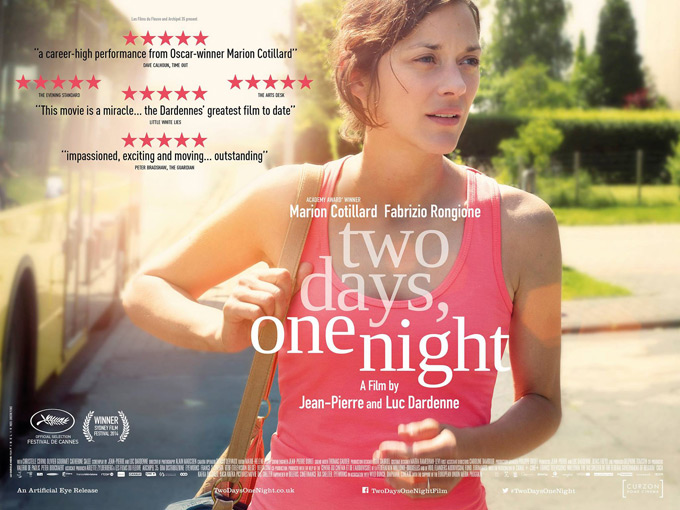
TWO POSTERI have this insatiable appetite for watching great actors or actresses work. I mean we all appreciate good acting, but for me there is something special about losing myself in great performances – a type of overwhelming and unequivocal admiration which enhances any moviegoing experience I may have. And there are certain actors and actresses who I know will automatically give these types of magnetic performances. One such actress is Marion Cotillard. Readers of mine probably know I think highly of her. In fact she holds a prominent spot on my “Greatest Series” list of the best actresses of all time (you can see that list HERE). She is one of the most intense and natural performers I have ever seen.

Cotillard’s latest movie teams her with the Belgian born Dardenne brothers and she once again shows off her wealth of talent. “Two Days, One Night” features several of the Dardennes’ thematic signatures. Most notably, their films take a naturalistic look at common, everyday people who often find themselves in difficult situations. There is no gloss or showiness to a Dardenne picture. Their movies tend to be unsentimental and they never romanticize their subject matter. In many ways it is as if they are holding up a cinematic mirror to human struggles which can make their films a bit bleak and depressing.

TWO DAYS1

In “Two Days, One Night” Cotillard plays Sandra. She’s a wife and mother working at a solar-panel plant in a Belgian industrial town. While on sick leave recovering from a nervous breakdown, Sandra is informed she has lost her job. While she was away her colleagues earned more money covering her shifts and management offers them a €1000 bonus if they vote to absorb Sandra’s position. The news hits the already emotionally fragile Sandra hard since her family depends on her salary to keep their home and to stay off government assistance.

But Sandra is encouraged by a friend and co-worker named Juliette (Catherine Salee) who convinces the company’s head to have another vote to decide Sandra’s fate. That gives Sandra a weekend to go visit each of her 16 co-workers in hopes of persuading them to give up their €1000 bonus and vote for her to get her job back on Monday morning. This would be a nerve-racking and uncomfortable task for anyone, but toss in the complication of her recent nervous breakdown and Sandra has seemingly insurmountable odds to overcome.

Most of the film follows her visits to her co-workers and the various exchanges they have. Through these brief interactions the Dardennes spotlight various shades of human nature, but there is more to it than just that. There is also the constant emotional struggle that often times gets the best of Sandra. Even the support of her patient and faithful husband Manu (Fabrizio Rongione) isn’t enough. We get a truly visceral and earnest portrait of depression that works so well due to the Dardennes’ disciplined focus and Cotillard’s sublime performance.

TWO2

Cotillard has this unmatched ability to deglamorize herself and become whatever her role requires. We’ve often seen this from her in the past and it is definitely on display here. She gives a subdued and low-key performance, perfectly fitting for the portrayal of a woman struggling within her bubble of depression. And she truly does carry the movie. She appears in almost every scene and the filmmaker’s confidence in her is crystal clear. She doesn’t overplay her role (which we often see in the these kinds of performances) and she doesn’t give us a single false scene or line of dialogue. It’s a performance unquestionably worthy of her recent Oscar nomination.

As usual the Dardennes write, produce, and direct “Two Days, One Night” which makes the film
undeniably their own. I appreciate their many creative touches from the strategic lack of a musical score to Dardenne favorite Alain Marcoen’s subtly attentive cinematography. I also love the unfeigned realism of their subject matter which is such a fresh change from the big studio norms of today. It also doesn’t hurt having a phenomenal lead performance to drive the film. Together all of these ingredients make “Two Days, One Night” another great entry into the Dardennes’ filmography and another shining example of why Marion Cotillard is arguably the best actress we have today.

VERDICT – 4.5 STARS

2015 Blind Spot Series: “La Dolce Vita”

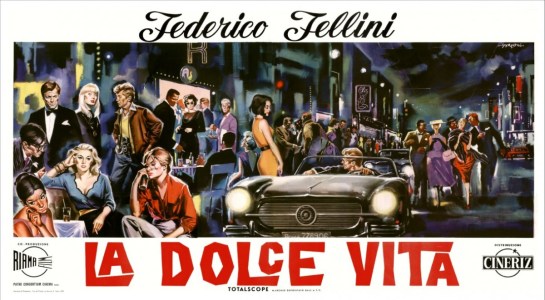
VITA POSTER

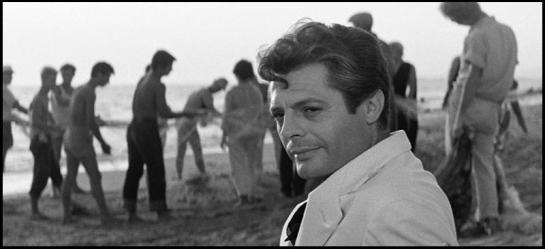
For the film’s main character Marcello, La Dolce Vita or “the sweet life” is like a carrot dangling before a horse. It keeps him moving forward while remaining out of reach. Marcello, played with spot-on precision by Marcello Mastroianni, searches for happiness, contentment, and fulfillment – that good life hinted at by the movie’s title. But for him they are unattainable dreams. Or are they unattainable? Are they goals meant only for the more talented and affluent? Are they far-fetched canards that prey on gullible optimists? Or do they really exist if only he were looking in the right places? This is a small handful of the questions asked in “La Dolce Vita”.

Federico Fellini’s seminal classic has been broken down, dissected, and interpreted a number of different ways. The film’s basic structure becomes apparent as the movie progresses. It basically consists of seven independent episodes bookended by a prologue and an epilogue. It’s common timeframe starts at nighttime and then moves to the dawn that follows. Marcello serves as the common link between each episode. Many critics have highlighted the film’s significant sevens: the seven episodes, the seven deadly sins, the seven virtues, etc. This is an intriguing perspective that begs for a more careful examination of the film. Personally I’m more drawn to other concepts and themes that Fellini explores.

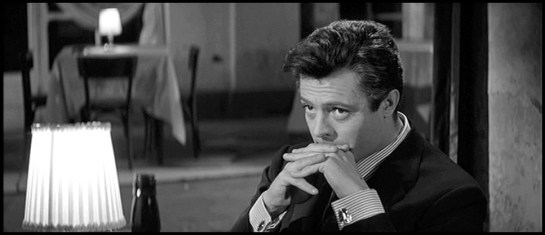
DOLCE1

Marcello is our connection, our mooring, the pulsing blood vessel running through the entire film. Early in the movie he comes across as spirited and confident. In the famous opening prologue a helicopter is transporting a huge statue of Christ to St. Peter’s Square. Marcello follows in a second helicopter filming the event, but takes a detour to solicit phone numbers from some rooftop bathing beauties. In the first episode we see him at a lively nightclub where he brushes off the threat of a man who wants to “smash his face” and leaves with a beautiful heiress. In both of these scenes Marcello appears to be self-assured and full of energy.

But as the film moves forward and the layers of the character are peeled back, we see a very different man. Marcello is a tabloid journalist whose work consists of chronicling the escapades of wealthy socialites, pseudo-actors and actresses, and self-indulgent playboys. It’s shallow and unfulfilling work that does nothing to satisfy his desire to be a serious writer. In fact the longer we stay with Marcello, the clearer we sense his growing state of melancholy.

DOLCE3

Marcello Mastroianni perfectly displays the suave, voguish facade Fellini is going for. Mastroianni’s handsome face, well-groomed hair, fancy suits, and stylish sunglasses sells us a character who seems cool and satisfied. But we watch him grow more weary and jaded with each passing episode, with each superficial aristocrat he encounters, with every shallow and spurious ‘news story’ he covers. Through Marcello the film builds up a lavish, attractive, self-indulgent perspective and then knocks it to the ground. It tempts us to indulge in the trendy excesses of “the sweet life” while at the same time systematically destroying the very idea of “la dolce vita”.

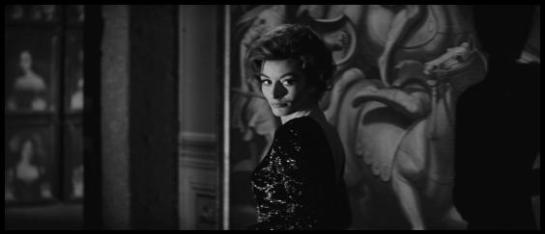
Fellini’s view of the good life and the quest to capture it could be called cynical. But it could be he is pointing to a particular perception of the good life (one that was especially popular in 1959 Rome) and focusing on its seductive dishonesty. The film gives us plenty of great scenes and characters to examine in our search for answers. There is the early nightclub scene and the meeting of Maddalena (Anouk Aimée), a rich and beautiful heiress who sees Marcello as her man of convenience. He clearly has feelings for her, but she basically uses him as her toy.

DOLCE2

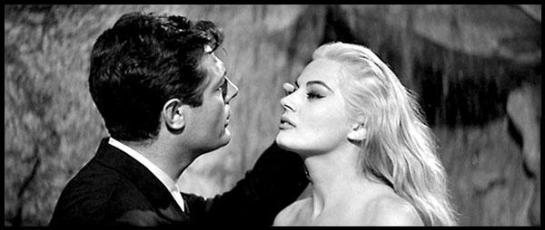
Then there is the famous episode with Sylvia (Anita Ekberg) a ravishing buxom blonde actress from America. She arrives in Rome and Marcello is to report on her stay. Swarmed by obsessed news reporters (it’s from “La Dolce Vita” that we get the word paparazzi) Marcello dismisses Sylvia at first. But soon he falls for the ‘perfect woman’ aura that surrounds her and which culminates in the film’s most memorable moment – wading in the Trevi Fountain. But like waking up from a dream, Marcello’s romantic moment dissolves before his eyes. Again, something else outside of his reach.

Perhaps the most telling is the three-part episode revolving around Marcello’s friend Steiner (Alain Cuny). He’s a wealthy intellectual who represents everything Marcello hopes to be. He’s has a luxurious home, the perfect family, high-class friends. In one scene Marcello and his unstable fiancé Emma (Yvonne Furneaux) attend a party at Steiner’s home. Marcello loves mingling with Steiner’s poet, artist, and intellectual friends and at one point Emma tells him that someday he will have Steiner’s material and social affluence. But in the third act of Steiner’s episode Fellini hits Marcello and us head-on with a not so subtle smack of reality. Another dream crushed under the weight of truth.

DOLCE4

This only scratches the surface of “La Dolce Vita ” and its numerous themes and concepts. I could talk about the scene where Marcello is typing at a seaside cafe and meets a young waitress named Paola – perhaps the one truly innocent character of significance he encounters. I could speak of the episode where Marcello’s father pays a visit. It’s the only clear look we get into Marcello’s past. I could go on and on. Fellini gives us so much to talk about and he never wastes a moment. Every episode and every scene offers something of narrative, thematic, or cinematic value.

I could go on and talk about the incredible visual technique used by Fellini, the diverse and personality-rich locales, the beautifully strategic use of music. With “La Dolce Vita” Federico Fellini has created a masterpiece that feeds off of every aspect of the cinematic experience. He captures your eyes with his entrancing visuals, he sucks you in through his fascinating characters, he challenges you through his intelligent thematic examinations. In a nutshell “La Dolce Vita” is cinema that we don’t see these days. Thankfully Fellini gave us this rich classic that is always worth revisiting.

VERDICT – 5 STARS