REVIEW: “The 400 Blows”

Francois Truffaut heads the list of great directors whose work I’m fairly unfamiliar with. Truffaut was an esteemed French filmmaker who was also a father to the French New Wave of the late 1950’s and 1960’s. He was deeply critical of the state of French cinema in the mid-50’s and eventually begin to make films of his own. His first feature-length picture came in 1959 with “The 400 Blows”. This is my launching point into the films of Truffaut and what a wonderful way to start. “The 400 Blows” is a gripping and deeply penetrating picture that instantly grabbed me with its heartfelt realism and its crisp visual style. And judging by this, his initial effort, there’s a clear reason why Truffaut is heralded as one of the most influential filmmakers in cinema history.

“The 400 Blows” follows 12-year old Antoine (played wonderfully by Jean-Pierre Leaud) and his life in 1950’s Paris. At first Antoine comes across as unruly and rebellious. But as the story unfolds we see that he is inundated with negative influences. His father is a forceful and sometimes pernicious authoritarian who takes the frustrations from his life out on his son. His abusive temper shows itself physically and verbally even to the point of publically humiliating his son . His mother is even more unhappy and discontent and she lets it show through her emotional negligence and general disinterest in her son. It’s only after Antoine catches her in an affair that she begins to show affection for him but even that is grounded in her own arrogant self-interest. Even at school Antoine faces his teacher whose meanness is based on his assumptive judgements that Antoine is and forever will be a bad kid.
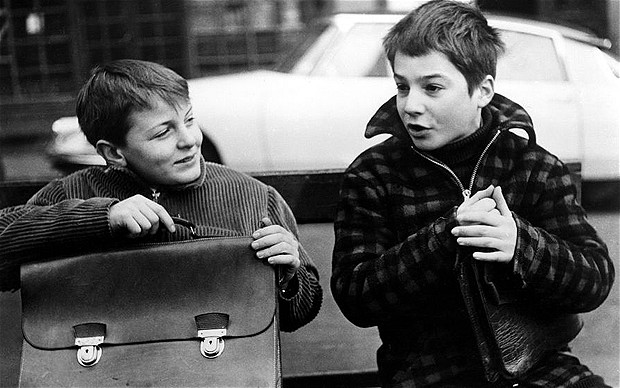
Antoine finds refuge on the streets of Paris and in the company of his best friend Rene (Patrick Auffay). Rene is a mischievous type and it’s uncertain whether he’s the best influence either. But the two have a true friendship which Antoine depends on. Some of the movies best scenes are with these two friends walking the streets of Paris talking back and forth. As things break down at home and at school, Antoine sees the streets as his only out and it’s Rene who’s there to help him survive, although not always in the most wise of ways.

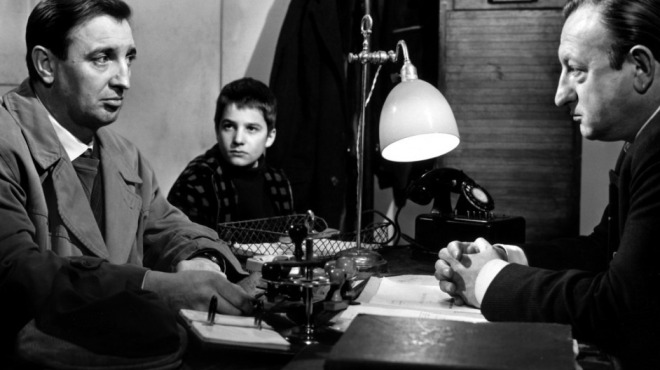
At its core, this is really a heartbreaking story. It’s a perfect example of a young boy being a product of his environment yet fighting hard not to be. Those who should be the stable, influential forces in his life utterly fail him. Even the law enforcement system heartlessly mistreat him later in the film. But Antoine just wants to be a little boy. We get to see the childlike yearnings for a stable home with a loving mother and father.
400

There’s a scene where Antoine is at home alone with his father and they are preparing dinner. It’s one of the few instances where his father is being a father. Truffaut elegantly shows Antoine’s love for this father-son moment through the young boys gazes and expressions. There is also another scene where the family goes out to see a movie together. For these few moments we see the happy family that Antoine wants and needs. Sadly, these are anomalies – exceptions to an otherwise dismal life for the 12-year old.

“The 400 Blows” is a powerful movie that will take you through a wide range of emotion. We experience the playfulness and cruelty of life along with the young boy. Before long, we’re rooting for him yet we’re uncertain of what the future holds right up to the last shot. It’s truly a magnificent film that put Truffaut on the map and I can certainly see why it remains influential to this day. It’s gorgeously crafted, deeply moving, and features penetrating performances. Enough with the adjectives. Let’s just say I loved “The 400 Blows” and I can’t wait to dive into more of Truffaut’s work.

VERDICT – 5 STARS

5 STARSs

5STAR K&M

REVIEW: “Shadow of a Doubt”

Alfred Hitchcock gets a lot of praise for his classic films such as “Vertigo”, “Psycho”, “Rear Window”, and “The Birds” and rightly so. But for those who aren’t familiar with the director’s full body of work, “Shadow of a Doubt” is one of his movies that may be easily overlooked. But to miss out on this wonderful early Hitchcock classic would be to miss out on one of his very best movies. This 1943 thriller has all of trademarks of a Hitchcock film and one of the strongest stories that he has brought to film.

“Shadow of a Doubt” was shot and set in Santa Rosa, California, a location picked for its picture of small town America. Charlie Oakley (Joseph Cotten) arrives in Santa Rosa to pay a visit to his sister Emma (Patricia Collinge) and her family. He hasn’t seen them in years and they receive him with open arms, especially his niece Charley (Teresa Wright) who was named after him. Charley has become bored with her life in her small town and the arrival of her uncle gives her a spark. But her uncle’s visit isn’t without purpose and Charley soon finds out that he is far from the wonderful man she thinks him to be.

The opening scenes let us know that there’s something mysterious going on with Charlie. Later he arrives in Santa Rosa and is doted on by his enamored family. He also draws the attention of and captivates many of the locals from bankers to widows. But he’s also hiding a very dark secret that eventually becomes a key driving force behind the film. In fact, Hitchcock gives us a compelling look at the dark reality of the real world infecting the innocent, idyllic life of a small town. Young Charley soon learns that the world can be a dangerous place and watching Teresa Wright portray Charley and her emotional transformation is a joy. Wright is brilliant. She’s lovely in her innocence and naivity and heart-breaking as we watch her face terrible things and bear huge burdens. I’m being vague and don’t want to spoil things for those who haven’t seen the film, but Charley is a wonderful character and Wright nails the performance.

I also loved Joseph Cotten as her Uncle Charlie. At first we love him just as much as the family does. He’s like that distant uncle who you haven’t seen in forever but you still think he hung the moon. But the problem is that you haven’t seen him therefore you really don’t know him. I bought into Charlie, the nice compassionate man, and was unnerved as he evolved into an entirely different person. This is due to how wonderfully he is written and to Cotten’s brilliant performance.

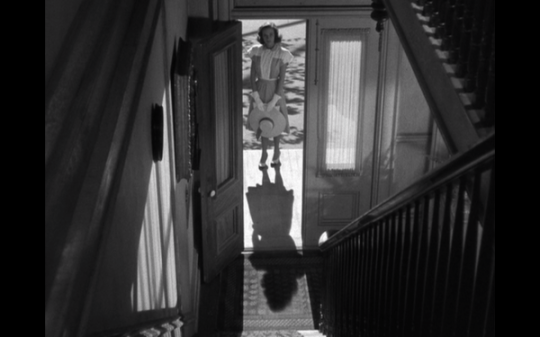
The movie also works due to what has come to be recognized as Hitchcock’s unique visual style. As with every Hitchcock picture, the camera is extremely important to his storytelling. We are treated to some slick camera angles and tricks as well as some clever use of lighting and shadows which helps inject the movie with moments of tension and suspense. Some of the best scenes involve moving cameras or perfectly timed close up shots and overall the visual style is vintage Hitchcock.

“Shadow of a Doubt” is an exceptional thriller built upon a very good story, some pitch-perfect performances, and slick direction. It’s not as well-known as some of Hitchcock’s bigger films but it’s just as good as them and it has certainly earned its spot as a true classic. The story moves at a great pace and it keeps you involved all the way to its startling ending. I really like “Shadow of a Doubt” and its one of those movies that I could watch again and again.

VERDICT – 4.5 STARS

REVIEW: “House on Haunted Hill” (1959)

I’ve recently spent a lot of time concentrating my movie watching on the horror and science fiction movies of the 1950s. This has proven to be a wonderfully entertaining project that’s allowed me to revisit movies I haven’t seen since I was a child as well as see new films that have been a joy to discover. Such was the case with William Castle’s “House on Haunted Hill”, a movie that I had heard of but never had the opportunity to catch up with. Now after finally seeing it, I can honestly say that I was thoroughly entertained. It’s a solid mixture of eerie tension and classic camp presented through a simple yet effective story.

The great Vincent Price stars as a mysterious millionaire named Frederick Loren. Imagine that, Price playing a mysterious character. Loren has rented a house with a very violent history and has invited five individuals to spend the night there. He bribes each with the possibility of making $10,000 each. All they have to do is live through the night. The entire thing is painted to be some type of twisted party for his wife Annabelle (Carol Ohmart). But soon the guests are terrorized by several unexplained occurrences and they begin to question whether or not the house is haunted or if they are in the middle of something much more sinister.

Of course we ask ourselves why these people would ever agree to come to such a creepy place to begin with. But in the opening of the movie, as the five are each brought to the house in their own hearse, we learn that each has their own important need for the money. As the story unfolds, I found myself being suspicious of several of the people while never being able to finger any of them. That’s a mark of good, suspenseful storytelling. Now I have to admit, as with many of these movies I kept thinking of better methods the group could use to ensure their survival. But that’s nitpicking. Afterall, wouldn’t things be really boring if they all used their brains?

The movie has several creepy effects that I must admit were quite gruesome considering the time the movie was released. Admittedly there were also some dated special effects that I couldn’t help smile at, but that were also part of the charm of watching these classic horror pictures. Castle’s inventive techniques were quite clever despite the small budget he had to work with. The atmosphere is pitch perfect and I found it easy to get lost in the spooky old house where the entire movie takes place.

Castle was known for his affection for horror and his numerous low-budget B-movies became a fixture in 1950s cinema. One thing that audiences often times experienced when watching one of Castle’s pictures was some type of theater gimmick. When “House on Haunted Hill” was released, moviegoers were treated to a floating skeleton that floated across the theater during a certain moment in the film. While we don’t get to experience that type of old-school fun when we watch the film, it’s still a highly entertaining piece of classic horror filmmaking wrapped up in a tight, compact 75 minute package.

“House on Haunted Hill” is a great example of how much fun the horror films of that period could be. Sure there’s some cheesy, stilted dialogue, the story is simple, and the effects aren’t going to satisfy someone expecting the best. But it’s a lesson in classic horror led by the master himself, Vincent Price. And considering much of the so-called “horror” that we get today, this was even more refreshing.

VERDICT – 4 STARS

REVIEW: “The Red Balloon”

Classic Movie SpotlightRED BALLOON“The Red Balloon” is a 1956 short film written, produced, and directed by French filmmaker Albert Lamorisse. It was filmed in and takes place in the Belleville neighborhood in Paris and follows a little boy who discovers a bright red, helium filled balloon. The film is simple but it’s one of the most tender and enchanting pictures you’ll have the pleasure of watching. At only 34 minutes long, it manages to pack more heart and authenticity into it’s running time than most feature-length movies of today.

Young Pascal (played by Lamorisse’s son Pascal) discovers a beautiful red balloon on his way to school one morning. He proudly walks along the streets of Paris with his new balloon while encountering a wide assortment of people, some friendly and some not so friendly. But over time we begin to believe the balloon has a mind of its own and a wonderful relationship develops between it and Pascal. It’s hard to believe but Lamorisse manages to make the balloon a true character in the film and we have no problems investing in this little boy’s attraction to and love for his red balloon.

We the audience basically just sit back and watch this young boy. There is almost no dialogue throughout the film, only a beautiful and appropriate score used at just the right times. But dialogue isn’t needed. The visual narrative is perfectly structured and paced and there’s not one thing that more dialogue could add that would improve on what we’re given. Young Pascal’s expressions, the beauty of Paris – even in this working class area, the amazing handling of the balloon, and the incredible camera work all contribute to grabbing us and wrapping us up in the wonderfully visual story.

“The Red Balloon” has received a lot of praise and rightly so. In fact, it’s one of the few short films to ever win a major Academy Award category (Best Original Screenplay). I was completely engaged throughout this short picture. And even during the couple of times where I felt I was missing what Lamorisse was saying, I was still wrapped up. “The Red Balloon” is a magical meditation on the innocence of a child’s imagination meeting the harshness of reality. But there’s more to it than just that and for my money, it’s one of those rare movies that is impossible to dislike. If you haven’t seen it, take 34 minutes and experience it. It’s worth the time.
VERDICT – 4.5 STARS

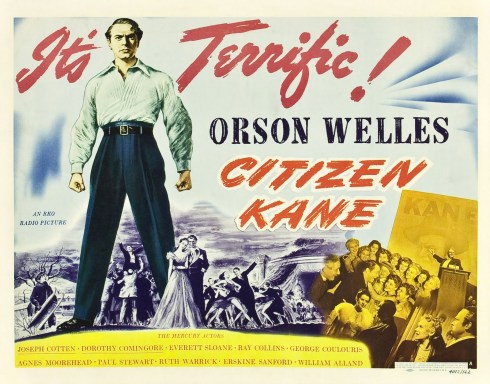
REVISITING A CLASSIC: “Citizen Kane” (1941)

You may have heard by now that Sight & Sound Magazine recently announced the results of their The Greatest Films of All Time poll. If you’re unfamiliar with the poll, it’s a worldwide survey of critics that has been conducted every 10 years dating back to 1952. Since 1962 “Citizen Kane” has been at the top of this pretty prestigious list, at least until this year. Alfred Hitchcock’s “Vertigo” has dethroned “Citizen Kane” which has launched a ton of great discussions on both of these films. Personally, “Vertigo” isn’t the greatest film of all time. In fact, for me it isn’t even the best Hitchcock film. And for my money, even though I like “Vertigo” a great deal, it can’t beat “Citizen Kane”, a movie that is a lesson in quality filmmaking starring, directed, and co-written by Orson Welles.

Last night I had the opportunity to revisit this cinema classic and it’s amazing how it truly seems to get better with each viewing. “Citizen Kane” is a film that has aged like the finest wines and there are so many reasons for it. The more I watch the movie the more I can appreciate the skilled filmmaking and risks taken to bring the movie to life. The film certainly had its share of struggles particularly when trying to find an initial audience. William Randolph Hearst, the American newspaper giant who is the clear inspiration for the movie’s main character, was infuriated by the movie and took huge measures to keep “Citizen Kane” from reaching an audience. Fear of his power kept the film out of many newspapers and out of many theaters. But after all these years, it’s the movie that has come out with the better reputation.

While there has been some controversy over who was the driving force behind the movie’s screenplay, Orson Welles and Herman Mankiewicz are credited with its authorship. It tells the story Charles Foster Kane, an immensely wealthy newspaper mogul, who lies on his deathbed, alone within the closed isolation of his mammoth Florida estate known as Xanadu. We watch as Kane utters his final word “Rosebud” and then dies. This opening event catapults the entire story forward. In fact, the entire narrative is driven by one incredibly clever device – “Rosebud”. Kane’s final word becomes a huge topic of interest especially for investigative reporter Jerry Thompson (William Alland). Thompson is convinced that there is a deeper secret meaning to Kane’s final word and he sets out to uncover it by looking into Kane’s past and interviewing those closest to him.

This points to one of the things that makes this movie so special. There’s no straight-line, uninterrupted narrative. Instead the story is told through well placed flashbacks from the points of view of several different people. Through their eyes we learn about Kane’s impoverished childhood. We learn about his leap of faith into the newspaper business at a young age. We see his political ambitions. But we also see the story of a man whose motivations fester into those of power and self-promotion. We watch as his ego and self-indulgence destroys every nonmaterial thing in his life. He’s the epitome of gaining the whole world but losing all that’s important. It’s a fascinating study of a man who, regardless of his wealth, power, and influence, is unable to overcome the greatest obstacle to true happiness – himself. This all unfolds through the words of Kane’s guardian, ex-wife, business partner, butler, and best friend. Now as someone who isn’t always attracted to the use of flashbacks, I’m really impressed at just how well they work here. Welles is truly laying out a man’s life before us and I was enthralled not only in his story but also with the small question behind it all – just who or what is “Rosebud”?

While many love the story and the storytelling behind “Citizen Kane”, it is equally or maybe even better known for its ambitious visual presentation and stylistic techniques. Welles was given tons of liberties from RKO Pictures when it came to making the film and that’s all the more surprising considering that this was his first feature film. He took his creative control and mixed it with a young man’s enthusiasm that resulted in a visual style significantly different from anything else in Hollywood. I can still name numerous carefully framed shots and brilliantly conceived camera tricks. There’s also Welles’ penchant for placing his camera at ground level and shooting up at his characters. This is ever so effective particularly in one extended take featuring a crucial conversation between Kane and his long-time friend Jedediah Leland (played wonderfully by Joseph Cotton). There are several other cool camera techniques and special effects along with some impressive makeup work that still influences a host of modern filmmakers.

I worry that newcomers or even those who haven’t seen “Citizen Kane” in years will approach the film from the “So this is the greatest film of all time?” perspective. That’s a bad way to approach any film especially considering how subjective these lists are anyway. Instead, this movie should be approached as its own creation – enjoyed and measured within those bounds. Welles’ accomplishment with the film cannot be overstated. The direction is brilliant, the screenplay is fantastic, and he gives a thundering performance and all within what was his first feature film. “Citizen Kane” was a critical success at its time but struggled to gain a huge following. But as years have passed, the movie has risen to be appreciated as a monumental film in cinema history. I tend to agree. And while “Citizen Kane” wouldn’t be my personal “greatest movie of all time”, there’s no denying it’s inventiveness, it’s influence, and its overall excellence.

VERDICT – 5 STARS

5 STARSs

5STAR K&M

REVIEW: “THEM!” (1954)

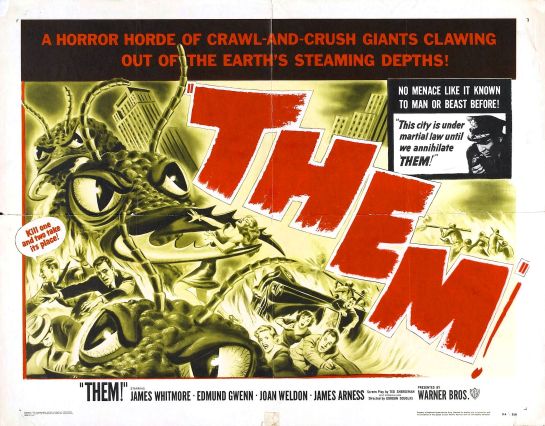
I’ve recently started revisiting some of the 1950’s sci-fi classics. I remember growing up and watching many of these films whenever I had the chance (which wasn’t often in the days of no cable TV and only three watchable local channels). The 50’s and early 60’s sci-fi genre saw mankind up against everything from huge tarantulas, sea monsters, giants, and a large assortment of alien threats, and as a young boy I loved them all. Of all of the 1950’s sci-fi creature features, “THEM!” most certainly ranks among the best of the bunch. “THEM!” was first conceived as a 3-D project from Warner Brothers, at least until a series of on-set technical issues arose. So the production team created the film in glorious black and white and I can’t imagine it any other way.

The movie’s main threats are giant ants which mutated as a result of radiation from a nuclear test detonation over the New Mexico desert in 1945. These massive insects are well over 9 feet long with bone-crushing mandibles and are byproducts of the new atomic age (at least new in 1954 – when the film was made). In fact, it’s Edmund Gwenn’s Dr. Medford character who paints the new nuclear world as a terrifying, unknown, and unpredictable place. That theme plays in the background of the entire movie and while maybe not as effective today, it’s still easy to see how it could create a fear and tension on its own.

The ants are first discovered when New Mexico state trooper Sgt. Peterson (James Whitmore) and his partner come across a little girl wandering aimlessly through the desert. She’s in shock and unable to tell them who she is or what she’s doing. They end up connecting her to a demolished camper of a now missing vacationing family. A string of other mysterious deaths, including Peterson’s partner, leads to F.B.I. Agent Graham (James Arness) being called in to help with the investigation. Dr. Medford (Gween), a leading myrmecologist from the Department of Agriculture also joins the investigation along with his “expert” daughter Pat (Joan Wheldon). They discover the reasons behind the deaths and their main goal becomes killing the bugs while containing them within the desert. But that doesn’t work out so well and before long they have a potential global crisis on their hands.

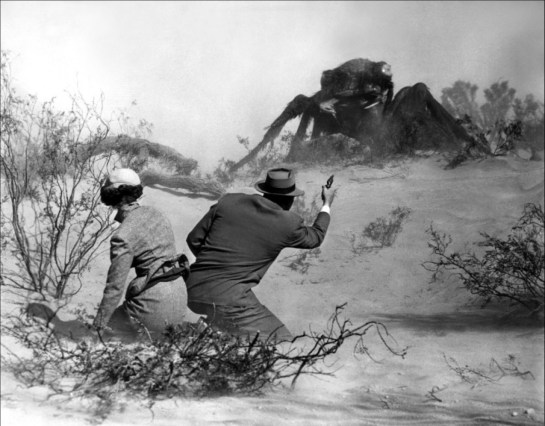
The story is attributed to a collaborative effort, but combined with Gordon Douglas’ marvelous direction, it is extremely clever and well constructed. The story starts off with a murder mystery feel as the officers, agents, and scientists piece together clues to uncover the mystery behind the deaths. What’s impressive is that it doesn’t feel manufactured or underplayed. The early investigation scenes are very well conceived and helped even more by Douglas’s slick use of his cameras. Smartly, the movie doesn’t reveal the ants right away which builds the suspense and anticipation so that when we finally see them, they have been established as a serious threat. Of course by today’s standards there’s nothing particularly scary of unnerving about them. But I still have no trouble going back to when people first saw the film and I still get a little giddy when I hear the ant’s menacing screeches.

I also love the way that everything in the story is taken seriously. Sure, there are some moments of good humor, but as a whole, the story is told in a very factual, pokerfaced way. One reason this is so good is because it leaves the audience toying with the possibilities that these bizarre and outlandish things could happen. While the writing is essential to this, the performances are equally important. Whitmore, Gwenn, and Arness are perfect fits for their roles. Wheldon is good as well although she isn’t all that convincing as an esteemed entomologist. But there are other small but fun roles to be found. A young Leonard Nimoy has a brief scene as an Air Force communications officer. Fess Parker also has a brief but entertaining part as a boozer stuck in a mental hospital.

“THEM!” has been recognized as an influential movie within the science fiction genre. Many great films that followed featured elements that could be traced back to this movie. For example, I couldn’t help but connect the idea of a queen laying eggs deep underground only to have them destroyed by flamethrowers to one of my favorite sci-fi treats of all time – James Cameron’s 1986 classic “Aliens”. It’s also a movie that helped usher in the new era of horror/sci-fi cinema. From the classic Universal monsters to the age of big bugs and spacemen, “THEM!” was at the forefront of the transition. I don’t doubt that many modern moviegoers will have a hard time digesting not only this movie but the entire genre. But the genre holds a special place in my heart and “THEM!” was the quintessential big bug movie.

VERDICT – 4.5 STARS