REVIEW: “Battle: Los Angeles” (2011)

When reviewing a film I always try to consider what kind of movie the filmmakers intend to make. It’s especially important to employ this philosophy when reviewing a movie like “Battle: Los Angeles”. I enjoy all kinds of movies including those that are intellectually challenging, emotionally stimulating, or even the proverbial mindless popcorn picture. “Battle: Los Angeles” is very honest about it’s intent and never pretends to be something it isn’t. It could best be described as “Black Hawk Down” meets “Independence Day”. It takes realistic, gritty military combat and mixes it with the alien invasion angle. It’s a loud, simple, explosion filled action film that does succeed to a degree.

In some ways it resembles a video game, not only by it’s title but also by it’s look and feel. What’s funny is that many modern video games have more plot than “Battle: LA”. It’s a very basic story. A staff sergeant (Aaron Eckhart) and his new platoon are sent into the alien infested Los Angeles battle zone to help escort out a small group of stranded civilians. That’s really it. It starts with a very brief introduction to the platoon but almost immediately the first attack occurs and the action takes off, only occasionally slowing down for small doses of character developing dialogue. While they try to add some degree of depth to the characters, other than Eckhart’s, none are all that interesting.

The movie also uses every military cliché you can think of. Whether it’s the personalities in the platoon or the contrived dialogue, you name the cliché, it’s used here. We’re also offered very little in regards to explanation. We hardly know anything about the alien invasion even though we do gather tidbits of information through brief glimpses of CNN newscasts (which I actually liked). The movie vaguely informs us that the alien’s objective is to steal our water and we get a little information about how they function. But to be honest, in this type of film is it really that important? Obviously the filmmakers think not.

“Battle: LA’s” action is it’s bread and butter and it’s largely impressive. Director Jonathan Liebesman used handheld cameras to give his film the familiar documentary feel while recreating the chaos and intensity of war. It’s nothing we haven’t seen before but it works more often than not. While a few scenes are a little disorienting it’s very effective most of the time. The CGI is generally good and especially shines in the large-scaled shots of the city and in images showing the massive destruction from the battles. The look of the aliens is serviceable but I was never blown away by them or their technology. There are some fierce action sequences particularly a frantic battle on a freeway and the final battle which I won’t give away. For my money, these scenes worked pretty well.

Aaron Eckhart is well cast as the combat-seasoned staff sergeant and the only remotely interesting character. Michelle Rodriguez plays the exact same type of role she always plays. The other performances range from fairly good to pretty bad. But then again this isn’t a performance driven picture, right? The bigger problem is the actors aren’t given much to work with. They also aren’t asked to do much more than shout and shoot so judging acting performances in this type of picture is pretty pointless.

“Battle: Los Angeles” isn’t a perfect film but it’s an honest one. It’s aim was to be a pre-summer popcorn action movie and it hits it’s mark. The trouble is the plot is paper-thin, the aliens aren’t that menacing, and it’s loaded with pointless, forced, and clichéd dialogue.. But the action is intense and it’s shot and edited in a way that pulls you into the combat. Even with it’s shortcomings, it manages to be a fairly entertaining getaway, but it’s not one that will stay with you very long.
VERDICT – 2.5 STARS

REVIEW: “The Boy in the Striped Pajamas”

PJsPOSTER

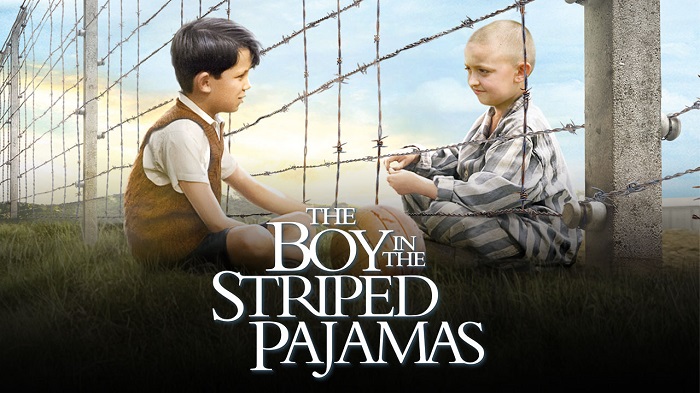
Obviously there have been several powerful films that have dealt directly with the Holocaust. “The Boy in the Striped Pajamas” is a unique look at this murderous and genocidal scar on world history. It’s based on John Boyne’s 2006 novel of the same name and looks at the subject through the eyes of an 8-year-old boy. It’s a tender but crushing tale of the loss of innocence as we watch this young boy discover the truth about the world around him. Some critics have said it exploits or trivializes the Holocaust with others going as far as to call it offensive. I found it to be a careful yet devastating drama that ultimately succeeds in the end.

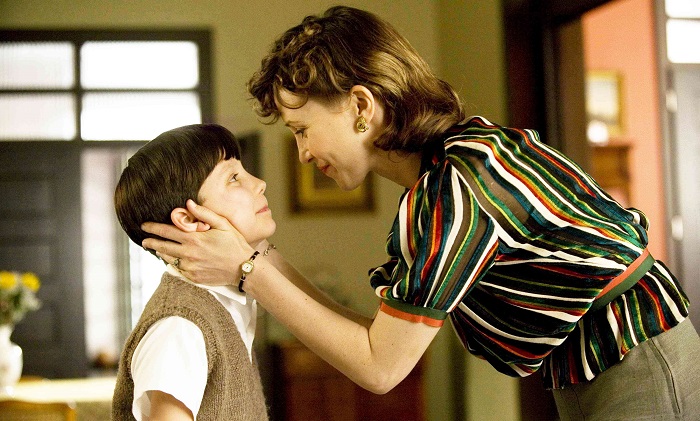
Asa Butterfield, better known for his more recent starring role in “Hugo”, plays Bruno. His father Ralf (David Thewlis) is a Nazi SS officer who gets a new assignment requiring him to move with his family from Berlin to the countryside. Bruno’s mother Elsa (Vera Farmiga) supports her husband’s decision. But Bruno finds himself alone and missing his friends back in Berlin. His loneliness and boredom spurs his curiosity and he begins noticing several interesting things about his new location. One is a mysterious “farm” in the distance that he sees from his bedroom window but is forbidden to visit or ask about. He’s also intrigued by a house servant who he notices is wearing what looks like striped pajamas. Of course we know the servant is Jewish and a captive, but through young Bruno’s eyes things are more confusing.

PJ1

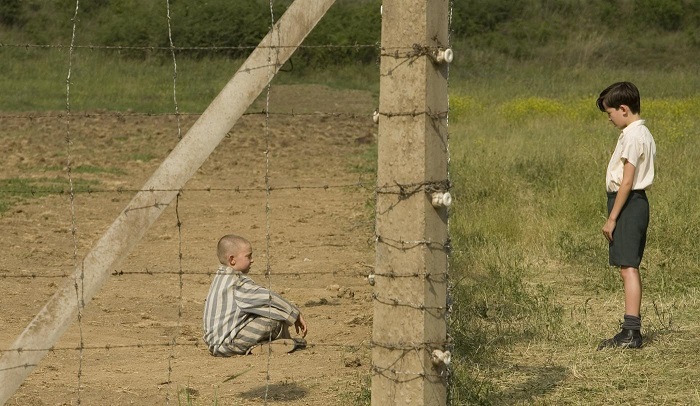
One of the most engaging things about the movie is that writer and director Mark Herman is able to keep us inside of Bruno’s head even though we know exactly what’s going on outside of his knowledge. I found the film to be very effective at conveying the feeling of discovery as Bruno learns more. Perhaps his biggest lessons come not from his twice-a-week tutor who bombards him with all sorts of Nazi propaganda and revisionist history, but from a young Jewish boy. Bruno encounters the boy after sneaking away from his house and stumbling across the “farm”. Of course it’s actually a Nazi execution camp and the boy, named Shmuel (Jack Scanlon), sits on the other side of an electrified fence. The two quickly develop a friendship. It is Shmuel who begins to shed light on what this “farm” really is and causes Bruno to question both his father and his cause.

The movie never loses sight of the fact that Bruno is only 8-years-old. He struggles with what he’s seeing and his attempts to reconcile certain things with his desire to see his father as a good man is heartbreaking. Even when his mother finds out why they’ve moved to the country and furiously confronts Ralf, we still witness these things through Bruno’s child-like reasoning. But there is an emotional balance. While we spend most of our time with Bruno, we know of the atrocities that are taking place almost entirely off-screen. Yet these atrocities are relayed to us very well in often subtle ways.

PJ2

The performances throughout the film are fantastic. Farmiga is one Hollywood’s better actresses and she shows that here. I also appreciated Thewlis’ portrayal of a man who often times puts his role of father in complete subjection to his duties as a Nazi soldier. But it’s young Butterfield who gets the vast majority of the screen time and he is quite good. He draws a lot of sympathy and emotion  and it’s always great to see a young actor able to pull that off. I also enjoyed his scenes with young Scanlon. While Butterfield is better in their scenes, they both handle the material nicely.

I can see where “The Boy in the Striped Pajamas” may put off some people. It’s hard to watch especially as everything comes to a head at the end of the film. In fact, it’s a movie I’m in no rush to see again. That isn’t due to any major shortcomings with the picture. It’s due to the film’s intense emotional punch that stuck with me for several days. I was incredibly moved and while there are some legitimate questions that could be asked about the story, the movie’s main point resonated with me. “The Boy in the Striped Pajamas” asks several powerful questions about war, family, and morality. It also gives us a glimpse into a part of our world’s history that is still hard to look at but should be reckoned with.

VERDICT – 4 STARS

4-stars

REVIEW: “BEAUTIFUL BOY” (2010)

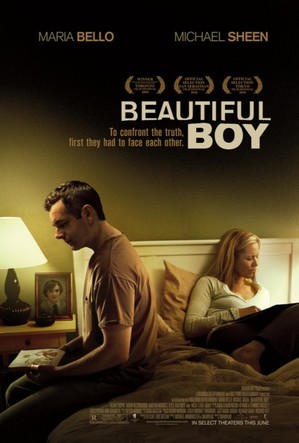
It’s hard to know how to take some movies inspired by real-life tragic events ripped from the newspaper headlines. They can sometimes be sobering and enlightening while others can be exploitative and irreverent. “Beautiful Boy” is a crushing drama that deals with the agony of a school shooting but from a different point of view. It’s obvious similarity to the 2007 Virginia Tech massacre is not by accident. Director and co-writer Shawn Ku’s connection to the college not only helped inspire the story but is one reason this intense subject matter is handled with such care and respect. The thrust of story doesn’t center on the horrible event itself. Instead its focus is on the devastating effects the massacre has on the shooter’s parents.

Maria Bello and Michael Sheen play Kate and Bill, a disconnected married couple on the road to separation. The one single thread holding them together is their son Sam (Kyle Gallner). Sam is a college freshman who has struggled adjusting to campus life. Sam calls home one night trying to hide his despondency from his parents. Bill and Kate attribute his emotion to the pressures of college life. But the next morning police arrive at their home to inform them that Sam has opened fire at his school killing 17 people before taking his own life. This all happens early in the movie while the rest of the film explores the brutal effects it has on Bill and Kate’s already strained relationship.

While Sam’s actions play a key role in the story they serve more as a backdrop. We don’t get inside Sam’s head and really examine his motives and some may have a problem with that. But it’s no problem for me since the movie’s intention is to look at a marriage on the brink of dissolution. Both Bello and Sheen deliver grounded performances that often times result in scenes driven by realistic, raw emotion. Their son’s acts cause them to face issues simmering beneath the surface of their marriage and their reactions feel natural and true. You watch as the chasm between them grows wider yet no one understands what they’re going through except each other. It’s an interesting dynamic that works more often times than not.

The movie does require the audience to automatically connect with Bill and Kate. We never get much insight into their relationship prior to the shooting. We see their relationship is strained but it’s hard to connect with them other than through their emotional devastation brought on by the loss of their son and the horrible circumstances surrounding it. I really felt for them especially as we see them deal with things such as the media camped out on their lawn, having to issue a public statement, and the stares of curious neighbors and co-workers all on top of their personal loss. But their relationship could have been easier to invest in if we were given more early in the film.

The movie also has an inconsistent visual style. At times it seems to be intentionally striving for a more artsy look with quick camera sweeps and strategic camera angles. Other times it looks very generic and by-the-book. I also wasn’t a big fan of the rather drab color palette. The movie seems soaked in blues and grays. Obviously this was intentional and I’m sure it was meant to convey the overall mood of the picture. But it was a little too much for me.

Even with its flaws “Beautiful Boy” can be a powerful film that handles some tricky and weighty subject matter with care and compassion. It was certainly a different approach seeing this type of horrifying event through the eyes of the parents and while their marriage isn’t opened as much as I wished, it’s impossible not to moved by the emotional distress this couple faces. Shawn Ku handles the material seriously and truthfully and some fine performances from Sheen and Bello help make up for the film’s shortcomings.

VERDICT – 3.5 STARS

REVIEW: “THE BEAVER” (2011)

Regardless of your thoughts on Mel Gibson’s real life personal struggles, there is no denying that he can still command the screen. In “The Beaver”, he gives one of the strongest performances of his career in a role that may touch close to home for him. Everything in this film revolves around Gibson and it’s his mesmerizing performance that sells not only his character but the main focus of what his condition is doing to his family. It’s a painfully authentic portrayal of mental illness and director Jodie Foster allows Gibson to make this complex character his own.

Gibson plays Walter Black, the CEO of a toy company who is facing serious struggles with depression. His wife Meredith (Foster) kicks Walter out of the house after seeing his lack of interest in getting treatment as well as the terrible effects his depression is having on their two sons. Walter comes across a beaver hand puppet in a dumpster and it becomes a channel of communication between him and everyone else. The beaver becomes therapeutic in the sense that Walter begins to gain a self-confidence. He begins mending fences with his family and even comes up with an idea that turns the struggling toy company around. But it’s all done through the mediator which is the beaver leading us to question whether or not Walter is progressing or simply developing a growing dependency.

While Walter is able to regain a relationship with Meredith and his younger son Henry (Riley Thomas Stewart), his oldest son Porter (Anton Yelchin) would rather he stay gone. There’s a huge disconnect between Porter and Walter and Porter’s greatest worry is that he will become his father. Their fractured relationship adds an interesting dynamic to the story but it feels underwritten. Sure, we understand the tension between the two but it seems that we have to do too much reading between the lines. Porter finds a little solace in an attractive but deceptive girl at school played by the wonderful Jennifer Lawrence. We get some fun scenes between the two as their relationship is actually fleshed out more than his and Walter’s.

“The Beaver” sold me on almost every point and the performances really click. I love every scene that Foster and Gibson share on screen and it reminded me of why these two have such strong track records. I only wish that Gibson and Yelchin had more screen time. Their relationship seems to be a crucial element of the story and therefore deserved more time than it received. While this is a moving and poignant drama there are also several scenes featuring some really funny dark humor. It all works together to create a really solid picture that, even with it’s few misfires, deserves more attention than it’s been given.

VERDICT – 4 STARS