Over time I’ve come to realize that often the best thrillers aren’t bigger budgeted movies with an attention grabbing cast. No, often the best thrillers are small budget pictures that take a strong concept and build on it with a smart, focused, and economical script. Look no further than last year’s fabulous “Blue Ruin”. In that same mold, this year we get “Cop Car”, a crafty, early Coen-esque styled thriller that earns its feelings of danger and discomfort.
“Cop Car” is directed and co-written by Jon Watts. He may not be a familiar name but that could change as he is slated to direct the next re-rebooted Spider-Man film. While that project doesn’t excite me, “Cop Car” certainly did. Within a tight and fluid 85 minutes, Watts spins his minimalist yarn across the expansive fields and long straight roads that surround his hometown of Fountain, Colorado. With a stressful patience he unfolds his story that starts with adolescence mischief but ends up in a much darker place.

The story begins with two 10-year old boys Travis (James Freedson-Jackson) and Harrison (Hays Wellford) crossing a large field playing some weird game involving cursing (Not a good start for me as I normally hate when filmmakers require young children to spout obscenities). It appears as if the boys may have run away from home as they make a number of boyish miscalculations. One figures they have already walking 50 miles while the other speaks of rationing their Slim Jim beef jerky.
Neither Jackson or Wellford come across as trained young actors which is both good and bad. In some early scenes you sense the strong pull of the director while in others the children’s natural curiosity and playfulness play out perfectly. We see the latter when the boys stumble across a Quinlan County sheriff’s car in an isolated, sparsely wooded area. Their curious nature gets the best of them and soon they are driving the car across open fields and rural roads, screaming and laughing in a mix of childlike mischief and pre-teen rebellion.
They are impervious to the real trouble they are in. In one scene that highlights their puerile logic, the boys ponder what they will do if caught with the car. One innocently and sincerely says ” We’ll just tell them we’re cops”. But the cop car belongs to Sheriff Kretzer. He’s played Kevin Bacon armed with thick mustached mug and a shady air about him. From the very first glimpse of Bacon we know his character is no good and we know the boys have stumbled into a dangerous mess. When finding his car missing, Sheriff Kretzer panics and sets out to get his car back at any cost.
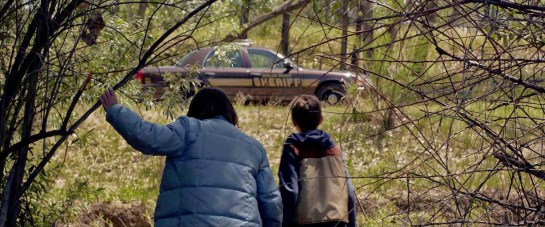
“Cop Car” has its share of darkly funny moments that can be both humorous and unsettling. About midway through the film the story takes on a more serious and sinister tone and the humor becomes scarce. And I’m convinced that neither Jon Watts nor co-writer Christopher Ford (also known for the much tamer “Robot and Frank”) have children because of the torturous emotional wringer they run the kids through during the film’s second half. This isn’t necessarily a criticism. It just amps the tension up to panic-inducing levels for parents.
The movie ends on just the right note by leaving several specifics up in the air and several questions swirling in our minds. The story’s intensity boils to what seems like a satisfying crescendo only to hit us with a new set of stakes and then leave us on an emotional edge. It’s a satisfying conclusion to a solid movie that navigates a few hitches to still give us a potent, edge-of-your seat thriller. And then there is that tenacious performance from Kevin Bacon – one of my favorites of the year.
VERDICT – 4 STARS



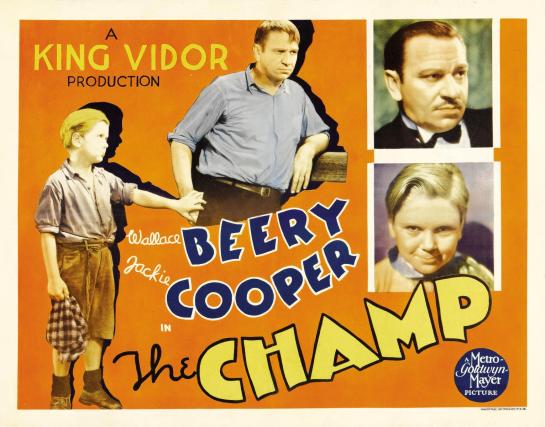
 Frances Marion’s story (which also won an Oscar) paints a vivid picture of the unwavering confidence and blind love that small children have in their parents. Dink sees his dad as a larger than life superhero of sorts. Yet he is constantly let down by his father’s drinking, gambling, and carousing. Jackie Cooper was such a treat. Watching him deliver young Dink’s roller coaster of emotions was a surprise. He avoided most of the traps that many golden era child actors often fell into and gave the film a ton of heart.
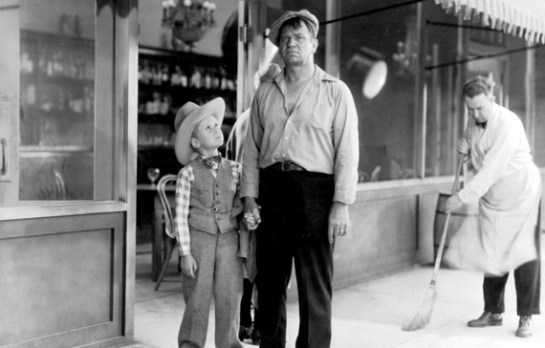 At the time this film was a part of Beery’s career resurgence. He had been a popular silent film star but had seen his star fade with the influx of ‘talkies’. “The Champ” solidified his return and spotlighted his knack for deeper and more dramatic performances. Beery gives us a character that is hard to like yet there is something about him (aside from our affection for Dink) that makes us want him to turn things around. Beery grounds Andy in reality which connects us to him and his circumstances.
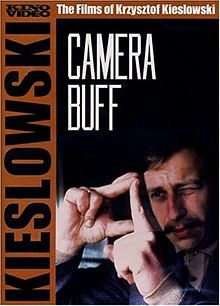 “Camera Buff” is a 1979 film from Polish director Krzysztof Kieslowski about an eccentric and reserved man and his infatuation with his newly purchased movie camera. Jerzy Stuhr brilliantly plays Filip, a loving and content husband who spends two weeks worth of salary on a small 8mm video camera in order to film his new baby girl. Filip is a nervous, circumspect man who you feel is perfectly happy with his quiet and confined life.

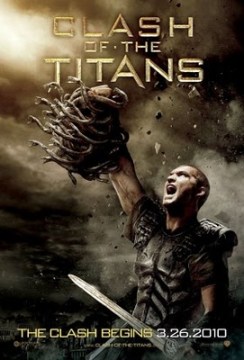 When I first came up with the idea for this fun little thing called The Public Movie Defender there were several movies that immediately came to mind for inclusion. Some are personal favorites that I am deeply passionate about and others are simply movies that I feel are good yet that get pounded a bit unfairly. Some aren’t that difficult to defend while others are a REALLY hard sell. 2010’s remake of “Clash of the Titans” is one of those hard sells. And while I wouldn’t categorize it as a personal favorite, I do think it’s a good movie that doesn’t deserve the level of disdain it has received.