REVIEW: “Extraction 2” (2023)

(CLICK HERE to read my full review in the Arkansas Democrat-Gazette)

In 2020 Marvel alumni the Russo brothers and Chris Hemsworth teamed up to make “Extraction”, a no-holds-barred old-school action flick. The results were pretty great. Now Netflix has brought back all the key players for “Extraction 2”, a bigger sequel in nearly every possible way yet one that doesn’t lose sight of what made its predecessor work. Sam Hargrave returns to direct with Joe Russo writing the script which is taken from a story he conceived with his brother Anthony and Andre Parks.

The first film ended with several lingering questions. If you remember the story’s protagonist, former SAS operator turned black-ops mercenary Tyler Rake (Hemsworth), was seriously wounded while on a mission in Bangladesh. After falling off a bridge and plunging into the muddy river below we’re left wondering if he was dead? A blurry final shot hints that he may have survived.

“Extraction 2” makes it clear he did indeed survive. It opens with Tyler’s body being retrieved and rushed to a hospital in Dubai where he lays in a coma for several weeks, his close friend and fellow mercenary Nik Kahn (Golshifteh Farahani) by his side. After waking up he undergoes a rigorous rehab just to be able to walk again. Once discharged Nik sets him up in a remote cabin in Austria where he can live off the grid and have a quiet retirement. Yeah right.
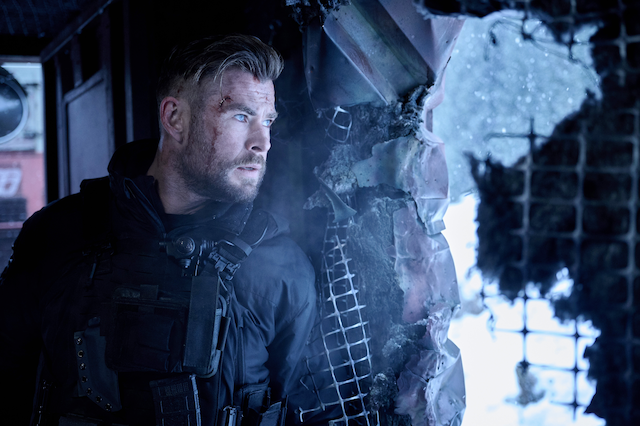
Image Courtesy of Netflix

One day Tyler is paid a surprise visit by a mystery man played by none other than Idris Elba. The man tells of a mission that requires someone with Tyler’s special (and quite lethal) skill set. Tyler is quick to decline. At least until he hears who sent the man – his ex-wife Mia (Olga Kurylenko). And that changes everything.

It turns out Mia’s sister Ketevan (Tinatin Dalakishvili) is stuck in an abusive marriage with a powerful Georgian gangster, Davit Radiani (Tornike Bziava). He’s incarcerated in a savage Georgian prison but has used his power and influence to have Ketevan and their two children locked up with him. Realizing she has to get her kids out, Ketevan reaches out to her sister for help. Upon hearing the story Tyler immediately accepts. Nik quickly joins in along with her brother, Yaz (Adam Bessa).

Action movie fans will love where things go from there. It starts with Hargrave and company putting together a lengthy and elaborately staged prison break-in and breakout sequence. It utilizes numerous crazy visual techniques and unquestionably expensive practical effects. It’s incredibly immersive despite the sheer craftsmanship sometimes pulling the spotlight away from the story being told. Who cares – it’s an exhilarating initiation into the film’s style of action.

From there things only ratchet up as Tyler, Nik, and Yaz take Ketevan and her children on the run from the film’s true antagonist, Davit’s cold ruthless big brother Zurab (Tornike Gogrichiani). Zurab has ran the family business while his brother has been in the clink, smuggling drugs and weapons to build a militarized criminal empire he calls the Nagazi. With seemingly endless resources at his disposal, Zurab has the means and the maniacal drive to hunt Tyler and his his sister-in-law wherever they go (which is precisely what he does).
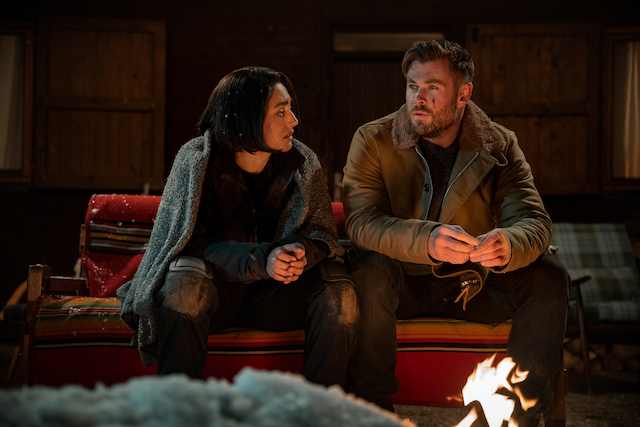
Image Courtesy of Netflix

While action is the main dish, Russo’s script does seek to dig a little deeper into Tyler’s pained personal history which was expressed in the first film but never really explored. There’s not a lot of time spent on it here, but what we get adds a welcomed human layer to Tyler. It’s a nice touch that brings the occasional break from the otherwise non-stop bullet-firing, bone-cracking, and blood-letting.

Then there’s Hemsworth who gives another tough and soulful performance which is a nice departure from his work as the bumbling God of Thunder in the MCU. Hemsworth is a well-rounded actor who has the grit and physicality for a role like this. He also has a natural charisma and an inherent likability that makes him and his character easy to root for. As for Farahani, she makes for a terrific foil and deserves her own spin-off movie.

To be clear, there’s not much in “Extraction 2” we haven’t seen before. But when you hone in on the action, choreography, and stunt work there aren’t many recent movies that have done it better. The painstakingly polished and furiously detailed set pieces are the film’s bread and butter, and it’s hard not to appreciate the amount of craft it took to pull some of this stuff off. All in all, count this as a sure-fire hit for Netflix. “Extraction” premieres today on Netflix.

VERDICT – 4 STARS

Review: “Everything Went Fine” (2023)

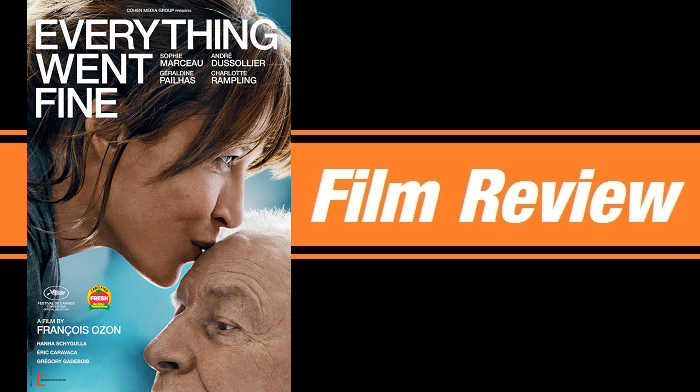
While hard at work writing her new novel Emmanuèle gets a phone call that no one wants to receive. She learns her 85-year-old father André has had a stroke and is being rushed to the hospital. This all too relatable moment sets the table for “Everything Went Fine”, the affecting and probing adult drama from renowned French filmmaker François Ozon.

“Everything Went Fine” is based on a memoir by the late Emmanuèle Bernheim that chronicled her own experience with her father’s death (Bernheim was the screenwriter for Ozon’s 2003 film “Swimming Pool” and his 2004 film “5×2”). Ozon sets aside his more provocative proclivities to give us an honest yet sensitive treatment of some weighty subject matter. The results are a richly human and unsentimental feature that sometimes operates like a procedural but one fueled by an unshakable warmth and empathy.

Image Courtesy of Cohen Media Group

“Everything Went Fine” isn’t the first movie to tackle assisted suicide. But rather than taking on the ethics of the controversial practice, Ozon’s interests are far more pragmatic. He digs into the more personal and practical implications. His filmmaking and storytelling is intentionally low-key, but the gravity of these ideas and themes are never lost on us. And he even finds time for dabs of mordant humor often when you’re least expecting it.

The movie is driven by a gripping performance from Sophie Marceau who plays Emmanuèle. It’s beautifully modulated work that keeps so many of Emmanuèle’s feelings internalized. Yet her inner conflict is always evident to the audience and is conveyed with resonating emotional detail by Marceau. Also good is André Dussollier playing Emmanuèle’s father, André. He’s a terse and temperamental man who has fueled much of the long-standing tension in their family.

Most of the movie follows Emmanuèle and her sister Pascale (Géraldine Pailhas) as they pay visits to the hospital, get updates from their father’s doctors, and manage his affairs the best way they know how. But after André is moved from the hospital to a rehabilitation clinic (rather than home) he broadsides Emmanuèle with a shocking demand. He wants her to help him end his life. She’s understandably against it and is taken aback by him putting such a thing on her shoulders. It ends up peeling back another layer to their already complicated relationship.

One of the things I love most about “Everything Went Fine” is how delicately Ozon handles the family history. And rather than force-feeding us, Ozon lets us sort it out and fill in the blanks for ourselves. He gives us just enough detail to grasp the dynamics at work. Through his lens the Bernheims are revealed to be a bourgeois family of artists who have lived comfortably off their successes.

Image Courtesy of Cohen Media Group

But they’re also a family marked by their own inner turbulence. For example while Pascale is really close with her sister, it’s clear Emmanuèle is her father’s favorite. Yet we get a couple of subtly revealing flashbacks to Emmanuèle’s childhood that tell a different story. Then there’s Claude (a subtly penetrating Charlotte Rampling), the girls’ mother and André’s former wife. She has Parkinson’s and severe depression and channels a clear resentment towards her ex-husband. All of it works to enhance the drama. Yet there are even more details that Ozon leaves for us to sort out on our own.

Over time we gain a good understanding of Emmanuèle’s emotional dilemma as she parses through a range of conflicting feelings. On the one hand there is the bitterness left from her painful childhood. On the other hand she feels obligated to be a good daughter. And then there’s the sheer weight of what he’s asking her to do. Ozon lets it all play out organically. And the patient rhythm of his storytelling combined with some top-to-bottom stellar performances lends the material just the kind of dramatic heft it needs.

VERDICT – 4 STARS

REVIEW: “Evil Dead Rise” (2023)

(CLICK HERE to read my full review in the Arkansas Democrat-Gazette)

Many of today’s horror movies are custom-made for easy consumption and even easier profit. Many studios have embraced the low-budget low-risk formula. They’ve realized that they don’t need to spend a lot of money to get people in the seats. Horror fans turn out. I’m certainly not against filmmakers taking risks, having fun, or showcasing their style. And I’m certainly not opposed to studios finding ways to make money. But the horror films of today rarely leave a lasting impression. What’s a good remedy for that? Well, fresh new ideas are always welcomed. But sometimes it’s good to get back to the basics.

Take “Evil Dead Rise”. It is absolutely a franchise horror movie so calling it “original” might be a stretch. But it comes from a series that has always had its own brutal (and sometimes wacky) identity. You may know what to expect from an Evil Dead movie, but you’ll never be fully prepared. Also, it’s a series that has wisely kept itself from over-saturating the market. This is only the fifth feature film since the original released back in 1981 and the first in ten years.

Image Courtesy of Warner Bros.

“Evil Dead Rise” is the second feature from writer-director Lee Cronin. His previous film was 2019’s “The Hole in the Ground”, a cleverly effective chiller that shares some of the same thematic interests as his latest, namely the anxieties of parenthood. While his first movie had a more psychological horror bend, Cronin’s sophomore effort let’s him explore that parenthood theme in the grisly, gruesome Evil Dead world which longtime buddies Sam Raimi and Bruce Campbell first launched 42 years ago for only $375,000.

Times have changed and movies cost a lot more to make. But “Evil Dead Rise” stays true to its roots and was made for a modest (by today’s standards) $15 million. But don’t worry, every penny made its way onscreen. Everything from the gnarly practical effects to the incredible makeup to the gallons upon gallons upon gallons of blood helps to create this visually amazing buffet of grotesquerie that long-time fans are hungry for.

Cronin has turned in a film that’s every bit as unsettling and gory as its predecessors (the lighter “Army of Darkness” being the one exception). Whether it’s someone swallowing jagged shards of glass, a cheese grater to the back of the leg, or a scalp ripped off a head, “Evil Dead Rise” leaves no doubt that it’s not for the squeamish. It’s a stone-cold killer of a movie that grabs you by the jugular and doesn’t let go. Yet Cronin doesn’t leave us emotionally high-and-dry. He gives us rooting interests, and he develops characters with enough humanity to make us care. That proves crucial.

After one of the best cold opens in recent memory (a nod to the ‘cabin in the woods’ trope the original Evil Dead movie made famous), Cronin takes us to Los Angeles where we’re introduced to Ellie (a terrific Alyssa Sutherland). She lives in a low-income high-rise apartment with her three children, Bridget (Gabrielle Echols), Danny (Morgan Davies), and Kassie (Nell Fisher). Life is hard for Ellie who has been raising her kids by herself ever since her husband and their father left. Even worse, the old building they live in is set to be demolished and Ellie still hasn’t found them a place to live.

Image Courtesy of Warner Bros.

Ellie is paid a visit by her estranged sister Beth (Lily Sullivan), a guitar tech for a touring rock band. Beth has gotten some unexpected news and looks to her big sister for guidance. But their family reunion is interrupted after an earthquake rocks their neighborhood. The quake opens up a hole in the parking garage revealing what appears to be an old vault (we learn the building was once a bank). In the movie’s lone instance of head-scratching inanity, Danny crawls down the hole and discovers some religious relics, a couple of old vinyl records, and one particular old tome that’s bound in flesh and inked with blood – the Naturom Demonto aka The Book of the Dead.

Fans know where it goes from here. The book is opened. The creepy incantations are recited. The soul-feasting flesh-destroying Deadites are unleashed on an unsuspecting Ellie and her family. Through it all Cronin keeps the tension steadily rising while seamlessly blending in slivers of humor often in the most unexpected moments. It’s all accentuated by the eeriness of the dim apartment building setting which becomes a playground of giddy gore-filled horror intent on making you squirm

Any real emphasis on storytelling withers away in the second half, but to his credit Cronin knows what his audience wants. He gives them a tightly wound 97 minutes that’s shrewdly tuned to satisfy the demands of devoted fans and to terrify those who are coming in fresh. And he does it all while subtly planting seeds for possible future films. Altogether it makes “Evil Dead Rise” a bloody good addition to its franchise and a feral jolt of energy for its genre. “Evil Dead Rise” is in theaters now.

VERDICT – 4 STARS

RETRO REVIEW: “Escape from New York” (1981)

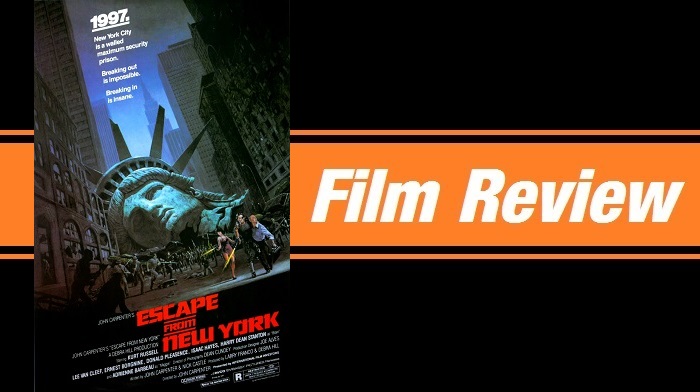
For years now John Carpenter’s 1981 sci-fi action classic “Escape from New York” has tickled me by being set in the “near-future dystopia of 1997”. Here we are in 2023 and it’s still amusing to look back on movies that were looking forward towards the future. But in a lot of cases, a closer examination of the movies and their inspirations gives you a better sense of where they are coming from. For example, “Escape from New York” was written in 1976 and had its roots in the nation’s cynicism following the Nixon Watergate scandal. In other words, these films often had more on their minds than just genre treatment.

At the time, Kurt Russell was best known for his roles in Disney comedies such as “The Strongest Man in the World”, “Charlie and the Angel”, and “The Barefoot Executive”. To try and break from that mold he starred in the made-for-television movie “The Deadly Tower” and Robert Zemeckis’ black comedy “Used Cars”. But it was “Escape from New York” that did it for him. The very next year he reteamed with Carpenter in “The Thing”. The next year it was “Silkwood”. The next year it was “Swing Shift”. The next year it was “The Mean Season”. And the next year it was “Big Trouble in Little China”. Kurt Russell was on his way.

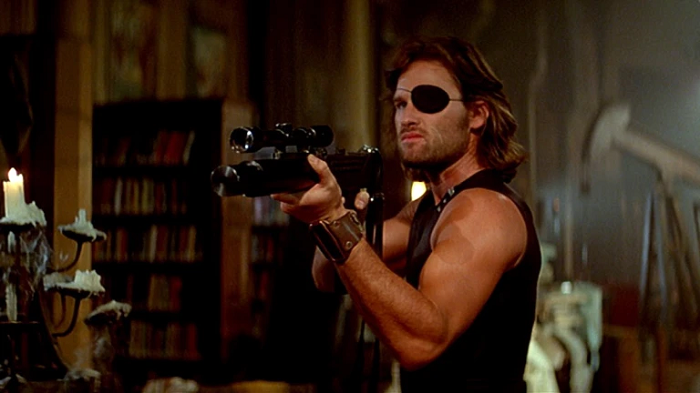
While the film’s backers wanted Charles Bronson to play the iconic anti-hero role of Snake Plissken, Carpenter insisted on Russell who put in a lot of effort to get into the character. As for the location, shooting in East St. Louis proved cheaper than New York City. Transforming a New York neighborhood into the run-down, decaying urban wasteland the film required was too pricey for the minuscule budget. So they shot a big portion in East St. Louis which had entire blocks of dilapidated buildings left vacant after a huge fire years earlier. Other memorable scenes were shot at St. Louis’ Union Station and on Liberty Island.

Carpenter co-wrote the story with Nick Castle who’s known best as playing Michael Myers in the original “Halloween” film. The movie is set in 1997, nearly ten years into a devastating war between the United States and the allied Chinese and Soviets. As a result, the nation’s economy has plummeted and crime has risen 400% which has led the US government to convert the ravaged Manhattan Island into the country’s lone maximum security prison. A 50-foot wall is built around the island, bridges are sealed off and mined, and heavily armed helicopters patrol the surrounding waters.

While flying to a crucial peace summit in Hartford, Connecticut, Air Force One is hijacked by a domestic terrorist/guerrilla fighter (played by another “Halloween” alum, Nancy Stephens). Unable to take back control of the plane, Secret Service agents rush President John Harker (Donald Pleasence – yep, another “Halloween” fixture) to an escape pod and jettison it over Manhattan just as the plane crashes to the ground. Police Commissioner Bob Hauk (the ever great Lee Van Cleef ) dispatches a rescue team to retrieve the President, but they learn he’s been abducted by a powerful gang leader named Duke (Isaac Hayes).

With his team forced to withdraw, Hauk calls on the growling, eye-patched Snake Plissken, a decorated former Special Forces soldier recently convicted of robbing the Federal Reserve. Snake has been sentenced to a life term on Manhattan Island, but Hauk offers him a deal. Sneak in, rescue the President, and bring him out alive within 24 hours and he’ll be given a full pardon. Without much choice, Snake reluctantly accepts.

The bulk of the story takes place within the ruins of Manhattan as Snake encounters an assortment of threats including the deranged and starving “crazies” and of course Duke and his violent gang of miscreants. But he also finds some unexpected allies played by a fun assortment of names. There’s a cheery taxi driver fittingly called “Cabbie” played by Ernest Borgnine. And a wormy old acquaintance named “Brain” played by Harry Dean Stanton along with his main squeeze Maggie who’s played by Adrienne Barbeau.

While rewatching “Escape from New York” I was reminded that, despite it’s reputation, it’s not the all-out action movie that you might think. It’s a genre exercise no doubt, and it still has a certain B-movie grindhouse appeal. But this tried-and-true favorite is more than a buffet of blood and bullets. And it has the restraint and focus to avoid being tagged as trashy exploitation. Instead, Carpenter created something that I’m sure even he didn’t expect. From Kurt Russell immortalizing the lead character to the comic books, action figures, and board games that followed, “Escape from New York” still excites its fans and has earned its status as a time-tested cult classic.

VERDICT – 4 STARS

REVIEW: “Elf” (2003)

(Originally reviewed in 2012)

Christmas movies are their own special brand of films. Much of what makes them good is centered on how well they tie into this wonderful holiday season. You can’t separate them from the holiday, and their success depends on that relationship to Christmas. Jon Favreau’s “Elf” is a perfect example. Soaked with Christmas lore, “Elf” captures the sentimental spirit of Christmas within its clever and often times hilarious story. “Elf” is inseparable from Christmas and your perception of the holiday will naturally impact your perception of this movie. That’s probably why I can forgive its few flaws and appreciate it as a true holiday treat.

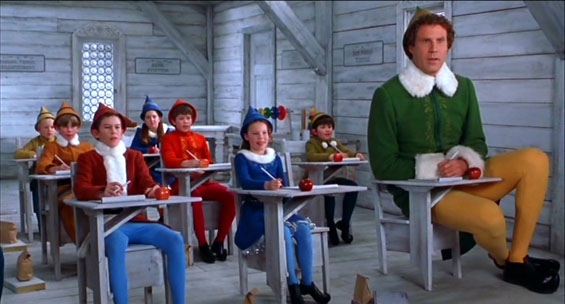
Will Ferrell stars which can sometimes throw up a few red flags for me. Ferrell and this movies often follow a fairly overused formula where he plays someone in an absurdly out-of-place position (see movies such as “Semi-Pro” and “Blades of Glory”). But unlike those movies, it really works here. He plays Buddy the Elf, a toymaker at Santa’s workshop in the North Pole. How’s that for a wacky fit?

But there are several noticeable differences between Buddy and his fellow elves, none more glaring than the fact that he’s 6’5 and not very good at making toys. His father, Papa Elf (hilariously played by Bob Newhart, fully decked out in a bright elf costume with green tights) decides it’s time to reveal to Buddy that he’s really a human being. Feeling uncertainty about where he truly belongs, Buddy sets out on a journey to find his real father. His quest takes him to the magical world of New York City.

ELF 1
Image Courtesy of New Line Cinema

It’s here that the absurdity really kicks in. Buddy arrives in the Big Apple in full elf garb where his elf mentality immediately clashes with the concrete jungle. He comes face-to-face with many new and exotic things including New York cabbies, coffee shops, and the Lincoln Tunnel. It’s often hysterical watching Buddy’s elf sensibilities smash up against big city life. The fish-out-of-water script provides plenty of funny moments. Of course it gets a little sappy at the end, and the baked-in holiday cheer means the ending is fairly predictable. But that goes hand-in-hand with Christmas movies. You pretty much know what you’re going to get.

Then there’s the terrific and committed supporting performances. I especially love James Caan as Buddy’s real father, Walter Hobbs. He’s a shrewd children’s book publisher who spends more time at work than with his wife (Mary Steenburgen) and his young son (Daniel Tay). Then there’s Zooey Deschanel as Jovie, a Gimbel’s department store worker who catches Buddy’s eye. Much like Walter, she’s in desperate need of some Christmas spirit, something that Buddy has in spades. Ed Asner is a wonderful fit as Santa Claus, and Faizon Love has several great scenes as the Gimbels toy department manager.

“Elf” is utterly absurd and unashamedly silly and I say that as a compliment. Even if you aren’t a Will Ferrell fan, he’s an absolute blast in this fun and festive holiday treat. It may be handcuffed by its Christmas movie boundaries, and it certainly dips into sentimentality at the end. But it’s such a warm and clever film; one with plenty of good gags and family-friendly laughs. It may not be up everyone’s alley. But for many, it’s a film that has become one of the “must watch” movies of the Christmas season. That’s certainly the case at our house.

VERDICT – 4 STARS

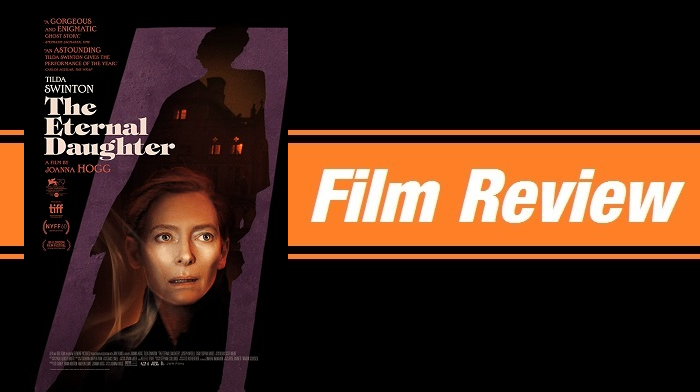
REVIEW: “The Eternal Daughter” (2022)

Tilda Swinton captivates in “The Eternal Daughter”, the latest from distributor A24 that for some reason seems to have fallen through the cracks this awards season. Sadly the film hasn’t received much of a push which is unfortunate considering it’s one of A24’s best films of 2022. Written and directed by Joanna Hogg, this poignant and haunting mother/daughter elegy begs to be contemplated as it tinkers with genre and subverts our expectations, all as Hogg pulls from some deeply personal places for inspiration.

“The Eternal Daughter” was shot during the COVID-19 lockdown which makes sense considering the mostly single location and minuscule cast. But whatever constraints were in place never make it onto the screen. That’s because Hogg’s keen control of her audience, both through her well managed direction and eloquently crafted script, never allows us time to ponder any of its limitations. Instead she keeps us firmly focused on her two main characters, Julie (Swinton) and her mother Rosalind (also Swinton).

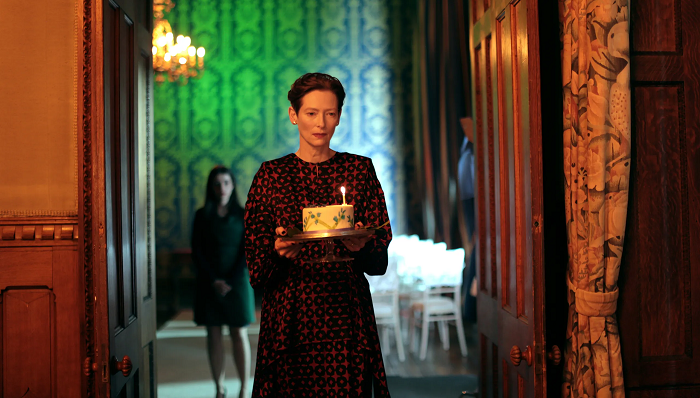
Image Courtesy of A24

The movie begins with a chatty cabbie driving Julie and Rosalind across the foggy countryside, eventually arriving at Moel Faman Hall, a remote hotel set in an old rural manor. It’s somewhat of a mother and daughter getaway to celebrate Rosalind’s birthday but with some special meaning. We learn that Moel Faman Hall was where Rosalind grew up as a child, well before it was turned into a rustic bed-and-breakfast.

Upon arriving Julie goes to check in and is greeted by the seemingly empty hotel’s snooty and disinterested receptionist (a really good Carly-Sophia Davies) who takes them to their room. It’s not the room they reserved, but the receptionist doesn’t seem to care. Instead she hops in the car with her boyfriend and leaves for the evening. Quite the opposite is Bill (Joseph Mydell), the kindly nighttime concierge who pops up later and is always willing to lend a hand. He’s a tender soul with his own personal attachment to the hotel.

So Julie and Rosalind settle in for the evening. As they do, Hogg treats us to one of my favorite things about her film – the small intimate exchanges between mother and daughter, so natural and organic that they immediately triggered sweet memories of my own mother and grandmother and the relationship they shared. These tender moments are scattered all throughout the movie, and they’re aided by Swinton’s graceful dual-role performance which evolves into something even more impressive over time. It’s great work from Swinton who’s no stranger to handling this type of challenge.

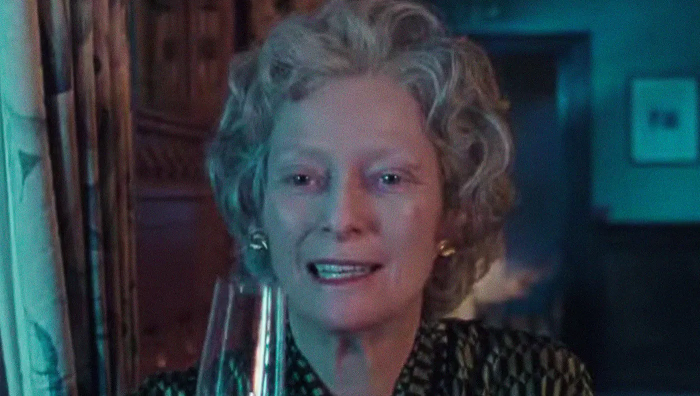
Image Courtesy of A24

For Julie, what follows are several restless nights where she constantly hears unexplained noises from the vacant floors above and even sees a ghostly old lady peering out the windows. Hogg plays around with our perceptions, not just of what we see on screen but also in how we view her movie as a whole. Is it a horror movie? The drafty creaky interiors, the thick evening fog that engulfs the manor, even the eerie wailing music that feels plucked right out of an early “X-Files” episode make you wonder. But as Hogg patiently reveals her real interests, we begin to get a better grasp of what’s really going on. It just takes cracking her code to get to the heart of the movie.

Though modestly budgeted, “The Eternal Daughter” looks amazing in large part thanks to the textured 16mm cinematography from Ed Rutherford. There’s also some crafty camera trickery, even craftier editing, and terrific makeup design. It all beautifully serves this thematically rich drama which clearly comes from a place close to Hogg’s heart. And ultimately it’s that personal touch that makes her thoughtful self-reflection resonate as intensely as it does. “The Eternal Daughter” is now showing in select theaters.

VERDICT – 4.5 STARS