REVIEW: “Escape From Mogadishu” (2021)

Twenty years ago Ridley Scott’s extraordinary film “Black Hawk Down” chronicled both the intensity of the combat and the heroism of the American troops trapped in the war-torn streets of Mogadishu during some of the most violent year’s of Somalia’s civil war. In reality there were many harrowing stories that took place leading up to the events of “Black Hawk Down”. Other nations also came face-to-face with the horrors that ripped the struggling country apart.

“Escape From Mogadishu” is South Korea’s submission for Best International Film at the upcoming Oscars and it tells one such story. Directed and co-written by Ryoo Seung-wan, this thrilling and often absorbing action thriller is based on some pretty spectacular real events. It chronicles the plights of the North Korean and South Korean embassies who found themselves trapped in Mogadishu as it quickly plunged into violent and bloody chaos.

While the action is fierce, one of the film’s most compelling elements is the attention it gives to the politics at play. Not just between the two Koreas, but also between them and the wobbly Somali government. Ryoo Seung-Wan and his co-writer Lee Gi-cheol give a surprising amount of early attention to the testy diplomatic landscape where two nations jostled for position in hopes of gaining status that would expand their impact well outside of Somalia’s borders.

Image Courtesy of Well Go USA

To set things up, in the 1980s South Korea had not yet been approved for membership in the United Nations. The continent of Africa had the most votes at the UN, so in 1987 South Korean diplomats were sent to Mogadishu, the capital of Somalia. Their hope was to develop a relationship with the Siad Barre led Somali government and in turn earn votes for UN membership. But at the same time, North Korean diplomats were lobbying members of the Somali government in an effort to block South Korea’s efforts. It essentially led to a diplomatic war between the two rival Koreas.

Jump ahead to 1990. South Korea’s Ambassador Han (Kim Yoon-seok), his intelligence officer Kang (Jo In-sung), and his secretary Gong (Jung Man-sik) try to penetrate the levels of corruption within the Barre regime. Meanwhile North Korea’s Ambassador Rim (Heo Joon-ho) and his volatile second in command Tae Joon-ki (Koo Kyo-hwan) work to undermine any and all South Korean progress.

Amid the political and diplomatic wrangling, Ryoo slips in brief glimpses of the growing unrest in the Mogadishu streets. These scenes are vivid precursors to what’s to come once the armed rebels under the command of General Mohamed Farrah Aidid enter the city. Soon a full-scale war is underway between the violent rebels and what’s left of Barre’s ruthless military. Ultimatums are made to every embassy and bounties are put out for anyone who worked for or with the Barre government. Suddenly UN membership takes a backseat for both the North and South Koreans. “From now on, our goal is survival.”

Image Courtesy of Well Go USA

“Escape From Mogadishu” quickly becomes exactly what it’s title suggests as the two small groups of delegates and their families, split by decades of tension between their own countries, must come together if they’re to have any chance to get out of the city alive. And with communications down and no way to contact either Seoul or Pyongyang, it’ll take setting aside and working through their mutual distrust, paranoia, and animosity in order to escape.

Ryoo Seung-Wan nimbly manages both the human struggles and the action. Strong performances and a good attention to detail make for a tense and immersive experience. Meanwhile themes of compassion, sympathy and humanity run throughout the story. And its hard to miss the straightforward commentary that speaks candidly to the bitter national divide between the two Korean nations. Meanwhile, the action sequences impress and include one of the coolest shots of the year – a slick camera trick where we weave in and out of four separate cars in a convoy as they race down the street amid a hail of bullets. I won’t spoil the context but the camera work is lights out.

One place where the movie struggles is with tone. There are some strange yet broadly funny moments early in the movie that feel oddly out of sync especially once you see where the movie goes. And there are times where the action seems a lot more rooted in genre than reality. But those issues hardly tarnish the many things “Escape From Mogadishu does right. You can’t help but be pulled in by this exciting true account with its strong underlying message of unity. And while its ending is never in question, Ryoo steers clear of a conventional finish and leaves his audience with plenty to think about. “Escape From Mogadishu” is out tomorrow (October 19th) on VOD.

VERDICT – 4 STARS

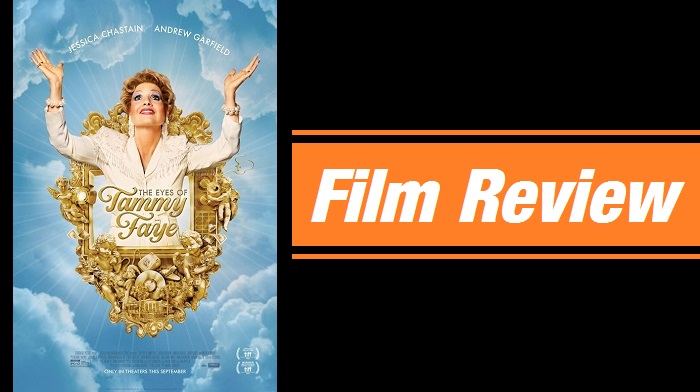
REVIEW: “The Eyes of Tammy Faye” (2021)

Those of us who were around in the late 1970’s through the 1980’s will certainly remember Jim and Tammy Faye Bakker, the hosts of the immensely popular television ‘ministry’ The PTL Club. Starting out of a small North Carolina studio, the Bakkers grew their small show into its own international television network. They even launched a 2500-acre theme park and resort. The couple’s lavish lifestyle was enough to rouse suspicion, but it was Jim Bakker’s sex scandals and coverups that eventually brought the powerful hucksters to their knees.

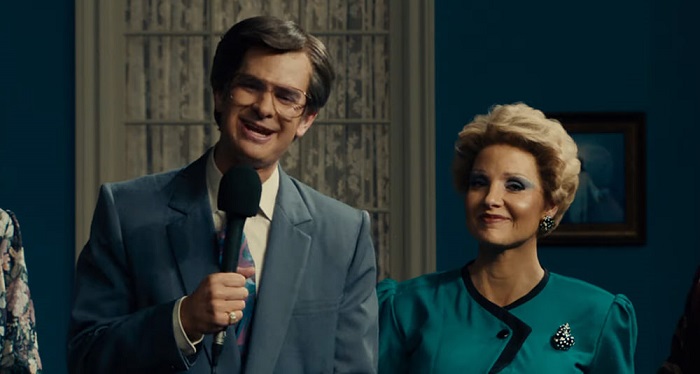
The new film “The Eyes of Tammy Faye” comes from director Michael Showalter working from a script by Abe Sylvia. It’s an adaptation of a 2000 documentary of the same name and sees Andrew Garfield and Jessica Chastain stepping into the roles of the televangelist power couple. The trailers for the film were both fascinating and curious, taking what looked to be a very sympathetic approach to Tammy Faye. While Jim Bakker was clearly a corrupt and contemptible charlatan, Tammy Faye’s hands weren’t exactly clean. So it made sense to wonder if the movie would paint us the full picture or was it up to something else?

Image Courtesy of Searchlight Pictures

It turns out “The Eyes of Tammy Faye” goes all-in, not just to gain our sympathies for Tammy Faye, but also in portraying her as one of Jim Bakker’s countless victims. She’s yet another person hoodwinked by Jim’s lust for wealth and power.

But there’s an unavoidable side effect to the movie’s staunch commitment to redeeming Tammy Faye’s image. The filmmakers are so aggressive in their attempts at shielding her from any culpability that they make her into a dimwit. Garfield’s Jim Bakker is so overtly and transparently a fraud to the point of being a caricature. Yet the film shows Tammy Faye standing by him, soaking up the posh amenities, but oblivious to her husband and ministry partner’s glaring corruption? That’s a leap of faith I could never take.

The movie’s two stars make for a captivating pair and there is certainly plenty of juicy material to cover. But “The Eyes of Tammy Faye” rarely gets out of standard by-the-book biopic mode. And in the rare instances where it does, the scenes more closely resemble an extended Saturday Night Live skit. Chastain goes big and gives a performance that’s captivating, a little wacky at times, but easily the film’s biggest strength. She pours herself into the titular character and as much as the Academy loves transformative work, Chastain should be a lock for an Oscar nomination.

The story starts in 1952, before the trademark thick eyelashes caked in mascara. There we see Tammy Faye as a little girl in International Falls, Minnesota. The movie wastes no time hopping to her bible college days in Minneapolis where she first meets and falls for an ambitious young Jim Bakker. Two scenes later the couple are married and starting a traveling ministry spreading their health and wealth prosperity gospel across the Bible Belt.

While in real-life Tammy Faye did more than her share of mangling scripture to lure in donors in an effort to support their opulent lifestyles, the movie paints her as well-meaning bystander. Instead it’s all Jim’s rabid thirst for money and prominence that led to their downfall. Especially after getting a taste of television on Pat Robertson’s CBN network. Before you know it Jim and Tammy Faye form their own TV channel out of a baby blue Charlotte, North Carolina studio – enter the PTL Network.

Image Courtesy of Searchlight Pictures

The movie doesn’t go into much detail about how the Bakkers managed to get from TV show hosts, to network owners, to building their own theme park and resort in Fort Mill, South Carolina all by 1985. It’s content with making quick stops along the timeline, each stop showing Jim’s ever-growing self-obsession while Tammy SLOWLY starts to realize the obvious. And of course their empire eventually crumbles in a heap of adultery, drug addiction, and fraud.

There are several other elements that either need more attention or just don’t work at all. There’s Tammy Faye’s undercooked relationship with her stern and unsupportive mother (a really good Cherry Jones). There’s Tammy’s clumsily written and out of the blue affair with her here-and-gone record producer (Mark Wystrach). There’s Vincent D’Onofrio’s wacky impersonation of Jerry Fallwell. And then you have the final 20 minutes that loses steam before ending with an especially strange final musical number.

”The Eyes of Tammy Faye” ends up being a bewildering mixed bag. In their efforts to rewrite Tammy Faye Bakker, the filmmakers leave us nothing but the appearance of humanity. They scrub clean most of her sins, and manage to shift the blame for the ones they do show. So we end up with a portrayal that neglects the very thing that would have made it interesting. It’s a shame because this truly is a showcase for Chastain who’s up to the task but isn’t given the material to match. ”The Eyes of Tammy Faye” opens in theaters this weekend.

VERDICT – 2 STARS

REVIEW: “Escape Room: Tournament of Champions” (2021)

2019‘s “Escape Room” was a movie built on a catchy premise but that eventually ran out of gas and ended with one of the most absurd and hard-to-swallow cliffhangers I’ve seen. But with a $9 million budget next to a $156 million box office take, it’s safe to say that green-lighting a sequel was a pretty easy call for Sony Pictures. This time around the budget gets bumped up to $15 million which the movie could reasonably make back during its opening week. Then again, once people get wind of how bad of a follow-up this is, all bets are off.

“Escape Room: Tournament of Champions” was one of the many movies delayed during the COVID-19 pandemic. It finally comes out at a near perfect time; after anticipated blockbusters like “A Quiet Place Part II”, “Fast & Furious 9”, and “Black Widow” have eased many anxious moviegoers back into theaters. Obviously the “Escape Room” movies don’t have the pull of those big-budget franchise films, but you still expect decent numbers. But then I saw the movie.

Image Courtesy of Sony Pictures

Its laughably bad title aside, “Tournament of Champions” didn’t set especially high expectations. The trailers advertised more of the same which would probably be enough to entice fans of the first movie. But where the 2019 film at least kept your interest most of the way, it’s sequel had me restless by the 15-minute mark and ready to check out at 30. That’s because this thing is inferior to the first film in every way imaginable which is stunning considering it didn’t have a particularly high bar to reach.

Something you’ll quickly notice is the shockingly shallow story that pretends to be interested in the cliffhanger ending of its predecessor but then completely tosses it aside within the first few minutes. We get a brief reintroduction to Zoe (played by the super soft-spoken Taylor Russell) who’s in therapy following the events of the first movie and is still determined to take down Minos, the shadowy corporation revealed to be behind the escape rooms. In case you need a refresher, Minos creates these elaborate (and potentially lethal) puzzle rooms and fills them with unsuspecting victims all for the viewing pleasure of their high-paying clients.

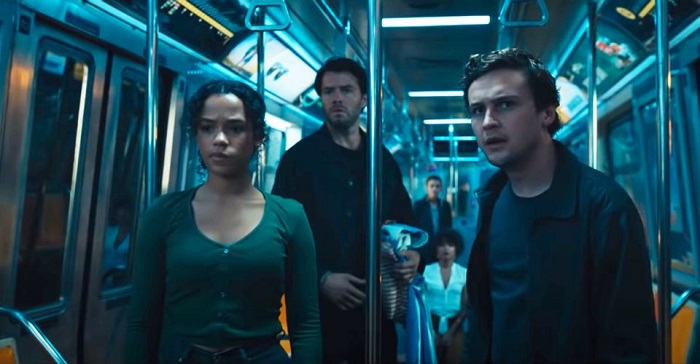
Considering that was the big reveal from the 2019 flick, you would expect the sequel to pick up that plot line and expand on it. Instead the filmmakers are content with just rehashing the previous film’s blueprint – toss people into a new escape room, watch them frantically try to solve a puzzle that opens the exit, someone probably dies, then it’s off to the next room, rinse-and-repeat. That’s this movie in its entirety. Zoe and her manic tag-along friend and fellow survivor Ben (Logan Miller) drive from Chicago to Manhattan to gather proof of Minos’ existence. But within minutes they find themselves lured back into the game, this time with new and far more deadly puzzles.

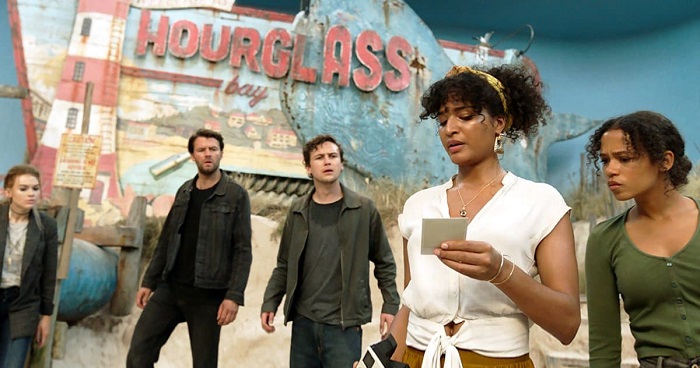
There are a few new characters who join Zoe and Ben, all previous escape room survivors. There’s a travel blogger, an alcoholic priest, a meathead, and a woman who can’t feel physical pain. Don’t worry about their names because they’re only characters in the literal sense. Nothing about any of them is remotely interesting. There’s no charisma, no discernible personalities, no depth. They just panic, scream at each other, and somehow still manage to solve these convoluted puzzles just in the nick of time. Sure some will die, but their deaths have no impact whatsoever. In fact, some are so freaking annoying I found myself rooting for their demise (sorry Ben).

Image Courtesy of Sony Pictures

One of the only genuine surprises with “Tournament of Champions” is that it actually has four screenwriting credits. That’s pretty amazing considering how little there is in terms of story. Even worse, it doesn’t move anything forward. No big revelations, not even new information worth noting. Just more escape rooms, this time with FAR less compelling players. Sure, the rooms are bigger and more intricate and the production design is pretty impressive. We get an electrified subway car, an Art Deco bank with a deadly laser grid, a miniature beach, etc. But with more complex rooms comes more complex solutions and the amount of conveniences and wild pin-point guesswork used to solve them is unintentionally hilarious (my favorite may be when one character enters a new room for the first time and states “There’s a refrigerator. I bet it’s our exit.”).

If you’re okay with watching a bland group of strangers run around and solve puzzles with some dying in various unimaginative ways, then “Tournament of Champions” may have enough to keep your attention. If you’re looking for a good story, compelling characters, or any reason to care, then you’re probably not going to find it here. Not even a ludicrous plot twist (if that’s what you want to call it) can add a charge to the mostly lifeless story. And that gets back to the biggest frustration. These movies have hinted at a deeper conspiracy and a potentially broader threat. That could be interesting. But at some point you have to start answering the many questions you raise. Then again, another $150 million at the box office could easily prove otherwise. “Escape Room: Tournament of Champions” is now showing in theaters.

VERDICT – 1.5 STARS

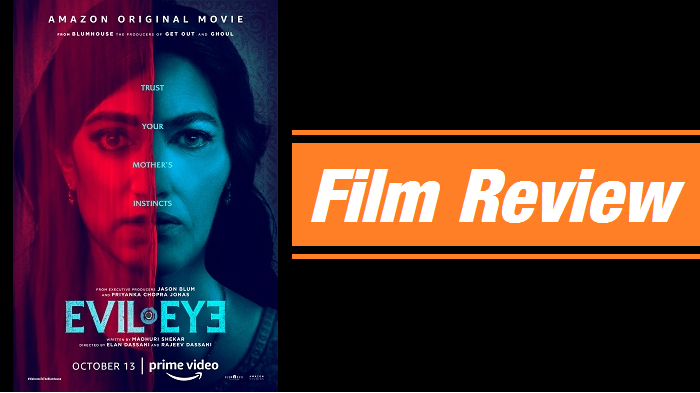
REVIEW: “Evil Eye” (2020)

EYEposterrr

My long overdue third taste of “Welcome to Blumhouse”, Amazon’s eight film collaboration with horror producer Jason Blum, is “Evil Eye” from co-directors Elan and Rajeev Dassani. Once again exploring the shared theme of “family and love as a redemptive or destructive force”, this film shows off some good ideas which separate it from the others (so far). At the same time it’s hurt by a paper-thin story that stretches about 45 minutes worth of material into a 90 minutes feature film.

At the heart of “Evil Eye” is a mother/daughter relationship that will undoubtedly resonate with many woman (it did with my wife). Pallavi (Sunita Mani) is a 28-year-old woman living in New Orleans. Her mother Usha (Sarita Choudhury) still lives in New Delhi, India. The two are very close and talk on the phone nearly everyday. The film does a good job developing their relationship through these across-the-world conversations. It also makes sense narratively considering the movie is an adaptation of playwright Madhuri Shekar’s Audible audio drama (Shekar also wrote the film’s screenplay).

EYE1

Photo Courtesy of Amazon Studios

Usha first comes across as a bossy meddling mom especially as she lovingly hounds her daughter about getting married. So you would think she would be happy when Pallavi meets her Mr. Perfect, a handsome young entrepreneur named Sandeep (Omar Maskati). Instead she’s quickly suspicious of her daughter’s new beau and his motivations. Her forbearing husband Krishnan (Bernard White) tries to dissuade her from ruining their daughter’s newfound happiness. But Usha grows increasingly convinced that there are some really bad vibes surrounding Sandeep.

A frustrated Pallavi first chalks it up to her mom’s silly superstition. But when Usha shares that she believes Sandeep is some supernatural evil from her past, her sanity is brought into question and her relationship with Pallavi reaches it breaking point. The whole mother/daughter dynamic is the film’s biggest strength, with both Choudhury and Mani maneuvering the emotional complexities with a relatable and heartfelt authenticity.

Unfortunately there’s still a lot of space to fill and sadly it’s not nearly as satisfying. The romance between Pallavi and Sandeep is sweet but soapy and sometimes bogged down by made-for-TV melodrama. Some scenes work but others fall flat, failing to meaningfully move the romance forward. More of the running time could have been spent digging into the characters and building more than just a surface level attraction. Or more time could have been spent on Usha’s past trauma, something that ends up playing a significant part in the story. Instead we get most of it through brief flashbacks that piques our interest only to have it deflated by a rather unremarkable reveal.

EYE2

Photo Courtesy of Amazon Studios

And couldn’t more be done with the New Orleans setting? Not only is it a place full of its own rich personality, but it too has a wealth of superstitions and spiritual folklore. Instead it’s given no attention whatsoever. In fact you would never guess the location if its name wasn’t stamped on the screen during the opening. Contrast that with the images of Delhi which capture its cultural significance to the story. Perhaps it’s not a big deal, but when a movie struggles to fill its running time, you can’t help but notice the missed opportunities.

Still, there are things to admire about “Evil Eye” – its attention to diversity, how it taps into Indian culture and tradition, Choudhury and Mani’s strong mother/daughter chemistry. At the same time its flaws are equally noticeable, most notably its lack of 90 minutes worth of story. To the filmmakers credit they stretch it as far as they can. But I found my mind wandering as I waited for the inevitable twist. You know, the ones that have come with every “Welcome to Blumhouse” film so far. “Evil Eye” is streaming now on Amazon Prime.

VERDICT – 2 STARS

2-stars

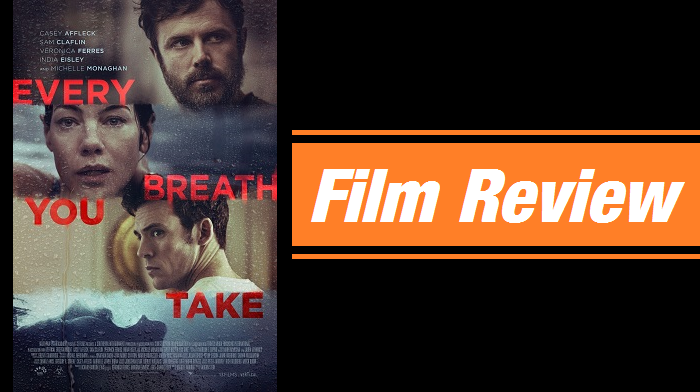
REVIEW: “Every Breath You Take” (2021)

BREATHposterr

Casey Affleck stars as a psychiatrist protecting his family from the unhinged brother of a patient in the new thriller “Every Breath You Take”. It’s directed by Vaughn Stein who did last year’s relatively fun but wacky “Inheritance”. This time Stein doesn’t have that kind of outlandish plot angle to play around with. Instead he’s handed an idea that plays like a watered down “Cape Fear” laced with a Lifetime Original. You know, a ticked-off charmer with a grudge seeks revenge by secretly seducing a man’s wife and daughter. That’s this story in a nutshell.

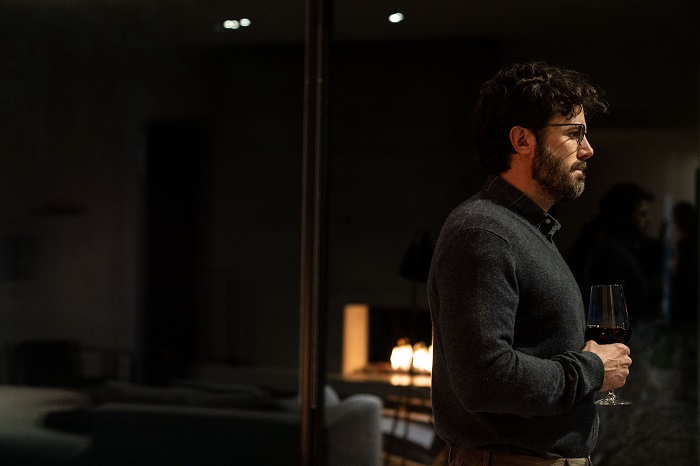
Affleck plays Dr. Phillip Clark, the quintessential movie shrink. He has all the markings – a bookish look, a soft tone, and a notebook full of handwritten doctor scribble. Phillip has a pretty good gig in upstate Washington, working out of his stylishly modernist home while teaching a few university classes on the side. But personally things aren’t so sunny. A devastating family trauma has left Phillip, his wife Grace (Michelle Monaghan), and his daughter Lucy (India Eisley) splintered and individually coping with the tragedy on their own. It’s clearly not going well. Phillip submerges himself in his work, a detached Grace furiously swims laps in their pool as her lone release, and Lucy has been kicked out of boarding school for doing a line of cocaine in the science lab.

BREATH1

Image Courtesy of Vertical Entertainment

As a therapist you would think Phillip would recognize the harm it’s having on his family. But his own emotional repression keeps him focused everywhere but inward. Then we get to sit in on one of his sessions with a young woman named Daphne (Emily Alyn Lind). She has a history of mental illness and suicide attempts but she seems better than she’s been in years thanks to some unorthodox experimental treatment. But then Phillip gets the chilling news that Daphne has taken her own life.

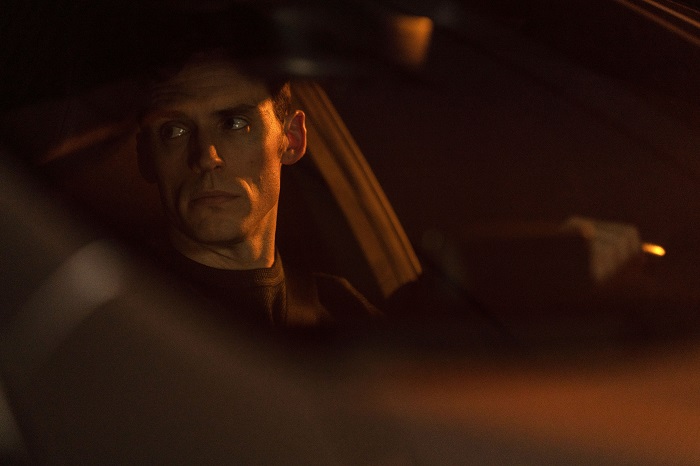
Enter the hunky Sam Claflin who plays Daphne’s grieving brother James. He shows up at Phillip’s house to return a book Daphne borrowed and is invited to stay for dinner by a sympathetic Grace. At the table James wins over Grace with his humble charm while stealthily wooing a clearly smitten Lucy with subtle looks and flirty grins. On the way out to his car he tells Phillip “You’re a lucky man. Family is all there is, and you have a great one.” It doesn’t take a flashing neon sign for us to realize the creepy James is up to no good.

Phillip suspects something too but not before James has found emotional cracks to slither into. And driving a wedge between family members proves to be a lot easier when there’s already no communication between them. So the bulk of the story follows James as he tries to shatter a family one member at a time while Phillip comes to grips with his past in order to save his present and future. We’re treated to several scenes of palpable tension and genuine discomfort. At the same time it’s hampered by characters making some really bad decisions – the kind that will have you slapping your forehead and yelling at your screen.

BREATH2

Image Courtesy of Vertical Entertainment

Claflin makes a dandy psycho despite having a character who is woefully underwritten. The movie uses his disarming good looks and genteel manner to make him believably deceptive. On the other hand he never really gets to explore the personal anguish or rage that supposedly drives his character’s actions towards Phillip and his family. All we get is a muttered quote he takes from his sister, “The deepest hurt I’ve ever felt was when I tried to do good and was shamed for it.” Its repeated several times and I’m still not sure what it means within the context of the movie.

The movie attempts to rectify this and other issues in the final act, but the rushed out-of-left-field ending and inevitable ‘big twist’ hurts more than helps. The performances are solid, the film musters a little tension, and the Pacific Northwest (shot in Vancouver) makes for a good setting and is nicely captured through Stein’s lens. But as a whole the story is more frustrating than satisfying. It’s a psychological thriller that leaves most of the psychology buried and unexplored. So we’re left with undercooked characters, thinly sketched motivations and a story begging for more attention and detail. “Every Breath You Take” opens today (April 2nd) in select theaters and on VOD.

VERDICT – 2 STARS

2-stars

SUNDANCE REVIEW: “Eight for Silver” (2021)

SILVERposter

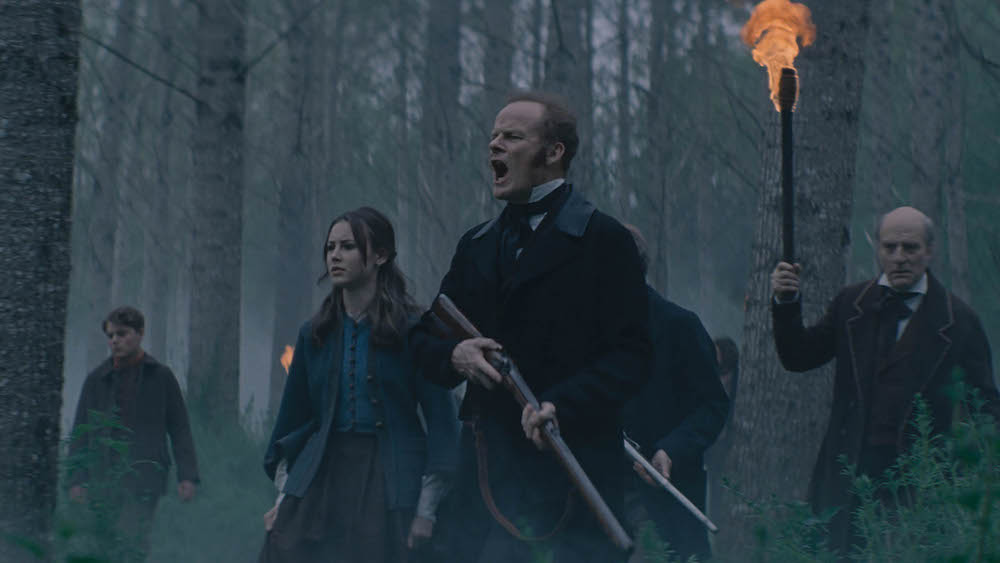
One of the biggest surprises coming out of this year’s Sundance Film Festival has been “Eight for Silver”, a gory old-fashioned horror movie that offers a fresh spin on the age-old werewolf story. The film comes from British writer-director Sean Ellis who is no stranger to debuting his films at Sundance. His latest film looks at the werewolf idea not so much as an individual curse but as a communal one. This novel perspective opens the door for Ellis to get into some meaty themes while still enjoying the sub-genre’s nuances.

The film opens on a World War I battlefield where French soldiers prepare to leave their trenches to storm a German fortification amid a hail of gunfire and mustard gas. Within seconds we’re moved to a medical tent where a surgeon removes lead from a wounded soldier’s abdomen. As the bloody extracted bullets clang into a pan, a final one looks much different than the others. “This isn’t a German bullet,” he says of the large pure silver slug gripped by his forceps. Oh how right he is.

From there Ellis travels back 35 years to the late 1800’s. He sets his story in Victorian England in the middle of a cholera pandemic, a little detail that fits the kind of atmosphere he’s going for. Seamus Laurent (Alister Petrie) owns a lavish country manor where he lives with his emotionally detached wife Isabelle (Kelly Reilly), their daughter Charlotte (Amelia Crouch) and their son Edward (Max Mackintosh). The wealthy and powerful Seamus is the leader of a group of property owners who have gobbled up most of the land in the area. It quickly becomes evident that Seamus is far more interested in tending to business matters than being a husband and father to his family.

One of the film’s more stinging themes considers the abuse of the lower class by the powerful and more directly colonialism, ethnic cleansing, and the mistreatment of indigenous groups. This comes to light after a caravan of gypsies set up camp on a patch of Seamus’ land. The Romani clan make a legitimate claim as the land’s original settlers and rightful owners. But Seamus and the other property barons will have none of it. They hire a group of mercenaries to intimidate the gypsies into leaving the area, but the confrontation turns violent. The impending savagery is captured in one of the film’s best shots. The static camera sits at a distance watching the twenty or so horseback riders approach the gypsy camp. It doesn’t move until the entire camp is ablaze.

Afterwards the mercenaries gather up the stragglers, executing them for their own amusement. Included in the barbaric purge is woman who uses her dying breath to place a curse the land. Days pass but then local children begin having the same nightmare, one that draws them to a grotesque scarecrow in the very field of the slaughter. Things get more disturbing from there. A child’s mangled body is discovered and Seamus’ son Edward is bitten by what’s believed to be the same ravenous creature. That same evening Edward begins having violent reactions before vanishing into the night.

All of that uncoils in the first thirty minutes or so and serves as a nice setup for Boyd Holbrook. The Kentucky-born actor sets aside his American accent for a well-tuned British one playing John McBride, a traveling pathologist who takes a personal interest in the strange goings-on around the area. Seamus calls on him to help find his son and track down who or what is responsible. McBride agrees but is soon butting heads with Seamus and other members of the local hierarchy over what’s really terrorizing their land.

From its earliest frames you can tell “Eight for Silver” is handsomely shot. It impresses both as a lush period piece and as gruesome gothic horror. Ellis serves as his own cinematographer and his camera plays an essential part in setting the film’s mood and creating its dread-soaked atmosphere. From his fog-cloaked exterior compositions to the cramped hallways of Laurent Manor. And Ellis makes a number of visual choices that payoff – his crafty his crafty use of light (or lack of it), his cold four color palette, the use of (mostly) practical effects.

When questioned about his qualifications by a skeptical landowner McBride explains “Our bodies speak even after death. I listen.” With “Eight for Silver” Sean Ellis gives him plenty to listen to. The movie has a good time tinkering with the werewolf mythos, changing it up in some cool and interesting ways while still embracing the gory goodness utilized in films like “An American Werewolf in London” and “The Howling”. And if you remember anything about this review  let it be ‘AUTOPSY SCENE’. It’s unforgettable and I’ll leave it at that.

VERDICT – 4 STARS

4-stars