5 PHENOMENAL MOVIE GAS STATION SCENES

In the movies gas stations offer much more than just a place to use the bathroom and top your tank. There have been all sorts of cool and funny movie scenes involving gas stations. So this is one of those weird Phenomenal 5 lists that looks at great movie gas station scenes. Now there were several scenes I really love that were left out just for the sake of variety. That being said, I wouldn’t call this the definitive list. But there’s no denying that these five movie gas station scenes are absolutely phenomenal.

#5 – “IT’S A MAD, MAD, MAD, MAD WORLD”
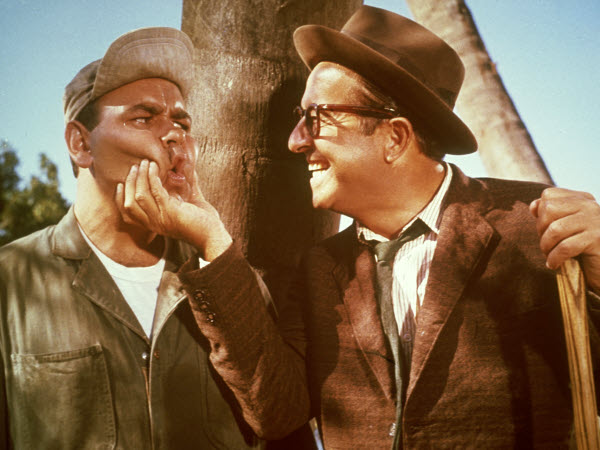
This wacky 1963 comedy is known for possibly having the biggest ensemble cast of great actors in movie history. It also has one of the greatest gas station scenes you’ll find. In this wild race to get to a load of stolen money first, a furniture mover named Lennie (Jonathan Winters) gets double-crossed by the greedy Otto (Phil Silvers). Lennie finally runs Otto down at gas station and chases him all over the property causing all sorts of damage. Otto escapes and the attendants tie Lennie up while waiting for the men in white coats to come get him. Lennie gets loose and ends up leveling (quite literally) the entire station. It’s a hilarious scene.

#4 – “ROBOCOP”

There’s a great and pivotal gas station scene in the 1987 sci-fi action romp “Robocop”. Emil, a member of the brutal gang that killed Alex Murphy which in turn caused him to become Robocop, stops at an all-night gas station. He robs the place and fills up with gas while terrorizing the attendant. Robocop notices a crime in progress and pulls up. After triggering Robocop’s memory, Emil sprays gas everywhere, throws down his cigarette, and tears off on his motorcycle. The gas station explodes with Robocop walking out of the flames. He thwarts Emil’s getaway but this scene is mostly important for putting Murphy on track to remembering who he was.

#3 – “KALIFORNIA”

There are actually two great gas station scenes in the 1993 gritty thriller “Kalifornia”. Pre-mega star Brad Pitt gives what I believe is his best performance as Early Grayce, a psycho who, along with his wife, hitches a cross-country ride to California with David Duchovny and Michelle Forbes. In the first unnerving scene, they stop for gas and a man with a wad of cash catches Early’s eye. Early follows him into the restroom, stabs him to death, and takes his money. But in an even more frightening scene, later they arrive at a different gas station as a huge electrical storm brews. It’s in this key scene that the rest of the group discovers the brutally unbalanced man that Early really is. Both scenes are intense and disturbing but also incredibly well done.

#2 – “THE BIRDS”
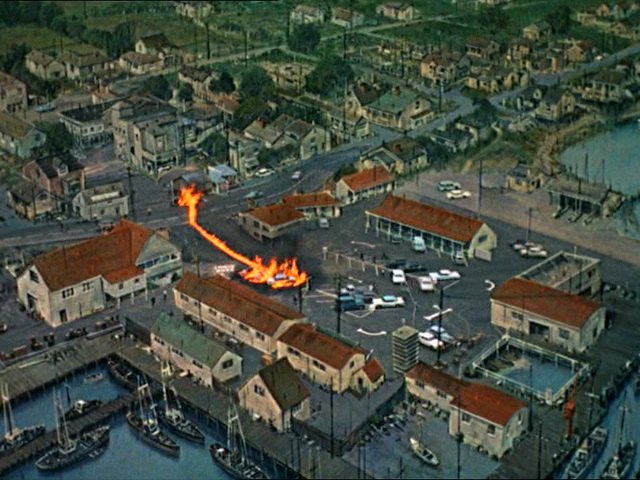
Alfred Hitchcock’s classic killer birds movie has several great moments but few are better than the gas station scene. As an attendant gasses up a customer’s car, two birds attack him knocking him down. As people rush to check on him, no one notices the nozzle continuing to spew gasoline. The flow of gas crosses the street into a parking area where a man steps out of his car and lights a cigar. Before he can be warned the match burns his finger then falls into the gas. BOOM! The man and several cars are gone and the flame blazes up the gas stream and the gas pumps explode. Hitchcock ends the scene with an amazing overhead shot of the horrible event. Classic!

#1 – “NO COUNTRY FOR OLD MEN”

Hands down my favorite gas station movie scene has to be from Joel and Ethan Coen’s fabulous “No Country for Old Men”. Hired killer Anton Chigurh (Javier Bardem) stops by a small isolated gas station to fill his tank and grab a package of peanuts. The elderly attendant makes the mistake of making small talk with Chirgurh which leads to one of most tense yet hilarious conversations I’ve ever scene. It ends with a coin toss with the attendant’s life on the line. I swear, I can watch this scene over and over and never get tired of it.

So there they are. What have we learned from this week’s Phenomenal 5? For one thing, it doesn’t pay to be a gas station attendant in the movies. So many good ones could have been mentioned. So what’s your favorite?

REVIEW: “Shadow of a Doubt”

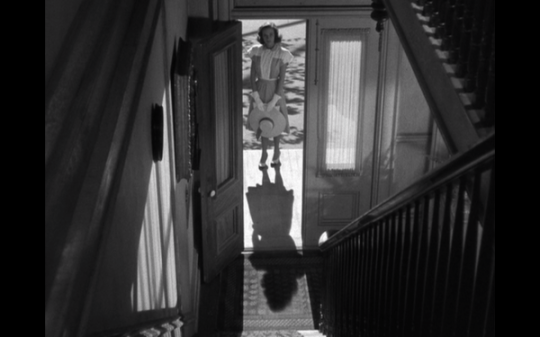
Alfred Hitchcock gets a lot of praise for his classic films such as “Vertigo”, “Psycho”, “Rear Window”, and “The Birds” and rightly so. But for those who aren’t familiar with the director’s full body of work, “Shadow of a Doubt” is one of his movies that may be easily overlooked. But to miss out on this wonderful early Hitchcock classic would be to miss out on one of his very best movies. This 1943 thriller has all of trademarks of a Hitchcock film and one of the strongest stories that he has brought to film.

“Shadow of a Doubt” was shot and set in Santa Rosa, California, a location picked for its picture of small town America. Charlie Oakley (Joseph Cotten) arrives in Santa Rosa to pay a visit to his sister Emma (Patricia Collinge) and her family. He hasn’t seen them in years and they receive him with open arms, especially his niece Charley (Teresa Wright) who was named after him. Charley has become bored with her life in her small town and the arrival of her uncle gives her a spark. But her uncle’s visit isn’t without purpose and Charley soon finds out that he is far from the wonderful man she thinks him to be.

The opening scenes let us know that there’s something mysterious going on with Charlie. Later he arrives in Santa Rosa and is doted on by his enamored family. He also draws the attention of and captivates many of the locals from bankers to widows. But he’s also hiding a very dark secret that eventually becomes a key driving force behind the film. In fact, Hitchcock gives us a compelling look at the dark reality of the real world infecting the innocent, idyllic life of a small town. Young Charley soon learns that the world can be a dangerous place and watching Teresa Wright portray Charley and her emotional transformation is a joy. Wright is brilliant. She’s lovely in her innocence and naivity and heart-breaking as we watch her face terrible things and bear huge burdens. I’m being vague and don’t want to spoil things for those who haven’t seen the film, but Charley is a wonderful character and Wright nails the performance.

I also loved Joseph Cotten as her Uncle Charlie. At first we love him just as much as the family does. He’s like that distant uncle who you haven’t seen in forever but you still think he hung the moon. But the problem is that you haven’t seen him therefore you really don’t know him. I bought into Charlie, the nice compassionate man, and was unnerved as he evolved into an entirely different person. This is due to how wonderfully he is written and to Cotten’s brilliant performance.

The movie also works due to what has come to be recognized as Hitchcock’s unique visual style. As with every Hitchcock picture, the camera is extremely important to his storytelling. We are treated to some slick camera angles and tricks as well as some clever use of lighting and shadows which helps inject the movie with moments of tension and suspense. Some of the best scenes involve moving cameras or perfectly timed close up shots and overall the visual style is vintage Hitchcock.

“Shadow of a Doubt” is an exceptional thriller built upon a very good story, some pitch-perfect performances, and slick direction. It’s not as well-known as some of Hitchcock’s bigger films but it’s just as good as them and it has certainly earned its spot as a true classic. The story moves at a great pace and it keeps you involved all the way to its startling ending. I really like “Shadow of a Doubt” and its one of those movies that I could watch again and again.

VERDICT – 4.5 STARS

5 PHENOMENAL JIMMY STEWART FILMS

One of my favorite movie actors of all time is the great Jimmy Stewart. Throughout his career which spanned almost 60 years, Stewart compiled an incredible resume full of some truly classic movies. Known as an everyday man, Stewart had a great charisma and a wonderful likability on-screen. But his greatness wasn’t just restricted to the movies. He had an impressive military career serving his country during World War 2 and the Vietnam War. But keeping with his movies, I thought I would show this great actor some love by looking at five phenomenal movies of his. Now it’s hard to call this the definitive list. But I have no problems saying that these five Jimmy Stewart films are simple phenomenal.

#5 – “Mr. Smith Goes to Washington”

This is the movie that made Jimmy Stewart into a big time movie star. “Mr Smith Goes to Washington” is the story of a simple but honest man who is sent to Washington to fill the position of a recently deceased Senator. Supposedly Stewart’s character would be easy to control and corrupt but that doesn’t turn out to be the case. This gem from Frank Capra caused a huge stir in Washington with several Senators and other government officials slamming it for daring to address possible corruption in our system. Regardless, Stewart is fantastic and his performance earned him a much deserved Oscar nomination.

#4 – “Vertigo”

Heralded by many (including the new Sight and Sound Magazine’s Greatest Movies list) as the best film of all time, this Hitchcock and Stewart collaboration has reached an iconic status. Personally, I don’t see it as the best movie of all time or even the best Hitchcock film but there’s no denying how wonderful Stewart is in the picture. The story is intriguing and suspenseful although at times slow and with a unfullfilling conclusion. But watching Stewart handle the material is a joy and I still say that his performance is the best thing about the film.

#3 – “The Philadelphia Story”

In 1940, Jimmy Stewart played in one of my favorite romantic comedies of all time – “The Philadelphia Story”. Teaming up with greats Cary Grant and Katharine Hepburn, Stewart still shines as a reporter who ends up in a tangled and sometimes hilarious web of love with Hepburn in the center. Grant and Hepburn are just as good as you would expect but I love Stewart’s performance. This is a great film and Stewart won his only Best Actor Academy Award for this role.

#2 – “It’s a Wonderful Life”

By now everyone knows “It’s a Wonderful Life” because of its status as a Christmas classic and I certainly wouldn’t take anything away from that. But it’s also a brilliant movie that’s driven by Jimmy Stewart’s fantastic work as George Bailey. From his onscreen chemistry with the gorgeous Donna Reed to his believable fall and eventual rise, Stewart owns every scene. He’s surrounded by a superb supporting cast and Capra’s direction is spot-on. But “It’s a Wonderful Life” wouldn’t be the classic it is without Jimmy Stewart.

#1 – “Rear Window”

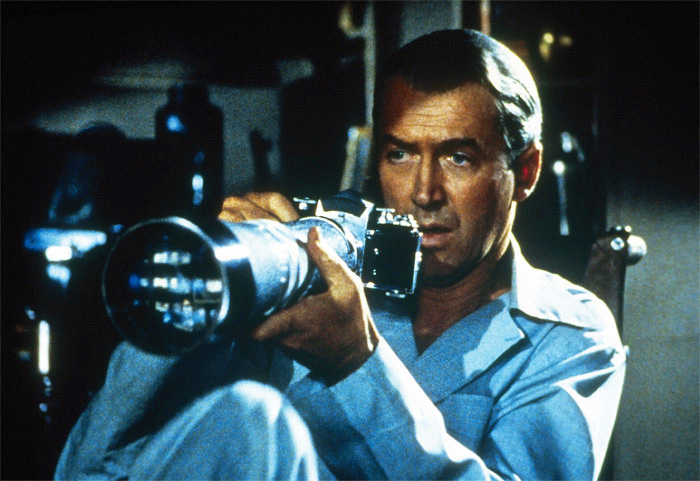
While “Vertigo” gets most of the love between Stewart’s collaborations with Alfred Hitchcock, “Rear Window” is my personal favorite movie from Stewart as well as my favorite Hitchcock film. Elaborately staged and at times incredibly tense, “Rear Window” confines Stewart to one room where he becomes a voyeur, peeping into the lives of his numerous neighbors. He soon suspects one neighbor of foul play and as the story unfolds we wonder if he’s right or if he’s allowed his snooping to manufacture something that’s really not there. Stewart has a tricky role but he nails it and this is one of those movies that I can sit down and watch at any time. Stewart and Hitchcock at their best.

There ya go folks. My 5 phenomenal Jimmy Stewart movies. So what are your thoughts on this tremendous actor? Are you a fan or is he not your cup of tea? Please share your thoughts.

REVISITING A CLASSIC: “Citizen Kane” (1941)

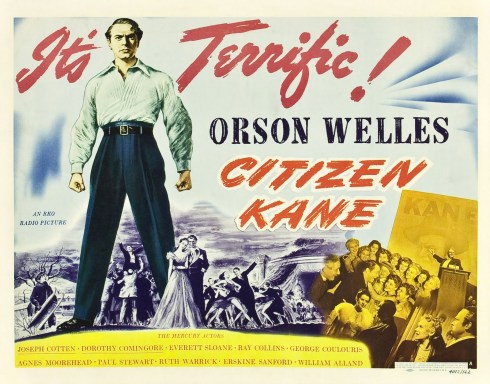
You may have heard by now that Sight & Sound Magazine recently announced the results of their The Greatest Films of All Time poll. If you’re unfamiliar with the poll, it’s a worldwide survey of critics that has been conducted every 10 years dating back to 1952. Since 1962 “Citizen Kane” has been at the top of this pretty prestigious list, at least until this year. Alfred Hitchcock’s “Vertigo” has dethroned “Citizen Kane” which has launched a ton of great discussions on both of these films. Personally, “Vertigo” isn’t the greatest film of all time. In fact, for me it isn’t even the best Hitchcock film. And for my money, even though I like “Vertigo” a great deal, it can’t beat “Citizen Kane”, a movie that is a lesson in quality filmmaking starring, directed, and co-written by Orson Welles.

Last night I had the opportunity to revisit this cinema classic and it’s amazing how it truly seems to get better with each viewing. “Citizen Kane” is a film that has aged like the finest wines and there are so many reasons for it. The more I watch the movie the more I can appreciate the skilled filmmaking and risks taken to bring the movie to life. The film certainly had its share of struggles particularly when trying to find an initial audience. William Randolph Hearst, the American newspaper giant who is the clear inspiration for the movie’s main character, was infuriated by the movie and took huge measures to keep “Citizen Kane” from reaching an audience. Fear of his power kept the film out of many newspapers and out of many theaters. But after all these years, it’s the movie that has come out with the better reputation.

While there has been some controversy over who was the driving force behind the movie’s screenplay, Orson Welles and Herman Mankiewicz are credited with its authorship. It tells the story Charles Foster Kane, an immensely wealthy newspaper mogul, who lies on his deathbed, alone within the closed isolation of his mammoth Florida estate known as Xanadu. We watch as Kane utters his final word “Rosebud” and then dies. This opening event catapults the entire story forward. In fact, the entire narrative is driven by one incredibly clever device – “Rosebud”. Kane’s final word becomes a huge topic of interest especially for investigative reporter Jerry Thompson (William Alland). Thompson is convinced that there is a deeper secret meaning to Kane’s final word and he sets out to uncover it by looking into Kane’s past and interviewing those closest to him.

This points to one of the things that makes this movie so special. There’s no straight-line, uninterrupted narrative. Instead the story is told through well placed flashbacks from the points of view of several different people. Through their eyes we learn about Kane’s impoverished childhood. We learn about his leap of faith into the newspaper business at a young age. We see his political ambitions. But we also see the story of a man whose motivations fester into those of power and self-promotion. We watch as his ego and self-indulgence destroys every nonmaterial thing in his life. He’s the epitome of gaining the whole world but losing all that’s important. It’s a fascinating study of a man who, regardless of his wealth, power, and influence, is unable to overcome the greatest obstacle to true happiness – himself. This all unfolds through the words of Kane’s guardian, ex-wife, business partner, butler, and best friend. Now as someone who isn’t always attracted to the use of flashbacks, I’m really impressed at just how well they work here. Welles is truly laying out a man’s life before us and I was enthralled not only in his story but also with the small question behind it all – just who or what is “Rosebud”?

While many love the story and the storytelling behind “Citizen Kane”, it is equally or maybe even better known for its ambitious visual presentation and stylistic techniques. Welles was given tons of liberties from RKO Pictures when it came to making the film and that’s all the more surprising considering that this was his first feature film. He took his creative control and mixed it with a young man’s enthusiasm that resulted in a visual style significantly different from anything else in Hollywood. I can still name numerous carefully framed shots and brilliantly conceived camera tricks. There’s also Welles’ penchant for placing his camera at ground level and shooting up at his characters. This is ever so effective particularly in one extended take featuring a crucial conversation between Kane and his long-time friend Jedediah Leland (played wonderfully by Joseph Cotton). There are several other cool camera techniques and special effects along with some impressive makeup work that still influences a host of modern filmmakers.

I worry that newcomers or even those who haven’t seen “Citizen Kane” in years will approach the film from the “So this is the greatest film of all time?” perspective. That’s a bad way to approach any film especially considering how subjective these lists are anyway. Instead, this movie should be approached as its own creation – enjoyed and measured within those bounds. Welles’ accomplishment with the film cannot be overstated. The direction is brilliant, the screenplay is fantastic, and he gives a thundering performance and all within what was his first feature film. “Citizen Kane” was a critical success at its time but struggled to gain a huge following. But as years have passed, the movie has risen to be appreciated as a monumental film in cinema history. I tend to agree. And while “Citizen Kane” wouldn’t be my personal “greatest movie of all time”, there’s no denying it’s inventiveness, it’s influence, and its overall excellence.

VERDICT – 5 STARS

5 STARSs

5STAR K&M

REVIEW: “Dial M for Murder”

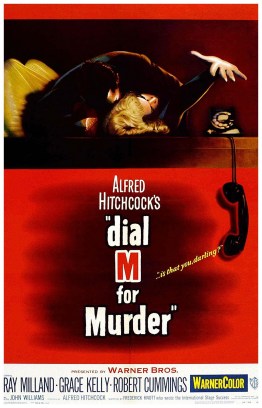
Classic Movie SpotlightDIAL MIt may not be the most acclaimed Alfred Hitchcock film, but “Dial M for Murder” is an intelligent and capable murder mystery adapted from Frederick Knott’s play. While there are special Hitchcock touches throughout the film, it’s Knott who really makes this such a memorable picture. He wrote the screenplay and kept most of his original work intact. The movie sharply resembles a play particularly by the fact that the majority of the film takes place in one single setting, a London apartment. Also, the dialogue flows in a way that favors what you would see on stage. But it’s that same dialogue delivered by some really strong performances and mixed with Hitchcock’s slick use of the camera that gives this movie it’s appeal.

“Dial M for Murder” explores the idea of the perfect murder. Ray Milland plays Tony Wendice, a professional tennis player who has enjoyed a lavish lifestyle thanks to his wife Margot’s wealth. After growing frustrated with Tony’s constant absence and busy schedule, Margot (Grace Kelly) begins a fling with an American writer named Mark Halliday (Robert Cummings). Tony finds out about the affair and fearing the loss of his meal ticket, he plans the murder of his unfaithful wife, leaving him her fortune. It’s a foolproof plan, carefully thought out to the smallest detail. But what may look good on paper doesn’t always translate well into real life.

The story is straightforward but structured and it pays great attention to the details. Clues are littered throughout the film with almost every seemingly small action from the characters having some type of relevance. It’s such a tight-knit and well-crafted story and watching it unfold is very satisfying. The story never trips over itself and Hitchcock let’s Knott’s script do most of the heavy lifting. The dialogue drives the film and it doesn’t rely on twists, turns, or red herrings. In fact, the narrative moves in a fairly straight line and never strays from it’s path. But I found it effective especially considering the movie is basically a single location cinematic play.

DIAL M 1

A movie of this sort only works with strong and grounded performances and “Dial M for Murder” certainly has them. I love watching Ray Milland’s shrewd and savvy Tony. He perfectly relays Tony’s arrogance and overconfidence in a way that never feels disingenuous or overwrought. He has a remarkable screen presence and is perfectly cast. Speaking of screen presence, the gorgeous Grace Kelly is mesmerizing. Whether it be her physical beauty and elegance or her graceful and authentic performance, Kelly steals almost every scene she’s in. I also loved John Williams as Inspector Hubbard. He’s fun, smart, and never misses a beat.

I suppose the location restrictions and the straightforward story could be considered faults especially for those comparing this film to some of Hitchcock’s other movies. But I loved how Hitchcock keeps the Wendice’s apartment fresh with inventive camera shots and clever angles. I can also appreciate the direct although conveniently tidy narrative. It’s an intelligent film that puts a solid story in the hands of some fantastic actors and lets them go from there. I always have fun with “Dial M for Murder” and it’s strongest message is this – keep up with your latchkey!

VERDICT – 4.5 STARS

“VERTIGO” – 4 STARS

In most conversations about Alfred Hitchcock’s films, “Vertigo” often finds itself mentioned as the quintessential Hitchcock movie. It’s called a masterpiece and is considered by many to be one of the best films of all time. While I don’t personally agree with that level of praise, there’s no denying that “Vertigo” is a cleverly crafted and stunningly stylized psychological thriller. “Vertigo” can never be branded as shallow or conventional. It has it’s fair share of mystery and suspense while also delving into more disturbing subjects such as mental breakdowns and romantic obsession. It’s takes it’s time playing out, but it’s still quite rewarding for those who appreciate it’s complexity.

The great James Stewart plays Scottie Ferguson, a San Francisco police detective. Scottie struggles with serious acrophobia which ends up contributing to the death of a police officer during a rooftop chase. The incident combined with his ailment cause him to retire early from the department. That’s when Scottie is hired by an old acquaintance named Gavin to follow his wife who he suspects has been possessed. Scottie doesn’t buy the supernatural assertion but still agrees to help. This sets the movie down it’s first of many twisty, unpredictable paths.  

It’s said that Hitchcock later stated he thought Stewart, who was 50 years old at the time, was too old and many critics initially felt he was miscast. Personally I think Stewart is fantastic here and it’s nice that over time his performance has garnered more appreciation. When first released, “Vertigo” was dismissed by most critics and Stewart became the easy scapegoat. The movie does have it’s flaws but it’s hard for me to associate any of them with Stewart’s performance. He’s grounded and believable and Stewart never loses control of his character even as things unravel around him.

Kim Novak plays Gavin’s wife Madeleine. She wasn’t Hitchcock’s first choice for the role but she ends up making the character her own. It’s impossible to talk about her character without giving away too much but Madeleine isn’t what she seems. A lot is required of Novak as her character branches out into several directions and for the most part she succeeds. She icy cold and mysterious yet we also see her as pitiful and sympathetic. She’s an essential character and while not as polished as Stewart, Novak’s performance works.

“Vertigo” is a technical marvel with some truly gorgeous camera work. Hitchcock keenly uses trickery and sleight of hand in several scenes to enhance the effects. The well-known vertigo zoom shots are still mentioned in most conversations about the film and the surreal use of lighting really dictate the tone of several scenes. I also love the wonderful locations. Hitchcock includes several San Francisco landmarks in the film and he uses the camera to accentuate the city’s beauty. Other small but effective devices include the use of reflections and clever elevated camera angles. It’s just an incredibly attractive film.

Some have described “Vertigo” as a meditation. Others have called it an observance. One reason these descriptions fit is because of the movie’s deliberate pacing particularly in the first half of the film. I felt it took a while getting it’s footing and the lackadaisical first 30 minutes could have been tightened up a bit. I was also a little surprised to see the timing of the big reveal. I certainly don’t want to give anything away but what I thought was the biggest red herring turned out to be no red herring at all.

For me “Vertigo” isn’t the perfect movie that many believe it is. That being said, it’s still a remarkable film that delivers despite it’s few flaws. It has the appearance of cinematic art with Hitchcock showing what skillful uses of a camera can bring to a movie. Stewart is brilliant and his performance immediately draws you into the picture. He’s the linchpin that keeps this dark but riveting film together. “Vertigo” has earned it’s “classic” label and it’s mandatory viewing for any fan of mysteries or thrillers. And while it’s not my favorite Hitchcock picture, it’s still a rock solid movie that satisfies with each viewing.