REVIEW: “Train to Busan”

trainposter

The zombie sub-genre is probably the fastest growing in all of horror. While it seems to have slowed down a tad, there are still countless numbers of films about the undead. Not surprising, a lot of it is waste, but there are also thoughtful, intelligent zombie movies that manage to terrify while also having something to say.

Director Sang-ho Yeon’s blistering South Korean zombie picture “Train to Busan” is one of the good ones. More survival thriller that straightforward horror, Yeon’s film pulls influence from several movies. It’s a bit of “Snowpiercer” meets “28 Days Later” but with a dash of “World War Z” tossed in for good measure. I’m not the first person to make those comparisons but they’re almost impossible to avoid. But that’s not a bad thing. “Train to Busan” doesn’t hang its hat on those influences. It has enough of its own ideas to make it unique.

train2

The film’s central relationship is between a father and daughter (right off the bat it had me – I’m easy.) Gong Yo plays a workaholic fund manager named Seok-Woo. He’s recently divorced and spends more time at the office than with his young daughter Su-an. His disconnect with his daughter is best illustrated in one scene where he gives her a birthday gift. It’s the exact same thing he recently gave her for another occasion. Frustrated, Su-an pleads with her father to take her to her mother in Busan.

The next morning father and daughter board a bullet train from Seoul to Busan. Once onboard Yeon and writer Park Joo-suk introduce us to several side characters who will impact the story in a variety of ways. There’s a blue collar husband and his pregnant wife, two elderly sisters, a self-centered CEO, a train-hopping homeless man, and even a high school baseball team. But there is one more noteworthy passenger – a staggered young woman with a bite mark in her leg. She begins to convulse, attacks an attendant, and soon the zombie spread begins leaving a handful of survivors trapped on a speeding passenger train.

There are no guidelines to how movie zombies operate. Some creep and stumble while others run full-throttle. Some return to life over time while others turn quickly. Yeon’s zombies are fast, ferocious, milky-eyed terrors. Their transformation from victim to zombie is instantaneous. This makes for several remarkably intense sequences especially considering the claustrophobic confines of a fast-moving train. Sang-ho and cinematographer Lee Hyung-deok create some stellar scenes brimming with viciousness yet not fully relying on graphic gore. Don’t get me wrong, the zombie violence is bloody but far from excessive.

train1

And as with the best zombie flicks, it’s the human elements that makes this one rise above genre expectations. Take the key daddy/daughter relationship. For them it becomes more than a train ride and zombie attack. It’s a wake-up call for Seok-Woo and a chance at righting his relationship with his daughter. There is also a running theme of kindness and charity in the face of great horrors. Repeatedly characters are faced with the options of working together or alone. Their decisions often impact whether people live or die. The film also examines paranoia, selfishness, sacrifice, and more.

I went into “Train to Busan” expecting a thrilling, edge-of-your-seat zombie romp and it’s very much that. It’s a tension-soaked blast of a movie but with plenty of smarts both in front and behind the camera. Its good characters, deeper themes, and impeccable execution helps it to defy any dismissive genre perceptions some folks may have. Sure, it still won’t appeal to everyone, but for me “Train to Busan” is an injection of freshness into its genre and easily in the upper tier of zombie movies.

VERDICT – 4.5 STARS

4.5 STARS

REVIEW: “Rogue One: A Star Wars Story”

rogueoneposter

When Disney bought the Star Wars franchise I don’t think anyone expected it to be three movies and done. You don’t exactly spend $4.06 billion just to make three films. Of course Disney being Disney means that Star Wars has become an annual cinematic event featuring new installments/episodes of the main story mixed with one-shot movies meant to fill in some of the gaps between previous films. The first of these one-shots is “Rogue One”.

These stand-alone ‘Star Wars stories’ will apparently be aplenty. Already rumors of a young Han Solo adventure and a Boba Fett origin story are swirling. “Rogue One” notches in just ahead of Episode 4 on the Star Wars timeline. It tells the story of how the original Death Star plans were stolen from the Empire. You know, the ones Princess Leia hid inside of R2-D2 just before being captured by Darth Vader. Just from that you can probably tell fan service is at a premium, but “Rogue One” packs plenty more to give it its own identity and a firm standing among the Star Wars films.

rogueone2

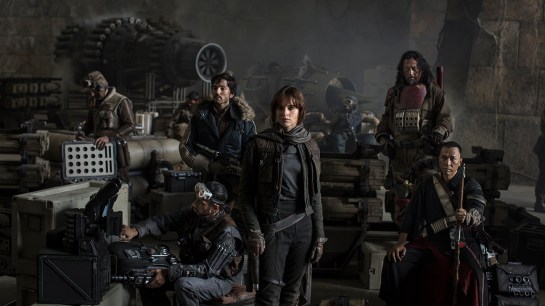
“Rogue One” introduces a new band of characters living within this vivid established world Star Wars fans know well. A strong and heady Felicity Jones plays Jyn Erso, a young woman with a history marked with distress, most notably the separation from her parents as a young child by the hand of Orson Krennic (Ben Mendelsohn). He’s the Empire’s weapons research director who’s tasked with creating a planet-killing superweapon. Years back Krannic forced Jyn’s father Galen (Mads Mikkelsen), a weapons designer, to help complete what would become the Death Star essentially leaving Jyn to be raised in hiding.

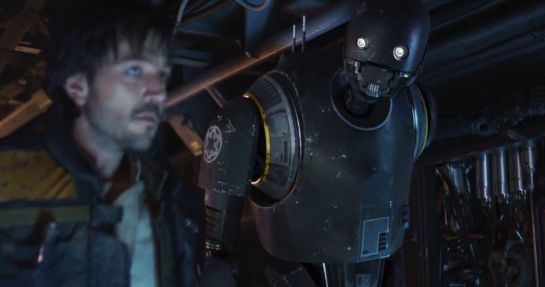
Jump ahead 15 years. Jyn is rescued from an Imperial prison by Cassian (Diego Luna), an officer in the fledgling rebellion. Aware of her identity, the rebels have a very specific yet complicated purpose for Jyn which leads her from being a pawn to a potential hero. But to make that journey she will need the help of a good cast of characters – Donnie Yen as the blind mystic Chirrut along with his sidekick/protector Baze (Jiang Wen), an Empire defector named Rook (Riz Ahmed), and the deadpan, scene-stealing droid K-2SO (voiced by Alan Tudyk).

rogueone1

Gareth Edwards directs and follows up his 2014 reboot of “Godzilla”. In that film Edwards’ deliberate and slow-revealing tempo invigorated some audiences (like me) while frustrating others. There is a bit of that approach here, but for the most part this is an energetic, steady moving picture. Chris Weitz and Tony Gilroy’s screenplay at first feels like a very different Star Wars movie yet over time its place in this beloved far, far away galaxy is much more cemented. By the end “Rogue One” not only feels like a Star Wars film, it holds its own within the franchise.

Now I’ve already heard the frustrations of some who desperately wanted this film to be something boldly unique. Complaints that Edwards and company play it safe have merit but there is a reason they do so. “Rogue One” is unshakably tied to Episode 4 and it shouldn’t surprise anyone that this film stays within that same style and framework. It’s a wise creative decision which actually helps the film effectively meld into the Star Wars macrocosm. With so many other Anthology films coming, there will still be plenty of opportunities for risk-taking. I don’t think this is it.

rogueone3

“Rogue One” looks amazing, the effects are stunning, the action is energetic, the nostalgia is delightful, there’s the right amount of humor, and it tells a good story. But what surprised me the most was how much I liked its characters. They’re fun and compelling with each having a good franchise footing. Each are easy to root for (or against) particularly as they navigate the film’s themes of loss, sacrifice, heroism, and war. Jones, Mikkelsen, Luna, Mendelsohn, Yen, and Tudyk – great performances and that’s not including the handful of familiar faces we meet along the way.

The original 1977 film alluded to the mission to steal the Death Star plans and the brave rebels who carried it out. The danger was intense and the cost was high. “Rogue One” tells that story with spirit and at times grit. I had confidence this could be good but with a degree of caution. I’m so pleased that my caution proved unwarranted and “Rogue One” turned out to be an absolute treat. Time will tell whether Disney’s Star Wars saturation wears thin, but as for now one thing is for sure – “Rogue One” is a sound reminder that the franchise is in very good hands.

VERDICT – 4.5 STARS
4.5 STARS

REVIEW: “Nights of Cabiria”

CABIRIA poster

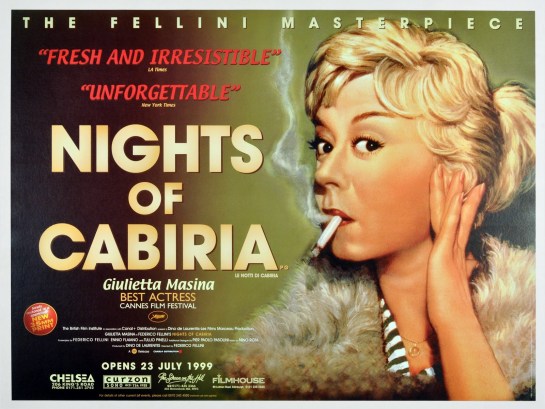
Nestled within Federico Fellini’s impressive filmography is “Nights of Cabiria”, a scintillating Italian drama that is rarely mentioned among the director’s greats (“8 1/2”, “La Dolce Vita”, etc.). It’s a shame considering the film earned Fellini one of his four Academy Awards and is regarded by some as his finest work. I find it hard to argue against the movie’s brilliance and greatness.

“Nights of Cabiria” sits firmly between Fellini’s shift from classical Italian Neorealism to the extravagant sensory experiences we would get later on. The neorealist’s spotlight on working class society and  economic hardships is represented from title screen to the film’s final frame. But we also see Fellini experimenting with a more crafty and stylish form of storytelling. It’s the early stages of what would literally burst into form three years later in “La Dolce Vita”.

Getting the film made wasn’t easy. Fellini peddled his story to a number of producers each of whom turned him down. It wasn’t until Dino De Laurentiis approached him with a five-film contract offer that Fellini was able to make his movie. With funding set Fellini then cast his wife Giulietta Masina in the lead role. This was a critical step since the lead character is in practically every scene and since the story hinges on her emotion and personality. Masina would go on to win the Best Actress Award at the Cannes Film Festival.

cabiria 1

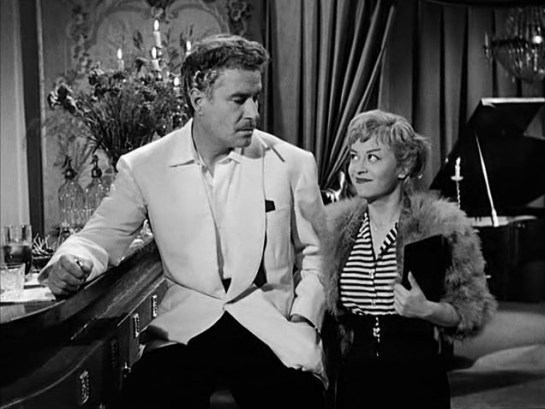
Masina plays a ‘lady of the night’ but not in the usual vein. Her name is Cabiria and there is more to her than her occupation. She is different – unique is several regards. She is significantly smaller than all the other ladies who work with her. She isn’t the most alluring or attractive. She wears her emotions on her sleeve. Simply put, Cabiria isn’t a woman who would naturally grab your attention, but that doesn’t sway her. Regardless of her obstacles, Cabiria pushes forward clinging to any semblance of happiness and holding onto an internal hope that somewhere true love awaits.

Despite her deeper innocence and naiveté, Fellini doesn’t portray Cabiria as a weak woman. She’s a tough cookie. She truly is a victim of circumstance who has survived due to her determination and wiles. For the audience her tiny shack of a home on the city outskirts is a sign of her tough life, but to Cabiria it’s a symbol of accomplishment. She proudly tells several people that she is a homeowner. And she isn’t afraid to be whisked away by a good dance tune – an effect of her sprightly optimism.

Cabiria2

But deep down there is a disappointment that she is deeply in tune with. The very first scene reveals it with uncomfortable clarity. She and her boyfriend are walking by the river in what resembles a romantic stroll. That is until he pushes her in and runs off with her purse full of money. We never see him again. The film is a series of encounters most with cruel outcomes. And Cabiria always seems to expect the disappointment and she accepts the hand she is dealt and moves on. Instead of concentrating on plot Fellini focuses on several tragic themes that grow more vivid with each of Cabiria’s encounters.

When developing the Cabiria character, both Fellini and Masina were said to be highly influenced by Chaplin’s Little Tramp. You can see it in her expressions, her mannerisms, and of course in many of her circumstances. There are moments when the resemblances feel a tad foreign to the tone of a specific scene, but for the most part it fits surprisingly well and it has such a unique contrast with several of the characters Cabiria meets.

“Nights of Cabiria” is filled with fine supporting performances, interesting visual touches, and poignant emotional moments. Fellini’s true-to-life themes simmer throughout the picture and many of them would resurface in “La Dolce Vita”. And at the core is Masina and her magnetic performance. She makes it impossible for us to lack sympathy for Cabiria despite some of the character’s poor decisions. We want her to rise above her circumstances and find the love she longs for. But as things progress Fellini leaves us cynical and skeptical. Like her we want to cling to the hope for happiness but ultimately fear the cloud of disappointment will be to much for her to overcome.

VERDICT – 4.5 STARS
4.5 STARS

REVIEW: “Hell or High Water”

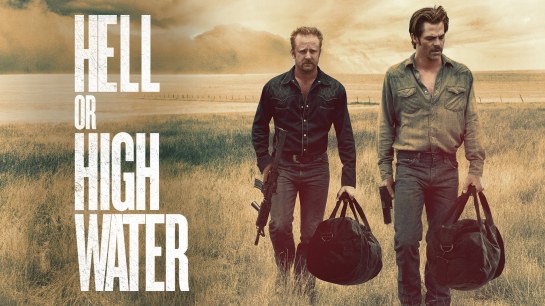
waterposter

Taylor Sheridan’s script for “Hell or High Water” didn’t have the easiest track to the big screen. It was finally purchased for production in 2012 after being highlighted as the Black List’s top script, but it would be another four years before it would finally hit theaters. But it’s hard to believe there has been a timelier moment for the movie to land than right now.

It has been accurately defined as a neo-western. It’s also a heist movie. It could be considered a comedy. Some may even call it an incisive bit of social commentary. Actually all of the above are fitting descriptions of this sensitive but slightly off-beat tale of two brothers burdened by their economic struggles. Director David Mackenzie takes this idea and visualizes it through the lens of tough small town living, something that the film rightly shows is slowly dying off.

water1

Those not close to or familiar with the rural challenges the movie depicts may not appreciate how accurately the film captures it. In the real America small working class towns are drying up. Many have economies dependent on one or two plants or factories and when those industries leave the communities suffer. Sheridan and Mackenzie capture this with such vivid and authentic detail through a powerful mix of camera, script, and setting.

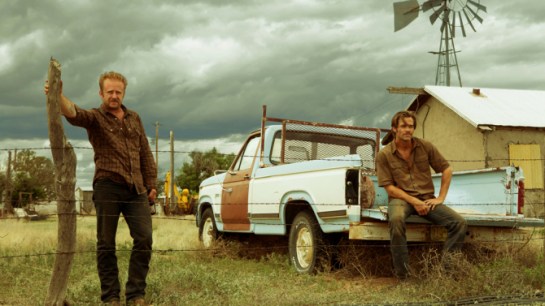
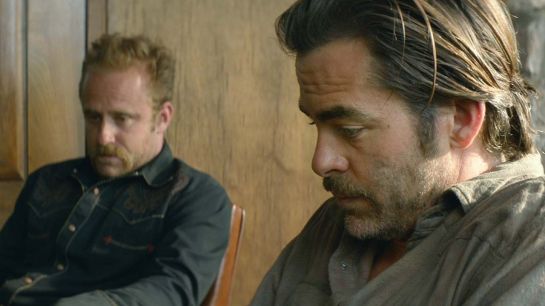
It’s this world that brothers Toby (Chris Pine) and Tanner (Ben Foster) live in. Toby is recently divorced and struggling to keep his family’s ranch left to him by his deceased mother. A reverse mortgage has left him smothering in debt and trying to avoid a looming foreclosure. Tanner is a rambunctious sort, recently out of prison and with no real direction for his life. But he does love his brother and will help him any way he can. That means helping him with well thought out robberies of a series of small West Texas  banks.

The movie also tells the story of a retiring Texas Ranger Marcus Hamilton (Jeff Bridges) who along with his partner Alberto (Gil Birmingham) set out to find the men responsible for the series of bank robberies. Much of the film’s humor comes from their back-and-forth banter which features a slew of affectionate insults. Bridges is a hoot and is right in his comfort zone. You could say he’s channeling a variation of his Rooster Cogburn from “True Grit”. The movie doesn’t miss a beat when it switches to Hamilton’s story and his scenes add more suspense to the inevitable crossing of paths. 

watersmall

Sheridan and Mackenzie go to great lengths to keep this from being a ‘good guy vs bad guy’ tale. They try hard to keep the black hats off of Toby and Tanner and put them on the banks and the economic system that keeps people down even when they seem to be ahead. This is emphasized when we learn oil was found on the family’s ranch. But I’m not sure the movie does a good enough job keeping the brothers within the grey area it wants them to be in. There are moments when they do try and morally reckon with their crimes and their hardships clearly contribute to their reasoning. But as things intensify it’s hard to know how the movie wants us to feel about them.

There is a pretty significant plot-hole in the final act that I can’t quite shake, but otherwise “Hell or High Water” sticks its landing. The similarities to the Coen Brothers’ “No Country for Old Men” are obvious from the start and there even seems to be a nod to Humphrey Bogart’s “High Sierra”. Those influences add a lot to the film but its strength is in its camera and in its realization of a segment of the country slowly being smothered out. The characters are easy to latch onto and the timely authentic story, while not perfectly told, feels grounded in a very true current reality.

VERDICT – 4 STARS

4 Stars

REVIEW: “Captain Fantastic”

capposter

“Captain Fantastic” begins with a gorgeous opening shot that pans a dense forest canopy. It’s followed by an equally beautiful shot on the forest floor gazing up at the tree tops. The soothing quiet is only interrupted by the hypnotic sounds of nature. The sequence highlights the natural beauty but also the remoteness of the setting. It doesn’t take long for us to learn why this is important.

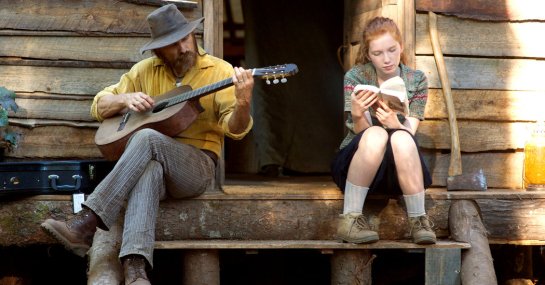
Actor Matt Ross wrote and directed this movie that on the surface resembles a left-wing fairytale. Viggo Mortensen plays a father named Ben who lives in isolation deep in the forest with his six children. They live off the land (as much as possible), have impromptu Woodstock-esque campfire jams, and frequently discuss the merits of Marxism, Trotskyism, humanism, anti-capitalism and a hodgepodge of other left-leaning isms. They even celebrate Noam Chomsky Day, for goodness sake!

cap1

But there is so much more beyond that surface-level first impression. Ross’s story digs deeper into these characters unfolding a plethora of complexities, inner-conflicts, and motivations. After several unforeseen turns we not only see these characters in a new light, but the entire movie itself becomes something completely unexpected. It becomes a movie not interested in politics, but in what makes these characters tick.

This film truly works better the less you know. I will say Ben and his kids aren’t without some contact with the outside world. Sometimes they hop into their bus/motor home (affectionately named Steve) and hit a small market for supplies. They check their post office box and Ben makes one or two necessary calls before heading back into the wilderness. But one day he gets some troubling news which sets the direction for the remainder of the movie.

What follows is a weird but enthralling concoction that features genre slices from American road trip movies to pitch black comedies. And while there is a small ‘liberal versus conservative’ narrative and their are some interesting social observations, this isn’t a political film. It’s incredibly open and fair in its characterizations. That’s because it is interested in something much deeper and more provocative. The discussions Ross wants us to have are beyond socialism vs. capitalism. He challenges us to look deeper into ourselves.

cap2

For all this film does well Mortensen is the biggest highlight. In a nomination-worthy performance he takes this peculiar, off-beat character and depicts him with such bruising authenticity. He is the centerpiece and one of the film’s most compelling questions is whether or not Ben is a good father. At times the answer seems obvious while other times we can’t help but wonder. Yet we never doubt his love for his children. Mortensen is essential to selling this character. His performance is far from flashy. It’s subtle, completely unselfish, and works well with the really talented young cast.

Matt Ross’s story of this off-the-grid family clashing with the outside world naturally has its funny moments. But it’s also a film filled with genuine feeling. Ultimately “Captain Fantastic” is about the willingness to listen and be open. It speaks against separating ourselves and speaks to the idea of balance, both in our convictions and in our willingness to learn from others. It speaks to balance in our relationships with others and with the world around us. It’s a meaningful message wrapped up in a superb film guaranteed to be unlike anything else you’ll see this year.

VERDICT – 4.5 STARS

4.5 STARS


5 Phenomenally Volatile Movie Romances

PHENOM 5

A year or so ago I did a Phenomenal 5 list focused on movie romances. Today we are again looking at romances but this time with a twist. These are five movie relationships known more for their fire and volatility than love and kisses. It didn’t take long for a big number to come to mind so I certainly wouldn’t call this the definitive list. Still, there is no denying that these five movie romances are not only volatile but also phenomenal.

# 5 – “War of the Roses”

roses

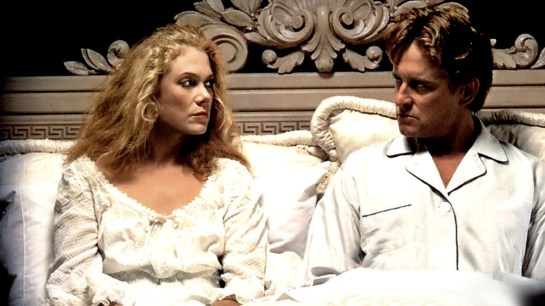
In the 1989 Danny DeVito directed “War of the Roses” everything starts reasonably well. Michael Douglas and Kathleen Turner meet in college, fall in love, and eventually marry. Oh but how quickly it turns into one of the most outrageous and darkest black comedies of its decade. Their relationship sours, their marriage crumbles, and the Roses bring new meaning to “ugly divorce”.

#4 – “Cat on a Hot Tin Roof”

hot-tin

The marriage between Paul Newman’s Brick and Elizabeth Taylor’s Maggie seemed destined for trouble. It becomes abundantly clear as “Cat on a Hot Tin Roof” moves forward, slowly shedding light on their feelings toward each other and on destructive secrets from their pasts. Alcoholism, deception, dysfunction – all factors that influence this stormy, bitter relationship between two deeply flawed people.

#3 – “Kalifornia”

kali

Adding a much different flavor to the list is “Kalifornia”, a twisted road thriller featuring a particularly tempestuous relationship between the violent, aggressive Early (Brad Pitt) and the simple, naive Adele (Juliette Lewis). The abuse we witness ranges from subtle and manipulative to fiercely physical. Incredibly the film makes the couple fascinating, even sweet on occasions. Perhaps that’s what makes the abusive side of their relationship even more disturbing.

#2 – “A Streetcar Named Desire”

streetcar

A second Tennessee Williams adaptation makes the list but with a twist. It’s impossible to consider one specific relationship in “Streetcar” without factoring in the three main players – Stanley, Stella, and Blanche. The depression and dysfunction of these three characters are so intrinsically intertwined and manifests itself through various degrees of mental and physical abuse. Sure, this may be a cheat, but the volatility of this three-headed relationship is too profound to exclude.

#1 – “Who’s Afraid of Virginia Woolf?”

virginia

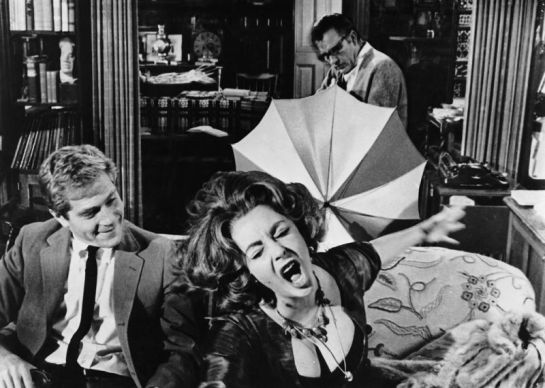
Relentlessly nasty, toxic, and brutal. Those are just a few adjectives which perfectly describe 1966’s “Who’s Afraid of Virginia Woolf?”. Perhaps no film has presented a more hateful, venomous relationship than the one shared between George (Richard Burton) and Martha (Elizabeth Taylor). As the film moves forward we get more alcohol, more insults, and more pain until these two severely damaged people simply have nothing left.

So there are my five volatile movie romances. What do you think of my picks? See something I missed? Please let me know in the comments section below.