Top 5 Supporting Actress Performances of 2014

2014 -Sactress

One of my favorite things to do in January is to look back at the performances from the year that was. The Golden Globes have come and gone. The Oscars are right around the corner. This is my chance to share the actresses and actors who I thought were the best in their respected categories. So without delay I’m letting the ladies go first. These are my favorite performances by actresses in supporting roles. It’s been a rich year filled with strong performances and these women have stood out to me.

#5 – Tilda Swinton (“Snowpiercer”)

SWINTON

I think the word ‘diverse’ is a great word to describe Tilda Swinton. In 2014 she showcased her incredible range. One of her standout and incredibly unique performances came in “Snowpiercer”. She plays Mason, the second in command of a constantly moving train carrying the last survivors on the frozen earth. Swinton hams it up like never before, but in some weird twisted way her character fits in this world. Swinton is devious, maniacal, and at times absolutely hilarious.

#4 – Emily Blunt (“Edge of Tomorrow”)

BLUNT

This is certainly not the kind of performance that will garner awards attention, but Emily Blunt’s performance in “Edge of Tomorrow” is gritty, tough, and filled with personality. Those who know my appreciation for Blunt may see this as a biased pick. But Blunt really shows a different side of her. She matches Tom Cruise in every scene and she injects such vivacity into a character that could have been run-of-the-mill and cliché. It’s a great performance.

#3 – Eileen Atkins (“Magic in the Moonlight”)

MAGIC

It’s a small role, but I love Eileen Atkins in Woody Allen’s “Magic in the Moonlight”. Allen has a knack for writing good female characters and then choosing good actresses to bring them to life. That is definitely the case with Atkins. She plays Colin Firth’s Aunt Vanessa, a subtle fireball who isn’t afraid to speak her mind to her pretentious nephew. Atkins makes it seem effortless as she delivers muted but sharp wit and a delectable charm.

#2 – Agata Kulesza (“Ida”)

IDA

One of the strongest components in Pawel Pawlikowski’s fabulous “Ida” is Agata Kulesza and her character Wanda. In many ways she is the door of self-discovery for young Ida. Kulesza gives us that side of her character, but she also superbly conveys another side plagued by misery and depression. Kulesza never struggles with the various perspectives she is asked to show, and regardless of whether the scenes are big moments or small subtle ones, she is up for the task.

#1 – Patricia Arquette (“Boyhood”)

ARQUETTE

There is a lot of buzz surrounding Patricia Arquette’s performance in Richard Linklater’s brilliant drama “Boyhood”. She deserves all of the attention she is getting. Arquette has always been a talented actress but here she gets an opportunity to do a number of different things. Filmed over a twelve year period Arquette shows us several different stages of this mother’s life and at no point does she ever feel deceptive or false. Arquette injects so much emotion into an already deeply moving film. She won the Golden Globe for the performance and I’m hoping an Oscar win will follow.

REVIEW: “Selma”

SELMA POSTER

The process to bring “Selma” to the big screen began in 2008. Since then “Selma” has had director changes, producer changes, cast changes, and script rewrites. But now it has finally hit theaters with director Ava DuVernay at the helm. As expected the film has generated a lot of buzz, critical acclaim, and its share of controversy. Going into the film I was excited to see how well the story would be told. I was also cautious and concerned about how the historical liberties I’ve been reading about would effect the film’s impact.

“Selma” doesn’t set out to be a comprehensive biography of Dr. Martin Luther King Jr. Instead it focuses on the events surrounding the 1965 voting rights march from Selma to Montgomery, Alabama. I appreciated the film’s disregard for the standard biopic blueprint. MLK’s entire life isn’t crammed into one story. This movie has a very specific story to tell, yet it allows us to glean much about this influential figure. We learn of his motivations, his faults, his fears, and his uncertainties all through observation. We also learn of his bravery, his sacrifice, and his determination.

SELMA1

This chronicle of the Selma march starts with Martin Luther King Jr’s (David Oyelowo) desire to secure true and unhindered voting rights for black Americans. We see him going to President Lyndon B. Johnson (Tom Wilkinson) and urging him to give immediate attention to the matter. We see the festering racial tensions in the south particularly in and around the town of Selma, Alabama. We see King visiting Selma with his fellow SCLC members. He speaks in churches and spreads the message of change through peace and offers encouragement to the black community. We also see the violent backlash against the peaceful protests – something that weighs heavily on Dr. King’s heart.

“Selma” has the big showcase scenes that you would expect, but DuVernay also gives us the smaller more intimate moments. These personal strokes paint a much more detailed portrait of King. There’s a fun scene where he and his SCLC buddies arrive at a female friend’s house for breakfast. It’s a great scene filled with playful banter and jests. There is also a piercing scene between King and his wife Coretta (exquisitely played by Carmen Ejogo). It’s a low-key but intense family moment that DuVernay films with subtle but brutal honesty. We get a number of these touches which are much more than just emotional gimmickry.

SELMA2

And you can’t have a discussion about “Selma” without talking about the performance of David Oyelowo. The British actor loses himself in the role of Dr. King. He is a great match in terms of physical appearance, but he gives us so much more. I was blown away by the steadiness of his voice and his near perfect accent. He also conveys the passion and charisma that I imagine from Dr. King. We see this most in his speeches/sermons at a church in Selma. Oyelowo’s performance is graceful, committed, and nuanced.

“Selma” has so many important things to say and it hits head-on the disgraceful racism that was prevalent at the time. It’s a film that could be taken as an important historical reflection. Unfortunately it loses a portion of its credibility due its historical liberties. I generally stay away from controversies surrounding historical inaccuracies, but for me “Selma” genuinely suffers due to decisions made by DuVernay and writer Paul Webb. It has nothing to do with the racism and violence shown in Selma. All of that was shown with such power and potency. Instead it’s the decision to cast Lyndon B. Johnson as an antagonist, something that simply wasn’t true.

History has shown that Johnson had King had disagreements. But they also had a deep respect and worked together to accomplish the shared goal of equality. Even some close to King have come out to defend Johnson from the film’s characterization. The movie shows Johnson as an obstructionist who grows more and more annoyed with King’s efforts towards equal voting rights. But it doesn’t stop there. The film stops just short of calling Johnson a racist. It also shows Johnson callously using the FBI to hurt King and his family. Many have said this never happened and it depicts Johnson as cold and pernicious. And when he does finally put voting rights legislation forward, the film shows him to be motivated more by his legacy than doing what’s right.

Selma3

But why did this hurt the film for me? Historical inaccuracies happen all the time in biography movies. For me it hurts the film because it strips it of a potentially strong and relevant message. I mean which would have more impact and resonance, the movie’s characterization of an obstructive and self-serving sitting white President or the true depiction of a white and black man standing side-by-side working towards true and meaningful change? The power and relevance of that message in the current climate is undeniable. Why did DuVernay choose the direction she did? Some of her comments about the making of the film may shed light on her motivations. Regardless it is a frustrating decision that seems unnecessary.

Sadly the “controversy” surrounding “Selma” isn’t without some merit. A lot of people, particularly younger viewers, may look at the film and take it entirely as historical fact. While that may not be completely true, the majority of the movie serves as a forceful and unflinching reminder of the faith and courage shown by Martin Luther King, Jr. and the persecuted black community of that day. The film forces us to experience the undeserved attitudes of hatred commonly thrown at black Americans at the time. It also raises our spirits by showing the determination of a brave community unwilling to sit by and have their rights trampled. The true story of Selma, Alabama has an inspirational power. “Selma” the movie also has that power except when it wanders off into its own revisionist world.

VERDICT – 3.5 STARS

REVIEW: “Unbroken”

Unbroken poster

The true story of Louis “Louie” Zamperini is a remarkable one. Zamperini was an Italian immigrant who navigated a troubled childhood to become a record-breaking Olympic track star. Later he fought in World War II where he ended up captured by the Japanese and placed in prisoner of war camps. In “Unbroken” director Angelina Jolie seeks to bring this unbelievable story of life, strength, and perseverance to the big screen.

Tackling movies like this always comes with risks. Many big emotionally-fueled biopics put too much emphasis on melodrama and sentimentality. Some are so systematically polished that they feel like productions instead of intimate stories. “Unbroken” struggles in both regards. Jolie heightens the melodrama through a number of common conventions. We see this mostly in the first half of the film. She also doesn’t shy away from giving us one emotional cue after another whether it be through music or her camera. Also there is no denying that this is a highly polished, by-the-books, prestige film.

UNBROKEN1

The first scene is the film’s best. We meet Louie (Jack O’Connell) as a B-24 bombardier on a bombing run over the Pacific. It’s a tense and well-shot sequence featuring anti-aircraft explosions and Japanese fighter planes. During this time we get our first flashback which patches together a bit of his childhood. He’s constantly in trouble although we never know why. But don’t worry, we get yet another flashback that shows him finding his way by running for his high school track team. This leads to an incredible experience running in the Olympic games.

From there the film spends a lot of time on Louie being stranded at sea and his time spent at various Japanese internment camps. These segments give us several exciting and inspirational moments. But they also bog the film down because Jolie stays at each place too long. Louie’s experience on a raft with two fellow soldiers is harrowing stuff. There are all sorts of dangers and threats they face, but too much time is spent showing them afloat drained by the glaring sun and starvation.

UNBROKEN2

And then there are the prison camps. Again, some tremendous scenes that are genuinely moving and sometimes difficult to watch. Seeing a sadistic Japanese corporal’s obsession with torturing Louie is an uncomfortable but effective experience. But as before we spend to much time there. Jolie pounds us with scene after scene of torture and cruelty and she doesn’t know when to move on or to wrap things up. It’s not that we become numb to what we are seeing, but it does lose its effect as it grows more repetitive. Eventually I found myself checking out.

“Unbroken” is a competent and well-intentioned movie centered around an inspiring true story. Louie Zamperini’s life was something to behold and we get a feel for that in this film. At the same time the movie is undermined by Angelina Jolie’s direction. She has a good visual technique, but her deliberate lingering zaps much of the life out of the film. It runs a good 30 minutes too long and I checked my watch more than once. But I don’t want to write the movie off. If you can wade through these bloated patches there are several things to like. Louie Zamperini died a few months before the film premiered. It’s wonderful to know that his life, first captured in a novel by Laura Hillenbrand, has now been brought to an even broader audience. The movie may not live up to its potential, but it does tell a story that deserves to be told.

VERDICT – 3 STARS

REVIEW: “Force Majeure”

FORCE POSTER

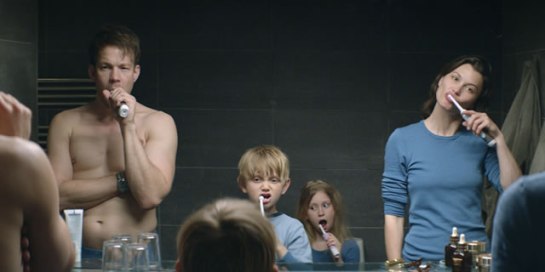
I wasn’t familiar with Swedish filmmaker Ruben Östlund, at least until I watched his recent film “Force Majeure”. Now I find myself anxious to seek out his other work. “Force Majeure” has left that kind of impression – a stinging film with a glossy appearance at first glance but with something far more sharp and jagged underneath. The film has certainly grabbed attention, winning a Jury Prize at Cannes and being nominated for Best Foreign Language Film at this year’s Golden Globes. Surely an Oscar nomination will follow.

Östlund wrote and directed the film and he handles his material with a scalpel. He carefully dissects his small cast of characters, particularly a husband and wife who are on a ski trip with their two young children. Right from the start we pick up on several interesting things about Tomas (Johannes Kuhnke) and his wife Ebba (Lisa Loven Kongsli). The posh mountain resort where they stay and their fancy ski gear seem to indicate that they are financially secure. There are also references that seem to indicate Tomas is a business man and this trip is a much needed opportunity to spend time with his family. And that’s all we get – only hints about their past. It’s all we need.

Force 3

On the surface it seems we are seeing a happy and healthy family. But Östlund takes us well beyond the window dressing. Several cracks in the facade begin to show, but it truly comes to light as they are having lunch on a terrace with a breathtaking view of the mountains. Fun family small talk and chatter soon gives way to fear after a controlled avalanche gets too close to the restaurant. In a self-centered panic Tomas runs away from their table leaving Ebba to protect their children. It’s a harrowing scene. It turns out that everyone is okay and they even return to eating their lunch. But in this scene the true catastrophe has revealed itself and it has nothing to do with raging snow.

Östlund breaks the film down in five chapters posing as the days of their vacation. Each day the central relationship shows more stress. Instead of laughs and enjoyment, the vacation days feature blank stares and only the required conversation. Whenever the couple do try to talk it inevitably turns back to the avalanche. Ebba is determined that Tomas admit what happened. Tomas responds by denying Ebba’s interpretation of the events. This even bleeds over into an awkward dinner they have with an old friend named Mats (Kristofer Hivju) and his girlfriend Fanni (Fanni Metelius).

FORCE1

There is also the perspective of the children. We rarely get into their heads, but when we do it’s potent and devastating. Östlund doesn’t use the kids to get cheap emotional reactions. Instead we get them in small but powerful portions. They know what is happening. They feel the tension. We feel their fear and concern. At times both of their parents put them on the backburner making them the ultimate victims.

The story of “Force Majeure” is told with an audacious tenacity. Östlund’s focus never strays and he bucks all kinds of conventions in order to wring out every drop of authenticity and veracity from his characters and his story. Even the gorgeous French Alps setting doesn’t distract us from the deeper focus. The mountainous landscapes are stunningly beautiful while at the same time ominously threatening. Even they serve as a metaphor for this seemingly lovely but volatile family situation.

FORCE2

“Force Majeure” also stands out due to Östlund’s remarkable technique. With the exception of a few tracking shots showing the family skiing, Östlund’s camera rarely moves. He frames his scenes by strategically placing his camera in a still position then allowing the scene to play out. The camera doesn’t twitch. It doesn’t turn. It simply observes. This technique results in several well-conceived and methodical scenes, but also a number of long simple takes that relay just as much emotion and information.

At the heart of “Force Majeure” lies a bitter and uncomfortable reflection of a relationship in crisis. As we go along things grow gloomier and I began to think of Michael Haneke, or at least a lighter version of him. There is definitely pain and anguish and we are left with an uncertainty that leaves things up in the air. But all of that is okay because “Force Majeure” is such a brutally honest film and it doesn’t use kid gloves when handling its material. It’s that unbridled truth that makes this such a potent and powerful movie.

VERDICT – 4.5 STARS

Know Your Movies – One Image, Three Hints

KNOW MOVIE

It can’t only be reviews, Phenomenal 5 lists, and commentaries, right? Know Your Movies is all about having fun. Here’s how it works: I’ll share a single shot from a movie. It can be extremely serious or completely absurd. After that I’ll provide you with three hints. The rest is up to you. Hop in the comments section and share your guess as well as any thoughts or memories you have on the movie, actor/actress, or the scene itself.

Today’s image is from a film that is one of my favorites of all time. So here is the shot. Three hints will follow.

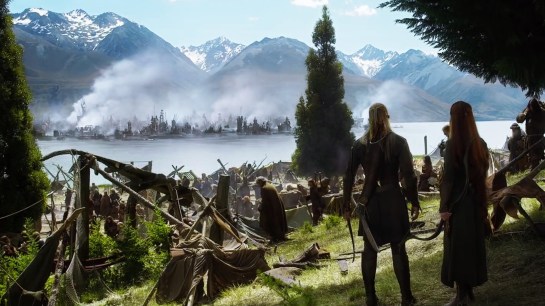
MOHICANS

Hint 1: Released in 1992

Hint 2: Adapted from an 1826 classic historical novel

Hint 3: Directed by Michael Mann

Now head to the comments and share your guess. It’s a wonderful shot that should make it obvious for some. I would also love to hear your thoughts on the film, the scene, or anything else related to it. Now feel free to guess and discuss this fabulous movie classic.

REVIEW: “The Hobbit: The Battle of the Five Armies”

HOBBIT POSTER

The biggest question swirling around Peter Jackson’s “The Hobbit” trilogy has been centered around the amount of content. Is there enough of it in J.R.R. Tolkien’s book to warrant three Jackson-sized films? That question has lingered in the back of my mind as I’ve watched each of the ‘Hobbit’ movies. The first two films sometimes struggled to suitably fill their time yet they managed to keep me engaged. Now we have Peter Jackson’s third ‘Hobbit’ film and final trip to Middle Earth. It’s “The Battle of the Five Armies” and I can see where people would say it is stretched too thin.

But to the question – Could “The Hobbit” have been adapted into two movies instead of three? I think the essential material could have definitely been covered in two installments. But at the same time “The Battle of the Five Armies” actually manages its time better than the previous films. Essentially it’s the trilogy’s big action-packed ending. The vast majority of the film is spent building up the climactic battle and then letting go with an epic-sized blow out. I had fun with it and it was far from the snoozefest I feared it would be.

HOBBIT2

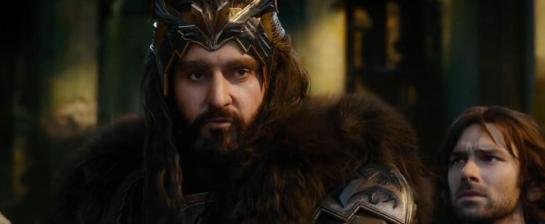
The film picks up exactly where the last one left off. There is no time jump. There is no setup. Smaug the dragon is loose and attacks Laketown. Bard (Luke Evans) guides the displaced people to safety and becomes their de facto leader. Thorin (Richard Armitage) and his band of dwarves have taken back The Lonely Mountain and its immense deposits of gold and riches. Problem is Thorin has gone mad with what is called “Dragon Sickness” and refuses to share his new-found wealth with Bard so that the people of Laketown can rebuild.

Then you have Thranduil (Lee Pace) and his elf army who come to the mountain to claim a white diamond necklace from the treasure. A blinded Thorin refuses and would rather fight than give up one piece of the mountain’s riches. With war about to break out between elves, dwarves, and humans, Gandolf arrives bearing news of a massive Orc army coming to take the mountain. The question becomes can they put aside their differences and come together to fight a much bigger and more deadly threat?

It’s hard to call this film a standard sequel considering the way it’s structured. It is much more of a direct continuation and I simply can’t objectively look at it as a stand-alone movie. It’s impossible to separate it from the previous film, and anyone watching this one without seeing part two will undoubtedly have a lesser experience. But as a follower of the series I think the film does a good job of picking up the story and bringing it to a conclusion. The performances are strong and steady and the effects are simply incredible. The action-fueled final hour features some great sword play and a cool host of creatures.

HOBBIT1

But let’s face it, the series has several things working against it. It’s almost impossible to keep from comparing it to the superior “The Lord of the Rings”. First let’s take the characters. I love Bilbo, Thorin, and Gandalf, but the secondary characters, while good, aren’t up to those in LotR. Then you have the big conclusion itself. This big sprawling final battle is extremely cool, but it carries almost no connection to the previous two films. In LotR the buildup to the big finale started in the first film. Everything worked towards that epic point. In this film the battle doesn’t carry near as much weight, and I wasn’t left feeling quite as satisfied. But is it really fair to compare this film to LotR? I don’t have a good answer to that.

I do think this is a stronger film than some give it credit for. It’s a tighter and more focused movie and runs 20 minutes shorter than either of the first two Hobbit films. More importantly it feels in tune with the previous movies and offers us an exciting and fitting conclusion filled with great action and emotion. Could the series have been better as a whole? It probably could. But I find it hard to point a finger at this film as the reason for that. Narratively speaking this may be the best film of the three. It just had the difficult task of also wrapping everything up. It certainly did that well enough for me.

VERDICT – 4 STARS