REVIEW: “The Magnificent Seven” (2016)

mag-poster

It’s no surprise that Denzel Washington and director Antoine Fuqua would work together again on a new project. They certainly struck gold with the popular and the acclaimed “Training Day”. But I have to admit I was a bit surprised at their latest creative endeavor. I’m not sure why though. After all this is the age of remakes, reboots, reimaginings, re-everything else.

Their newest collaboration is “The Magnificent Seven”, a modern action crowdpleaser anchored by a fun ensemble cast. The original 1960 Western classic was based on Kurosawa’s masterpiece “Seven Samurai”. This updated film tends to pull further away from its roots but never so far as to lose its identity. It embraces the basics of the story while adding in a few details of its own. And as expected it attempts to do everything bigger most notably the furious wild western action.
mag2

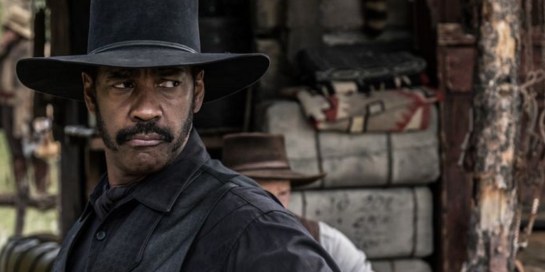
If you haven’t seen the 1960 Western, Yul Brynner led a hired band of misfits to protect a small Mexican village from a gang of violent bandits. In Fuqua’s version the Mexican village is exchanged for a small mining town named Rose Creek and Peter Sarsgaard’s Bogue  is the vile industrialist terrorizing them. Washington takes Brynner’s spot. He plays Sam Chisolm who is approached by a young woman from Rose Creek (Haley Bennett) seeking help.

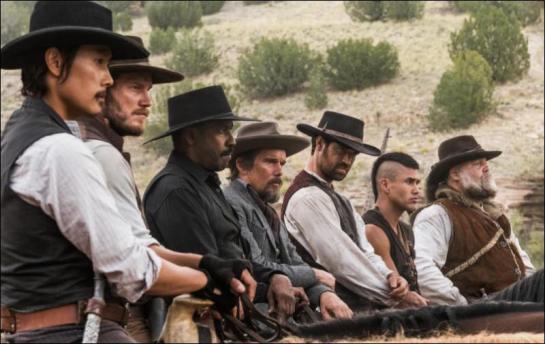
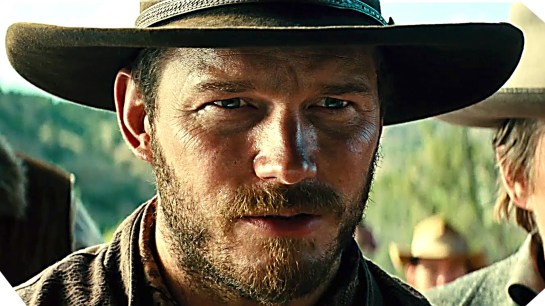
Sam agrees but first he’ll need a team of gunfighters to train the townsfolk and lead the defense against Bogue and his gang. His merry band of wild west outcasts includes a boozing gambler (Chris Pratt), an ex-confederate sharpshooter (Ethan Hawke), a deadly assassin (Byung-hun Lee), a wanted Mexican bandit (Manuel Garcia-Rulfo), a big burly tracker (Vincent D’Onofrio), and a disillusioned Comanche warrior (Martin Sensmeier).
The Magnificent Seven Movie

Fuqua, screenwriters Nic Pizzolatto and Richard Wenk do a good job of building a fun camaraderie between their characters. It’s one of the film’s key ingredients since it genuinely wants to be a buddy-cowboy picture. There is plenty of playful banter, ribbing, and jests but never too much. That’s because it’s also aiming for something more – an old school western.

Watching the movie I couldn’t help but feel a little bit nostalgic. Fuqua tips his Stetson to a number of classic western angles both narratively and visually. His use of the camera is fantastic (great cinematography from another “Training Day” alumni Mauro Fiore) and the score features some of the last work of the late great James Horner. And you’ll clearly notice Fuqua channeling from an assortment of western directors from John Ford to Sergio Leone.
mag3

Expect some fierce and energetic action especially in the inevitable final showdown (which is especially fun). Following a familiar blueprint each character is given their moment to show off their gun-twirling, knife throwing, or dynamite-chunking. What you won’t see is any deeper sense of emotional struggle between these characters. We get glimpses of it especially from one specific character but never enough to divert it from its clear desire to be a straightforward action film.

That leaves “The Magnificent Seven” open to reasonable criticism. It’s not a deep contemplative character study or emotionally heavy drama. It certainly misses some opportunities to incorporate those elements which may have made it a better film. But I’m fine with it since that isn’t what this film is aiming to be. It’s an action romp and Denzel and company pull it off nicely. They are clearly having a blast doing it and I must say I did too.

VERDICT – 4 STARS

4 Stars

REVIEW: “Bonjour Tristesse”

BONJOUR poster

While writing an upcoming blog piece I was compelled to revisit the morally murky waters of “Bonjour Tristesse”. Otto Preminger’s crafty 1958 British-American drama was based on the popular novel by Françoise Sagan. At the time the film danced precariously close to the edge of early cinema standards, causing censors plenty of headaches and heartburn.

In some ways “Bonjour Tristesse” was ahead of its time. Its style of storytelling, its willingness to look at taboo subjects, its nonjudgemental perspectives. All of these were things that would begin showing up more in films shortly after. Upon release critics didn’t necessarily see it that way and the film wasn’t particularly well received. But one of its early champions was none other than Jean-Luc Godard who two years later would make his pivotal French New Wave classic “Breathless”, a film that in some ways found inspiration in “Bonjour Tristesse”.

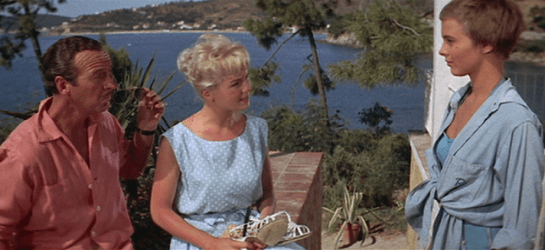
Preminger loves to play with contrasts. Look no further than to the story itself. It swings back and forth between present day and the events of a recent two-week vacation. Both periods are told from the perspective of a young teen named Cécile (Jean Seberg). In the present we spend an evening with her and her wealthy playboy father Raymond (David Niven) as they hop from one expensive nightclub to another. With them is Raymond’s blonde flavor of the evening and several different suitors vying for Cécile’s attention. All of these scenes are presented in black and white.

BONJOUR1

Contrast that with the vivid, bright colors of the vacation flashbacks. The beautiful French Riviera setting is where we get the meat of the story. Cécile and her father are staying at their oceanside villa with his latest fling – a younger, spacey beauty named Elsa (Mylene Demongeot). Their time of fun and frolicking gets a bit complicated when the cultured and proper Anne (Deborah Kerr) arrives. Ever the libertine, Raymond doesn’t hide his attraction to Anne. Meanwhile Cécile grows frustrated with the strict and starchy authority Anne imposes. The various conflicts that follow work together like clever, revelatory puzzle pieces.

The bright, colorful vacation sequences are nice to look at, but they offer more than just beautiful scenery. Through them we learn the reasons for Cécile’s obvious melancholy in the present day scenes. Hiding behind the façade of riches, parties, and the perfect vacation spot lies a subtle repugnancy and an undeniable sadness that slowly simmers to the surface as the movie moves along. Cécile’s emotions are the focus. In fact, the color and black-and-white contrast is directly tied to Cécile’s changed emotional state.

BONJOUR2

“Bonjour Tristesse” takes the audience down several winding narrative paths. There are no jarring twists or sudden diversions. Instead it deliberately and patiently unfolds. Several of the characters take on slow, chameleon-like transformations. The characters are hard to read and various actions change our perception of them sometimes more than once throughout the film. The script lays this out nicely but the performances are just as important.

David Niven is solid as always, effectively selling us his hedonism. He will often carouse about seemingly unaware of his selfishness or the effects of it. We see it in his throwaway attitudes towards his mistresses as well as the oddly affectionate relationship with his daughter. Deborah Kerr is brilliant and her performance provides a pivotal shift in tone and narrative. But it is Seberg whose light shines brightest. She is magnificent as she maneuvers from an innocent, playful pixie to a jaded young woman drowning in disappointment and melancholy. Much like the movie at the time, there were several criticisms about her performance. Personally I feel they are failing to see her performance as a deliberate and cohesive whole.

It would be a mere two years before Seberg would set the French New Wave on fire, but in “Bonjour Tristesse” she and Preminger were playing with several elements that the New Wave filmmakers would take to new levels. It meanders a bit and at times feels a little soapy, but its intelligence, craftiness, and style can’t be denied. “Bonjour Tristesse” is an undervalued and underappreciated film. It holds up magnificently and its influence alone shows the value that many often overlook.

VERDICT – 4 STARS

4 Stars

5 Phenomenal Western Shootouts

PHENOM 5

There have been so many classic western shootouts that it’s unfair to call this the top 5. But each one of these certainly capture exactly want I love about movie gunfights. Unlike a gun duel, a shootout isn’t just about having a quick draw. These five westerns flat-out let the bullets fly and their signature shootouts are ones to remember. As always, I wouldn’t call this the definitive list. But there’s no denying that these 5 western shootouts are absolutely phenomenal.

#5 – “3:10 TO YUMA” (Heading to the Train Station)

PHYUMA

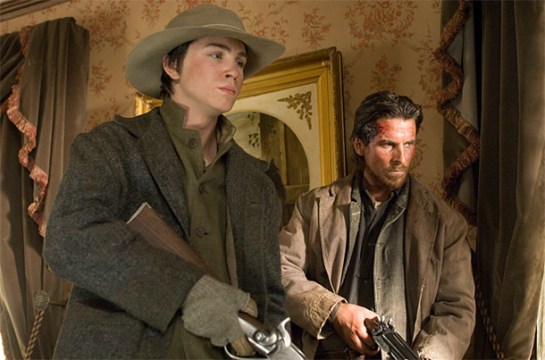
There wasn’t a lot of appreciation for “3:10 to Yuma”, director James Mangold’s remake of the 1957 western. But I loved the film especially the final shootout as Dan (Christian Bale) tries to get his prisoner Ben Wade (Russell Crowe) from the hotel to the train station and ultimately to Yuma Prison. But Wade’s gang is waiting and a firefight erupts as Dan runs through town trying to get Wade on the 3:10. The interesting dynamic between Dan and Wade make the final bullets all the more significant.

#4 – “TOMBSTONE” (Gunfight at the O.K. Corral)

PHTOMBSTONE

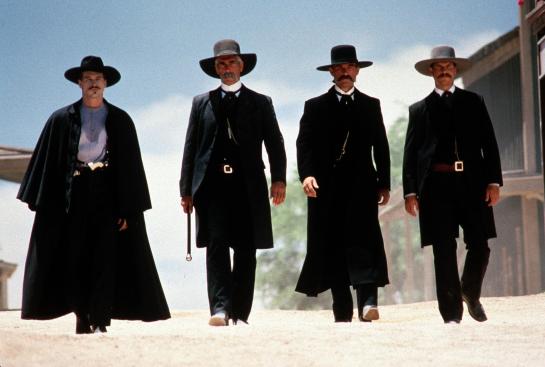
Wyatt Earp, his brothers Virgil and Morgan, and Doc Holliday make their way to the O.K. Corral where members of the Cowboys gang are breaking the law by carrying weapons. Of course it ends up being a fierce firefight which ignites the already existing tension between the Earps and the Cowboys. What makes this scene even better is the buildup leading to the first shot. Incredibly intense and beautifully filmed.

#3 – “THE WILD BUNCH” (Going Out in a Blaze of Glory)

PHWILD

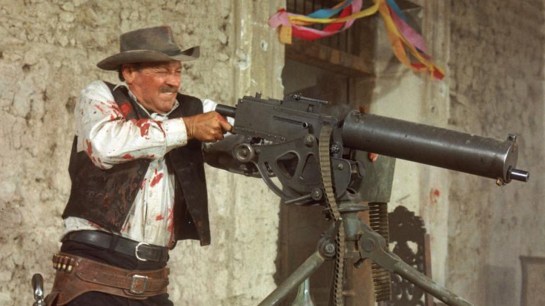
This band of wanted outlaws find themselves up against a crooked Mexican general and his army in the final scene of  Sam Peckinpah’s “The Wild Bunch”. Bullets fly and the bodies pile up in what has been called one of the greatest shootouts in movie history. It’s bloody and hyper violent especially for a 1969 western. But it’s also the only way you would expect this film to end.

#2 – “MY NAME IS NOBODY” (Jack Beauregard Versus a Different Wild Bunch)

PHNOBODY - Copy

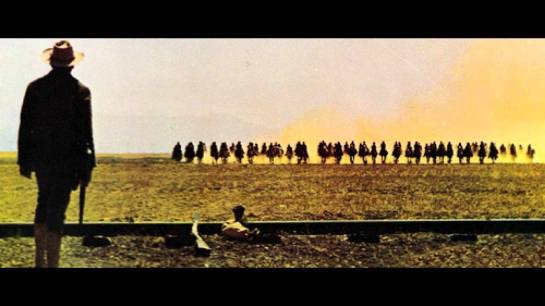
While “My Name if Nobody” is one of the quirkiest spaghetti westerns made. It’s also one of the best. It features a truly classic shootout even though it’s pretty one-sided. As a chance to stage his last showdown, Jack Beauregard takes on The Wild Bunch (obviously not the same as the #3 on this list), a massive gang of bandits. As they approach on horseback, Jack let’s them have it and let’s just say the results are “explosive”. It’s beautifully filmed and the great Ennio Morricone’s score makes the scene even better.

#1 – “OPEN RANGE” (Showdown Against Baxter’s Boys)

PHRANGE - Copy

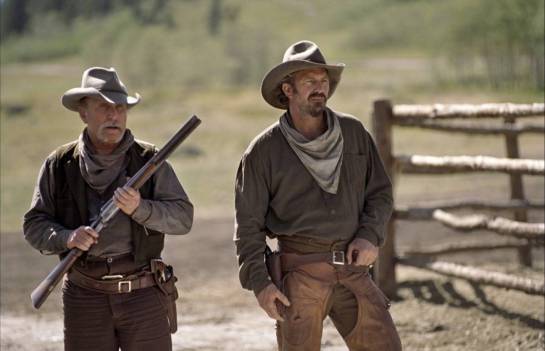
“Open Range” ends with one of the most intense and realistic gunfights you’ll see as Charley and Boss take on Baxter and his gang in the middle of town. One thing that makes it so effective is the complete absence of music once the guns start firing. There is also some clever camera work that gives the scene a really slick and gritty look. Kevin Costner not only starred in the film but directed it and his eye for a shootout is impeccable. Don’t believe me? Then just give the final 15 minutes of “Open Range” another look. It’s amazing.

Agree or disagree? Do you have a western shootout that I should have included? Leave a comment below and share your thoughts or your favorite western shootout.

REVIEW: “Hitman: Agent 47”

AGENTPOSTER

Still looking for that one great movie based on a video game? If so take my word for it, “Hitman: Agent 47” ain’t it. Let’s be honest, it’s not like expectations for this film were through the roof. It’s not like this was a ‘can’t miss’ movie. But these things still don’t excuse the film for being this tedious, this inert, and this unimaginative.

This is the second attempt at bringing the Hitman video game franchise to the big screen. The first film came along in 2007 and was universally panned by critics. This 2015 mess of a movie was deservedly met with the same reaction. The sad thing is the Hitman video games offer plenty of good source material for what could be a fun and entertaining action flick.

AGENT1

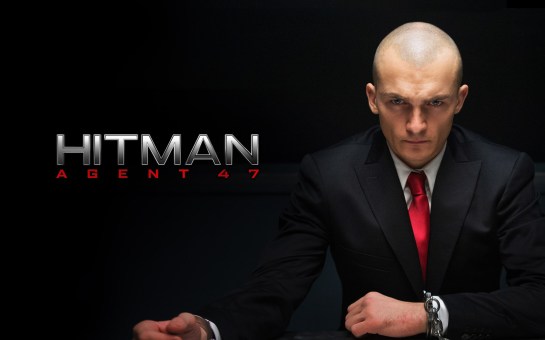
This time Rupert Friend plays Agent 47, a genetically enhanced hitman working for a mysterious shadow organization. (Interestingly the role was originally slated for Paul Walker prior to his sad and untimely death). He’s on the hunt for a Russian geneticist named Petr Litvenko (Ciaran Hinds), the creator of the Agent program. During his mission he encounters mercenaries from a sinister group called the Syndicate (aren’t all nefarious groups called that) who want Litvenko for their own criminal reasons.

47 discovers Litvenko has a daughter Katia (Hannah Ware) and sees her as the key to finding his creator. The trouble is the Syndicate has discovered her existence as well. In the meantime Katia is vigilantly working to find out who she is. She knows Litvenko’s face but has no idea he is her father. She desperately seeks him out hoping he can shed light on her identity. Obviously all of these paths eventual intersect which makes up the bulk of the story.

AGENT2

Director Aleksander Bach (in his directorial debut) attempts to add some level of uniqueness through his stylized action – slow motion, revolving cameras, bright sterile environments, even brighter blood. When put together it all looks fine, but I was amazed at how little energy it brought to the film. The action definitely has more fire than the story or its characters, but that’s a pretty low bar.

Rupert Friend is good enough as the emotionally void Agent 47 and Hannah Ware has some decent moments. Zachary Quinto shows up but never feels quite right for his role. But you can’t put too much blame on the actors. The material they are given is just so bland. That can be said for the entirety of “Agent 47”. It isn’t an offensively bad movie. It’s not close to being called good either, and that becomes evident early into the film and doesn’t change.

VERDICT – 1.5 STARS

1.5 stars

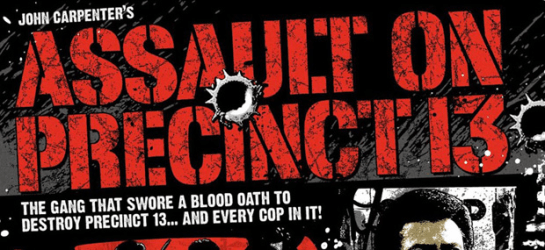
RETRO REVIEW: “Assault on Precinct 13”

ASSAULT POSTER

Before John Carpenter became a horror movie icon for his 1978 classic “Halloween” he made a low budget crime thriller that wasn’t well received at first but eventually blossomed into a cult classic. Since then “Assault on Precinct 13” has gained wider appreciation from critics and huge respect for its impressive accomplishments with a shoestring budget.

Producer J. Stein Kaplan approached Carpenter about making a crime exploitation thriller with only $100,000 to work with. Carpenter would be given full creative control including handling the script. It only took him eight days to finish the story which he stated was heavily influenced by Howard Hawks’ “Rio Bravo” and George Romero’s “Night of the Living Dead”. You see those influences in a number of places. Casting an African-American in the lead role was significant. The plot itself features several callbacks to those classics.

ASSAULT2

It takes place in a Anderson, California, a crime-riddled suburb of Los Angeles. After six members of a street gang are killed by cops their leaders form a blood pack to avenge their deaths. A series of events brings groups of people together in Anderson’s closing police precinct building. As night falls this group of policeman, prisoners, secretaries, and civilians must survive waves of attacks from heavily armed gang members until help can finally arrive.

Carpenter shot “Assault” in 20 days, meticulously planning his scenes to best utilize his limited funds. When watching the film there is no denying its minuscule budget. You see it in numerous places. But the sheer quality of the suspense trumps nearly every budget limitation. Carpenter demonstrates some of same bubbling tension that would later make “Halloween” so effective.

ASAULT2

Carpenter also handled the score, writing the music in only three days. While performing the music he relied heavily on synthesizers and drum machines. The score hops back and forth between surprisingly catchy hooks and tense minimalist chords. While it is absolutely a product of its time, Carpenter’s score does the most important thing – it serves the story well.

“Assault on Precinct 13” made its mark as a griping crime thriller that was never hampered by its low budget. John Carpenter’s violent tale taps into themes of racism, gender roles, personal responsibility, and inner-city violence while also being a groundbreaking action picture. Perhaps it hasn’t aged well in certain areas, but in terms of what I care about the most – high quality storytelling – it hits nearly every right note.

VERDICT – 4 STARS

4 Stars

REVIEW: “The VVitch”

VVITCH

Much of the inspiration for the independent horror movie “The VVitch” was gleaned from folktales, journal entries, and court documents from 17th century New England. Writer and director Robert Eggers faithfully and extensively researched with the intent of presenting the most accurate portrayal of his time period and subject matter. As a result he has made one of the few truly unsettling modern horror movies.

It’s not that Eggers only took plot points from old records. He also sought a deeper understanding of the 17th century mindsets towards religion, family, and specifically for this story, the idea of witchcraft. Add to that an almost obsessive attention to detail regarding the visual representation. For Eggers the authenticity of the language and setting was vital.

WITCH1

The story begins with a family being banished from a Puritan settlement due to the father’s unwillingness to compromise his religious convictions. William (Ralph Ineson), his wife Katherine (Kate Dickie), daughter Thomasin (Anya Taylor-Joy), son Caleb (Harvey Scrimshaw), and two rambunctious twins eventually settle on a patch of land near a sprawling forest.

Over time the family builds a sufficient farm and William and Katherine have their fifth child, Samuel. Everything seems well until one day when Samuel seems to vanish while being closely watched by Thomasin. His disappearance begins a stream of unexplained and disturbing events that threaten the family and leaves them teetering close to madness.

I won’t say anymore, but Eggers plays with a handful of compelling themes. One of the biggest centers around the family’s puritanical faith. There is a genuine faithfulness to God  they all share. At the same time the rigidity of their adherence and their inability to live up to their own standards leaves each of them spiritually vulnerable to an evil force lurking in the forest. And it was that same rigidity that caused them to leave the protective walls of the settlement to begin with.

WITCH2

The story’s slow-burn generates a surprising amount of unease. There is an ominous cloud hanging over this family. They can’t see it but we do. With each step forward Eggers adds another layer of suspense and by the film’s end the horrors are so uncomfortably realized that you can’t help but be effected. And it manages this with very little blood and gore. It is the clever melding of setting and subject matter that leaves you squirming.

It seems like I’m often complaining about the scarcity of originality in the horror movie genre. “The VVitch” is definitely original. It features a gripping story sure to be interpreted a number of different ways. The performances are phenomenal. The cinematography is impeccable. The score is haunting. It’s impossible to leave “The VVitch” and not feel you’ve seen something unique.

VERDICT – 4.5 STARS

4.5 STARS