REVIEW: “The Innocents”

innocentsposter

Movies have scoured the landscapes of World War 2 telling stories from practically every perspective, or so you may think. Director Ann Fontaine proves that to be false with her powerful and understated French-Polish drama “The Innocents”, a story of a much different kind of wartime horror.

“The Innocents” is written, directed, shot, and edited by women giving it something we rarely get from war pictures – a female perspective. Based on a little-known true story, the film explores a harrowing scenario with seemingly no scar-free solution. At the same time it looks deeper into subjects such as sexual assault, motherhood, and crises of faith.

innocents1

The story is set in 1945 shortly after the end of the war. Mathilde (deftly played by Lou de Laâge) is a French Red Cross nurse assigned to help in post-war Poland. After reluctantly accepting a nun’s plea for help, Mathilde follows her to an isolated convent where she discovers a young nun in labor. What follows is a quiet, tense sequence where Mathilde performs a cesarean among sisters who are unwilling to divulge details of their unusual situation.

Soon we learn of their horrific secret. The nuns had weathered persecution during the German occupation, but then the Russians arrived. Over a three-day span Russian soldiers repeatedly stormed the convent and raped the sisters resulting in numerous pregnancies. Fearing disgrace and ostracism the sisters rely on Mathilde to shelter their secret. At the same time obvious inner conflicts between their faith and circumstances add an even heavier level of complexity. For Mathilde caring for the sisters while keeping the secret from her Red Cross superiors proves to be difficult.
innocents3

A real strength of “The Innocents” is its even-handed approach to its subject matter. There is no pointed lecturing or judgements about faith, unbelief, or the decisions each influences. Instead Fontaine presents her material with a clear-eyed neutrality. She allows her story and well-defined characters to speak for themselves free of gloss or manipulation. It’s such a vital approach for Fontaine and the writing team to take. I can’t imagine the film having near the punch without its real-world grounding.

Specifically, the handling of sisterhood under stress is thoroughly compelling. Despite the nun’s best efforts, their faith inevitably crashes against the ugly, abrasive world outside their walls. Mathilde is the antithesis – an influence from outside but one representing something good. Her growing relationship with the sisters despite not sharing their beliefs is one of the film’s key undercurrents.

innocentss

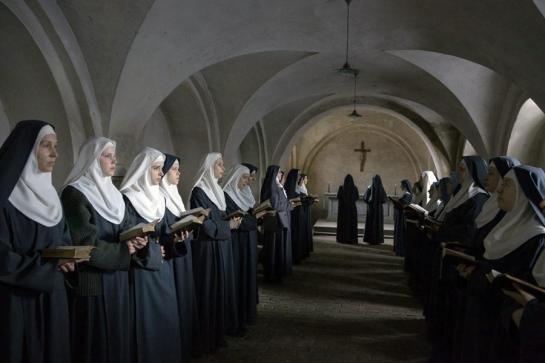
And then there is Caroline Champetier’s cinematography which is something to behold. Shot after shot highlight elements of the period, many resembling classic art pieces. We especially see it in her capturing of the convent. She accentuates its cloistered, bygone look, almost as if it’s from another time. It hearkens back to Champetier’s fantastic work in the slightly similar film “Of Gods and Men”.

As you watch “The Innocents” it’s easy to recognize the many parts seamlessly working together. The smart, measured script, Fontaine’s restrained yet sure-footed direction, Champetier’s beautifully moody cinematography, the wonderful performances by the predominantly female cast (particularly Lou de Laâge). They are all vital in telling this incredibly unique story of courage amid the unimaginable. By the end it was clear to me that no character’s innocence would remain intact, but even the smallest light can offer a glimmer of hope. The film helps us remember that.

VERDICT – 4.5 STARS

4.5 STARS

REVIEW: “Spy”

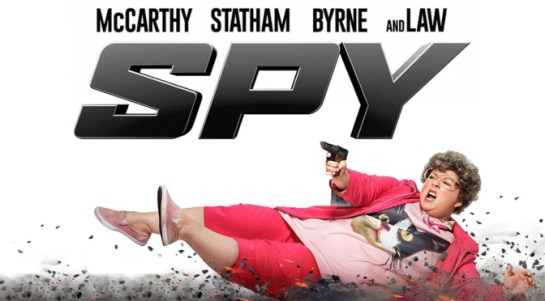
spy-poster

I’m curious as to whether there is any middle ground with Melissa McCarthy. She’s a comic with a very in-your-face brand who does variations of the same shtick in practically every film she makes. Now if you enjoy that you’re likely to appreciate every one of her films to varying degrees. If you don’t then you’re going to struggle with every movie she makes.

Her action/comedy “Spy” is no different. It is full-blown McCarthy bouncing back and forth between self-deprecating, ‘fish out of water’ humor to loud, obnoxious, profanity-riddled “comedy”. Fans are sure to find it entertaining. I don’t fit that description which explains why I found it tedious, juvenile, and at times unbearable.

spy3

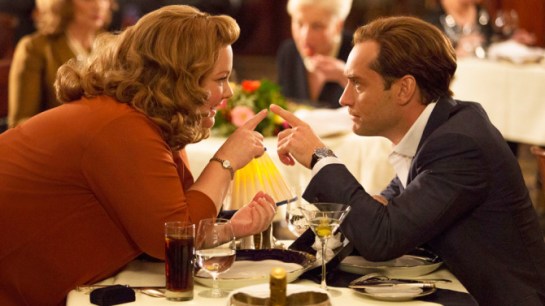
McCarthy plays her usual character – a sympathetic oddball eccentric. This time she plays a CIA Operator named Susan Cooper whose job is to sit behind a desk and relay information to debonaire field agent Bradley Fine (Jude Law). Susan aspires to be a field agent herself but lacks self-confidence. Plus she likes working with Bradley mainly due to a small but obvious crush. But he (like nearly everyone else in the film) doesn’t take her seriously which does nothing to boost her spirit.

Bradley is sent on a mission to retrieve a suitcase nuke from terrorists but things go terribly wrong. Susan is allowed in the field by her mean-spirited and reluctant boss Elaine (Allison Janney). Her job is strictly to observe, but a series of mishaps thrusts the desk-bound operator deeper into the wacky, violent spy world.

spy2

Director Paul Feig had a hit in 2011 with “Bridesmaids” but followed it with the appallingly bad “The Heat”. And this year he is credited with directing the terribly bland “Ghostbusters” reboot. “Spy” doesn’t do anything to even out his track record. There is little new here. We get the standard McCarthy weight and appearance gags. We get a vomit gag. We get body part gags. And so on and so on.

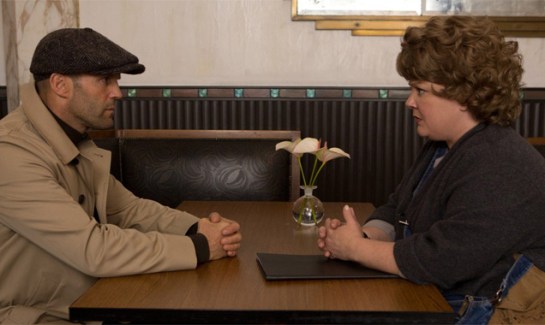
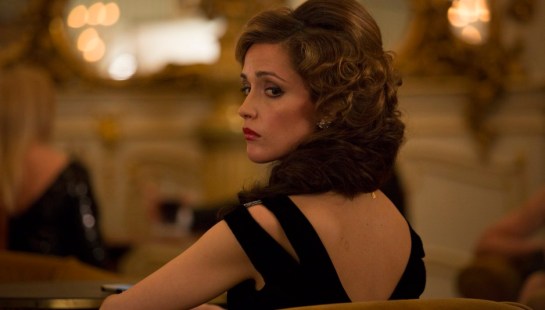
The movie does introduce a number of quirky side characters most notably Jason Statham as a belligerent and oafish field agent and Rose Byrne as the evil villainess. Both fall into their parts well. Unfortunately both characters are undercut by Feig’s puerile writing. His insistence on forcing profanity in their every sentence makes them sound ridiculous. Perhaps the one reasonably authentic character is found in Susan’s loyal friend Nancy (Miranda Hart).

SPY-04418.CR2

The story itself tries to be a globe-trotting spy spoof but its antics get tiring. It attempts to change things up midway through by giving McCarthy’s character a profound transformation. The problem is it doesn’t feel genuine or earned. Even worse I found it made Susan shallower and far more annoying.

Yes I know people loved “Spy”. I know it made a ton of money at the box office. I know it was critically praised and sits at 94% on Rotten Tomatoes. So be it. I simply don’t see the attraction. It is another in a long line of modern comedies that cling to the same methods. Much like McCarthy, if you like that type of humor you’ll probably like “Spy”. If you want something fresh, intelligent, and outside of the modern norm good luck finding it here.

VERDICT – 1.5 STARS

1.5 stars

REVIEW: “The Birth of a Nation” (2016)

birthposter

I’m not sure if any 2016 movie has drawn a more complex range of discussion than Nate Parker’s “The Birth of a Nation”. Right out of Sundance, many instantly christened it the next Best Picture Oscar winner and a direct answer to the #OscarsSoWhite controversy. Some have placed the entire weight of the Hollywood diversity cause on its shoulders. Such high expectations are hardly fair.

Adding another layer was the resurfacing of a 1999 Penn State rape charge. Parker and close friend Jean McGianni Celestin (who is given a story credit in the film) were accused of raping a fellow student. Charges against Parker were dropped but information about his defense (namely his definition of “consent”) and acts of intimidation towards the victim haven’t shed him in the most positive light. Celestin was convicted but the charges were eventually dropped on a technicality. The victim committed suicide in 2012.

Essentially this renews the age-old debate of separating the art from the artist, something I’m usually able to do (Roman Polanski’s “The Pianist” remains a favorite of mine). But I don’t dismiss those who struggle with Parker and his film mainly because a brutal rape plays a big part in the story. Ultimately your experience with “The Birth of a Nation” could very well be influenced by how these events speak to you.

birth2

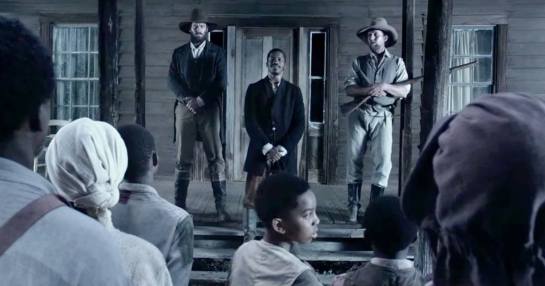
Personally I feel better equipped to examine the movie on its own merits. Controversy aside, there is a powerful story at the center of Parker’s film – a melding of fact and fiction. It’s based on the life of Nat Turner, a slave in Southhampton County, Virginia who led an uprising against white slave owners in 1831. Many have viewed Turner’s rebellion as a heroic and justified act which is clearly the perspective Parker takes. But in doing so he softens the edges of Turner’s actions which misses out on some of the more fascinating complexities of his story.

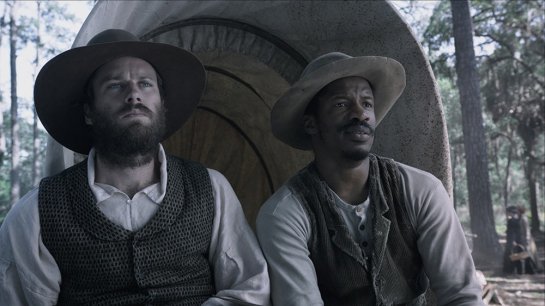
Parker (who wrote, directed, and starred in the film) first reveals Nat Turner as a young boy. A self-taught reader, Nat is given a Bible by the matriarch of his slave owning family (Penelope Ann Miller). Years pass and Nat becomes a preacher to his fellow slaves on the plantation which is now ran by Samuel Turner (Armie Hammer). When a local white minister (played in a near cartoonish fashion by Mark Boone Junior) notices Samuel’s slaves are “well behaved”, he suggests that Samuel take Nate to other plantations to preach calming messages to their slaves (for a price of course).

As Nat visits other plantations the true brutality of slavery is brought into focus and he realizes he is simply a tool of the slave owners. This directly challenges his view of Scripture and soon causes him read the Bible in a new way. Feeling inspiration from God, Nat puts together a violent rebellion in hopes of freeing his people and pouring out judgement on their oppressors.

birth4

“The Birth of a Nation” is told almost exclusivity from the slave’s perspective (mainly Nat’s) which offers some truly powerful moments. This allows for the ugliness to be seen without any (intentional or unintentional) gloss. At the same time Parker’s direction and storytelling is all over the map.

The early parts feel as though Parker is simply checking off plot points. There is little narrative flow. Once the film gets to where Parker wants it to be, he slows it down and more thoughtfully maneuvers from scene to scene. There are also these unusual bursts of otherworldly imagery which seem to be portraying Nat as a mythological spiritual figure of sorts. It’s an interesting idea but Parker doesn’t let it flow naturally from the story. It’s more or less forced upon us through much more conventional techniques.

There are several compelling things Parker touches on that I wish had been explored more. There is an undeniable spiritual element particularly when Nat begins to see Scripture through a different lens. I would have loved to see more of his struggle with interpretation since it eventually birthed his inspiration for the rebellion. Instead it (and several other story threads) feels terribly shortchanged.

birth1

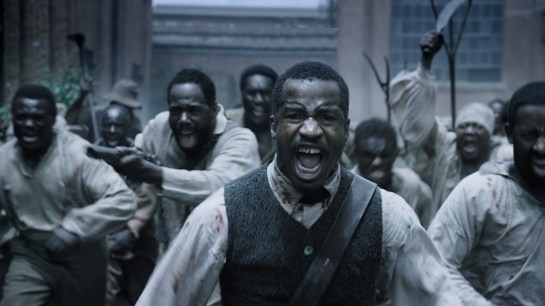
Then there is the rebellion itself. The uprising began with a surprise killing of 50+ slave owners. Parker doesn’t hold back on the graphic brutality, but in his version Nat and his fellow slaves targeted the male slavers who we see throughout the film doing all sorts of vile acts. In reality women and children were also killed. This fact could have subverted what Parker is going for, but the inner moral conflict it surely brought would have been fascinating to explore.

While several things would have made this better, that in no way means this film is without value. Again, there is a powerful story at its core, and while sometimes conventional, several of Parker’s images and scenes are indelibly etched in my mind. But perhaps its biggest strength is how it serves as a profound reminder of a nation’s past transgressions. From start to finish “Birth” keeps you locked in and focused. Parker never loses the potency of his subject matter.

It’s no accident Parker chose “The Birth of a Nation” as his title. It’s taken directly from D.W. Griffith’s 1915 silent epic – a film praised for its groundbreaking approach to filmmaking and excoriated for its depictions of African Americans and the KKK. Parker has “reclaimed” the title and attached it to a much different picture – not a perfect one, for sure. Its uneven direction, messy script, and some heavy-handedness of its own are legitimate frustrations and while “The Birth of a Nation” strives for greatness it falls just short. Yet despite its shortcomings, there is still important and thought-provoking material here, material that deserves to be seen and talked about.

VERDICT – 3 STARS

3 Stars

REVIEW: “Love & Friendship”

love-poster

You could almost say Jane Austen adaptations make up their own small, intimate movie genre. Obviously you have the gushy, sudsy dramas such as “Sense and Sensibility” and “Pride and Prejudice” which together have been adapted nearly twenty times in film and television. You could also include the wide range of movies that found their inspiration in Austen’s work – movies ranging from “Bridget Jones’s Diary” to the wackier “Clueless”. To venture even further into absurdity just this year we had “Pride and Prejudice and Zombies”. The title says it all.

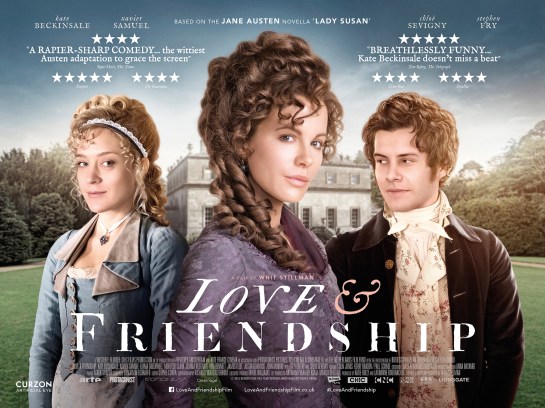
The latest Austen film treatment may be the cleverest and best executed of the bunch. It’s “Love & Friendship”, a whip-smart period comedy named after an early Austen story but actually based her epistolary novel “Lady Susan”. It’s the fifth film from writer and director Whit Stillman and his first since 2011’s fabulous oddball campus comedy “Damsels in Distress”. “Love & Friendship” is very much a Stillman picture – intelligent, tightly focused, and refreshingly modern. That last description is especially impressive since the film perfectly fits within its late 18th century aristocratic setting.

love3

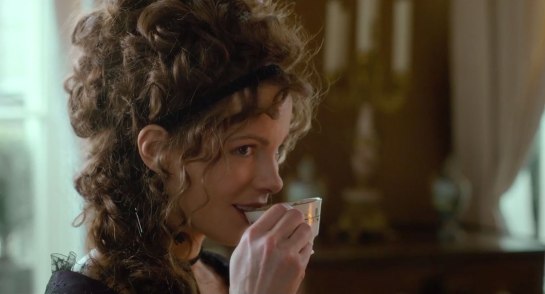
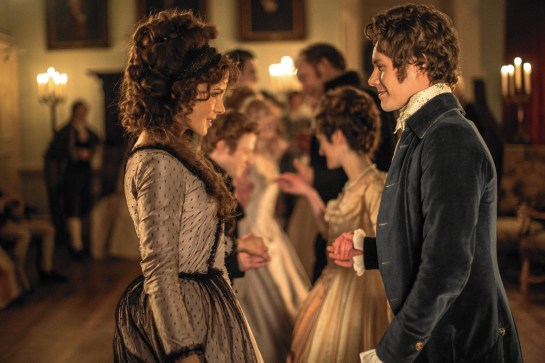
Kate Beckinsale plays the conniving, opportunistic Lady Susan. A recent widow and completely broke, she makes her way to the estate of her brother-in-law Charles (Justin Edwards) and his wife Catherine (Emma Greenwell). They agree to let Lady Susan stay with them even though they are aware of her flirty, gold-digging history. Lady Susan instantly sets her eyes on Catherine’s younger, handsome, and (most importantly) wealthy brother Reginald (Xavier Samuel).

What follows is a comical mélange of scheming and manipulation as Lady Susan works to regain her rich, high society status. In the process she encounters a number of obstacles including Reginald’s parents who are well aware of Lady Susan’s reputation. Things get even more ‘complicated’ when Lady Susan’s young daughter Frederica (Morfydd Clark) pays a surprise visit.

love2

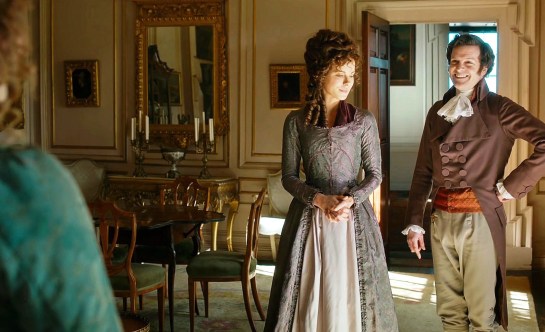
“Love & Friendship” does a remarkable job of taking a Jane Austen period drama and lacing it with Whit Stillman’s signature snappy dialogue. The costumes, the settings, and even the characters seem pulled straight from the 18th century. More importantly Stillman doesn’t disturb or shy away from the traditional Jane Austen formula. He actually embraces it and looks at it from a variety of perspectives. The results are hilarious, lively, and surprisingly fresh.

For many the biggest revelation will be Kate Beckinsale who relays every ounce of Lady Susan’s physical beauty and self-serving venom with mesmerizing precision. Armed with the character’s razor-sharp deceptive tongue, Beckinsale cuts through every male she encounters but does so with a heartless grace. Her selfish callousness towards others is most clearly seen in her moments with her one friend and confidant Alicia (Chloë Sevigny). Yet despite her character’s toxicity, Beckinsale makes Lady Susan a captivating force.

love1

Placed around Lady Susan are a host of fun supporting characters, each portrayed through some period-perfect performances. Xavier Samuel makes quite the turn from his “Twilight” days and the accomplished Stephen Frey adds a little more weight to the cast. Sevigny is a nice fit as Lady Susan’s crony and Greenwell is equally good as the sister-in-law caught in an unwinnable situation. But Tom Bennett is the real scene stealer. He plays Sir James Martin, an extremely wealthy, well-meaning suitor who also happens to be a blithering idiot. Bennett is given the broadest comedy but the small hysterical bursts we get from him fit in nicely.

It’s safe to say that “Love & Friendship” offers a very unique take on Jane Austen’s work while at the same time feeling right at home in the author’s written world. Whit Stillman’s latest has the appearance of a stiff, snooty, blue-blooded time piece. But wrapped within its opulent gowns, neo-classical furnishings, and stately manors is one of the year’s funniest movies and another home run for this gifted filmmaker.

VERDICT – 4.5 STARS

4.5 STARS

2016 BlindSpot Series: “Cléo from 5 to 7”

BLINDSPOT LINEUP


One of most influential movements in cinema came in the form of the French New Wave. Visionary filmmakers like Truffaut, Godard, and Chabrol sought to shatter the formulas and artifices that dominated mainstream movies. These brilliant auteurs redefined the art of cinema while also developing their own distinct styles and unique techniques. Nestled comfortably in the male-dominated movement was Agnès Varda, a pioneering filmmaker who gave the era a strong female voice. Varda was known as the grandmother of the movement and one of her signature films is “Cléo from 5 to 7” from 1962.

The film is about a singer named Cléo (played by Corinne Marchand). She is a tall beautiful picture of health, but we quickly learn she is ill and awaiting test results that could have serious after-effects. The story follows Cléo as she walks through Paris shopping, meeting friends, doing anything she can to take her mind off of the news she expects to receive later that evening. Along the way we see her wrestling with mortality and struggling to maintain any sense of optimism.

CLEO1

At around the halfway point of the film we realize that Cléo is also wrestling with her own identity. She has become exactly what everyone expects her to be. Her superstitious maid treats her like a child. Her musical collaborators don’t take her talents seriously. She is treated like a toy of convenience by her boyfriend. All seem indifferent to her illness and unconcerned about her worries. Cléo takes off on her on and for the last half of the film we see her shedding layers of her old self. It’s a rediscovery of sorts in the two hours left until she is to get her diagnosis.

“Cléo from 5 to 7” is told through a subtle documentarian style – a technique often used by New Wave directors. Varda tells the story in almost real-time allowing us to gather information by simply following Cléo around. Her camera often sits and observes while other times it’s in a constant state of motion. There are some fabulous long tracking shots specifically of car rides around Paris. Then there are quiet but powerful moments where the camera focuses on Marchand’s face. Varda was known as a talented photographer and we see it reflected throughout this film.

CLEO2

Marchand is a nice fit for the role of Cléo. I loved watching her start as a beautiful but scripted human being and then transform into her equally beautiful but truer self. We see her peel off the facade she’s built on other’s expectations and Varda represents this in Cléo both physically and emotionally. The character runs the gamut of emotions which culminates in a final intensely satisfying shot of Marchand’s face. It’s a very interesting and subtly expressive performance that nicely serves Varda’s vision.

“Cléo from 5 to 7” is La Nouvelle Vague through and through. Those unfamiliar with the New Wave movement will instantly notice the artistic uniqueness and nuances that have influenced filmmakers to this day. And after so many years this film still feels like something fresh and innovative. That is a testament to Agnès Varda’s remarkable writing and direction and the pioneer vision that she and so many of these filmmakers maintained.

VERDICT – 4.5 STARS

4.5 STARS

REVIEW: “Hunt for the Wilderpeople”

hunt-poster

Taika Waititi has had his hand in many unique projects, but it was his hysterical vampire mockumentary “What We Do in the Shadows” that made me a fan. The film’s wacky mix of absurd and subtle humor was refreshing especially within its formulaic and gimmick-ridden genre.

His follow up is the equally hysterical and equally refreshing “Hunt for the Wilderpeople”. Much like his previous film, Waititi writes, co-produces, and directs this odd couple adventure comedy that so beautifully walks the line between silly absurdity and thoughtful, tender humor. Contrary to many modern comedy norms, “Wilderpeople” delicately explores several deeper themes underneath its unashamedly goofy exterior. Most importantly it does it all very well.

hunt2

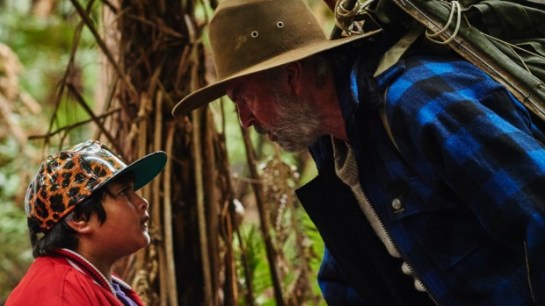
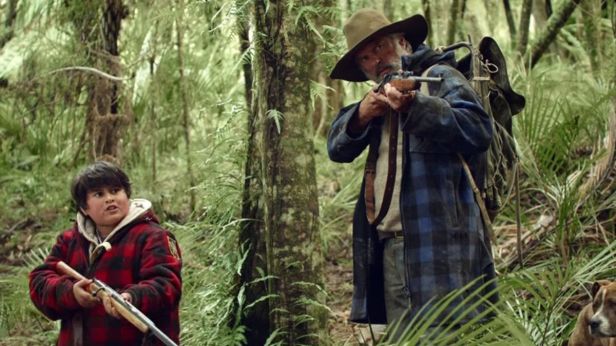
The film tells the story of two very different but equally isolated people. Ricky Baker (Julian Dennison) is a troubled 13 year-old who has been shipped from home to home by child welfare services. After several incidents in the city Ricky is given one more chance at a home life. He is sent to the countryside and new foster parents the quirky but loving Bella (Rima Te Wiata) and the burly, gruff Hec (Sam Neill).

Through circumstances that I’ll let you discover for yourself Ricky runs away into the dense bush but is eventually found by Hec. Child Services, led by the dogged, overzealous Agent Paula (Rachel House), absurdly determine that Hec kidnapped Ricky and therefore set out on a manhunt to find the two. This feeds the film’s main focus – the peculiar relationship between a young boy and an elderly man both with huge needs in their lives.

hunt1

To say Waititi has fun with the whole “opposites attract” idea is an understatement. The clashing of these two drastically different personalities allow for some truly hilarious moments. Ricky’s youthful exuberance against Hec’s grumpy desire to be left alone. Ricky’s street gangster ambitions against Hec’s bushland survivalist skills. Yet they come together through one lone emotional similarity and we get to enjoy the zaniness this unlikely pairing brings.

Much should be said about the performances which are very much essential pieces. This is young Dennison’s third project and he is such a treat delivering a fabulous multi-layered character. We see it in his spontaneous pop culture references, his penchant for writing haiku, and his random child psychology quotes. Dennison exudes a certain sweetness and naïveté that melds so well with the tone Waitiki is going for.

hunt3

Sam Neill is equally vital. He could have easily been your run-of-the-mill surly old-timer, but his performance doesn’t allow for that. He, along with Waititi’s script, blow apart any surface level perceptions we may have of his character. Hec may appear familiar, but Neill takes him in several unexpected directions. In fact the same could be said for much of Waititi’s film. It’s constantly defying expectations.

Waititi’s star is clearly shining brighter and his next film should be a challenge (Marvel’s third Thor film). But “Wilderpeople” is him making movies in his comfort zone. It is a film so clearly and perfectly attuned to his humor and sensibilities. This fun little odyssey pulls from so many directions but always maintains its balance. It’s genuinely tender and sweet but never overly sentimental. The humor ranges from subtle deadpan to big broad comedy but it always works together. All of this testifies to Waititi’s brilliance as a filmmaker and storyteller. The guy knows how to make a movie, and you won’t find a 2016 comedy much funnier than this one.

VERDICT – 4.5 STARS

4.5 STARS