5 Phenomenal Stan Lee Cameos

movie_theatre - Phenom 5

Marvel’s superhero movies have certainly made their mark on the cinematic landscape. One of the real treats for comic book fans has been the inclusion of cameos by the man himself Stan Lee in almost every Marvel movie that has been made. So in honor of the man who created so many of these characters that many of us grew up reading and now enjoy watching, I thought this week I would focus on his best cameos. Now considering the number of cameos he has done I wouldn’t call this the definitive list. But there’s no denying that these five Stan Lee cameos and most certainly phenomenal.

#5 – “Hulk”

LEE HULK

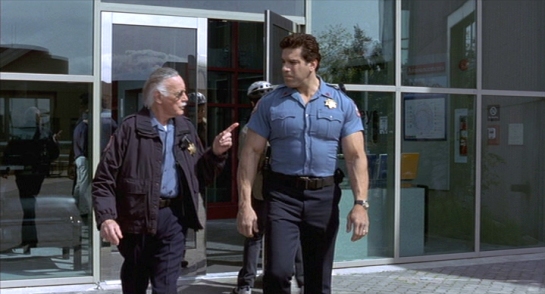
There aren’t many good things I can say about Ang Lee’s long, boring, and at times infuriating 2003 film “Hulk”. It was a monumental disappointment and, aside from some pretty good performances and a great Stan Lee cameo, I consider it one of the worst Marvel movies. But Stan’s cameo is a blast not so much for anything that happens. Lee is walking out of a building with none other than Lou Ferrigno. Both are security guards which provides a hilarious contrast. The small elderly guy and the hulking giant (pun absolutely intended). Watching these two, men who are ingrained in Hulk’s history, discuss security concerns is such a hoot.

#4 – “Iron Man”

LEE IRON MAN

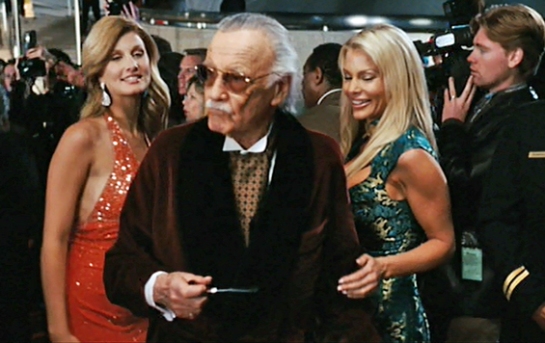
When Tony Stark arrives at a big public gala you can expect a number of things: nice cars, beautiful women, camera flashes, and the quick, dry wit that only Downey, Jr. could bring to the character. Stark briskly strolls through this sea of attention, taking time to insult one woman and intentionally mistaking one man for Hugh Hefner. We see the man from behind. He has slicked back gray hair, a fancy smoking jacket, and he’s bookended by two gorgeous woman. Obviously it’s Hefner, right? Nope! The man turns around and it’s none other than our guy, Stan Lee. It’s a hilarious scene as Lee confusedly looks around to see who just walked by.

#3 – “The Amazing Spider-Man”

LEE SPIDEY

I wasn’t too keen on there being a Spider-Man reboot so soon but that’s what we got in 2012. “The Amazing Spider-Man” was an okay movie (head and shoulders above this year’s lame sequel) but certainly not at the top of the superhero movie list. But one great thing it did have was one of the best Stan Lee cameos of them all. Spidey and the Lizard are engaged in a pretty brutal scrap which boils over into a library. The librarian is none other than Stan the Man. He is checking in some books while listening to music through noise-cancelling headphones that Stark Industries must have created. Behind him a huge fight is going on with tables and books flying everywhere. But he doesn’t see it. He just carries on with his duties.

#2 – “Fantastic Four: Rise of the Silver Surfer”

LEE FF

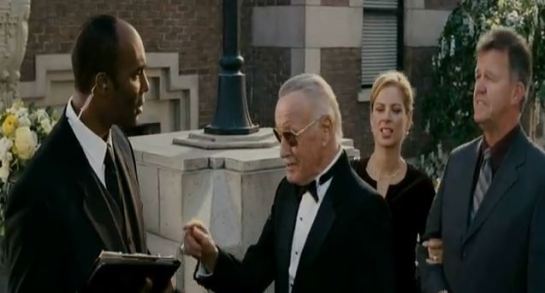
The Fantastic Four films were Marvel movies that had some really strong moments but are ultimately forgettable especially when compared to the better superhero movies out there. But the second film, Rise of the Silver Surfer, featured a Stan Lee cameo that I just can’t get enough of. The film starts with New York’s wedding of the century. Reed Richards and Sue Storm are about to be married and all of the guests are arriving. Well up walks Stan Lee, only the man who CREATED the Fantastic Four. He’s greeted by a strict doorman who stops him. Stan says “I must be on that list” and then gives him his name. The doorman will have none of it and pushes him back all while Stan keeps pleading his case. Great scene.

#1 – “Thor”

LEE THOR

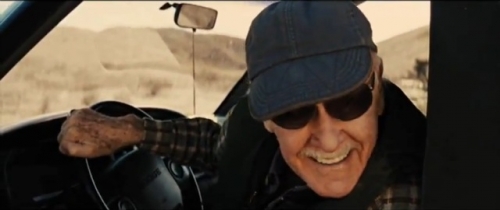
“Thor” was one of the Marvel movies that I thought had a real chance to flop. It was such fantastical material and it could have been a disaster when brought to the big screen. But Marvel knew what they were doing and they knew the tone the film needed. That’s why I thought it really worked. It also featured what is my favorite Stan Lee cameo. Thor’s hammer, the deceptively pronounced Mjolnir, has crashed to Earth. It has been found in New Mexico by a redneckish crowd who have brought out the pickup trucks, beer, and lawn chairs. As hard as they try, none of them are able to lift Mjolnir so they tie a chain to the back of a truck and floor it. The back end flies off of the truck and the driver looks out the window. Of all people it’s Stan Lee who simply asks “Did it work?” No Stan it didn’t, but you did give us what I think is your very best cameo!

So those are my choices. Do you see a Stan Lee movie cameo that I missed? Please share you thoughts on these or others in the comments section below.

REVIEW: “Play Time”

PLAYTIME POster

“Playtime” may be one of the most difficult movies to categorize or review and it may be a difficult movie for some people to process. French filmmaker Jacques Tati is known for focusing more on people and communities and allowing his stories to be told visually through their interactions. He was much more interested in visual comedy through observation than presenting a structured narrative. With “Playtime” he takes this unique style and amplifies it. But with this film he has a different intention and much bigger expectations that may be hard to appreciate at first glance.

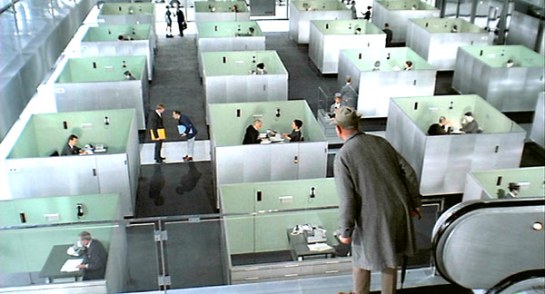
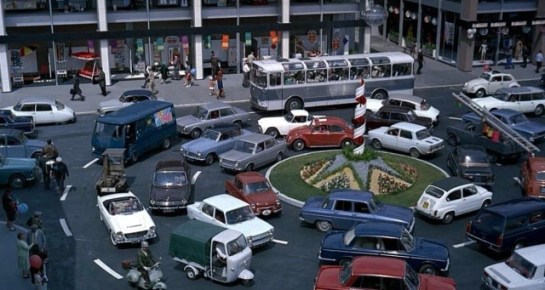
“Playtime” was Tati’s most ambitious project and at the time it was the most expensive movie in French history. It never made its money back at the box office and eventually drove Tati into bankruptcy. Much of the high cost went into the enormous set built by the filmmaker. Money issues made constructing the set drag out almost 4 years. But if you’ve seen the film it’s impossible to not be in awe of what Tati created. His set included an airport, skyscrapers, apartment buildings, office complexes, a downtown area, and several busy city streets. All of it represented the new futuristic Paris that Tati often spoke against in his films.

PLAYTIME1

This is also a movie intended to fade out Tati’s popular Mr. Hulot character. Tati was growing tired of him and used this as an opportunity to move on to something new. But some believe this is one reason the movie wasn’t as well received by the public as hoped. Mr. Hulot was incredibly popular with audiences and his limited appearances in this picture didn’t sit well with some viewers. But honestly, Mr. Hulot is only a cog in Tati’s big machine. This was never meant to be a Mr. Hulot picture in the same vein as “Mr. Hulot’s Holiday” or “Mon Oncle”.

“Playtime” does incorporate several of Tati’s signature techniques in filmmaking and comedy. The gags often hinge on timing and some of them require careful attention or you just might miss them. There is no meaningful dialogue in the picture. Instead the voices of people are simply part of the important background noise that we hear throughout the film. Sound has often played a significant part in Tati’s films and it’s no different here. Everything from the loud heels clicking on the cold, hard floors to the flatulent noises from the hip office chairs has a distinct and intentional sound.


The movie is broken down into sections. It begins in what resembles a hospital but we soon find it’s an airport. It’s here that we are first introduced to some of the film’s reoccurring characters including a tour group of women from the United States and of course Mr. Hulot. From there the movie moves into Tati’s vision of where Paris was heading – a city of long, congested, assembly-line like streets with matching skyscrapers made of steel and glass. The city’s traditional beauty and history is gone replaced by a cold and sterile modernist future. Tati does give us quick looks back at the city’s glory but they are cleverly shown reflections seen in glass doors. The reflections of the Eiffel Tower and of the Sacré-Cœur Basilica on Montmartre hill are visions of a Paris that Tati sees as disappearing in the real world.

PLAYTIME2

Mr. Hulot is lost in this new world. The second big section of the movie takes place in an office high-rise where Hulot is set to have a meeting. Tati makes the place incredibly impersonal and goes to great lengths to portray the building’s futuristic technology as silly and pointless. There is a great scene that illustrates this right after Hulot enters the office building. He’s met by a little old doorman who sits him down while he calls upstairs. To do so the old fella has to work an overly complex intercom system, all the time grumbling to himself as he carries out his perfunctory, everyday duties. He refuses to let Hulot leave his seat, making him wait and wait until the executive he’s there to meet finally arrives from upstairs. But the executive moves him into an office 10 feet away from where he’s been waiting and has him sit down and wait longer. The doorman, the intercom, and the long wait were for the most part pointless.

Hulot ends up getting lost and he stumbles upon a trade show happening in another part of the building. This is where the next section of the movie takes place. It’s followed by some time spent gazing into an apartment complex before heading to an evening at a nice restaurant. Most of the film’s second half takes place in the restaurant. Hulot ends up inside but we really see very little of him. Instead we’re introduced to the new series of characters including a loud and obnoxious American businessman, a clever doorman, an embarrassed waiter who has ripped his pants, the antsy owner, a drunk, the aforementioned tour group, and a number of other people.

The restaurant sequence is a pretty impressive thing to behold. We watch as the night starts slow but as the crowd increases and several mishaps occur, things liven up. There’s really nothing else to the scene. There isn’t a deeper story angle to latch onto nor is there one central character to follow. It’s pure observation as the camera steps back and moves from one section of the restaurant to another. We simply watch everything as if we were sitting on a stool in the corner of the room. It’s unlike anything I’ve seen. It’s a bold and inventive experiment but it’s also laced with some really funny gags. And it doesn’t stop there. There’s a really good drugstore sequence and some time spent on the congested city streets before zipping us back to the airport.

PLAYTIME3

You can’t watch “Play Time” and not be impressed with the skill and the craft of Jacques Tati. And while it certainly has some funny moments, it lacks the playfulness of the previous Mr. Hulot films and I have to admit I missed that. The shelving of Hulot is obvious as Tati intentionally loses him in the concrete, glass, and metal world he created. In fact, at times it seems that Tati is rubbing it in our faces by occasionally throwing out men who walk and dress like Hulot but we find out they are not. By shortening the screen time of his beloved character he forces us to look at the bigger picture that he’s painted on his personal canvas. He makes us look beyond what we’re familiar with and what we expect.

There is nothing conventional about “Play Time”. It’s an ambitious project that also has that signature Tati humor. But it’s nothing like the filmmaker’s previous work and that took some adjusting for me. And personally speaking, this film just didn’t resonate with me like his other work. Staying with the movie can be a bit of a challenge and the humor is spread out and more subtle. But the craftsmanship behind this film can’t be questioned and the sheer scope of the undertaking is incredible. There is so much going on throughout this picture and for a movie with no substantial plot or direction that’s a pretty amazing accomplishment.

VERDICT – 4 STARS

Your Voices: On underrated actresses

your-voices

Your Voices is a simple concept created to encourage conversation and opinions between movie lovers. It works like this: I throw out a certain topic and I’ll take time to make my case or share my opinions. Then it’s time for Your Voices. Head to the comments section and let fellow readers and moviegoers know your thoughts on the topic for that day!

Emily Blunt

Emily Blunt

A while back I wrote about actresses who I believe are underrated in today’s movie environment. We see many actresses get a ton of praise and a lot of spotlight, but there are others who are immensely talented yet who just don’t get the attention that their work has earned them. I think a good argument could be made that there should be more substantial movie roles for women and I am of the belief that there are plenty of talented actresses to fill those roles aside from the common big names we always hear about.

For me one such underrated actress is Emily Blunt. Many people who frequent this site knows how much I champion her work. There is an amazing natural quality to Blunt and her acting that is rare in movies today. Even more, whether it is drama, comedy, or even science fiction, Blunt handles her roles brilliantly. She can be quirky. She can be tough. She can be emotional. And she does it all with ease. Personally I would love to see her given bigger and more demanding leading roles that would showcase these talents and propel her to be the prominent leading lady that I think she deserves to be.

YOUR VOICES: Who do you think is an incredibly underrated actress?

Now it’s time for Your Voices. With so many great actresses out there, who are some that you think are criminally underrated? Why do you think so? Please share Your Voices on today’s question. I’d love to hear from you in the comments section below.

5 Phenomenally Annoying Actors

movie_theatre - Phenom 5

I don’t know about you, but I find some actors incredibly annoying. In fact, often times some of Hollywood’s biggest draws drive me up the wall. Today I decided to give these actors the discredit they deserve by listing five of the most annoying actors in the world of cinema (to me of course). Now this is sure to get me some flack because there are a couple of names on this list that have a huge following. Then again I do tend to go against the grain just a tad. Now with so many fitting actors I wouldn’t call this the definitive list, but these five are phenomenally annoying.

#5 – Adam Sandler

ADAM

To be completely honest, it’s not so much that Adam Sandler himself annoys me as an actor. It’s just that his balls of crap movies annoy me to the ends of the Earth. For that very reason I am inserting him onto this list even though he doesn’t really fit. Sandler has settled into this groove of churning out stupid, unfunny turds disguised as movies and he seems completely content with it. I guess it’s easier when you are making the money he is. But I would think there would be at least an ounce of creative integrity somewhere within him. On the other hand…

#4 – Seth Rogen

SETH

Okay, let the hate begin. Well maybe I am exaggerating the response a tad, but I know many people really do like Seth Rogen. Personally I have never found the guy funny. Like many modern day comedy stars, Rogen is pretty much a one-trick pony. You know exactly what you’re going to get anytime you see a Seth Rogen picture with the exception being his forays into playing non-stoner characters. But even then the movie feels exactly the same as the others. Despite his popularity, Rogen is a blow-hard that just doesn’t impress me.

#3 – Jack Black

MCDNALI EC004

Thankfully Jack Black hasn’t been as prominent on the big screen as he was several years ago. For me that is a good thing. Black is an actor that has one act and one act only. If you don’t find his shtick funny, well you’re out of luck. Even when he tries to take on remotely serious roles, that insipid act of his bleeds through. The actor is mostly known for his mush-for-brains roles that fits him. In all fairness I have to say I loved him in “Bernie”. Unfortunately I can’t say that about anything else he has done.

#2 – Chris Rock

84th Annual Academy Awards - Show

I think it’s safe to say that Chris Rock’s popular glory days have passed by, but he still sticks in my side. He has had an occasionally funny moment, but overall I find his humor to be more akin to fingernails on a chalkboard. Rock is sometimes brash and loud and that’s not always a bad thing. But I think a lot of his act is generated from pretty bad and unlikable attitudes that he does little to hide. All of that, mixed with his obnoxiously shrill voice, makes him an actor that I find terrible annoying.

#1 – Ken Jeong

JEONG

I swear I have no idea how this guy has a career. I know some people find him funny and some like his brand of humor. I honestly frown, turn my head, and often times turn the channel whenever this obnoxious, annoying clown shows up on screen. He is a guy whose gimmick may have briefly worked well but he has driven it in into the ground. For me Jeong isn’t funny. He isn’t entertaining. He isn’t talented. But he certainly is annoying.

So those are my five phenomenally annoying actors. Agree or disagree? Is there a name I missed? Please take time to share your thoughts in the comments section below. I would love to hear from you.

REVIEW: “The Raid 2”

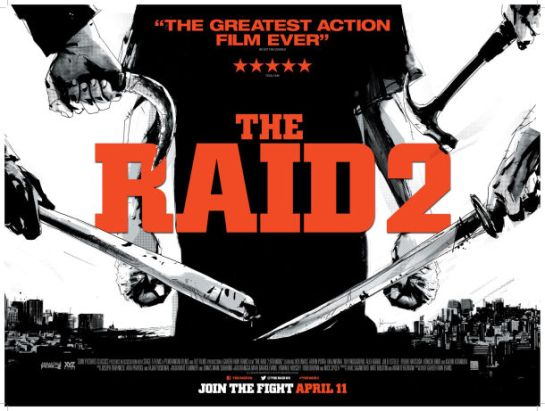
Raid poster

I’m not sure if anyone expected “The Raid: Redemption” to be such a worldwide success, but that’s exactly what happened with the 2011 Indonesian martial arts picture from writer and director Gareth Edwards. Now we get “The Raid 2”, a sequel armed with a bigger budget and much more ambition. This first film was built around minimal story but a very interesting premise. This film greatly expands the story while featuring the same entertaining, high-octane, and sometimes brutal action that energized its predecessor.

“The Raid 2” moves beyond the closed confines of a tenement and quickly develops itself as something bigger. SWAT Team member Rama (Iko Uwais) returns, and this time he finds himself in a web of two rival mob gangs and corrupt police officers. After his brother is killed by one of the gangs, Rama is persuaded to join a secret task force set on infiltrating the gangs and exposing the crooked cops. He befriends the ambitious but overzealous son of one the mob bosses which gives him an inside track. But as you may guess, things aren’t nearly as easy as Rama would like.

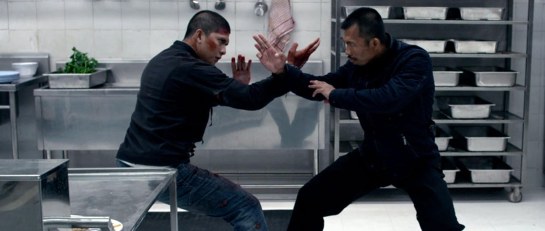
“The Raid 2” pulls from numerous classic crime films and mob movies. You can’t help but notice it throughout the entire story. If you’re familiar with some of these plot points you’ll know exactly how things are going to play out. While that did take away any sense of curiosity or surprise for me, Edwards still handles it very well and it’s the injections of action (a very unique style of action) that very much separates this film from the gangster movies it otherwise emulates. There are plenty of wickedly choreographed martial arts sequences, but there are also some insanely good shootouts and one particular car chase sequence that blew my mind.

RAID 2

That’s really what “The Raid 2” is all about. It’s a full blown action picture and that is where it makes its money. And let me just say that some of it isn’t for the faint of heart. Blood splashes, arteries are severed, limbs are broken. After all this is the movie that gives us characters simply known as Hammer Girl and Baseball Bat Man. Now obviously she didn’t get her name because of her carpentry skills and he didn’t get his because of his high batting average. Both characters are outrageous but they are also good examples of how much fun the movie is.

“The Raid 2” is a film that will definitely be appreciated by fans of the first movie. It remembers what made its predecessor successful and it builds upon it. Surprisingly there is a lot more story this time around which isn’t necessarily original but it is entertaining. The acting is adequate, but no one is looking at this film for Oscar-winning performances. Most people will be coming to it for action and they will get plenty of it. And it’s no joke either. It’s exhilarating, violent, and jaw-dropping and it will unquestionably satisfy the thirst of any true action movie fan.

VERDICT – 3.5 STARS

Movie Bloggers Roundtable

BANNER

The Movie Bloggers Roundtable is a feature where I join up with four esteemed movie bloggers and we share our thoughts on a certain subject. Everyone on the panel will share their thoughts and feelings on the topic of the day and then we share them with you. The panel may change from post to post and hopefully we will get a wide range and interesting mix of opinions and perspectives.

Today’s roundtable discussion is inspired by my pal Ruth over at FlixChatter (one of the absolute best movie blogs around). It’s a question that I found incredibly intriguing and it had me thinking on it for several days afterwards. It deals with the different decades and the movies that defined them. Joining me for this roundtable is Zoe from The Sporadic Chronicles of a Beginner Blogger, Michael from It Rains…You Get Wet, Cindy from CindyBruchman.com, and Richard from Kirkham A Movie A Day. Now I can easily say that I LOVE THESE BLOGS and if you haven’t been frequenting their sites you should. So lets get to this week’s question:

What has been the greatest decade for movies?

Decades


Keith (Keith & the Movies)

I had this question in mind for a later date, but after reading Ruth’s post I just had to talk more about it. This is really difficult because every decade has had its own flavor and has contributed to the world of cinema in different ways. I have a personal affection for the 1980s mainly because those were my teen years and so many of those films nurtured my love for cinema. But was it the greatest decade for movies? I don’t know. I think arguments could be made for almost every decade. But after sloshing it around for a while my pick is the 1950s.

The 1950s were an interesting time for movies. We were beginning to see a genuine shift in how movies were being made and how stories were being told. At the same time the decade still held on to some of the things that made the 1940s so special. The 50s gave us big screen debuts from all-time great performers like Paul Newman, Marlon Brando, and Audrey Hepburn. It gave us Hitchcock’s best including “Rear WIndow” and “Vertigo”, Kurosawa’s masterpiece “The Seven Samurai”, arguably the best musical ever made “Singin’ in the Rain”, and I could go on and on. The number of true cinema classics that found their genesis in the 1950s is astonishing.

More personally the 1950s also delivered some of my favorite movie trends. Science fiction and creature features were a staple throughout the decade with fun movies like “Them!”, “The Thing from Another World”, and “Godzilla” just to name a few. The late 50s also gave birth to the French New Wave, a movement that has influenced some of cinema’s greatest directors even today. Masters like Truffaut and Chabrol laid the foundation for the run of great New Wave classics that would come through the 60s. This just skims the surface of what made the 1950s great and it’s hard to find a decade any better.

Zoe (The Sporadic Chronicles of a Beginner Blogger)

So I have been thinking of the best decade for movies and I have to say, that after all the scratching, weighing up and contemplating that I have done, I am going to give it to 2000-2009. The sheer magic that was wrought in cinema during that time is simply staggering. There are amazing titles, some of the best performances of all time, and technology had so much advanced that it really made all the difference in the world. Granted, things like The Godfather, The Green Mile, Saving Private Ryan, the Indiana Jones movies, the original Star Wars trilogy, etc. came from other decades, but in terms on consistency the 2000s get it. Hands down.

There are titles to look at like The Lord of the Rings trilogy, the Bourne movies, some fantastic superhero flicks, great comedies, brilliant dramas, numerous team ups between Leonardo DiCaprio and Martin Scorsese, some solid animations (even though I am not a fan of the genre), more excellent Tarantino outings, impressive thrills from Christopher Nolan, even some relatively decent horrors, and some of the best Bond flicks of all time. In fact, each and every genre got some excellent titles to add to it. I am a fan of the 00 decade, I thought some exceptionally engaging films came forth from there. Not that it is without flaws, but overall I think that everything rounded out extremely well for the movies that were put forth from 2000-2009.

Michael (It Rains…You Get Wet)

Easily, it’s the 70s. A particular span of time that proved to be one of the most tumultuous for many in the latter half of the 20th century. A decade filled with economic downturns, disillusionment, and the realization that things really could get a Hell of a lot worst. And did. The timing for film couldn’t have been better, though. For all of its crises and missteps, corruption and loss of idealism, the Me Decade heralded some of the absolute best cinema this country had to offer for the period.

The uncertainty and controversy, which followed the waning years of the Vietnam War, aroused an atmosphere that prompted directors and producers to reflect so distinctly upon the eyes of movie audiences. Prompted seemingly from watershed moments, crossroads, and/or deflated dreams, nothing could hold the tide back. It shouldn’t surprise that the era’s off-beat and imaginative comedies, challenging dramatic themes, and the stellar crime films of the period have rarely been surpassed.

From the big and important films (The Godfather, Chinatown, Jaws, Star Wars) to the small and decidedly underestimated (Halloween, The Long Goodbye, The Driver, Sorcerer), this decade had it all…and in spades. Cast back on us via celluloid, in movie houses by filmmakers who’d tasted the same bitter tea the era had served up. Lastly, though the decade did not invent or even introduce the character of the anti-hero, that protagonist certainly came into its own during this distinct ten-year stretch.

Richard (Kirkham A Movie A Day)

So, the cynical side in me wants to believe that Keith selected me because of my clearly expressed view contained in my on-line moniker and Avatar. My ego wants to believe that I was asked because my writing on-line about movies from different time periods has been interesting enough to make it appear that I might make some insightful comments. The movie lover in my soul however knows that I’ve been asked to speak for the greatest decade in movies because of my passion. I cannot disappoint any of those selves or my friend Keith, the greatest decade of movies ever was the 1970s. If I were more knowledgeable about foreign language films, the 50s could have snuck in here or if I limited myself to the sheer quantity of great films than it might be the 30s. There are however a couple of different characteristics that I would use in defense of the 70s as the greatest decade.

I don’t think any other decade has the range of styles and subject matter that the seventies did. In 1970 “Airport” was a best picture nominee. It was a soap opera melodrama with a single unique idea, disaster, at it’s heart. Ten years later, “Apocalypse Now” was a best picture nominee and the distance traveled between those two styles of film is daunting. The studio film had given way to the movie brats of film school and their highly personalized view of cinema. In 1971 “Fiddler on the Roof” was a best picture nominee and it was as much “Tradition” as you can get. Back to 1979, and another musical is nominated for best picture, “All That Jazz”, which is a meta picture about a filmmaker, making a movie and a musical simultaneously and it is autobiographical. The mindsets between these bookend years could not be more different. In the center of the decade were films that made genre films acceptable mainstream fare; pictures like “The Exorcist”, “Star Wars” and “Superman”. The greatest film of the 1970s also changed how movies were exhibited, marketed, exploited and analyzed, “Jaws” changed everything. With the exception of the movie studios being divested of their theater chains, the box office returns and audience reaction to “Jaws” did more to change the movie business than the addition of sound. It also happens to be the greatest picture made since the 1930s.

I can’t imagine any decade could match the quantity of movies from the 1930s, after all the Dream Factory was cranking them out like cars on an assembly line. Pound for pound however, 1975 could match up against 1939 very well. The degree of autonomy that directors and writers had in the 1970s may never be seen again except in the new world of You Tube and VOD. Those are the places that movies like “Taxi Driver” or “The Conversation” would have to end up. Too many opinions from too many directions mean that more recent films will never be as raw. In the 70s, Science Fiction films could explore ideas without having to have gargantuan budgets. Off beat characters could be the focal point of a story, and everybody was OK with that. In later decades, if a character was unique in some way, that would be the marketing strategy. In the 70s, everybody just expected the characters to have character.

If you consider the firepower of 1970s films, no other decade comes close to the quality of movies made in a ten year period. Look at someones list of ten greatest movies of all time, I’d be surprised if a third of them did not come from that decade: The Godfather, Jaws, Star Wars, Rocky, Apocalypse Now, The Godfather Part II, Taxi Driver, Network, Close Encounters of the Third Kind, Alien, The Exorcist. If your list is specialized to a genre, Gangster Films, Cult Movies, Sports Films, Science Fiction, somewhere on those lists are at least two movies that were made in the 1970s, and for some lists it would be more than half. Stars still mattered in the seventies and the list of actors and actresses who made their biggest marks in the 70s is a long one. If this were a boxing match, in my view it would be like one of those Mike Tyson fights in the early part of his career, a knockout in the first or second round. The winner and undisputed heavyweight champion of movie decades, the 1970s.

Cindy (CindyBruchman.com)

It’s obvious to me that the 1990s were the best years in film. Drama defined the decade because of the contributions of Tom Hanks, Steven Spielberg, Robert DeNiro, Martin Scorsese, Quentin Tarantino, and the Coen Brothers.

Tom Hanks. He owned the decade. Sure, there were mediocre choices like That Thing You Do! in 1996 or in 1992, as Jimmy Dugan in A League of Their Own. He managed to put his personal stamp on the film with the memorable phrase, “There’s no crying in baseball!”
But consider this blockbuster list:
1990, Bonfire of the Vanities
1993, Philadelphia (Best Acting Oscar)
1993, Sleepless in Seattle
1994, Forrest Gump (Best Acting Oscar)
1995, Toy Story
1995, Apollo 13
1998, Saving Private Ryan
1999, The Green Mile
1999, Toy Story 2

Many would say Saving Private Ryan is THE best war film. His ability to represent the common man with simplistic charm reminiscent of the great Jimmy Stewart. Jimmy only won one Oscar in 1940 with The Philadelphia Story. Of course, Tom Hanks greeted the new century with strong performances but it was the 1990s where he became the legend his is today.

Steven Spielberg. His relationship with Tom Hanks in films has served them both well. Not only is Saving Private Ryan arguably the best war film which is a Spielberg masterpiece, Spielberg gets the credit for the best film ever made with Schindler’s List. That’s a subjective claim, but no one would disagree that Schindler’s List is one of the finest films in the history of film making. It happened in the 1990s. What else did Steven Spielberg put out that decade? Two personal favorites are Jurassic Park from 1993 and Amistad in 1998.

Speaking of directors and actors teaming up, how about Martin Scorsese and Robert DeNiro in the 1990s? The best gangster films combined with strong acting in DeNiro’s career:
Martin Scorsese Robert DeNiro
1990, Goodfellas 1990, Goodfellas
1991, Cape Fear 1991, Cape Fear
1993, The Age of Innocence 1993, This Boys Life
1995, Casino 1995, Heat 1997, Wag the Dog

Other explosive directors that created iconic drama in the 1990s were Quentin Tarantino and The Coen Brothers. Look what they did during the decade:
Quentin Tarantino Coen Brothers
1992, Reservoir Dogs 1990, Miller’s Crossing
1994, Pulp Fiction 1991, Barton Fink
1997, Jackie Brown 1996, Fargo
1998, The Big Lebowski
If you disagreed that Schindler’s List wasn’t the best film of the decade, then you probably think along with a million other critics that Pulp Fiction was the best film of the decade. If you are a Coen Brothers fan, then you probably are a cult follower of the Dude and drink White Russians as a token of homage. I know that’s when I was snookered with Jeff Bridges as an actor.
Finally, if the above reasons doesn’t convince you, here are more random films from the 1990s that I personally favor:
L.A. Confidential, Mission Impossible, Being John Malkovich, Rushmore,Contact, Sense and Sensibility, Elizabeth, Dogma, Last of the Mohicans, Dances with Wolves, Sling Blade, The Piano,
Star Trek: First Contact, and Run Lola Run.

Are you convinced now that the 1900s was the best decade in film-making history?

So what is the consensus?

70S

I want to thank Zoe, Michael, Richard, and Cindy for participating in this third Movie Bloggers Roundtable. You have heard our thoughts, now we want to hear yours. Do you like the feature? More importantly, which decade do you think is the best and why? There are a ton of good defenses for each. Please share your thoughts in the comments section below.