REVIEW: “The Immigrant”

IMMIGRANT POSTER

Whenever the topic of greatest working actress pops up Meryl Streep so often finds her name at the top of the list. I do belief Streep can be really good, but I believe a strong case could be made for Marion Cotillard. She is a sensational actress who has proven herself with every role she has tackled. She does it again in James Gray’s new film “The Immigrant”. This period drama was a very personal project for Gray. In an interview with Variety he said “It’s 80% based on the recollections from my grandparents, who came to the United States in 1923.” We see this personal connection running throughout the entire film.

The story starts in 1921 as Ewa (Cotillard) arrives at Ellis Island with her sister Magda (Angela Sarafyan). The two have left their home country of Poland, which has been ravaged by World War I, in hopes of starting new lives. But during the processing, Magda is quarantined for a suspected lung disease and Ewa is set to be deported due to some questionable immorality that took place on the boat to America. But she catches the eye of a man named Bruno (Joaquin Phoenix) who uses his money and influence with a particular guard to free Ewa and save her from deportation.

IMMIGRANT1

With no place to go, Ewa accepts Bruno’s offer to work for him in hopes that she can earn enough money to get her sister the medical care she needs. The problem is Bruno runs a ‘gentleman’s show’ and the women he employs are prostitutes. Bruno is charming and persuasive but he also exploits Ewa’s desperation. Ewa is torn between the moral consequences of her actions and her desire to help her sister. Things are complicated even more as Bruno develops an infatuation with her which brings with it jealousy, rage, and even violence.

The movie centers itself on its characters and the different plights of each. Ewa’s circumstances are obviously difficult and the dream of a new life seems practically unattainable. Bruno is often a despicable and detestable man, but at times we see glimpses of compassion. The reasons behind his occasional generosity is a puzzle. Is it due to a genuine love he has for Ewa or is it in the interest of making money? Jeremy Renner plays a struggling magician named Orlando. He is a cousin to Bruno but the two haven’t been close in years. He too is drawn to Ewa and he looks to be a more gentle and loving alternative. But even he shows glimpses of instability making us question who he really is inside.

These characters are magnetic of themselves but they are even richer due to the brilliant cast. Phoenix is always good and while this role doesn’t ask him to dive as deep into the character as some of his previous work, he still has moments where he just takes over a scene. Renner is also very good and he often offers some needed changes in tone which he has no problem handling. But the true standout is Marion Cotillard who once again completely immerses herself in a role. Watching her dissect her character and give her such strong emotional form is akin to watching a fine artist. It’s heavy material and Cotillard expresses it with an emotional precision that we rarely see. She also has a classic-styled radiance that fits this type of movie well and translates beautifully with the camera. Cotillard is brilliant and this is my favorite performance of the year so far.

DSC_1034.NEF

James Gray’s story is engaging and heartbreaking. His characters are interesting and compelling. But there is also a perfectly realized 1920s New York City that plays a major role in the film. Gray’s vision combined with Darius Khondji’s cinematography creates shades of the city which sometimes look bustling and vibrant but often times looks cold, harsh, and unwelcoming. It’s a portrait that walks hand-in-hand with the characters and their situations.

There are a few things in “The Immigrant” that could be picked apart and a case could be made that it has a few lulls. But for me the selling point here are these characters who I happened to latch onto instantly. It’s also a period film featuring a master class in acting by Marion Cotillard who I believe is one of our finest. She absolutely owns the screen and she leaves nothing behind. That alone makes “The Immigrant” worth seeing.

VERDICT – 4.5 STARS

REVIEW: “Video Games: The Movie” (2014)

VIDEO GAMES POSTER

Can a documentary on the history and evolution of video games appeal to those without a care or connection to the industry? It’s a reasonable question and one that was swirling around in my head as I sat down to watch Jeremy Snead’s Kickstarter-funded new film. The blandly titled “Video Games: The Movie” seeks to tell a CliffsNotes history of video games while also promoting them as an art form and showing how far they have come since their early incarnations. For gamers this is cool stuff, but what about for others?

Let me start by admitting an important bit of information. I am a die-hard gamer and have been since Santa Claus surprised me with an Atari 2600 on Christmas of 1980. Since that time all the way to today I’ve had 16 different consoles. I was also a huge fan of the arcade culture during its lucrative heyday. I tell you all of this because, without a doubt, my personal history with gaming influenced my experience with this documentary. I have a connection with the history, the evolution, and the artistry of games as well as the pioneers and current developers who play a prominent part in the film. Therefore I have to admit that my viewpoint may be a bit influenced by nostalgia and my unflinching gamer geek status.

VIDEO GAMES 1

That’s an important consideration because in many ways “Video Games: The Movie” is a celebration. It has its target set on the gaming community who should really enjoy this film. But as I scoured through a host of harsh reviews I noticed that many critics viewed this as a film only intended to “preach to the choir” and some go as far as calling Snead a “salesman”. In one sense I do see what they are saying because there is a lot of pro-gaming passion and exuberance throughout the film. But I also think some of these critics are the same people who the film seeks to disprove. People who perceive the video game industry as inconsequential and who dismiss it on an assortment of flimsy grounds. Yes the film promotes video games, but it also seeks to prove their creativity and importance within the entertainment space.

Sean Astin narrates the documentary which features a wide assortment of interviews. Snead talks to several video game luminaries such as Nolan Bushnell, current accomplished game developers like Cliff Bleszinski and Hideo Kojima, and even television celebs such as Wil Wheaton and Zach Braff. Some give a fascinating look into the origins of video games. Some give keen insight into where games are now. Others give personal testimonies of how games have effected their lives. But the movie doesn’t shy away from some of gaming’s hot button issues. It talks about the video game crash of 1983 and the self-inflicted causes behind the industry’s near demise. It talks about the scrutiny over increased violence in games and the measures the industry was rightly forced to take. It’s compelling stuff.

I really liked “Video Games:The Movie”, but as a documentary the film does have flaws. The biggest problems lie with its structure and storytelling technique. To be honest it’s pretty messy at times. There is no single established time line and the film is constantly jumping back and forth with no real sense of direction. I remember at one point being dumfounded by the material that was being skipped only to be pulled back to it later in the film. Snead seems more interested in talking about topics which is great, but it’s at the expense of a needed fluidity. Then there are moments where the film suddenly transitions to topics which seem out of sync with the more interesting elements of the picture. A brief but clunky explanation of pixels. A sudden divergence into modern game technologies. These things slow the film down and take the focus off of what I was really enjoying.

PAC2

“Video Games: The Movie” is scattered and unfocused and at times it can be a bit frustrating. But I think it’s also a passion-fueled examination of an entertainment form that has passed both movies and television in terms of worldwide revenue and popularity. Video games have been dismissed in many regards but their evolution is astounding. This film seeks to show them as far more than the simple run-jump-shoot children’s experience that many think of. They have become legitimate escapist entertainment featuring intelligent storytelling and amazing artistry (when done right of course). This film promotes that thought and shows the history behind it.

So I return to my original question. Is this a documentary that can appeal to those without any care or connection to video games? Personally I think it can. It offers a ton of facts and insight about the industry that many folks may not know or realize. At the same time it offers loads of fun and entertainment for the community of which I happily proclaim being a part of. But who knows, maybe that is why the film worked so well for me.

VERDICT – 4 STARS

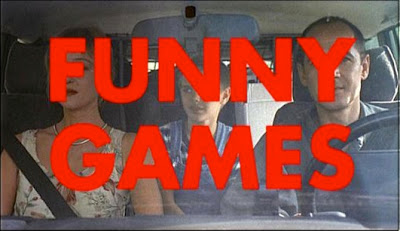
REVIEW: “Funny Games” (1997)

funny games poster

Michael Haneke has a reputation for torturing the characters in his movies as well as his audiences. I’ve found this critique to be a bit harsh, but after seeing his 1997 Austrian psychological thriller “Funny Games”, it’s a little easier to see where people are coming from. Haneke’s signature style and filmmaking techniques are all employed here, but what separates this film from others of his I’ve seen is the gruesome and torturous ordeal that we have to endure. Granted, there are varying elements to this in many of Michael Haneke’s movie but nothing quite like this. But that doesn’t mean this is a bad film. It’s an unsettling but riveting movie that never let’s go of you. But be warned, it’s not an easy movie to digest especially for more sensitive audiences.

The movie begins with Georg (Ulrich Mühe), his wife Anna (Susanne Lothar), and their son Georgie (Stefan Clapczynski) heading to their lakeside vacation home. Upon arrival they greet their strange acting next-door neighbor who is accompanied by two unfamiliar preppy young men. The family goes on to their lake house where they begin to settle in. Georg and Georgie head down to the lake to get their boat ready for sailing while Anna prepares dinner. That’s when the two young men, Peter (Frank Giering) and Paul (Arno Frisch) show up and begin giving Anna a hard time. After Georg and Georgie return things turn really bad and Peter and Paul put the family through a hellish game of psychological torture that goes beyond cruel.

FUNNY GAMES1

There’s no need to go further into the story because it would unquestionably spoil things. Let’s just say “Funny Games” evolves into a voyeuristic and often times uncomfortable experience. But to be honest that’s exactly what Michael Haneke is trying to create and it is most effective. I found myself squirming in my seat several times and Giering and Frisch are quite menacing but in a very different way that we usually see. Haneke and his two young actors are able to sell us on uncertainty and we have a hard time reading and a harder time predicting the actions of Peter and Paul. Frisch gives a stand-out performance as the more talkative and calculated of the two. Surprisingly his fantastic work didn’t lead to a bigger career. Giering is also very good as the quieter and seemingly more subservient Peter. It was at the time considered a breakout performance. Sadly he would die only a few years later after bouts with alcoholism and severe emotional issues.

I alluded earlier to Haneke’s specific filmmaking techniques including using still cameras and letting his scenes play out. It’s heartily employed here. So often Haneke strategically sets his cameras and then requires us to watch as his characters go through a variety of different situations. In “Cache” it was through the video camera of a mysterious and unknown provocateur. In his most recent film “Amour” we often times are forced to observe the difficulties and indignities of an elderly couple trying to manage a crippling illness. But it’s at an entirely different level in “Funny Games”. We watch a nice middle-class family being psychologically terrorized and in a sense we are enduring it too. It’s not an easy watch and there doesn’t seem to be an ounce of mercy coming from script or the camera.

FUNNY GAMES2

But perhaps the most fascinating thing about “Funny Games” are the numerous references to movies, movie plots, and movie structures made by Paul and Peter. Then there is Paul’s obvious awareness that he is in an actual movie. I don’t intend to go any further because it’s something better experienced than told about. But these little additions do more to make the audience feel like observers which gets to the big point Haneke is making with this picture – the fascination with violence in the media. In fact there’s one point where Peter even says “We mustn’t forget the importance of entertainment”. The line fits perfectly in the situation, but it’s also directed at us. Haneke attempts to prove that very point by exposing the audience and I have to say he got me.

You certainly can’t call “Funny Games” a fun movie and its not the type of film that you’ll want to watch over and over. It’s a disturbing thriller that I found to be smart and compelling but also brutally painful and sometimes emotionally unbearable. As someone growing more and more appreciative of Haneke’s work, I did find “Funny Games” to be a mesmerizing film. Sure it’s unsettling but it intends to be and it does make some interesting points in very sly and crafty ways. I certainly wouldn’t call this a film for everyone, but its unconventional and unashamed boldness really impressed me. It’s another winner from Haneke. Just be aware of what you’re getting into.

VERDICT – 4.5 STARS

5 Phenomenal Things About “Aliens”

movie_theatre - Phenom 5

James Cameron’s “Aliens” has the distinction of not only being one of the best science fiction movies of all time but also one of the best sequels ever made. I can’t tell you how many times I’ve watched this movie since its 1986 release, but I’m sure it rivals any other. So in light of my affection for this film I thought it deserved a Phenomenal 5 spotlight. Now obviously I feel there are many things to love about this film so I wouldn’t call this the definitive list, but these five things about the movie “Aliens” are most certainly phenomenal.

#5 – The Ventilation Shaft Sequence

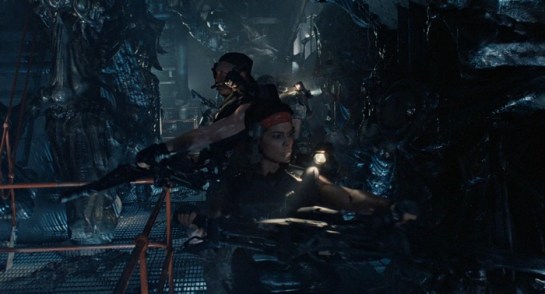
ALIENS VENT

There are so many memorable scenes in “Aliens” and one my favorites is the great escape through the ventilation shafts. The creatures have made it through our survivors’ defenses and their last hope of escape are a long series of ventilation shafts that run out to the landing field. The bad thing is the aliens follow them in leading to a cramped and claustrophobic fight for survival. Cameron’s strategic camera adds an incredible degree of intensity to the sequence and James Horner’s pulse-pounding score amps up the tension. It’s a great scene with great edge-of-your-seat action.

#4 – Bishop

ALIENS Bishop

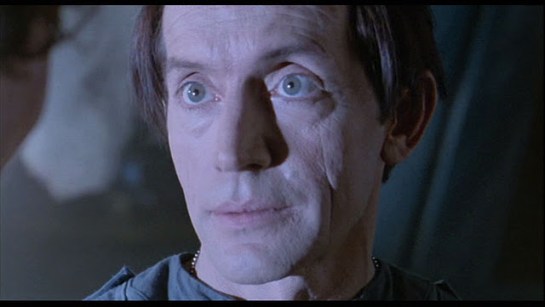
There is an assortment of cool characters in “Aliens” and one of my favorites is Bishop. He is a new model android that serves on the spaceship Sulaco. He accompanies Ripley and the marines as they investigate the lost communication with a colony. Lance Henriksen is perfect for the role. He constantly maintains a steady tone even when things quickly turn bad and he shines in every one of his scenes. And who can forget the part he plays in the final third of the film. There are many characters to love in “Aliens” and Bishop is one of the best.

#3 – The Colonial Marines

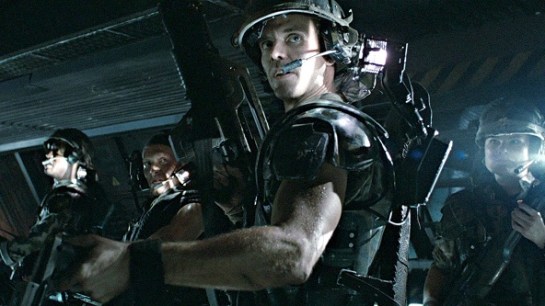
Aliens Marines

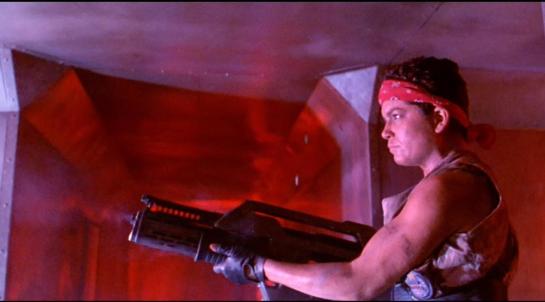
I remember as a young teen thinking that the Colonial Marines in “Aliens” were incredibly cool. Guess what, I still do. Sure they dabble in an assortment of stereotypes, but they still feature a variety of fun characters many of which offer some good depth. We see these layers peeled back when they realize the weight of the threat they face. Michael Biehn is fantastic as Corporal Hicks. Bill Paxton is perfect as the neurotic Hudson. I love Jenette Goldstein as the tough-as-nails private Vazquez. Apone, Gorman, Drake, Frost, etc. I love them all and each adds to the movie in their own way.

#2 – The First Encounter

ALIENS ENCOUNTER

There are a few movie sequences that I have watched so many times that I have them committed to memory. One of them is the first encounter between the Colonial Marines and the aliens. After tracking missing colonists to underneath a processing station, the marines are broadsided by a vicious and frightening attack. The buildup to the first encounter is dripping with tension. The costly firefight and the desperate escape that follows is exhilarating stuff. The entire sequence helps to open up and define the characters and their situation, and it remains one of my favorite science fiction movie scenes of all time.

#1 – Ellen Ripley

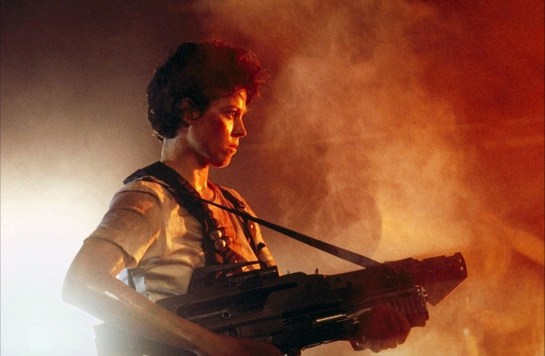
ALIENS RIPLEY

It’s unfortunate that we don’t get more strong and dynamic female movie characters like Ellen Ripley. She showed her toughness in the first “Alien” picture, but it’s in the sequel that we see her grittiness and resolve on an entire new level. Ripley is dismissed at first by the macho Colonial Marines. But it doesn’t take long for her to show her strengths and she can dish it out with any of them. Sigourney Weaver mixes a tender motherly instinct with a hard-nosed will to live resulting in what I think is one of the best female leads ever put on screen.

So there you have it. Those are my five phenomenal things about the movie “Aliens”. So what do you think about them? See something I missed? I’d love to hear your thoughts on this list and the movie in the comments section below.

REVIEW: “Snowpiercer”

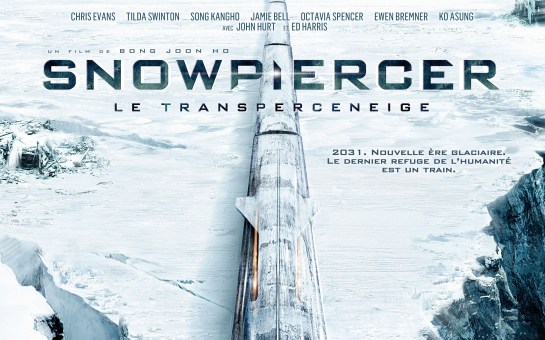
SNOW POSTER

Every revolution has a cost and the cost is high in Bong Joon-ho’s sci-fi action flick “Snowpiercer”. This is the Korean filmmaker’s first feature since “Mother” from 2009. “Mother” was my first exposure to Bong Joon-ho and my christening of sorts into the art of Korean cinema. “Snowpiercer” is a much different film yet it doesn’t stray too far away from the style and approach which lies at the heart of this auteur.

Despite the efforts of blowhard extraordinaire Harvey Weinstein, “Snowpiercer” has finally made its way to the United States. Weinstein acquired the North American rights for the film with a wide release planned. But the pompous film mogul demanded that 20 minutes of footage be cut and when Joon-ho rightly refused, Weinstein sabotaged the movie by delaying it for almost a year and severely restricting its release. But word of mouth and positive reviews eventually earned it a broader release although nothing like what was originally planned.

The story is taken from a 1982 French graphic novel and as with any good science fiction, the premise is everything. To stonewall the effects of global warming mankind injects the atmosphere with an experimental agent that instead brings on a second ice age. Humanity’s last inhabitants live within the Snowpiercer, an enormous train in constant motion powered by the “eternal engine”. Onboard the train a social order has been created. The affluent upperclass live in the lavish head section while the poor and needy inhabit the tail. Now at first the movie appeared to be a climate change and class warfare lecture, but once we begin to meet the blend of interesting and eccentric characters, we realize there is more under the hood.

SNOW1

After several failed attempts the tail section puts together another revolt against the privileged and the armed soldiers who defend them. Curtis (Chris Evans) is quickly established as the strongest link and the man many look to for leadership. His mentor Gilliam (John Hurt) is grooming him to be the leader once they are able to take over the train. Curtis is a complex character. He often shows heart particularly in his dealings with his fellow tail-sectioners. Evans continues to grow as an actor. He’s mostly been known for playing goofballs or superheroes but I love seeing him open himself up as an actor. He once again flexes his action star muscle, but it’s nice to see him digging deeper into a character and doing it well.

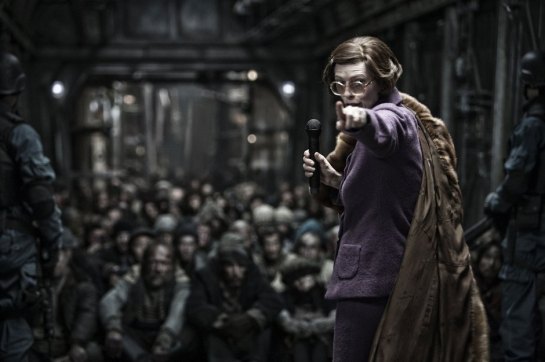
Evans is helped out by an incredible supporting cast. Jamie Bell is good as a character who starts out as a standard sidekick but evolves into something more. Oscar-winner Octavia Spencer plays a mother determined to get her son back after he is taken by the upperclass authority. A Joon-ho favorite Song Kang-ho plays the drug addicted designer of the train’s many doors separating the cars. The fabulously quirky Alison Pill is great as a character simply titled Teacher, and the always exceptional Ed Harris pops up in a significant role. But the true scene stealer has to be Tilda Swinton. She plays Minister Mason, an overseer of sorts who is really a glorified lacky. Swinton has a ball playing such a wacky and neurotic character. Everything from her appearance to her ways of expressing herself works to inject a bit of humor while never derailing the movie’s more prominent tone.

SNOW2

All of these characters work to energize Joon-ho’s engaging story. To be honest it’s hard to deny the absurdity of it all, and a surface reading would make this sound like a pretty standard action romp. But when the story is this well told and it moves at such a fluid and dynamic pace, it’s so easy to get completely caught up in it. I had a blast with its central conceit and the stylized storytelling. The careful mix of action and character development is well done and the setting is superb. It ranges from beautiful and colorful to dark and dirty while always maintaining a sense of claustrophobia. And as with almost every other sci-fi film, we get plenty of commentary here. Joon-ho paints a parallel portrait of the modern societal standard which is sometimes effective and other times ham-fisted. His climate change theme was the most compelling showing an awareness while also showing the dangers of overreacting. His class warfare approach is a little more uneven. But other themes such as drug abuse, political power, and revolutions are laced throughout the story in intriguing ways.

“Snowpiercer” also looks amazing from its wide assortment of environments within the train to its ice-ravaged world outside. The variety of action we get is also a treat. It may be intense close quarters shootouts or hand-to-hand combat in precarious situations. Some of it dances close to the edge of brutality, but so often Joon-ho pulls back his camera just as the violence is happening sparing the audience from the gore while keeping the sheer intensity of the scene. It’s a mark of the creative Korean style and it gives the movie a particular look that I absolutely loved. It’s a visual delight.

Thanks to Weinstein “Snowpiercer” hasn’t gotten the release it deserves but word of mouth is spreading. Let me happily add to its positive press. This is a fantastic science fiction picture that sounds similar to many other films yet feels completely unique and fresh. It’s a film with many strengths and as a lover of good sci-fi, I had an absolute blast with it!

VERDICT – 4.5 STARS

REVIEW: “Dawn of the Planet of the Apes”

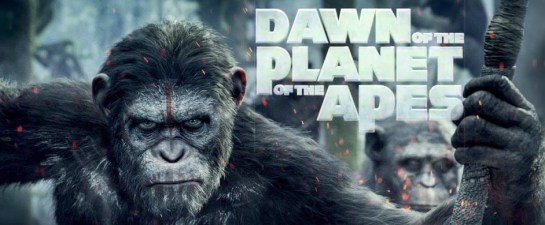
DAWN POSTER

While it may have one of the clunkiest movie titles of 2014, that hasn’t stopped “Dawn of the Planet of the Apes” from raking in loads of praise from critics and even more cash at the box office. I have to admit I’m surprised at how this franchise has found life again. I love the original 1968 classic, but frankly this doesn’t seem like the type of series that would appeal to the modern movie sensibilities of many of today’s moviegoers. The 2011 franchise reboot along with its $480 million box office grab proved me wrong. And of course when you make that kind of money you know there is going to be sequel.

I liked the first installment of this reboot but I didn’t see it as the gem that many did. This time around we have a new director and an overhauled cast but the writing team stays intact which you can sense from the first act. In what has become a very familiar way to setup these types of films, the movie opens with snippets from newscasts explaining the state of the world since the events of the first film. Human civilization has collapsed, ravaged by the effects of a deadly simian flu which decimated the population and triggered near apocalyptic after-effects. In other words things on earth are pretty bad, that is unless you are an ape.

DAWN1

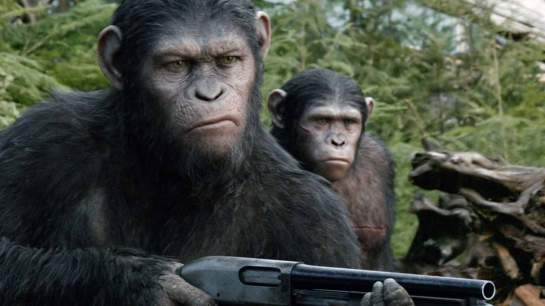
Caesar (Andy Serkis) now leads a large colony of apes who live in the forests outside of what was San Francisco. These apes share the intelligence of Caesar which we see exhibited in a variety of ways. Many of the apes believe that humans are now extinct, that is until they encounter a small group of them in the forest. The group turns out to be part of a pocket of survivors living in the city. Their energy supply is almost gone and a hydroelectric dam in the forest could supply them for years. But as they learn, the dam is smack dab in the middle of ape territory which presents a very big problem.

One of the most fascinating aspects of this film are the political wranglings that take place both between humans and between the apes. Internal debates, distrust, and dissensions plague both camps as each try to figure out how to handle the other. Malcolm (Jason Clarke), the head of the small group, recognizes something special about Caesar and tries to form a bond with him. Dreyfus (Gary Oldman) is more skeptical and he prepares the humans for war in case Malcolm fails. Similarly Cesar believes peace is the best option but his second in command Koba (Toby Kebbell) has personal animosity towards all humans and he wants to be proactive.

All of that is constructed in a way that shows the similarities between the humans and apes. In fact, that’s a central theme that runs throughout the picture. Whether it be tender family relationships or fear-driven warmongering, we see it all in both the humans and the apes. But what may be the most amazing feat accomplished by this film is its incredible way of translating emotion from the apes. Every display of love, hate, disappointment, frustration, anger, or sympathy that we get from them is incredibly…well…human. Much of it is due to the brilliant makeup and special-effects. But the true credit goes to the stunning motion caption mastery. I love hearing from people who are finally recognizing the genius of Andy Serkis. But folks let me just go ahead and say it – this is Oscar-worthy work. And Kebbell isn’t too far behind him.

XXX DAWN-PLANET-APES-MOV-JY-3806-.JPG A ENT

Now while the story is entertaining and never boring, it still has a few things that keep it from being truly phenomenal. There are so many familiar plot angles that we get throughout the entire movie. Honestly, I was amazed at how many things I saw that I had seen in other films. I don’t want to spoil anything , but it really stood out and it made many plot lines predictable. I also thought several of the emotional tugs were a bit obvious and gimmicky. What’s amazing about it is that they still worked for me. I knew I was having my heart-strings yanked during these instances yet I still went with them. Effective but still obvious.

Despite those gripes “Dawn of the Planet of the Apes” is still a highly entertaining picture. Regardless of its familiar directions the story still kept me engaged. It easily kept me attached to these characters and the film moved at an almost perfect pace. There is some great action, awesome effects, and the performances are strong (none better than the stunning work of Andy Serkis). This is yet another big budget 2014 blockbuster that delivers. I just wish the story itself went out a little more on its own.

VERDICT – 3.5 STARS