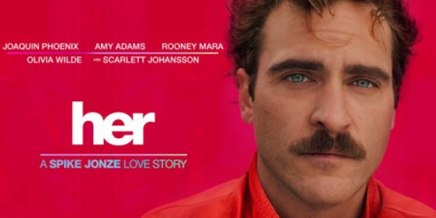
REVIEW: “Her”

HER POSTER

In the not too distant future of Spike Jonze’s “Her” technology has made major leaps, fashion senses have eroded, and Hollywood’s cynical views of relationships have remained the same. Loaded with ambition and lauded by many as the best movie of 2013, “Her” incorporates a familiar science-fiction concept into what is more or less a love story and relational study. But it’s far from conventional or cliché. That said, it isn’t a film free of problems which (for me) ultimately keep it from being the modern day masterpiece that some are touting it as.

The story revolves around Theodore Twombley (Joaquin Phoenix), a nerdy introvert who works as a letter writer for people who have a hard time sharing their feeling. Theodore is a lonely soul. He’s currently involved in divorce proceedings from his first wife Catherine (Rooney Mara) and he hasn’t been able to get out of his ever-present state of melancholy. He has practically no social life and outside of his longtime friend Aimee (Amy Adams), there is no significant person in his life.
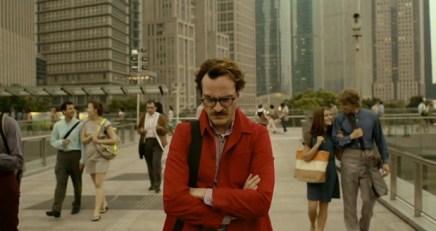
HER2

Theodore’s life takes a strange and unexpected turn when he purchases a new operating system for his computer. But this is no Windows XP. It is an adaptive artificial intelligence that evolves and takes on its own personality. The OS (voiced by Scarlett Johansson) goes by the name Samantha and soon develops a very personal and intimate relationship with Theodore. Samantha begins to fill the lonely void in Theodore’s life while he becomes her window to a new and exciting world. But the reality that she is an operating system causes him to wrestle with the legitimacy of their relationship.

The science-fiction mainly serves as a subtle backdrop with the exception of the familiar idea of computers becoming sentient. But Jonze deserves credit. He’s really doing a lot more here than first looks might reveal. He takes an interesting look at our infatuation with our gadgets and where that could perceivably lead us in the future. There is also a strong focus on communication or lack thereof. The film shows us several relationships that struggle due to the poor abilities to communicate. And speaking of struggles, prepare for a lot of them. In Jonze’s gloomy view of love, nearly every relationship struggles and has a rare hope for survival.
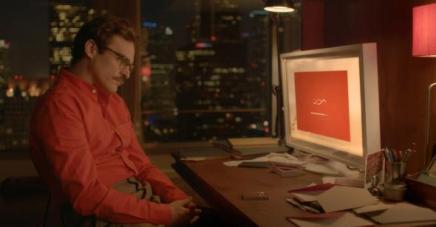
Her3

On the other hand, it’s the rich and unbridled conversations between Theodore and Samantha that causes their relationship to flourish. There are so many scenes of them just talking about simple things that may seem inconsequential but that are vital to making a relationship work. Phoenix is amazing and completely wraps himself up in his character. He displays an enormous range of feelings with such realistic fervor. And Johansson shows why voice work is deserving of more attention than it’s given. Her voice is sultry and sexy but it’s also warm and vulnerable. These two show a deep and growing attraction, yet even here we see Jonze use a little bait and switch.

But while I really appreciate Jonze’s originality and I love being challenged by deeper thought-provoking approaches, there were a handful of things that kept me from fully embracing this as a great film. First there is the movie’s glacial pacing specifically in the second half. The aforementioned conversations between Theodore and Samantha are good at first, but they reach a point where they no longer move the story along. The countless closeup shots of Phoenix laying on a pillow talking to Samantha well after their love has been established grew a bit tiresome. This only slowed things down for a movie that already had a calculated and deliberate pace.
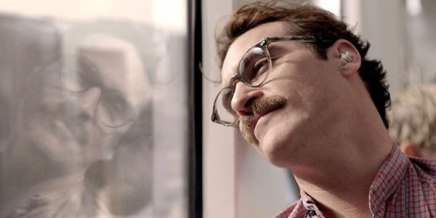
HER1

The film also contains some unneeded scenes that added little to the movie. Olivia Wilde pops up as Theodore’s blind date. While her presence had a purpose, she was a very flimsy, throwaway character. There is also a weird scene where Samantha calls on a surrogate to serve as her physical body in order to be intimate with Theodore. It’s an intentionally uncomfortable scene laced with a touch of dark humor. But as it plays out things get sloppy especially with the surrogate character herself. And then there are these occasional odd tone-shattering attempts at humor. One involves a lewd act with a dead cat’s tail and the other features a cartoony video game character who suddenly spews a river of obscenities. This silly juvenile humor came across as cheap and both scenes felt completely out of place.

I wish I could toss aside those complaints because “Her” does many things right. It asks some great questions and it certainly allows for a variety of interpretations. For example take the ending. Depending on your interpretation it could be a very light and hopeful ending or a very dark and depressing one. I liked that. I love the work we get from Phoenix and Johansson and Rooney Mara’s character added a deeper emotional twist that I really responded to. But the film’s cynicism, the constant lingering of the second half, and some questionable script choices hurt my experience. It’s one of the few movies that captivated me yet had me checking my watch before it was done. Ultimately that’s a disappointing combination that pushed me away a bit.

VERDICT – 3 STARS

The Top 5 Performances of 2013 – Supporting Actress

A light painting of the year 2013 written against a black background

I love this time of year. It’s when we look back at the movie year that was. In addition to my Top Films of 2013 list I like to break down the four major acting categories and list my five favorite performances of the year for each. And we start today with the ladies. I’m looking at the five phenomenal performances by actresses in a supporting role that really blew me away. There were many this year but these are the ones that top my list:

#5 – Elizabeth Debicki – “The Great Gatsby”

A GatsbyTalk about a movie that drew a mixed reaction! Baz Luhrmann’s “The Great Gatsby” was a fever dream built around some great source material and some good performances. Perhaps the biggest surprise for me was the performance from Australian newcomer Elizabeth Debicki. She played Jordan Baker, a beautiful yet mysterious woman whose playfulness is only trumped by her conceit. Much like the Nick character, I was fascinated with Debicki’s portrayal of Jordan. Unfortunately the script shortchanges the character a bit and Debicki isn’t given enough screen time. Personally I found her performance to be magnetic.

#4 – Allison Janney – “The Way, Way Back”

A WAY WAY

It’s funny, this is a performance that I liked a great deal after first seeing it but probably not enough to include it on a prestigious list like this. Yet over time Allison Janney’s work in “The Way, Way Back” has stuck with me. It’s definitely the wackiest performance on my list but it really is brilliant work. Janney plays a kooky, hard-drinking woman who will never win ‘Mother of the Year’. She has a number of funny lines but she never falls into a caricature. In fact there is a warmth to her despite her self-destructive malfunction and we see that because of Janney’s performance. It’s a role that could have went terribly wrong but Janney doesn’t allow that to happen.

#3 – Emily Watson – “The Book Thief”

_MG_9531March 11, 2013.cr2

I am a huge fan of “The Book Thief” and a big reason for that lies in the performances. From top to bottom the film’s cast is exceptional. Emily Watson plays a strict foster mother who at times comes across as detestable. But surprisingly the character has more depth than we first think and Watson’s shining performance brings her complexities to the surface. It’s not a showy or flashy performance that will naturally draw awards, but I believe she is a big part of one of the film’s key emotional threads. It’s great work from a wonderful actress who rarely gets her due.

#2 – Vera Farmiga – “The Conjuring”

A CONJURING

This may be a small cheat. It could be argued that Farmiga is the lead in James Wan’s surprisingly good horror film “The Conjuring”. I think she could be considered either way so for my benefit I’m putting her here. Farmiga is a wonderful actress and this performance is no exception. There is an natural feel to her work in the film that mainly flows from the 100% commitment she gives to the material. As with many good characters, there is a complexity that draws our interest but it’s sometimes the performance that sparks that. Such was the case here. Farmiga had me from her first scene and I was connected all the way through.

#1 – Lupita Nyong’o – “12 Years a Slave”

A 12 years

I realize that this may be the obvious or popular pick but that doesn’t bother me. It’s also the right pick for me. I thought the performance from Kenyan actress Lupita Nyong’o was one of the most piercing things I saw in 2013. It’s a performance that comes across as raw and gushing with emotional power. But that is exactly what the character needed. It’s impossible not to be drawn to her and there are a number of her scenes that will stick in the back of your mind well after the movie is done. I fully expect Nyong’o to get an Oscar nomination and it would be well deserved. In fact, I say give her the statue. It was certainly my favorite supporting actress work of the year.

Thanks for reading. The supporting actors are next. What did you think of this list? Please take time to share your thoughts or your picks in the comments section below.

REVIEW: “Blue Jasmine”

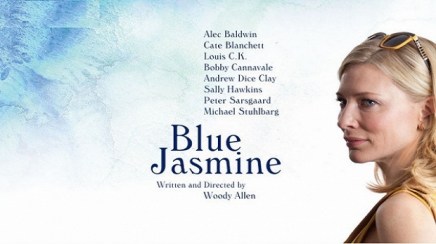
BLUE poster

Each year has its share of certainties: we grow a year older, we have to pay our taxes, my sports teams disappoint me, and Woody Allen puts out a new movie. Now that doesn’t mean that every one of Allen’s films are masterpieces (ala “Midnight in Paris”). In fact some of them are just dreadful (ala last year’s “To Rome with Love”). But one thing about the bad ones, you always know the next film is only a year away. And maybe, just maybe, Allen will land one of the real gems he’s capable of making.

Here’s the good news – “Blue Jasmine” is one of the good ones. This character study touches on a number of subjects from business ethics to family troubles to rabid consumerism. At the center of it all is a captivating performance by Cate Blanchett. She plays Jasmine Francis, a New York socialite whose posh lifestyle collapses when her crooked husband is arrested and loses their fortune. Penniless and without a place to go, Jasmine flies to San Francisco and moves in with her estranged working-class sister Ginger (Sally Hawkins). It’s here that she must learn to start a new chapter of her life or drown in her despair of leaving the affluent upper crust.

BLUE1

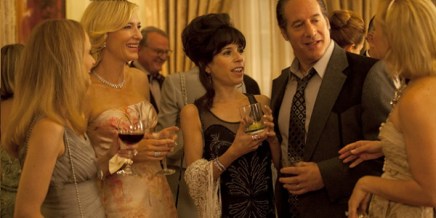
To go further, Jasmine is a wreck. She’s coming off of a nervous breakdown, she pops anxiety pills like candy, and she has an affinity for heavy drinking. She still carries her spoiled and privileged attitude which clashes with her new destitute reality. And all of this is brought on by her lousy husband. We see the events leading to Jasmine’s fall from luxury through several cleverly incorporated flashbacks. We watch her husband Hal (Alec Bladwin) and his penchant for women and shady business deals while she lives in a diamond-studded state of naïveté. She’s content with living high on the hog while asking no questions whatsoever. That proves to be a costly mistake, both mentally and monetarily.

Jasmine’s snooty ego doesn’t fit well with the circle of people she is introduced to in San Francisco. This class clash is the prominent focus for most of the film. This is also where we meet the film’s fantastic assortment of side characters. Hawkins is great as Jasmine’s kindhearted sister and I really liked Bobby Cannavele as her blue-collar beau hunk boyfriend. We get Michael Stuhlbarg as a lovestruck dentist and Peter Sarsgaard pops up as a wealthy businessman with political aspirations. But the biggest treat was Andrew Dice Clay. Yes you heard me, Andrew Dice Clay. Gone is the loud obnoxious standup routine. Here he plays a humble, hard-working fellow that you can’t help but sympathize with. And it’s all because of the unbelievable turn from Dice Clay. He was completely natural and restrained. Brilliant work.

BLUE2

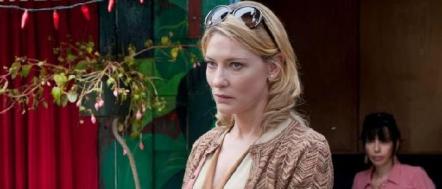
But the true star is Cate Blanchett who undoubtedly gives one of the year’s finest performances. There are bits of subtle humor that are sprinkled in throughout her story. But she’s more of a sad, self-destructive woman who has no sense of direction or belonging. Blanchett visualizes her struggles through every fidget, every bead of sweat, and every outburst. She’s not a likable character by any stretch but she’s simply mesmerizing. Blanchett gives a performance that is getting some Oscar hype. Personally I think it demands an Oscar nomination.

It’s clear that “Blue Jasmine” was influenced by other films. For example if you listen closely you can hear “A Streetcar Named Desire” passing in the distance. But Woody Allen has always been a filmmaker who treasures inspiration and when he is on his game he can truly deliver. This is really good material handled by an excellent cast including a surprise performance from Andrew Dice Clay and some of the best work of Cate Blanchett’s career. “Blue Jasmine” may not stay with you for a long time nor be considered among Allen’s very best by the bigger fans of his work. For me it really worked and it’s definitely good Woody Allen.

VERDICT – 4 STARS

REVIEW: “Blackfish”

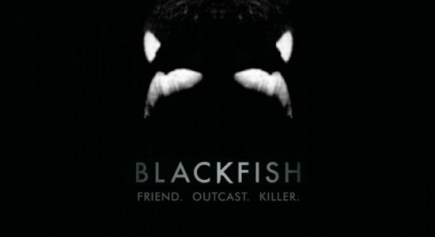
Blackfish poster

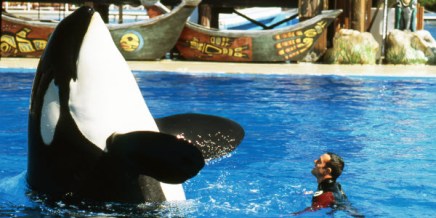
It’s good to see that documentaries are slowly becoming a recognizable force in the world of cinema. Each year an assortment of insightful and engaging docs that inform and challenge are made by visionary and passionate filmmakers. This year one of the films getting a lot is of press is “Blackfish”. This documentary focuses on Tilikum, a 12,000 pound orca who performs at SeaWorld in Orlando, Florida. It chronicles the events surrounding Tilikum, including his original capture in 1983, his life in captivity, and his involvement in the deaths of two trainers and a SeaWorld guest.

Let me start with the film’s strength. This is a brilliantly made documentary in terms of its structure and pacing. Director and co-writer Gabriela Cowperthwaite has an unquestionable knack for presentation. With practically no spoken narration, the film seamlessly moves from one interview bite to another mixing in home video footage, archived news reports, and courtroom testimonies. There is never a lull and I found myself glued to the screen even when some of what I was seeing wasn’t that convincing. It has a riveting cinematic flare to it that definitely hits on the emotional level. And clearly emotions were a central target that “Blackfish” had in mind.

Blackfish2

For me, good documentaries enlighten, challenge, inform, and expose. I like it when they take on a tough subject with passion and conviction. But I also appreciate balance, not in terms of equal time for a counterpoint, but in fact telling and representation. That’s a balance that I think is missing here. “Blackfish” is after all an advocacy film. It has a clear objective in mind and there is nothing wrong with that. But there reached a point where I felt chunks of information were being left out and the film was going for a more emotionally manipulative approach. I’m certainly not saying there aren’t moments that truly cut to the heart, but “Blackfish” wants the audience thinking solely with the heart and judging by many of the responses that seems to have worked.

Those interviewed for the doc are mainly a handful of ex-SeaWorld trainers, an OSHA representative, and an orca expert. It’s a single-minded group who offer some thought-provoking insight but also have a similar objective – spotlight the evils of orca captivity and put the crosshairs on SeaWorld. I thought the film’s case was the strongest when it was explaining facts about orcas in their natural habitats. It is also hard not to be effected when we see how some of these early parks operated. And I believe the doc raises some good questions about SeaWorld’s safety protocols.

Blackfish1

But the film falls short when it tries to land its bigger punches. For example the main argument of “Blackfish” is that Tilikum killed three people as a direct result of being held in captivity. Yet Tilikum’s culpability in two of the deaths is sketchy. The first death also involved two aggressive female orcas and the second death involved a man who hid in the park and climbed into the tank with Tilikum after hours. Cowperthwaite briefly touches on these details but then uses the deaths to further a point of view. There is also the goal of making SeaWord out to be nothing more than an evil money-grubbing corporation. While SeaWorld should answer some of the film’s piercing questions, this is a self-serving characterization that overlooks some key facts about the establishment.

“Blackfish” makes a few other missteps. It often gives definitive statements about ambiguous events and it does try to frame opinions as facts. But it also gave me a greater appreciation for these incredible animals and it challenged my past apathy towards their plight. “Blackfish” does ask some powerful questions and it does so through a near perfect presentation. I only wish it was as interested in appealing to the audience’s examination as it is to the their emotions. That type of manipulation just wasn’t needed. Then again, it seems to be a tactic that has really worked so far.

VERDICT – 3.5 STARS

REVIEW: “All is Lost”

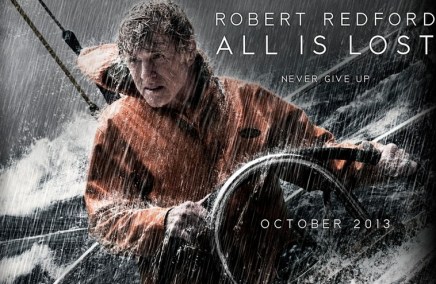
ALL POSTERPerhaps not since “Cast Away” has a movie been more concentrated on a single performance than “All is Lost”. And it’s interesting that this film also features survival elements involving the sea. But unlike “Cast Away” there is no supporting cast. There is no interaction between characters. There is only 77-year old Robert Redford in what may be the most physically demanding role of his long career.
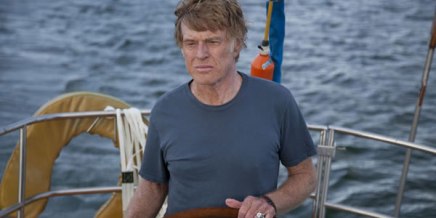

The film opens with an unnamed man reciting what sounds like a short goodbye note. Moving back eight days, we see the man is awoken when his yacht collides with a cargo container in the middle of the Indian Ocean. With a hole in the hull and water gushing into his cabin, the man immediately tries to fix the problem. This launches our time with this character as he faces one challenge after another for the next eight days – challenges brought on by the sea and the elements.

ALL 2

“All is Lost” is unique in that we get no backstory whatsoever. We are never told who this man is or why he is so far out at sea by himself. We do glean small fragments of information throughout the film. For example the opening narration leads you to believe there is a family he has left behind. We also get scenes that show a wedding band on his finger. Could he still be married? Could his wife have recently died? Writer and director J.C. Chandor doesn’t take us by the hand and spell everything out for us. His film allows us to put these pieces together in our minds and come up with our own solutions.

Chandor’s first film was 2011’s ultra-talky “Margin Call”. This movie couldn’t be more different. Aside from the short opening narration, Redford has only three lines of dialogue (if you can call them that) in the entire movie. The bulk of his performance is physical and through expression. It’s truly marvelous work. Unlike most, I have always been a bit mixed when it comes to Redford’s movies. There’s no apprehension here. Redford is great. He gives an ‘every man’ performance without an ounce of his once prominent ‘golden boy’ artifice. He tells us so much through a gesture or an action. It’s a remarkably understated performance that doesn’t rely on big showy scenes or spotlights.

ALL 1

Now we do get some of the familiar plot developments – shark attacks, punishing storms, depleted supplies, etc. Yet despite that the film feels remarkably fresh and invigorating. Perhaps it’s the connection we have with Redford’s character. Maybe it’s the circumstances which we are thrown into. I was wrapped up in all of it and even though some of the plot devices were conventional, there is still an undeniable attraction to this ‘man versus sea’ tale.

Hats off to J.C. Chandor for creating a small but gripping picture that may embrace familiar devices but that brilliantly carves its own path. With only a man, a boat, and the vast sea Chandor shows his versatility as a filmmaker by embracing the confines of his environment and making a movie that feels grander than it may be. But to be honest, I love it’s simplicity. I love it’s focus. And I love the performance from Redford. “All is Lost” may not work for everyone, but it sure worked for me.

VERDICT – 4.5 STARS

REVIEW: “The Way, Way Back”

WAY WAY BACK Poster

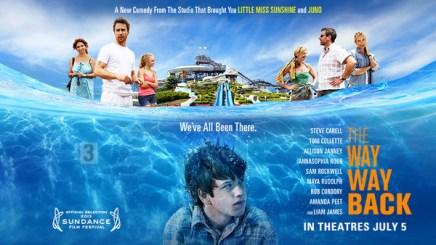
I love it when a movie really surprises me. Such was the case with “The Way, Way Back”. This one-half comedy and one-half drama is a wonderful and entertaining stew that caught me off guard. Written and directed by the team of Nat Faxon and Jim Rash, “The Way, Way Back” is a warm and authentic coming-of-age picture. It’s a smart and funny film that at times dances close to cliché but then always turns and goes in a more smart and believable direction. It really worked for me.

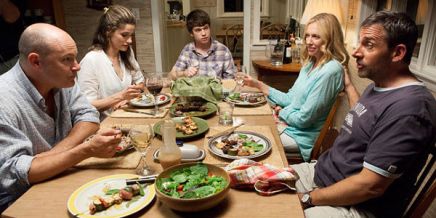
Liam James plays Duncan, a sullen and awkward 14-year old who is trapped in a world of selfish, adolescent adults. He is forced to accompany his divorced mother Pam (Toni Collette), her jerk of a boyfriend Trent (Steve Carell), and his daughter Steph (Zoe Levin) on a vacation to Trent’s summer home in a small New England beach town. Duncan’s life is full of complications. He is disconnected from his emotionally needy mother and at constant odds with the annoying and disingenuous Trent. Then there are the assortment of oddball characters from his new summer neighborhood none of which give him a feeling of belonging.

WAY WAY1

But things change a bit when Duncan meets Owen (Sam Rockwell), a laid back water park manager. Owen takes a liking to Duncan and actually connects with him on a level that the struggling teen desperately needs. Rockwell is fabulous here and he gives arguably the funniest performance of the year. He’s obviously a naturally funny guy and you’ll swear you’re watching improvisation as he delivers one quick-witted funny line after another. Faxon and Rash along with Maya Rudolph have small roles as fellow water park employees and they round out what becomes Duncan’s sanctuary. It’s where feels free. It’s where he feels he belongs.

One of the film’s great strengths is that the story is told almost entirely from Duncan’s perspective. We see his perception of dysfunctional adults, broken marriages, and juvenile behavior from those who should be anchors of support. It really is the adults who are the irresponsible and objectionable ones. As one equally frustrated young character describes it – “It’s spring break for adults” and not in a good way. But there are always cleverly injected bits of humor that keeps the tone a tad lighter than it may sound. Much like their previous Oscar-winning work on “The Descendants”, Rash and Faxon’s script takes on serious life situations and laces them with subtle bits of comedy. It’s great writing that will have you laughing one minute and feeling deep empathy the next.

WAY WAY 3

This is a character-driven movie and the performances don’t disappoint. The relatively unknown Liam James is just what the lead role needed. He’s restrained and grounded which allows for so much truth to flow from the character. I also really liked Steve Carell in a role that is drastically different from what we’re used to seeing him do. It’s interesting that the biggest comedian in the entire cast has the most serious role in the film. Allison Janney is a lot of fun as a spacey next door neighbor and Rob Corddry and Amanda Peet are delightfully insufferable as two of Trent’s close friends.

The story of an insecure socially displaced youth isn’t new, but often times it’s told using the same overused formulas and contrivances. “The Way, Way Back” doesn’t exactly carve a new path but it does stay out of the usual trappings. It’s refreshingly honest and surprisingly funny. There are also some fabulous characters brought to life through some good acting led by Rockwell. His performance was a real eye-opener for me. The soundtrack, the perfect pacing, etc. As I said, it’s a wonderful and entertaining stew and I was hooked from the first scene. What a nice surprise.

VERDICT – 4.5 STARS