REVIEW: “Terminator: Genisys”

GEN POSTER

Since its inception way back in 1984, the Terminator franchise has made a name for itself. The first film was an unexpected success but it was the first sequel, “Judgement Day” which arrived seven years later, that launched the series into the upper stratosphere of pop culture. “Terminator Salvation” came out in 2009 and unlike most I thought it was a fun and unique perspective on the series. The film wasn’t as profitable as normal leaving the direction of the franchise uncertain.

But fear not, now we have a fifth installment in the form of “Terminator: Genisys”. It offers up a new  story angle with a completely new set of people playing the same franchise characters. The only familiar face is Arnold Schwarzenegger who returns as the outdated but tough T-800 Terminator. While it does try to do several interesting things ultimately it rehashes too much from its predecessors and nearly all of its attempts at originality fall flat.

Gen2

To be honest laying out a story introduction is easier said than done. In the future John Connor (this time played by Jason Clarke) leads a big final assault on Skynet. As victory looks certain it is discovered that Skynet has sent a T-800 back to 1984 to kill Sarah Connor (remember the first film?). John Connor sends his most trusted man Kyle Reese (this time played by Jai Courtney) back in time to protect his mother but during the process the timeline is disrupted. Basically this flubs up everything from the past movies which grants the writers a new canvas to work on.

Once Kyle arrives in 1984 he is attacked by a liquid metal T-1000 Terminator. He is rescued by a young Sarah Connor (Emilia Clarke) and her pet…err guardian Pops. Pops (Schwarzenegger) is a T-800 sent back years earlier to protect her. Follow me so far? The rest of the film features the trio setting out to destroy Skynet before it destroys humanity. Skynet is hiding under the guise of Genisys, a popular worldwide operating system nearing its global launch. Infiltrate Genisys, blow it up, save the world. But of course that is easier said than done.

The time traveling hopscotch does offer some intriguing possibilities and the tie-ins with previous films at first are pretty great. But eventually the time element grows convoluted and most of the tie-ins feel more like crutches than attempts at any meaningful continuity. The further the movie went the more disconnected I became. In the end I kept saying to myself “This doesn’t feel like a Terminator movie”. Sure it is playing in the same sandbox, but nearly everything new it offers feels generic. There are some funny moments where they capture some of the charm that first surfaced in “T2”. There just aren’t enough of them.

GEN1

And then there is the casting. Arnie is entertaining playing the cold, dry terminator (a mirror to his usual acting ability). He is given more fun things to do than anyone else and he has a blast with it. One the other end there is Emilia Clarke who never offers up a convincing Sarah Connor. Perhaps comparing her to Linda Hamilton is grossly unfair, but she doesn’t come across as genuinely tough or tenacious. Sometimes her performance is just bad. And it doesn’t help that she and Courtney have practically no chemistry. Even Jason Clarke’s scar-faced John Connor felt a bit off.

My problems with the cast could also be due to fatigue. It could be I’m just tired of seeing the same characters constantly being portrayed by new faces. The series has often addressed this issue with age gaps. But now we have had Clarke and Christian Bale as older John Connor; Edward Furlong and Nick Stahl as younger John Connor; Courtney, Michael Biehn and Anton Yelchin as Kyle Reese; Clarke and Hamilton as Sarah, etc. It may be an unavoidable dilemma but if so it stresses the importance of casting the right people.

“Genisys” does have a couple of cool action sequences, some good laughs, and an occasional fun nostalgic nod. And on its own it does make for decent, lightweight science fiction. The problem lies in its connection to a major popular franchise. A ‘Terminator’ film brings with it certain high expectations (from some audiences) and “Genisys” doesn’t meet them. As I said, it doesn’t feel like a ‘Terminator’ movie which in the end is a pretty bad thing.

VERDICT – 2.5 STARS

2.5 stars


REVIEW: “Suffragette”

SUFF POSTER

suf·fra·gette (/səfrəˈjet/) noun • historical

a woman seeking the right to vote through organized protest.

That definition is true yet in no way does it adequately define the women and the movement they sparked in the late 19th and early 20th century. In Great Britain the suffragette movement became a force sometimes blurring the lines between lawful and militant protesting. Militant groups such as the WSPU led by Emmeline Pankhurst went from picketing, protesting, and hunger strikes to arson and bombings. While their tactics may have sometimes crossed the line, the rights they fought for were important and deserved. It was a complex time.

“Suffragette”, the new film from director Sarah Gavron, sets itself in this period and seeks to tell the story of passionate women standing up for their right to vote. But movies like this can be tricky. When you have a wealth of rich historical source material you automatically have a story to tell. It also offers a chance to deliver a powerful message. Movies have often stumbled when trying to balance these two creative opportunities.

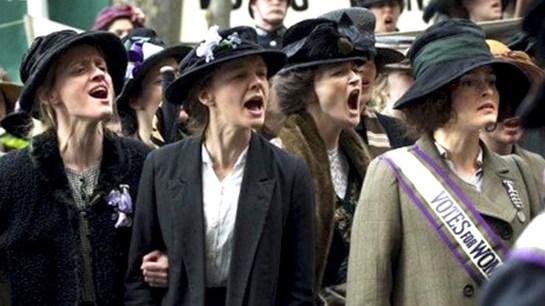
The story is told through predominantly fictional characters but with a few historical figures included. Instead of telling a specific historical account, writer Abi Morgan creates several characters and reveals that period through their eyes and their experiences. The always absorbing Carey Mulligan serves as our main lens. She plays Maud Watts a wife and mother who also works long, strenuous hours as a laundress.

suff1

It’s London in 1912. The suffragettes have only begun to make waves. Maud first witnesses the movement through street speakers and storefront vandalism. But her interest is mainly influenced by the inequalities she experiences at her workplace. She is also encouraged by the infectious enthusiasm of her friend Violet (Anne-Marie Duff). Maud becomes more involved as she meets inspirational women like Helena Bonham Carter’s Emily and Meryl Streep’s Emmeline Pankhurst.

Wisely, Gavron and Morgan don’t make Maud’s decisions easy. We get a compelling internal struggle and there is a constant wrestling with the potential consequences of going too far. The decisions are made even more difficult by her unsupportive husband Sonny (Ben Whishaw) and the thoughts of being separated from her young son. Add to that the dogged pursuit of the government assigned Inspector Steed (Brendan Gleeson). As the movie progresses that struggle evolves in a way that is very organic and satisfying.

The character and the struggle mainly works thanks to Mulligan. This is such an understated and subdued performance that plays in perfect sync with the character. She skillfully articulates every feeling and raw emotion. It’s no glamorous role. Mulligan sports a tired and worn face and she often expresses a convincing sense of physical and emotional exhaustion. It’s impressive watching her transition from a woman sadly content with the hand she has been dealt in life to a woman driven to action by that very same hand. It’s a fine performance.

SUFF2

Then there is Meryl Streep. In a bit of promotional manipulation you would think Streep has a significant role. Actually she does not. It’s basically a glorified cameo. It’s almost as if they were positioning her for the obligatory Oscar nomination she gets every year (apparently no one feels “Ricki and the Flash” is going to do it for her). She’s not bad here, but there is nothing to her small appearance that stands out either.

Where “Suffragette” stumbles is in the omission department. The film looks at Maud’s life and tells her story well. But at the same time it wants to represent an important historical struggle and does so in broad strokes. Much of the struggle is thinly represented namely the motivations behind voter suppression and the political manipulation and posturing. So much in this area could have been explored. Instead we just get highlights. There is also the ending which is fine in concept but came sudden and abrupt.

“Suffragette” dances in numerous shades of gray both in the actions of the women shown in the film and in the film’s opinion about them. But it certainly doesn’t waver in its message about the plight of women during a time that wasn’t that long ago. Regardless of any hiccups, the film deals in powerful and important themes and does so in a way that can’t be ignored. There is such a great sense of time and place and falling into the life of Maud is effortless for us. It also helps to have a great performance by Carey Mulligan – one that could easily earn her a nomination come Oscar time.

VERDICT – 4 STARS

4 Stars

REVIEW: “Tomorrowland”

LAND poster

At the heart of Brad Bird’s “Tomorrowland” lies something good and noble. A movie about positivity and hope. A movie about optimism and faith in the future. A movie promoting the idea that we can change the world for the better. I give the film a lot of credit for sporting such important themes. But somewhere along the way Bird and company forgot the importance of good storytelling.

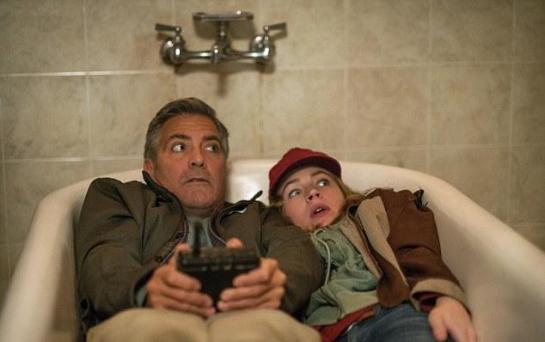
The story centers around a forward thinking and science-savvy teen named Casey (Britt Robertson). She discovers a T-shaped pin that grants her visions of the futuristic Tomorrowland – a utopia where science and technology has flourished. Once the pin’s battery runs out Casey seeks more information about it. A little girl named Athena (who is actually a robot) leads Casey to a cantankerous and disillusioned inventor named Frank (George Clooney).


Land1

Frank supposedly knows how to travel to Tomorrowland but he wants nothing to do with it. When a group of angry robots show up to try to kill them, he grows even more obstinate. Frank represents the cynical ‘it can’t be done’ mentality. It clashes with Casey’s unbridled hope and optimism. This is also represented as a generational division between the older pessimistic attitude and the youthful ‘can do’ spirit. Ultimately the two will have to come together if there is to be any hope of saving Tomorrowland and the vision it represents.

“Tomorrowland” is an ambitious picture. It tries to be a flashy special effects spectacle and a thought-provoking essay packaged in pretty Disney wrapping. It gets the first part right. “Tomorrowland” looks absolutely amazing. The effects are dazzling – bright, beautiful colors and fun, innovative architecture and technology. Bird and company create a visually satisfying and compelling world and there is obviously a lot of time and attention  that went into its details.

Land2

But the same can’t be said for the story itself. This is a film that struggles to find its identity. It tinkers with several interesting ideas and it teases us with several fun and interesting story angles. But it never capitalizes on them. So often the story loses any momentum by bogging down in dull back-and-forths and tedious lectures. It is a film with a message but it is incredibly clunky in its delivery and the film’s preachiness is pretty glaring at times. These things strip the movie of its excitement, allure, and charm.

In a nutshell “Tomorrowland” is a messy and frustrating experience. It looks spectacular and its optimistic outlook is commendable. There is a really good story buried in there somewhere. But I grew tired of looking for it and waiting for it to show up. The story is simply too inconsistent, too uneven, and too flat. It doesn’t know what it wants to be. There is never enough Disney for young kids and not a well delivered message for adults. As a result we are left with yet another movie that falls terrible short of what it could have been.

VERDICT – 2 STARS

2 Stars

REVIEW: “Spectre”

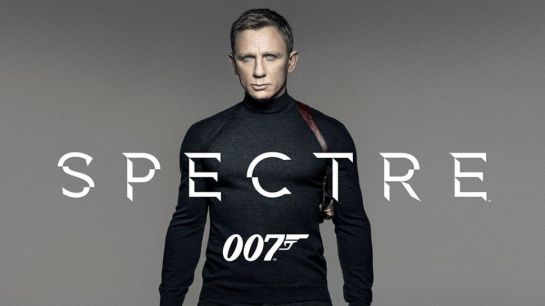
SPECTRE POSTER

In a way I owe Daniel Craig a debt of gratitude. His tenure as James Bond is what lured me into the hugely popular franchise. Purists will likely scoff, but Craig’s iteration of the British super spy has featured less cheese and more humanity and vulnerability. An argument could be made that the high-energy cheese is what made those earlier films great. I believe that to a degree. But ultimately it has been Craig’s Bond run than has drawn me and given me an greater appreciation for the franchise as a whole.

This is Craig’s fourth turn as the dapper 007 and his second Bond film with director Sam Mendes. Their previous installment “Skyfall” was a global juggernaut at the box office becoming the 14th film to earn over $1 billion dollars. It was also well received by critics many of whom called it Craig’s best Bond picture. So now comes the next film and the unenviable task of matching the success of its predecessor. To do that the film was given a budget that has made it one of the most expensive movies ever created. But throwing money at a project doesn’t automatically equal good results.

SPECTRE1

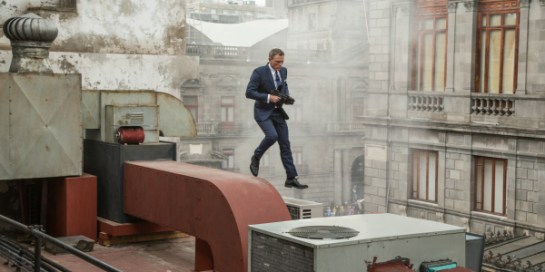
“Spectre” starts off firing with Bond in Mexico City during the Day of the Dead. He’s on a deeply personal mission which leads him to a terrorist named Marco Sciarra (Alessandro Cremona). Sciarra is connected to a sinister secret criminal organization called Spectre which is led by the shadowy Ernst Stavro Blofeld (Christoph Waltz). At the same time M (Ralph Fiennes) is battling to protect MI6 from the aggressive head of the Joint Intelligence Service who wants to do away with the 00 program.

Bond tracks Spectre to Rome, the first leg of his globetrotting search for answers. He discovers that he may have a deeper connection to Ernst and his organization. As 007 hunts to unearth the truth, Spectre is out to stop him at all costs. They go head-to-head in a number of exotic locales including Rome, Morocco, Austria, and London. One of the film’s strong points is how well it captures all of the fun and varied locations.

Spectre2

In fact all of “Spectre” looks good. Hoyte van Hoytema’s cinematography lives up to the franchise expectations and at times it absolutely shines. The Mexico City opening is exciting and energetic featuring several visual highlights. The same goes for a fun car chase through the streets of Rome and a thrilling plane vs. Land Rover chase down a snowy Austrian mountain. The film definitely has its moments.

Unfortunately “Spectre” also has its flaws and no amount of visual splendor can cover them up. While I liked “Spectre” as a whole, I was expecting more action, more energy, more drama, more character development, and more signature Bond moments. Compared to Craig’s three previous Bond movies “Spectre” feels hollow, inert, and terribly inconsistent. After the phenomenal Mexico City start, the movie is constantly fluctuating between excitement and slow stretches of vapidity.

Spectre3

You simply don’t expect this considering how well these movies have worked in the past. But as I sat in the theater I kept waiting for the film to gain its footing. I kept waiting for it to kick into gear. But there is a frustrating sluggishness to the screenplay – the collaborative work of four different writers. It wastes so much time that could’ve been better spent developing some of the characters namely the story’s villain.

Christoph Waltz is a superb actor but the amount of screen time he is given never allows him to flesh out a compelling villain. His villainy is mainly referred to more than shown and we never see that big Bond vs. Villain moment. The closest we get is an absurd torture scene that features one head scratching moment after another. I was so excited to see him as a Bond villain but this was a tremendous waste. As was Dave Bautista as Spectre’s hitman. He’s a stereotypical henchman who shows as much emotion as a house plant.

Spectre4

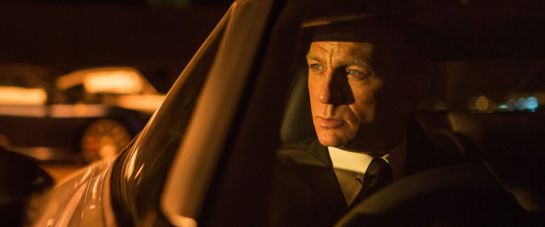
Craig gives another good performance but he isn’t offered any material to stretch his character. All of the supporting Bond cast members are here including Q (Ben Whishaw) who gets more screen time than before. He’s a lot of fun. Moneypenny (Naomie Harris) has a few good lines and Fiennes is good when wrangling back and forth for the 00 program’s survival. Unfortunately both feel underused. Lea Seydoux is the main ‘Bond girl’ this time around and her performance is solid. But her character is a bit flimsy and uneven.

That could be the best way to describe “Spectre” – uneven. It’s a film undoubtedly approached with mile-high expectations from many. Perhaps too high. But truthfully expectations aren’t the problem. This is a film that features some fine action sequences. It has a good story at its core and there are moments where it comes together in really interesting ways. But there are also moments where it makes practically no sense and other moments where it sputters and spins its wheels. Still I liked the movie, and I’m anxious to give it another look. But with this cast and this pedigree I can’t help but be disappointed with what we get.

VERDICT – 3 STARS

3 Stars

REVIEW: “Bridge of Spies”

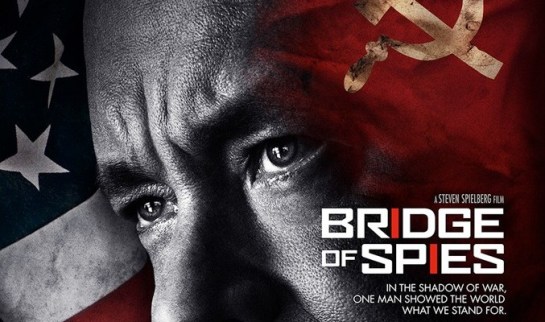
SPIES poster

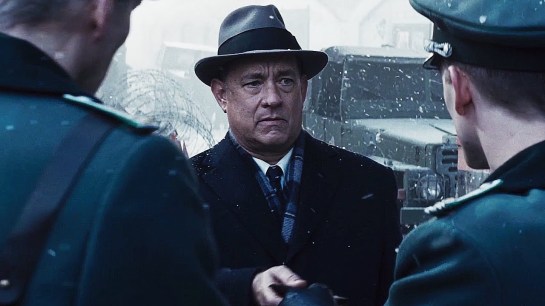
A Steven Spielberg and Tom Hanks collaboration is a sure-fire attention getter. Such is the case with “Bridge of Spies”, an old school Cold War espionage drama made to bloom as awards season approaches. The trailers are a tad misleading. This is a dialogue-driven thriller that crafts its suspense through its many scenes of political back-and-forths, judicial wrangling, and contentious negotiations.

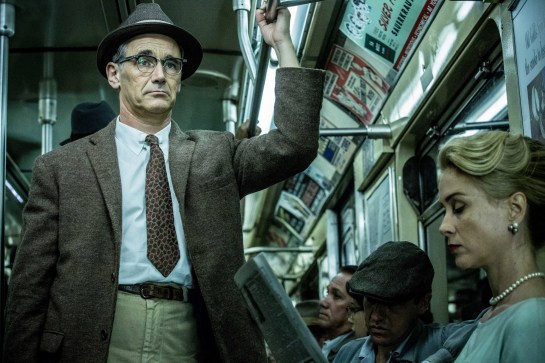
The story is based on the embarrassing U-2 incident which occurred in 1960 under the watch of President Dwight Eisenhower. It actually begins three years prior after a Soviet spy named Rudolph Abel (Mark Rylance) is captured by the FBI. Wanting to give the appearance of a fair trial, the government appoints insurance attorney James Donovan (Hanks) to represent him. The prosecution, the judge, the government, and the media all seek to make an example out of Abel. Donovan sees things different.

SPIES1

Donovan is a man of principle and stands firm in his belief that everyone including Abel deserves due process. This sparks outrage among government agencies, the American public, and even Donovan’s own family. This is the film’s early focus. We spend a lot of time with the development of Donovan and Abel’s relationship and the uphill battle they face in the courts of law and public opinion.

Spielberg begins breaking away to young pilots being trained for a top secret reconnaissance mission over the Soviet Union. Among them is Francis Gary Powers who is shot down and taken prisoner by the Soviets. Fearing that Powers will give up vital intelligence, the government sends Donovan to East Berlin where he is to negotiate a hostage exchange – Abel for Powers.

Negatively, these breakaways are intended to provide context to Donovan’s mission, but they don’t offer much. None of the characters we get in these scenes are all that interesting or compelling. Even Powers himself offers nothing more than a face to the negotiations. This wasn’t a major flaw but it did seem like wasted time and it made the film drag a bit.

SPIES2

Also, one of the most fascinating parts of the story was the ‘fish out of water’ element – an insurance lawyer in hostile territory negotiating between two global enemies. But I never got the sense that Donovan was too worried or fearful. Certainly there are scenes where he feels the pressure, but I would have loved to see more tension, uncertainly, and internal struggle. Instead he handles his tasks as he would any normal insurance settlement back home.

I don’t think the blame for that goes to Hanks. His performance is superb. There is no doubt that this role is right in his comfort zone. Donovan’s down-to-earth everyday man qualities are no problems for Hanks. He has been a master of that type of character for years. I also loved the subdued performance from Mark Rylance, a fine British theater actor. His Abel manages to be the most interesting person on screen even though he offers practically no flash at all.

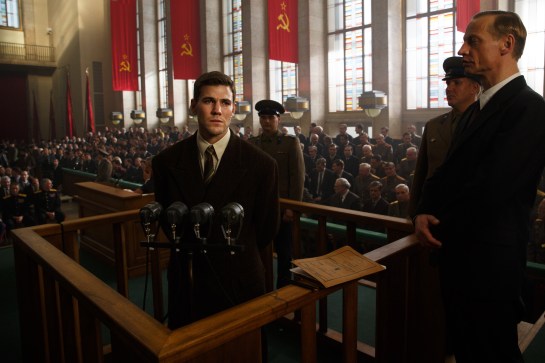
in DreamWorks PIctures/Fox 2000 PIctures' dramatic thriller BRIDGE OF SPIES, directed by Steven Spielberg, Francis Gary Powers (Austin Stowell) is an American U-2 pilot shot down over the Soviet Union.

And then there is Spielberg. There is such satisfaction in watching a master of his craft work. The film was written by Mark Charman (and polished up by Joel and Ethan Coen). Spielberg lets their script breathe by directing with tremendous restraint. He grants his actors room to work and allows the story to unfold at an organic pace. There is practically none of that overpowering Spielberg flair that we have seen in the past. Just steady and compelling storytelling nestled in a wonderfully rendered Cold War setting.

Don’t let the trailers fool you. “Bridge of Spies” is no thrill a minute edge-of-your-seater. Instead it is a talky yet quietly made period drama. It is a fine reflection of vintage moviemaking mixed with a riveting story. It may never be heralded among Spielberg’s very best, but it does feature many of his best filmmaking traits (shaky political subtext aside). And mixed with a fine performance from Hanks, it seems primed and ready for the inevitable attention it will get come awards time.

VERDICT – 4 STARS

4 Stars

RETRO REVIEW: “St. Elmo’s Fire”

fire

Rewatching “St. Elmo’s Fire” is like stepping into a time machine. As with so many films from its period, it contains numerous components that are unequivocally and distinctly 80s. “St. Elmo’s Fire” was released right in the heart of the decade, July of 1985, and that seems amusingly fitting. Its cast, its look, its mechanics all function like a movie made within those definable 10 years. In some ways that is a compliment because the 80s were so indelibly marked with a unique cinematic style and playfulness. In other ways it is not a flattering statement because many of these films drown in that style and never feel as imaginative or important as they try to be. They simply don’t stand up well outside the boundaries of their decade. All are true when it comes to “St. Elmo’s Fire”.

The film was directed and co-written by the ever so divisive Joel Schumacher and featured most of the major members of the unfairly branded “Brat Pack”. Along with “The Breakfast Club”, “St. Elmo’s Fire” is considered the centerpiece and measuring stick of the Brat Pack genre. Again, this actually contributes to the cool and nostalgic feel, yet watching this cast, all young and promising at the time, wasn’t without a certain amount of baggage (whether fair or not).

ELMO1

At first it would be easy to dismiss “St. Elmo’s Fire” as a film that does nothing and says nothing. Most of the film plays out like scenes of encounters and conversations pasted together and bound only by a thin semblance of plot. That’s actually pretty accurate. But to say the film says nothing would be inaccurate. Often times its storytelling and messaging is muddled and messy, but there is a deeper meaning that I still find effective.

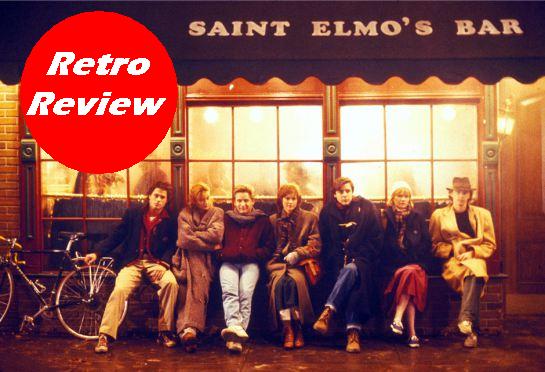
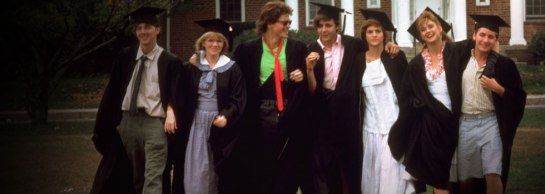
The story follows seven close college friends who have recently graduated from Georgetown University. The film’s intent is to show us their transition from the comforts and structure of college life to the responsibilities and unpredictabilities of adulthood. Emilio Estevez, Judd Nelson, Ally Sheedy, Demi Moore, Andrew McCarthy, Rob Lowe, and Mare Winningham each play ‘types’ (as they were known to do in many of their films). We get the yuppie, the bad boy, the party girl, a buttoned up nerd, the brooder, etc. It is a bit surprising and frustrating as none of them stray too far from their types.

ELMO2

Still some of the characters carry some weight and their intersecting stories are interesting. Ally Sheedy is the most compelling of the bunch and she has the most interesting and thoughtful story. On the opposite end you have Estevez and his throwaway character. His weird and sudden obsession with a past college crush (played by Andie MacDowell) is silly and disjointed. Most of the other characters fall anywhere in between, but ultimately it is their group dynamic that the film banks on and for the most part it works. The performances are pretty solid and even when the material flounders a bit they are often able to salvage the scene.

“St. Elmo’s Fire” was trampled by many critics who saw it as a huge waste of time. The film doesn’t do itself many favors. It meanders a bit and you can’t help but recognize its feelings of self-importance. It simply isn’t as cool or as smart as it wants to be. But I still think its a good movie and I still think it contains a satisfying message. Perhaps some of my appreciation is rooted in unashamed nostalgia. I’m willing to admit that. Ultimately I think there is too much here to write off, even if it is a little rough around the edges.

VERDICT – 3 STARS

3 Stars