Your Voices is a simple concept created to encourage conversation and opinions between movie lovers. It works like this: I throw out a certain topic or question and I’ll take time to make my case or share my opinions. Then it’s time for Your Voices. Head to the comments section and let fellow readers and moviegoers know your thoughts on the topic for that day!
We all love movies, right? I mean that’s probably why you’re reading this right now. Sometimes our love for movies goes beyond simply venturing to the theaters or renting a Blu-Ray. And sometimes our enthusiasm can be seen in the collectibles or the cool assortment of movie related memorabilia we have. It could be as simple as a t-shirt or as personal as an autograph. That is certainly the case with me. I have some movie related stuff that may not be cool to everyone but they are near and dear to my heart.
Ahhh, Bogie in all his glory…
Trying to pick my favorite among my movie stuff was pretty tricky. It’s not that I have a bunch of it. It’s just that I love them all. I decided to go with something a bit odd but a bit sentimental as well. It’s my Humphrey Bogart life-sized cardboard standup (please, don’t laugh). Frequent readers of K&M probably know that I have a pretty strong affection for Bogart and his films. There is a funny story behind this particular piece of Bogart. Twenty years ago while on my honeymoon I noticed this standup at a movie memorabilia shop. I had to have it. Bogart made the trip with my wife and me and now he stands right next to our bed at home. What a tolerant and understanding wife! So now it’s time for YOUR VOICES.
YOUR VOICES: What is your favorite bit of movie memorabilia?
So let Your Voices be heard. Does your love for movies extend into collectibles? Is it something big and amazing or is it a small little movie trinket that you hold dear? Please share Your Voices on today’s question. I’d love to hear from you in the comments section below.
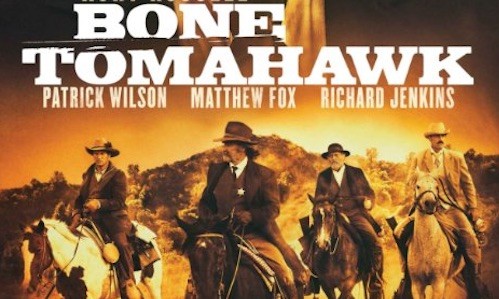
Some movies are beyond categorizing. They simply can’t be kept within the bounds of a single genre. It is a tricky thing to do well and I have always enjoyed it when a movie pulls it off. The bizarrely titled “Bone Tomahawk” may be this year’s biggest example of that. This unique genre-jumping concoction could best be described as an action, horror, comedy, western, thriller. To fail to emphasize any of those components would be to fail in accurately describing this wild movie.
Is 2015 the year of the subversive western? Earlier this year we had “Slow West” and “The Salvation”, two well made films that dared to do unique and different things in the western sandbox. “Bone Tomahawk” blows the sandbox to smithereens. Writer and director S. Craig Zahler (perhaps better known for his novels and heavy metal music) makes an impressive directorial debut as he juggles genre and tone to give us a film we can never quite figure out. Every time I felt I had figured out what it was, “Bone Tomahawk” would pull the rug out from under me.
While fleeing a posse, two murderous and thieving scoundrels (amusingly played by David Arquette and Sid Haig) stumble across a mysterious burial ground. Only Arquette’s character survives and he flees to the small town of Bright Hope. Unbeknownst to him, savages from a clan of hill-dwelling cannibals follow him to the town. They butcher a stable boy and kidnap three people. Among those taken is Samantha O’Dwyer (Lili Simmons) wife of Arthur O’Dwyer (Patrick Wilson).
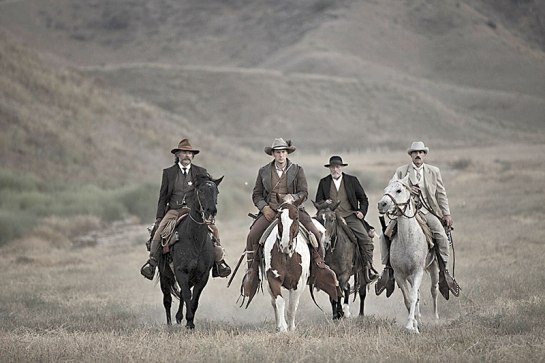
Kurt Russell ventures back into the wild west playing Sheriff Hunt. He and his insistent and loyal deputy Chicory (played with humorous precision by Richard Jenkins) prepare a rescue. Arthur joins their venture as does John Brooder (Matthew Fox), the town’s dapper dandy with his own violent baggage. This ragtag posse of sorts begin the three day trek to find their people unaware of the horrors that may lie ahead.
Zahler’s vision for his film is fed to us in small parts. In one moment it will feel like a traditional western. In another moment it is a suspenseful thriller. Then a subtle yet hysterical bit of dry or dark humor makes it seem like something else altogether. Also the film will occasionally hit you with a scene of gruesome horror, something akin to a B-movie cult film. Fortunately all of these work within the bounds of Zahler’s vision.
The film also surprises with its patient, slow-burning storytelling. The intensity ratchets up in the final act, but prior to that there is a surprising amount of quality character development. For Zahler his characters are clearly a main focus and he smartly anchors them with a small but impressive cast. Kurt Russell is effortlessly superb and obviously comfortable with this type of role. Richard Jenkins is an absolute treat – a pleasant mix of humor and humanity. The underappreciated Patrick Wilson is very good in what is in many ways the main character. And Matthew Fox really impresses. At first he looks a bit too stiff for his character, but over time as layers are peeled back, Fox shows a noteworthy range. He is a lot of fun.
I’m not sure how big of an audience there is for a movie like “Bone Tomahawk”. In no ways does it bow to convention or crowd pleasing. It is far from formulaic. It certainly doesn’t follow any familiar blueprint. It does meander a bit in the middle which does make it a tad longer than it needs to be, but it still manages to be something absorbing and strikingly unique. Just go into it expecting the unexpected because that is exactly what you are going to get.
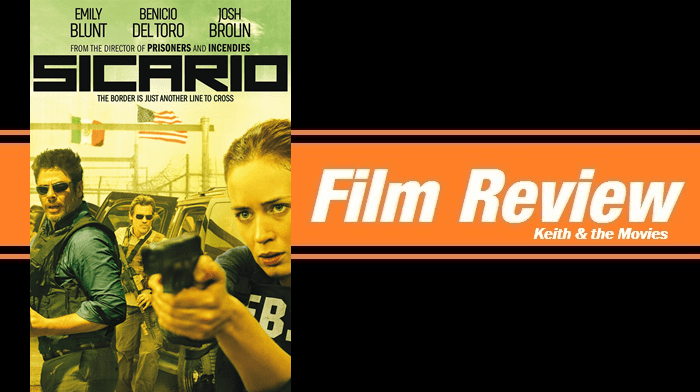
I think we have reached a point where we can watch a movie and confidently say “That is a Denis Villeneuve film”. The French-Canadian filmmaker can be defined as someone not afraid to claw deep under the surface of difficult subject matter. He also spares his audience no amount of discomfort or unease when telling his stories. His films are incredibly cinematic and are recognized by both their narrative and visual intensity. Several films have helped reveal his uniquenesses, but his new film “Sicario” is his best yet.
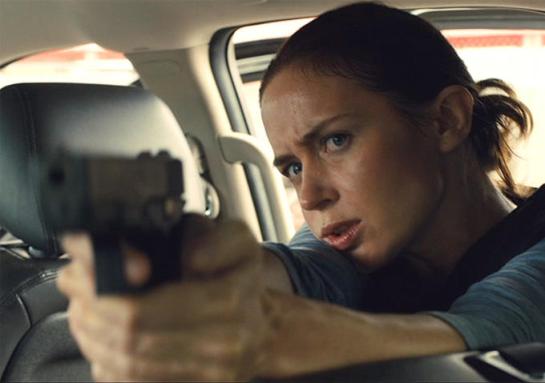
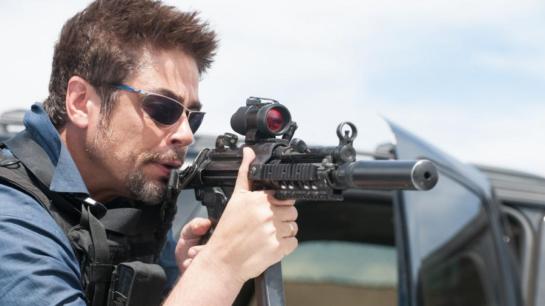
Every one of Villeneuve’s characteristics mentioned above are present in “Sicario”, a border thriller that stings with relevancy. Emily Blunt is superb playing Kate Macer, an FBI field agent specializing in hostage rescue. The film opens with a gripping sequence featuring Kate leading a raid on an Arizona housing division. Her actions catch the attention of her superiors who then ask her to join a task force led by Department of Defense ‘advisor’ Matt Graver (played with amusing cockiness by Josh Brolin). The mission is to strike back at the drug cartels responsible for a number of brutal killings. Anxious to finally make a significant difference, Kate agrees to join Graver’s team.
Also on the team is the mysterious and shadowy Alejandro played with unflinching precision by Benicio del Toro. Back in 2000 he won the Supporting Actor Oscar for “Traffic”, but this stellar performance rises above his past work. His Alejandro is impenetrable – a walking contrast of information and emotion. The vast majority of the film is shown through Kate’s perspective. Like her, we struggle to figure out Alejandro, Graver, and the entire mission for that matter. Screenwriter Taylor Sheridan meticulously feeds us small bits of information never allowing us the feeling of being fully informed.
“Sicario” is also strengthened by the sting of its moral ambiguity. There is no easy way to navigate the morality of what we see on screen. Kate struggles with it and Villeneuve forces his audience to struggle with it too. It casts a bright light on the drug war, border violence, and government policy painting each as murkier and far more complex than we normally hear through political talking points. It operates under the idea that we have lost the drug war. Now it’s about control and making sure it doesn’t consume us. But does that mean compromising our moral conscience and turning what we known to be ‘right and wrong’ into a much more gray area? These questions hit Kate like a crashing wave.
And there is no way to talk about this movie without mentioning its phenomenal presentation. Villeneuve has perfectly matched the intensity of his story and subject matter with a visual rendering that is truly absorbing and stimulating. It will come as no surprise that Roger Deakins’ cinematography is magnificent. When will this man finally win the Oscar he deserves? His camerawork is key in making many of these scenes work. There are no vanity or prestige shots. They all have meaning. Deakins visually infuses so many scenes with tension and potency.
There is one particular sequence that may be my favorite of the year. Kate joins Graver’s team in a extradition mission to Juarez. They are to move across the border, pick up a high value target, and make it back. Deakins’ magic takes over the moment they leave the military base. Through his lens, Deakins reveals to us the boiling tension of the location and situation – the same tension that Kate is experiencing for the first time. It is also helped by Jóhann Jóhannsson’s simmering score – one of the year’s best. The entire sequence is cinema at its finest.
“Sicario” is a searing and provocative thriller – visceral and unflinching in its depiction of a situation with no easy answer. Denis Villeneuve and company expertly craft a cinematic experience grounded in relevancy and unwilling to sugar coat its subject matter. Villeneuve, Blunt, del Toro, Deakins, and Jóhannsson all deserve Oscar nominations and the film itself is among the year’s very best.
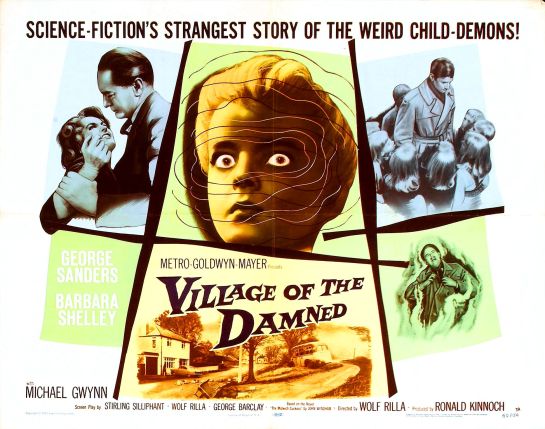
Creepy kids are often an automatic score when it comes to horror films. 1960’s “Village of the Damned” is an early example of that theory in action. This unique piece of British sci-fi horror anchors its suspense in its largely unexplained phenomena. But that’s just fine because watching its straightforward story play out is a lot of fun.
“Village” was initially intended as an American picture but MGM moved it to their British studio and brought in German director Wolf Rilla to head the project. The story was based on John Wyndham’s 1957 novel “The Midwich Cuckoos”. The film faced several criticisms from censors over different bits of content most of which still found its way into the final version.
The film opens in the small British village of Midwich. Suddenly and mysteriously everyone in the village falls unconscious including a prominent professor Gordon Zellaby (George Sanders). Gordon’s brother-in-law Alan (Michael Gwynn) grows suspicious after failing to reach anyone in the village over the phone. The unexplained phenomenon soon wears off and the community seems to be unaffected. That is until a short time later when every able woman in the town turns up pregnant including Gordon’s wife (played by the “First Lady of British Horror” Barbara Shelley).
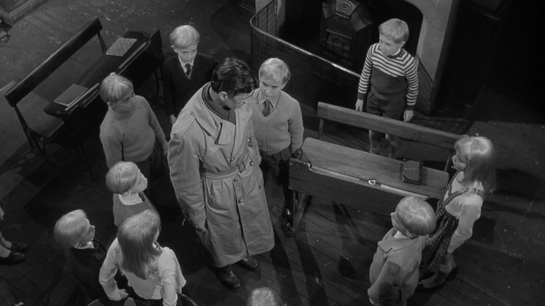
The film presents the confusion, anger, and distrust that would naturally follow such and event. But Midwich then suspects something else is taking place as the babies mature and are born at an accelerated rate. Once born they continue to grow faster than normal, each with bright blonde hair, a heightened intellect, and “arresting” eyes. A series of unexplained events follows leaving the village and outsiders wondering what these children represent and what their motivations may be.
Wolf Rilla doesn’t let his film devolve into an endless parade of cheap scares or contrived creepiness. Instead the movie focuses on the mystery and the evolving threat itself. Questions aren’t always answered. The movie doesn’t serve everything to the audience on a platter. Instead it leaves many things up in the air and we are just as lost and confused as most of the characters. It’s a smart approach that keeps the film from being corny or routine.
It is also helped by a solid cast of characters each of whom are truly invested in the predicaments of their characters. In fact I was a bit surprised at just how well presented the characters are both from the script and the performances. Actually the entire movie functions this way. The well presented script and performances solidify the film’s aim to be a mysterious and creepy science fiction, horror, thriller. The true grip of “Village of the Damned” is rooted in its unsettling mystery and the filmmakers know how to keep their project within those bounds. The film definitely benefits from that.
When hearing David Schwimmer’s name most will automatically think back to his goofy, good-hearted character from the television comedy series “Friends”. What may surprise them is that Schwimmer is also the director of the 2010 feature film titled “Trust”, a bold and unflinching look at sexual abuse. This is no comedy. This is no lightweight drama. This film doesn’t skim around the edges of its topic. “Trust” is an honest examination – a cautionary tale focused on a topic that many would prefer to stay away from.
The film is based on a story written by Schwimmer. His inspiration came from his 14 years with The Rape Foundation, a group focused on support, prevention, and education about rape. Schwimmer’s intense research spanned seven years and took him to a number of individuals and families who have been decimated by these despicable crimes. For Schwimmer this was an important story to tell and his uncompromising yet sensitive approach does this highly relevant subject justice.
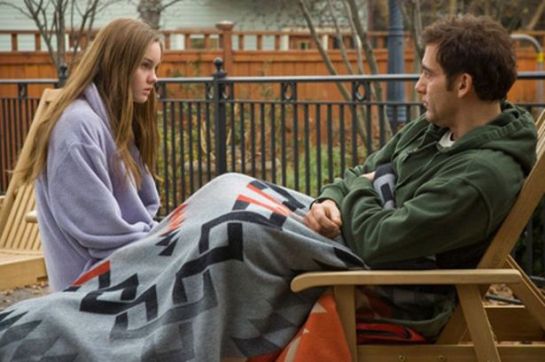
The film starts by showing us a strong, stable, and close family. Husband and wife Will (Clive Owen) and Lynn (Catherine Keener) are loving parents to their three children. Annie (Liana Liberato) is their strong and outgoing 14-year old. In almost systematic fashion the film shows the methodology and seduction of young Annie by a 35-year old internet predator going by the name of Charlie. It begins in an internet chat room and evolves to text messages and intimate phone calls. It starts with one lie followed by another and another until Annie gives in to Charlie’s manipulation.
The rape of a young girl is powerful and sobering material, but perhaps the film’s most compelling decision is to focus more on the aftermath and fallout than the actual transgression. Schwimmer takes us stage by stage through Annie’s coping struggles which range from denial to defending Charlie. At times Annie’s emotional battles are excruciating to watch mainly due to the deftly honest handling of the subject and Liberato’s revelatory performance. Liberato was actually 14-years old when the film was being made which gives so many of her scenes an even sharper and more unsettling edge. She is magnificent.
But the film goes further and examines several other consequences. It looks at distorted perceptions of sexual assault. It looks at internet bullying. It looks at the effects that such a horrible event can have on a family namely a devastated father. Clive Owen gives a performance that should have demanded Oscar recognition. He shows us a wounded father drowning in sadness, insuppressible rage, and unbridled guilt. And the scenes Owen shares with Liberato are powerful and heart-wrenching. Toss in great performances by the always reliable Keener and Viola Davis as Anna’s counsellor.
Schwimmer said in many ways this is a film about “parenting in the age of technology”. With so many children having smart phones, laptops, and tablets with open access to the internet, and with the sickening number of internet predators this is an extremely relevant topic. “Trust” is a startling and often troubling movie but an incredibly earnest and sensitive one as well. It sugarcoats nothing and offers no easy answers or quick solutions. It deals in painful reality. This could have easily been an exploitative and overly melodramatic project. Thankfully Schwimmer and his cast care about the topic and are deeply invested in getting it right. Ultimately that’s why “Trust” is such a gripping and forceful success.
I originally planned on doing a Phenomenal 5 list of great Indiana Jones moments. It turned out that limiting that list to only five was absurd and impossible. So to solve the problem I decided to break it down by the three true Indiana Jones movies (sorry “Crystal Skulls”, you are absolutely terrible). It starts with Steven Spielberg’s adventure classic “Raiders of the Lost Ark”. One of my very favorite films, “Raiders” has stuck with me since I first saw it in theaters way back in 1981. Now limiting the list to five was quite the chore and I certainly wouldn’t call this the definitive list. But there is no denying that these five “Raiders of the Lost Ark” scenes are absolutely phenomenal.
#5 – Marion in a Basket
When Indy and Marion arrive in Cairo they quickly learn that the Nazis are aware of their presence. The two are separated and Marion heads into the back alleys before hiding in a straw basket. Indy fights off some thugs and gives us one of the franchise’s most memorable scenes. He then sets out to find Marion but realizes that there are hundreds of these straw baskets all over the city. The sequence ends with a bang. It’s such a clever mix of action and humor – something the entire series would become known for.
#4 – Horse versus Truck
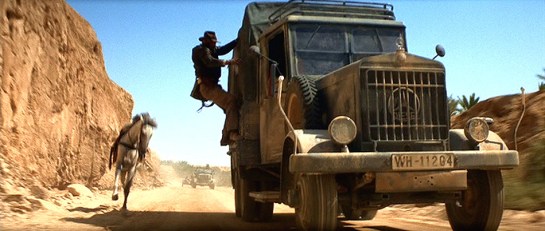
There is a spectacular action sequence centered around Indy’s pursuit of the Ark. Indy had the Ark in his grasp but the Nazis quickly steal it away. Indy first has a great fight with a Nazi heavyweight around a German bomber. But the excitement really amps up when Indy commandeers a horse and chases after the caravan of trucks loaded with soldiers and the Ark. A high-speed fight in trucks, on trucks, and under trucks ensues offering up one of the film’s most exhilarating action scenes.
#3 – The Bar Fight
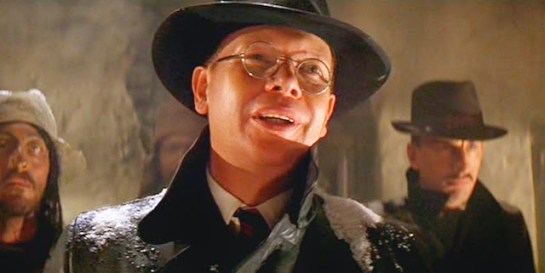
The bar fight in “Raiders” is great for numerous reasons. First it starts with the rocky reunion between Indy and Marion. Second it gives us one of my very favorite exchanges. The devilish Gestapo investigator Major Toht comes in search of a medallion in Marion’s possession. Toht’s interrogation plans are…unpleasant but luckily Indy busts in and a wild bar fight and shootout follows. As before, the scene is mixed with great action and several clever slices of humor. It is also the scene that forces Indy and Marion together and sets them off on their wild globetrotting adventure.
#2 – The Well of Souls
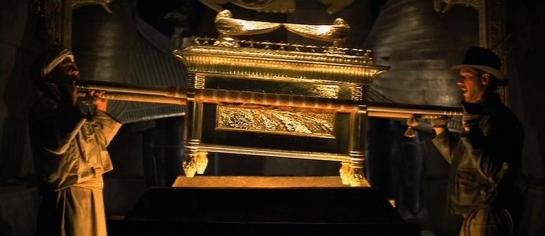
Indy, Sallah, and their crew work in an Egyptian desert uncovering the entrance to the mysterious Well of Souls. Just a few paces away the Nazis are also digging but in the wrong place. Indy and Sallah enter the snake-filled chamber. Indy faces his fear of snakes and obtains the Ark. Unfortunately the Nazis are waiting on Sallah as he exits. They take the Ark, throw Marion into the Well with Indy, and seals them in. But never to be outdone, Indy comes up with a clever but unorthodox way out and it sets in motion the next leg of his journey to get the Ark.
#1 – The Peruvian Temple
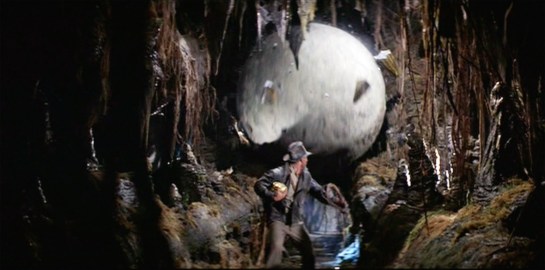
How on earth could any scene top the Well of Souls? For me the answer is found in one of the best movie openings of all time. Spielberg perfectly launches this fabulous franchise by introducing us to Indiana Jones in one of his most dangerous environments. He and a very young Alfred Molina enter a booby-trapped Peruvian Temple to grab a mystical golden idol. The sequence works on so many levels. It reveals to us the type of fun and adventurous character at the center of the film. But it also reveals the tone and quality these movies became known for. I can’t imagine the movie or the series kicking off any better.
There is my list. Obviously there are other great scenes that I had to leave out. Now tell me, which would have made your list? Share your thoughts in the comments section below.