REVIEW: “The Dark Knight Rises”

The superhero genre has been going strong for several years now and I’ve been wondering when was it going to run out of steam. At what point was the quality of the films going to suffer leading audiences to say enough is enough? In 2005 Christopher Nolan made a great contribution to the genre with “Batman Begins”. He followed it up with 2008′ s phenomenal “The Dark Knight”, a film that was not only one of the best sequels ever made but a demonstrative statement showing that superhero films can be legitimate and powerful forms of cinematic entertainment.

That brings us to “The Dark Knight Rises” the final film of Christopher Nolan’s Batman run and the end of what could easily go down as one of the best movie trilogies in motion picture history. “The Dark Knight Rises” is smart, layered, gritty, moving, and action-packed. Nolan not only wraps up his series in a competent and satisfying way, he gives us one of the most potent and energetic movie experiences you’ll find – a near perfect mix of comic book action, socially reflective drama, and expert storytelling. If these are the kinds of films we could get regularly from the superhero genre, I see no limit to their lifespans.

This film takes place 8 years after Batman rode off into the shadows at the end of “The Dark Knight”. Batman is a fugitive, unjustly but willingly, wanted for the murder of Harvey Dent. There have been no Batman sightings during this time and crime in Gotham City has declined due to an inspired city leadership and law enforcement armed with the Dent Act. Bruce Wayne (Christian Bale) has become a hobbled recluse, spending all of his time in a closed off wing of Wayne Manor where long-time family friend and faithful butler Alfred (Michael Caine) is his only contact with the outside world. Gotham has become lethargic in its approach to crime and peace time has made the city leaders careless. Everyone except commissioner Jim Gordon (Gary Oldman) and Officer Blake (Joseph Gordon-Levitt), a devoted young patrolman. With their guard down, the city is hit head-on by a brutal but calculated terrorist named Bane (Tom Hardy). Bane’s destructive assault on Gotham cripples the city and as all-out anarchy takes hold, the need for Batman is greater than ever.

Morgan Freeman also returns as Lucius Fox, Bruce Wayne’s close friend and acting president of Wayne Enterprises. Fox is struggling to keep the company afloat following the poor position Bruce left him in. In addition to Hardy and Gordon-Levitt, Anne Hathaway joins the series as Selina Kyle, a cat burglar who steals out of Robin Hood-like motivations but also with a single more direct purpose in mind. Also new to the cast is Marion Cotillard. She plays Miranda Tate, a Wayne Enterprises board member and philanthropist with a great interest in green energy technology and Wayne’s investments into it. Matthew Modine plays Deputy Peter Foley, a spineless officer who is more interested in making a name for himself by catching Batman than stopping the coming storm at the hands of Bane. We also get Ben Mendelsohn as a slimy self-serving Wayne board member with his hands in deeper in than they should be.

Nolan takes this amazing collection of acting talent and throws them all into his smorgasbord of plot lines and dramatic twists. But he never loses control of the film and everything comes together in an extremely satisfying way. Nolan incorporates several relevent and current issues into the story, none more prevalent than the entire class warfare theme. Selina has a very anti-rich people mindset seeing the wealthy as a key cause to society’s ills. Bane himself seeks to take the power out of the hands of the wealthy, the local government, and law enforcement and give it to the poor and downtrodden. But Nolan doesn’t sugarcoat or promote anything. In fact he shows where an extreme and unbridled class warfare position can lead. Some may say that his presentation is heavy-handed but I felt it worked perfectly in the greater context of the story.

Nolan and his brother Jonathan wrote the screenplay and even with the heavy exposition in the first 30 minutes – clearly intended to fill the audience in on what has transpired during the missing 8 years – the movie moves at a crisp and fluid pace. As with all of Nolan’s pictures, there are layers of story that unfold to reveal deeper meanings and cool dramatic twists that should please both comic book fanboys and lovers of good storytelling. He doesn’t dumb things down nor does he ever patronize the audience. The film sets the table for us then causes us to attentively hang on for dear life – a most pleasing challenge. Much like “The Dark Knight” there are no shortcuts here. The film isn’t just a loud summer studio comic book adaptation. It’s brilliant cinematic storytelling that takes a superhero concept, laces it with a true sense of reality, and presents it to us in a beautifully crafted package. Another example of why Christopher Nolan is one of our best directors and visual storytellers.

I’ve mentioned the cast but they deserve more than just a few words. Bale IS Batman and this is his strongest work of the entire series. We see him as a broken and vulnerable man as well as the growling caped crusader. Bale has no problems relaying either to the audience. Anne Hathaway is also very good as Catwoman (even though she’s never called Catwoman) and while I wasn’t certain she completely belonged in Nolan’s more realistic Batman universe, he never overdoes the character and Hathaway sells her well. Tom Hardy will undoubtedly face comparisons to Heath Ledger’s Joker from the last film but that’s terrible unfair. The two villains couldn’t be more different and Hardy’s Bane easily stands on his own. Hardy spends the entire film behind a mask but his body language and brute swagger makes him a most menacing villain. Gary Oldman is fantastic as always as was the lovely Marion Cotillard. Michael Caine is wonderful and has some of the best exchanges with Bale. Unfortunately he disappears in the second half of the film. And Joseph Gordon-Levitt continues to prove he is a solid young actor. Perhaps the only weak spot was with Matthew Modine who I never really bought into. His character only adds one small thing to the story and Modine never makes him all that compelling or interesting.

Technically “The Dark Knight Rises” is the jaw-dropper I expected it to be. Nolan’s stylistic flare and incredible camera work do a great job of capturing the panic and dread of a city under siege. The special effects are stunning and the action sequences are big and boisterous. Nolan gives us some new Batman toys as well as some old favorites and they’re used in several cool crowd-pleasing ways. I also loved the fight choreography. You know by the trailer that there is going to be a Bane and Batman showdown and Nolan builds it up with undeniable intensity. Then when the payoff comes, we aren’t hampered by herky-jerky camera movements. Instead Nolan lets the fights take place without any fancy gimmicks. It was incredibly satisfying. I also loved Hans Zimmer’s score. Some have voiced dislike for his ever-present pounding music but it worked for me. I felt it contributed to the intensity that the film is going for just as Zimmer’s scores have done for the previous two Batman movies.

“The Dark Knight Rises” once again plunges the people of Gotham and us into the depths of fear and dread while examining evil and the darker side of society. Yet the film always allows us hope. This is certainly another dark story but the stakes are high and the ending is exceptional and rewarding and the perfect goodbye to a phenomenal trilogy. I wanted to stand and applaud. The film stretches the boundaries of the comic book genre. It’s large in scale, full of story, and absolutely engrossing throughout it’s almost 3 hour running time. “The Dark Knight Rises” is far more than simply great. It’s a modern classic featuring mesmerizing performances, fist-pumping action, and genuine intelligence. It’s a visual spectacle. It’s emotionally and intellectually stimulating. It’s a text book lesson on the melding of big budget flamboyance with smart and challenging storytelling. It’s hard to accept that this is Nolan’s final Batman film but he has given us a gift – a groundbreaking series of films capped by a truly glorious finale. What a ride it’s been and what a way to end it.

VERDICT – 4.5 STARS

4.5 STARS

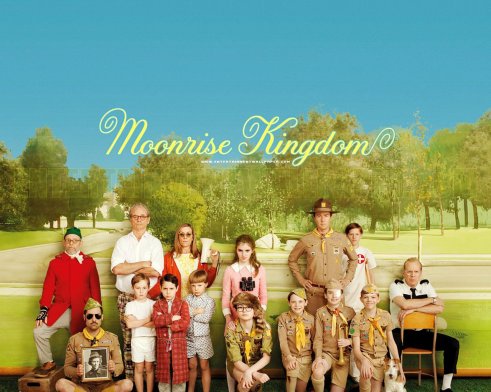
REVIEW: “Moonrise Kingdom”

Going into a Wes Anderson film there are several things you know to expect: a healthy dose of dry and sometimes offbeat humor, a unique visual style, and familiar aesthetics that permeate each of his movies. “Moonrise Kingdom” is no different from other Anderson efforts in terms of it’s storytelling style and visual presentation.  This is his first film since 2009’s Oscar winner “Fantastic Mr. Fox” but it’s clear from the opening credits that his dedication to his style of filmmaking is still as strong as ever.

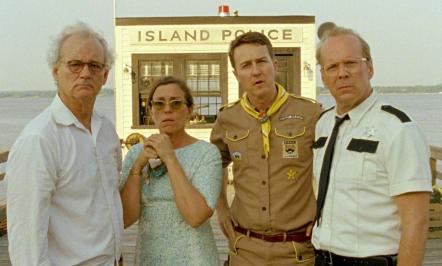
“Moonrise Kingdom” takes place in a small community on a New England island in 1965. A very Wes Andersonish  narrator sets the table for us and we meet several of the community folks including Scout Master Ward (Edward Norton) the leader of the island’s branch of the Khaki Scouts. While doing morning inspections, he discovers that 12 year-old Sam (Jared Gilman), a picked on, eccentric young boy has run away from the camp. Elsewhere on the island young Suzy Bishop (Kara Hayward) lives at Summer’s End, her home shared with her parents and three young brothers. Suzy is a reserved introvert who has no friends and finds refuge by retreating into her fantasy novels and looking through her binoculars – something that she pretends gives her super powers. It’s through her binoculars that she discovers her mother Laura (Frances McDormand) meeting secretly with the community policeman Captain Sharp (Bruce Willis). Her father Walt (Bill Murray) is impervious to the signs of his wife’s secret fling mainly due to their fractured relationship.

Suzy ends up running away from home and through a flashback we learn that it’s something she and Sam had been planning since they first met at a local church play the year before. The two meet in a meadow then set out on a journey together through the rugged and rainy island terrain. Sam flexes his extensive outdoor knowledge before Suzy by pitching tents, building fires, and catching and cooking fish. Meanwhile, after discovering the kids are gone, the dysfunctional community sets out to find them.

Anderson has several interesting dynamics at work, the first being the relationship between the two kids. It’s easy to see why they are drawn to each other. Both feel detached and out-of-place. There’s a void in their lives and they find solace in the fact that they no longer feel alone in the world. Both Gilman and Hayward are stunningly good especially considering this is the first feature film for both. Anderson’s childlike deadpan dialogue flows naturally from the two characters and he really gives them a believable foundation for the budding adolescent romance. Some have argued that the romance between the two was lacking and never provided the spark to drive the relationship. I argue that there’s no huge passionate spark mainly due to the children’s age and the newness of love and romance. I feel that their attraction to each other is based more on their personal, emotional, and social similitude. Being in each other’s presence fills a substantial emptiness in their lives and let’s them know they aren’t alone. A form of love sprouts up from that and Anderson depicts it with tenderness even amid the laugh out loud moments and the hilarious, straight-faced dialogue.

My biggest problem with the way Anderson handles the children’s relationship is the way he handles his child actors in one particular scene. Intended to show a sexual curiosity and almost unwanted compulsion, there is a brief scene where Gilman and Hayward are asked to engage in something that I have no problem saying I was uncomfortable with. At the time of filming, both actors were 12-years old and the willingness of Anderson to shoot this particular scene is disappointing. It’s certainly not graphic but it’s also not appropriate and that fact that it’s used more for comic effect is even more frustrating.

But while the story of Sam and Suzy drives the main narrative, perhaps the biggest microscope is put on the community and the fact that they are each flawed individuals forced to make important and sometimes redemptive decisions. As you look at each character you see situations unfold that bring them to the point of either doing the right thing and changing the direction of their lives or watching as things crumble in around them. In a very real sense, the disappearance of Sam and Suzy is the catalyst for some pretty real and important character transformations in Captain Sharp, Scout Master Ward, Laura, and Walt. Even Sam’s fellow Khaki Scouts are faced with their own moment of truth.

I talked about Gilman and Hayward’s performances but they’re surrounded by some equally strong work. I was particularly drawn to Bruce Willis who delivers some great laughs but through a very controlled performance that’s perfectly fitting for Wes Anderson material. Willis occasionally gets to show his acting range and this is a good Oscar caliber example of that. And I have to say, as someone who isn’t the biggest Edward Norton fan, that he was a lot of fun here. He’s goofy, nerdy, and his delusion of control that’s evident in some of the early scenes results in some of the films funnier moments. Frances McDormand is perfectly cast and Bill Murray is funny as always. I also thought Anderson favorite Jason Schwartzman was funny running around in full Khaki Scout attire.

“Moonrise Kingdom” is another Wes Anderson picture that’s a side-splitter to some but a head-scratcher to others. I laughed a lot through the film but I was also touched by its tenderness and care in addressing struggling children with feelings of isolation and insecurity. Anderson does get careless and I feel irresponsible in one brief scene but there are still several undercurrents that touch on important themes without fully diving into them. We not only see it with the children but in the community and it really worked for me. “Moonrise Kingdom” may not be for everyone but I loved its full package and stylish presentation. It’s a breath of fresh air in a comedy genre filled with raunchy movies and lazy humor. I’ll take this over them any day.

VERDICT – 4.5 STARS

“TO ROME WITH LOVE” – 2 STARS

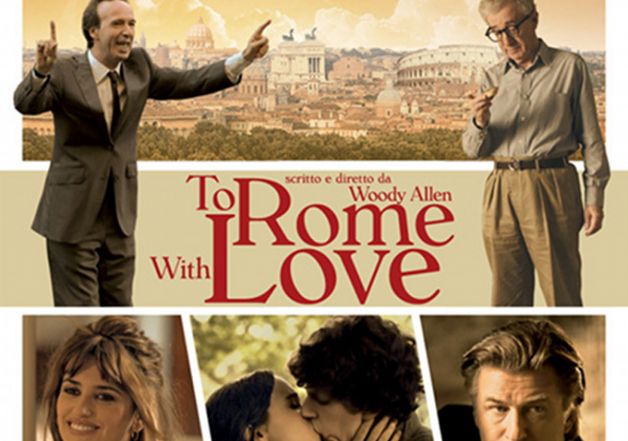
I’ve never been a big Woody Allen fan. But my appreciation for his filmmaking grew with last year’s amazing “Midnight in Paris”, a fantastic film that was wonderfully written, genuinely funny, and purely magical. Allen’s European tour continue’s with “To Rome With Love” yet another romantic comedy taking place in one of Europe’s most beautiful cities. “To Rome With Love” is a collage of individual stories about a number of different people and their relationships, their predicaments, and their quirks. It starts by capturing some of that same magic that made “Midnight in Paris” such a strong film but the second half of the movie runs off the rails and the result is an uneven and ultimately disappointing result.

The different unconnected stories battle for screen time and all start on the right track. In one, Haley (Allison Pill), an American tourist visiting Rome meets, falls in love with, and is soon engaged to a local hunk named Michelangelo (Flavio Parenti). After her parents fly over to meet his parents, her father (Woody Allen), who compares his recent retirement to a premature death, thinks his career is rejuvenated after discovering Michelangelo’s shower singing father (Fabio Armiliato). In another story, Roberto Benigni plays a mundane and predictable husband and father who suddenly becomes the object of immense fame and notoriety over nothing more than what type of underwear he wears and how he likes his toast.

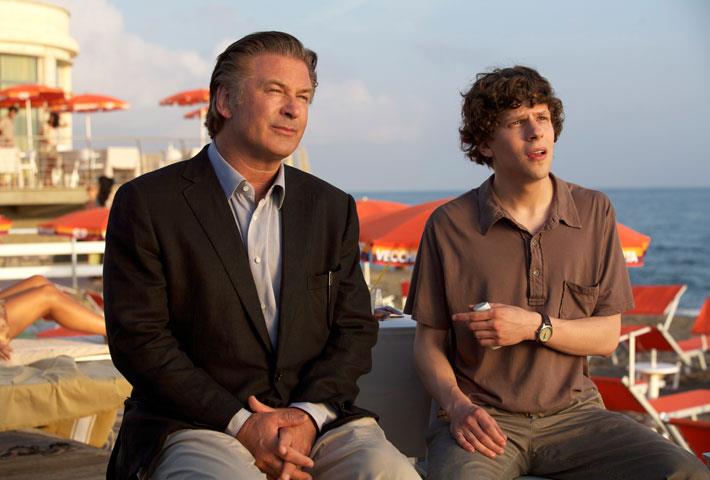
In yet another story Alec Baldwin plays John, a middle-aged architect back in Rome visiting the neighborhood where he once lived as a young man. He bumps into Jack (Jesse Eisenberg), a young architect living in Rome with his girlfriend Sally (Greta Gerwig). Their relationship is strained when her best friend Monica (Ellen Paige) flies in to visit from the states. John follows Jack around everywhere sounding off warnings about his budding relationship with the flakey Monica. And then there are the reserved small-town newlyweds (Alessandro Tiberi and Alessandra Mastronardi) who arrive in Rome where the husband hopes to get a job from his wealthy family. Through several off-the-wall events, the two are separated in the city and each find their love for the other challenged by the people they meet including a  prostitute played by Penelope Cruz. This was easily the weakest story of the four.

These four storylines stay within their own individual walls and they never intersect with each other. As I mentioned they each start strong and Allen packs a lot of good laughs particularly the first half of the movie. At first I really thought Allen was doing something clever and crafty with the four stories. The film addresses an interesting array of issues and the characters are actually quite intriguing up to a point. But things begin to slowly turn sour and not only does Allen’s story fly wildly out of control but many of his characters become pretty pathetic individuals who depict the movie’s warped and cynical view of love, devotion, and relationships. Several of the characters are faced with sexual temptations and ultimately fall prey to them, some with almost no meaningful struggle of conscience. Other storylines become preposterous which is ok if you’re going somewhere with it. And while I definitely laughed at some of the over-the-top gags, keeping my loosely attached interest intact  hinged on the idea that Woody was doing more with these self-indulgent characters and outlandish situations than what we were seeing. As it turns out he really wasn’t.

As I’m sure you noticed, Allen still has a knack for attaching great talent to his productions. There’s not a bad performance in the entire film and the actors almost pull it off even when the material goes south. Woody Allen himself delivers some of the film’s biggest laughs while portraying the same neurotic and pessimistic character as in his other roles. Speaking of neurotic, but on a much smaller scale, I also really enjoyed Eisenberg’s performance as well. But the biggest star of the film may be the city of Rome itself. Allen truly has an affection for Rome and he goes to great lengths to show its history, beauty, and romantic charm. While Rome certainly doesn’t take on main character status as Paris did in “Midnight in Paris”, it’s still a key ingredient in giving the movie the romantic vibe its shooting for. In fact, for me the movie loses most of its sense of romance with the exception of the charming city that’s present in almost every scene. Even when I was growing detached from the stories, Allen’s camera would capture a location in Paris that sucked me back in.

“To Rome With Love” is truly a story of two halves. The first half of the movie was an absolute blast even though some of the four stories were more interesting than others. But in the second half of the movie I sat in the theater noticing that I hadn’t laughed in some time. As I slowly lost interest in the characters I began noticing that Allen really wasn’t going anywhere with the film. There’s no clever or memorable twist. It spits and sputters to its finale and by the end I was asking myself how Allen could have made two halves so totally different. I also wasn’t all that interested in Allen’s seemingly loose ideas of love, fidelity, and trustworthiness and in this case it hollowed out his characters with the exception of those in Haley and Michelangelo’s story. For some, the spectacular location and the number of funny moments will be enough to carry the picture. But for me it was terribly uneven and it ends up tearing down everything it itself creates. In fact, “To Rome With Love” feels like a film that needed another year of writing and production. The rushed results were nothing short of disappointing.

REVIEW: “The A-Team” (2010)

I was a big fan of the original “A-Team” TV show so naturally I was interested in seeing this group of guys move to the big screen. The TV show was a pretty fun mix of over-the-top action and good-natured humor and it found a pretty strong following. Sadly the movie adaptation is a loud, obnoxious, and rather pointless modernization. There’s no doubting the cool factor in seeing Hannibal, Face, B.A., and Murdoch on the big screen for the first time. But the material is so bad and the novelty only carries the film so far before it quickly wears off.

One of the first things to turn me off was the pervasive profanity found in the film. How this movie was able to keep a PG-13 rating is stunning. You name the curse word and it’s there and many are used throughout the movie from start to finish. Don’t be fooled into thinking this is a fun action movie you can take your kids to (much like the TV show). I suppose the filmmakers feel that a movie must be “modernized” in order to attract newer audiences. So they throw in things such as the profanity and changing Face from just a ladies man into someone who sleeps with every woman he encounters (including an adulterous relationship). “Losing it’s innocence” is probably a silly term to use here but I really hated the direction they chose for the film.

Another problem I have is with the way the movie was filmed. Normally I have no problem with jumpy cameras trying to add the feel of “chaos” to a film even though it’s something that’s been done over and over. But in “The A-Team” the film’s camera work and editing is horrible. There are some battle sequences where the shaky camera and hack-and-slash editing are so bad that you have no idea what is happening. Over time this becomes annoying and detracts from the action which is the film’s bread and butter.

The story is certainly nothing to brag about. In fact, there’s nothing that you’ll remember about it once the end credits roll. It’s utterly forgettable. It’s basically three small missions woven together by a few thin threads of plot. So that leaves it up to the action sequences (and there is alot of them) to hold up the film. There is some wild action and when it isn’t hindered by the editing it can be pretty entertaining. But while it’s full of slick explosions and tons of CGI, some of the scenes are so over-the-top that they come across as just silly. Fans of the TV show will remember that some of the team’s exploits were beyond belief. But it’s nothing like in this movie. You can’t help but to shake your head at some of the stuff you’re seeing.

“The A-Team” does have a decent cast and Neeson and Cooper are particularly good even when the writing lets them down. Perhaps the movie’s strongest points are the exchanges between these two. There is a lot of botched potential here. What could have been a fun, action popcorn escape turns out to be a mess. Some good acting and wild action is overshadowed by pitiful editing, shoddy camera work, and a mediocre story. “The A-Team” is a disappointing film in almost every regard.

VERDICT – 1.5 STARS

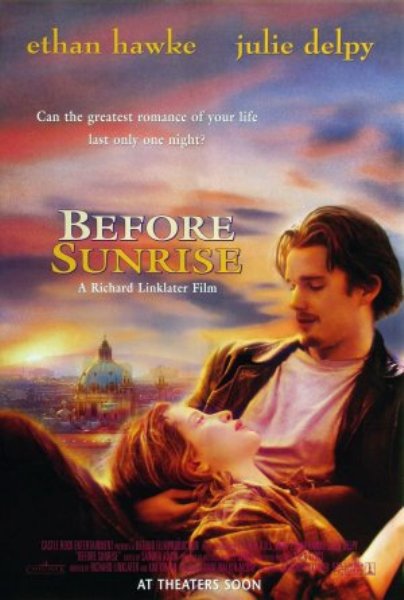
REVIEW: “BEFORE SUNRISE” (1995)

It’s gotten to where it is really difficult to find a good romantic drama or a good romantic comedy out of the host of mediocre to bad films that Hollywood churns out these days. So many of these movies employ the same stale formulas and the same conventional approach to storytelling. Richard Linklater’s “Before Sunrise” is an intelligent and fresh romantic drama that is anything but conventional. Linklater wrote and directed this story of two strangers who meet, take a chance, and truly connect.

“Before Sunrise” is built around an extremely minimal plot. Jesse (Ethan Hawke) and Celine (Julie Delpy) meet while on a train from Budapest to Vienna. Jesse is an American heading to Vienna where he is to catch a plane to the United States. Celine is a student at the Sorbonne in Paris and is returning after a trip to visit her grandmother. The two enjoy a conversation and they both sense a connection between them. The train arrives at Vienna in the early evening and Jesse’s flight doesn’t leave until the next morning. So he convinces Celine to skip her connecting train to Paris the spend the night with him walking through the streets of Vienna.

The rest of the movie follows them as they simply walk and talk. As they stroll through some of the city’s streets, cemeteries, and parks, they share more and more about each other – their beliefs, their pasts, their outlooks, their fears – and we the audience learn who they both are with each passing conversation. Even more, we watch as a spark of attraction turns into romance as the night continues. What’s even more interesting is watching the two pour their hearts out to each other as their time together begins to run out. There is an awareness between them that once she boards the train and he heads to the airport they may never see each other again. Linklater translates that reality to the audience very well and it’s a lot of what drives the second half of the film.

Both Ethan Hawke and Julie Delphy give great performances in a film requiring a lot of dialogue, some delivered through very long takes. The script almost feels as though it were written with them in mind, particularly Hawke, when actually Linklater had a hard time finding the perfect actors for the part. Hawke and Delphy work off of each other wonderfully and it’s their natural genuineness mixed with a perfect handling of the characters that sells both them and their romance. While Linklater brought aboard Kim Krizan to add a solid female influence into the story, it’s also said that both Hawke and Delphy contributed to the script. I think that’s another key reason that they work so well with the material.

Now there’s no denying that “Before Sunrise” is very talky and on the surface there isn’t a lot that happens. And even though I loved the glimpse into Vienna’s culture, Linklater – while certainly using it to a degree – doesn’t make the city and the culture a key player in the film in the same way as say Woody Allen did with Paris. It’s truly a movie about two strangers connecting and talking. Now as I mentioned, there is a meatier subtext and a more grounded and authentic look at spontaneity, personal reflection, and romance. But I can see where Linklater could have used the Vienna setting more to the movie’s advantage.

Overall, “Before Sunrise” is honest and straight-forward. There are no false moments or pretenses from the film, the characters, or the story and that’s one of the things that makes it work so incredibly well. You believe in the characters and you believe in their romance even though it’s based on one small spontaneous act. Watching these characters unfold was a delight and the ending didn’t undo what the rest of the movie accomplished. “Before Sunrise” may not be for everyone, but it’s a truly romantic yet in some ways sad look at two individuals who aren’t nearly as assured as they let on to be.

VERDICT – 4 STARS

5 Phenomenal Movie Cars

Many of us – and I point mainly to us sometimes one-dimensional, easily pleased males – attach ourselves to movies for the simplest of reasons. For me growing up, I remember several things about movies that attracted me including tough guys and cool cars. A while back I did a Phenomenal 5 on movie tough guys and tough gals. Shouldn’t it naturally follow that I now list 5 phenomenal movie cars? Now these cars are phenomenal in the sense that they really made an impression on me. In fact you could say that each was a key part of what made these movies worked. Ok, and they’re also incredibly cool and I would daydream about having one for myself. So here we go. Now as always, I wouldn’t call this the definitive list. But there’s no denying that these 5 movie cars are absolutely phenomenal.

#5 – ECTO-1 – “Ghostbusters”

The Ghostbusters major mode of transportation was the souped-up 1959 Cadillac ambulance known affectionately to fans as Ecto-1. Sure, it was a genuinely goofy-looking ride but for a young man like me – at the time – it was really cool. The undeniably unique siren and the Ghostbuster logos made the Ecto-1 a vehicle that really stood out when racing through the streets of New York City. Add the cool contraptions and modifications and you’ve got a perfectly fitting quirky car for a quirky group of guys. I just had to slip Ecto-1 on my list.

#4 – CAMERON’S DAD’S CAR – “Ferris Bueller’s Day Off”

Any of us from the 80’s remembers Ferris Bueller and his day off from school with girlfriend Sloane and best friend Cameron. The movie came out in 1986 and became a classic. Ferris sets up a day trip for the three into Chicago but first has to fool both his parents and school principal. But they also need transportation. That’s where Cameron’s dad’s vintage 1961 Ferrari GT convertible comes in. The awesome fire-red sports car becomes a pivotal part of the film and not just because it’s extremely cool. I’ll forever remember Ferris slipping into the car for the first time while “Oh Yeah” by Yello plays in the background. A classic movie and a classic car.

#3 – THE TUMBLER – “Batman Begins”/”The Dark Knight”

While the first Batman movie franchise only provided us with one genuinely good movie, the different versions of the Batmobile were pretty cool throughout. But they haven’t aged well. That’s where Christopher Nolan comes in. In “Batman Begins” he introduced us to the Tumbler, a military prototype that resembled a high-speed tank more than a souped-up car. Unlike the previous movie incarnations, this Batmobile could move – zipping through freeway traffic, shooting up on rooftops, and as we see in “The Dark Knight” it has the coolest two-wheeled surprise. While the Tumbler was destroyed in “The Dark Knight” all indications are that it will be back in this year’s “Dark Knight Rises”. I can’t wait.

#2 – BULLITT’S CAR – “Bullitt“

Every movie fan has to be familiar with Steve McQueen’s Ford Mustang GT Fastback in the 1968 classic “Bullitt”. The movie was a huge success and features what many call one of the greatest car chases in movie history. The adrenaline injected scene takes place through the streets of San Francisco and goes for over 10 minutes. “Bullitt” is considered an action movie classic and it’s one of McQueen’s signature performances. But it’s also a film just as well-known for Bullitt’s smoking-hot Mustang and the car chase that set the standard for many that followed.

#1 – BANDIT’S TRANS-AM – “Smokey and the Bandit“

As a young kid growing up there was no car I wanted more than Bandit’s black 1977 Pontiac Trans-Am from “Smokey and the Bandit”. Burt Reynolds speeds, spins, and jumps from county to county with Sheriff Buford T. Justice (Jackie Gleason) hot on his tail. The jet black paint with the gold firebird on the hood was one of the coolest things this little boy had seen. I had two different Bandit toy cars that I drove all over my room and even today I would love to have one of these 1977 beauties. There have been a lot of awesome cars that have zipped their way across the big screen. But for my money none will top Bandit’s Trans-Am.

So there’s my list. I can automatically think of several cars that some would certainly put on their list. Agree or disagree? Please take time to share your favorite movie car!