REVIEW: “Higher Ground”

Vera Farmiga has proven herself to be one of the most gifted and proficient actresses in Hollywood. In “Higher Ground” she once again shows off her acting chops but it also marks her directorial debut. It’s a thoughtful and sometimes challenging film that takes a more candid look at spirituality and how life’s difficulties make true faith seem out of reach. It’s also a story of decisions and the consequences that follow. It tackles some weighty religious issues but also looks at social troubles such as drug use, infidelity, and divorce. But at it’s heart, “Higher Ground” is the story of one woman’s conflict between the faith she envies and the lack of faith she feels.

Farmiga plays Corinne, a married mother of two who has watched her life take several drastic changes in direction. She was raised in church but was led away by her rebellion. After some poor choices lead to a premature pregnancy and marriage, she’s brought back to God by a near tragic accident. The family dedicates themselves to a small local church and we watch as Corinne grows in her personal relationship with God. But an inner conflict grows within as she struggles to see God’s hand in some truly difficult circumstances. She asks tough questions with genuine motivations and most of the picture focuses on her search for clarity. Corinne is a very earnest woman and Farmiga makes her believable and relatable regardless of your religious convictions. It’s a beautiful performance that drives the entire film and never shortchanges the character.

When it comes down to it, “Higher Ground” plays it pretty safe. It’s constructed in a way that different people can take away different conclusions largely based on their personal beliefs on Christianity and faith. The story certainly doesn’t target Christianity but neither does it shy away from asking some fairly provocative questions.  While at times it tries to paint faith into a corner and make Christians seem naive and disconnected, it also shows the deception and disloyalty of the faithless world. It may dabble in the occasional stereotype, but overall it stays on an even course which should allow it to speak to different people.

Farmiga’s direction is subtle and steady. She lets the story unfold without any overwrought theatrics or emotional gimmickry. The film looks and feels grounded in reality and Farmiga maintains a steady, natural tone. There are a couple of instances where it abruptly shifts to a new scene, but otherwise it moves at a smooth pace. The Christians are often times depicted well but at other times I couldn’t help notice how much they resembled a group of hippies from Woodstock. There are also several attempts at humor that are actually quite funny, but there are others that feel terribly out-of-place in the picture. One example is Corinne’s close friend explaining her method of keeping her marriage fresh. It’s not particularly funny and I found it pulled me out of the film.

There’s a lot to like about “Higher Ground”. Farmiga shows that she is certainly capable behind the camera even though the movie has it’s shortcomings. It’s a little clunky in some areas and it’s characterizations aren’t always consistent. But it is a careful and sincere picture that I bought into from the start. It clearly wants to speak to both sides of the faith issue but it does so without delegitimizing either position. It’s an intelligent and thought-provoking picture that may not be the best film of the year, but it certainly works on many levels.

VERDICT – 3.5 STARS

“THE MUPPETS” – 3 1/2 STARS

The Muppets have been missing in action for years now making them complete unknowns to a new generation of children. Now they are back in a feature film simply titled “The Muppets” and in many ways, it’s a fun and nostalgic step back in time. It’s based off “The Muppet Show”, a parody-driven variety program which ran from 1976 to 1981 and branched out into several full length movies. The whole cast is back and the result is a family-friendly experience that will bring back some fond memories for parents while introducing these wonderful characters to a new younger audience. And while the movie certainly retains that Muppet magic in places, it’s not without it’s problems.

Jason Segal wrote and stars as Gary, a human and brother to Walter who is a puppet. The two are incredibly close and as adults still live together. Throughout the years, Walter has become a huge Muppets fan. He watches all of their old shows, has a Kermit watch, and has a bedroom wall plastered with Muppet posters and stickers. Gary and his girlfriend Mary (Amy Adams) plan a romantic vacation to Los Angeles to celebrate their 10th anniversary. Walter ends up coming along and gets an opportunity to visit the old Muppet Theater. There he overhears the plot of an evil oil tycoon, appropriately named Tex Richman (Chris Cooper), to tear down the theater and drill for oil in it’s place. Walter makes it his mission to save the theater by convincing the Muppets, who have long since parted ways, to get back together for one last show to save the theater.

Both Gary and Mary are simple and sometimes cheesy characters and for the most part that’s ok. Segal and Adams make them both likeable even though their cluelessness is sometimes overplayed. Chris Cooper is a lot of fun as the stereotypical cold-hearted businessman and he hams it up without short-changing the character. But the Muppets are the real stars and while there are a few different voices, they all pretty much have the same personalities I remember from the show. They’re all here and I was surprised to see how much I remembered about them. Being this is a fairly concentrated movie, I was disappointed that some didn’t get as much screen time as I wanted but there’s not a lot you can do about that.

The story, while straightforward and predictable, does offer some pretty good laughs. There are several musical numbers throughout the film some of which are quite fun. Cooper’s bad guy rap is hilarious and works so well due to it’s absolute absurdity while others fall pretty flat and add little to the movie. But often times jokes are made at the song’s expense and they’re actually quite funny. “The Muppets” features several scenes that are like nostalgic flashbacks but it also has a few dull moments. The story drags in places and doesn’t maintain a steady pace. These lulls certainly don’t kill the picture but keep it from being as good as it could have been.

“The Muppets” may not be a great movie but it did leave me feeling like I had stepped back in time. I really enjoyed seeing these characters that I loved as a child back together again and there were several instances where I gave a hearty laugh at the genuinely funny jokes. There are also some fun cameo appearances by James Carville, Emily Blunt, Mickey Rooney, Selina Gomez and several more. While the movie hits a few speed bumps along the way, overall I did have fun and I guess that’s all that counts.

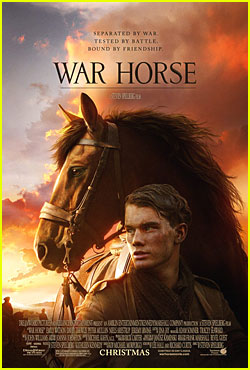
REVIEW: “War Horse”

“War Horse” is a Steven Spielberg movie throughout. It’s broad in scope, has huge production value, and soaked in melodrama. Spielberg produced and directed this war time period film and it features beautiful locations and several large-scale action scenes and set pieces. He has made several of these ambitious war pictures before so he’s in familiar territory. But his biggest challenge is taking a horse and making him the main star while keeping the audience engaged for the movie’s two and a half hour running time. “War Horse” does succeed in several areas but it never completely captures or maintains the emotional charge that it aims for.

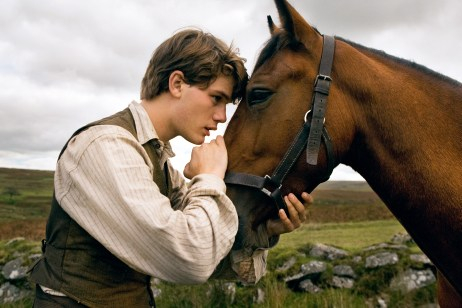
Based on a 1982 children’s book, “War Horse” follows a very special young colt who is unwisely bought at an auction by a struggling farmer who is supposed to be buying a bigger, stronger plow horse. The farmer’s wife is furious with the purchase but their young son Albert promises to raise and train the horse who he names Joey to eventually plow their hard, rocky farm plot. The family hits even harder times and circumstances arise that sees Joey thrust into the onset of World War I. “War Horse” never stays in the same place very long and becomes a collection of brief short stories about the people Joey encounters including a military officer heading to war, two young brothers reluctantly serving on the German front, and an elderly French farmer and his granddaughter. There are several other scenes featuring other characters but the one constant throughout is Joey.

WAR HORSE

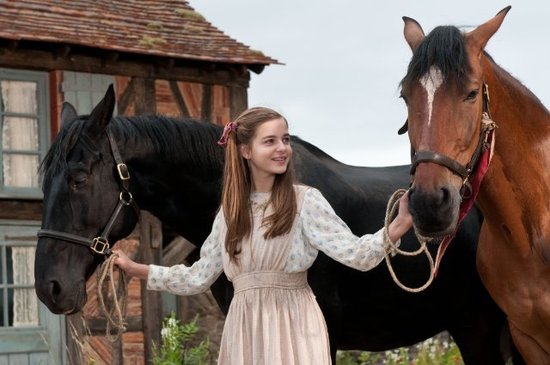
This storytelling technique works good in the broad sense. Joey is certainly an incredible animal and I couldn’t help but stay interested regardless of the convenience that dictates many of his situations. I particularly enjoyed the story of Joey and the military officer played wonderfully by Tom Hiddleston. Equally good were the scenes with the French Farmer played by the fantastic French actor Niels Arestrup and his young granddaughter Emilie played by the lovely Celine Buckens. These are the films best scenes and I can’t help but wish we could have gotten more from these characters. But as I mentioned, Joey is the real star and I was amazed that Spielberg was able to draw so much character out of his lead. As many as eight different horses played the part of Joey and even though the director uses several instances of emotional manipulation, the horse we get on-screen held my interest throughout.

But there was something missing in the movie. It’s clear what the movie wants to be but I could never get as emotionally invested as I was supposed to be. Some of the tugs at our heart-strings felt a bit artificial and there are several animal movie clichés that the movie fully embraces. It was also rather predictable in some areas and I found myself figuring out things well before they culminated on the screen. As with many Spielberg pictures, subtly isn’t a strong point and his attempts to bring tears feel heavy on delivery but light in effect. And with a movie that is striving to be an emotionally driven family drama, that hurts the film.

Flaws aside, “War Horse” is a very watchable film and even flirts with occasional greatness. As expected, it’s technically sound with some beautiful camera work, fantastic locations, and crisp editing. I loved the shots of the English countryside and the dank, muddy, war-torn areas are perfectly fitting. All the performances are solid and some of the character stories are great. There is a lot of charm and heart in “War Horse” but there are also several cheap and lazy attempts to bring out the tissues. It’s a good movie and one that I would certainly watch again. But I can’t help feel that with a tighter script and a slightly different approach, “War Horse” could have been a serious Oscar contender.

VERDICT – 3.5 STARS

REVIEW: “Dial M for Murder”

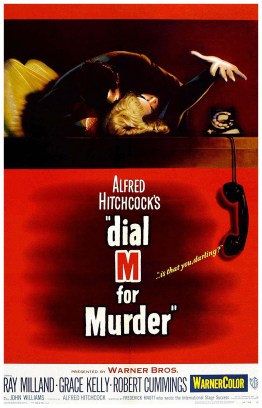
Classic Movie SpotlightDIAL MIt may not be the most acclaimed Alfred Hitchcock film, but “Dial M for Murder” is an intelligent and capable murder mystery adapted from Frederick Knott’s play. While there are special Hitchcock touches throughout the film, it’s Knott who really makes this such a memorable picture. He wrote the screenplay and kept most of his original work intact. The movie sharply resembles a play particularly by the fact that the majority of the film takes place in one single setting, a London apartment. Also, the dialogue flows in a way that favors what you would see on stage. But it’s that same dialogue delivered by some really strong performances and mixed with Hitchcock’s slick use of the camera that gives this movie it’s appeal.

“Dial M for Murder” explores the idea of the perfect murder. Ray Milland plays Tony Wendice, a professional tennis player who has enjoyed a lavish lifestyle thanks to his wife Margot’s wealth. After growing frustrated with Tony’s constant absence and busy schedule, Margot (Grace Kelly) begins a fling with an American writer named Mark Halliday (Robert Cummings). Tony finds out about the affair and fearing the loss of his meal ticket, he plans the murder of his unfaithful wife, leaving him her fortune. It’s a foolproof plan, carefully thought out to the smallest detail. But what may look good on paper doesn’t always translate well into real life.

The story is straightforward but structured and it pays great attention to the details. Clues are littered throughout the film with almost every seemingly small action from the characters having some type of relevance. It’s such a tight-knit and well-crafted story and watching it unfold is very satisfying. The story never trips over itself and Hitchcock let’s Knott’s script do most of the heavy lifting. The dialogue drives the film and it doesn’t rely on twists, turns, or red herrings. In fact, the narrative moves in a fairly straight line and never strays from it’s path. But I found it effective especially considering the movie is basically a single location cinematic play.

DIAL M 1

A movie of this sort only works with strong and grounded performances and “Dial M for Murder” certainly has them. I love watching Ray Milland’s shrewd and savvy Tony. He perfectly relays Tony’s arrogance and overconfidence in a way that never feels disingenuous or overwrought. He has a remarkable screen presence and is perfectly cast. Speaking of screen presence, the gorgeous Grace Kelly is mesmerizing. Whether it be her physical beauty and elegance or her graceful and authentic performance, Kelly steals almost every scene she’s in. I also loved John Williams as Inspector Hubbard. He’s fun, smart, and never misses a beat.

I suppose the location restrictions and the straightforward story could be considered faults especially for those comparing this film to some of Hitchcock’s other movies. But I loved how Hitchcock keeps the Wendice’s apartment fresh with inventive camera shots and clever angles. I can also appreciate the direct although conveniently tidy narrative. It’s an intelligent film that puts a solid story in the hands of some fantastic actors and lets them go from there. I always have fun with “Dial M for Murder” and it’s strongest message is this – keep up with your latchkey!

VERDICT – 4.5 STARS

“VERTIGO” – 4 STARS

In most conversations about Alfred Hitchcock’s films, “Vertigo” often finds itself mentioned as the quintessential Hitchcock movie. It’s called a masterpiece and is considered by many to be one of the best films of all time. While I don’t personally agree with that level of praise, there’s no denying that “Vertigo” is a cleverly crafted and stunningly stylized psychological thriller. “Vertigo” can never be branded as shallow or conventional. It has it’s fair share of mystery and suspense while also delving into more disturbing subjects such as mental breakdowns and romantic obsession. It’s takes it’s time playing out, but it’s still quite rewarding for those who appreciate it’s complexity.

The great James Stewart plays Scottie Ferguson, a San Francisco police detective. Scottie struggles with serious acrophobia which ends up contributing to the death of a police officer during a rooftop chase. The incident combined with his ailment cause him to retire early from the department. That’s when Scottie is hired by an old acquaintance named Gavin to follow his wife who he suspects has been possessed. Scottie doesn’t buy the supernatural assertion but still agrees to help. This sets the movie down it’s first of many twisty, unpredictable paths.  

It’s said that Hitchcock later stated he thought Stewart, who was 50 years old at the time, was too old and many critics initially felt he was miscast. Personally I think Stewart is fantastic here and it’s nice that over time his performance has garnered more appreciation. When first released, “Vertigo” was dismissed by most critics and Stewart became the easy scapegoat. The movie does have it’s flaws but it’s hard for me to associate any of them with Stewart’s performance. He’s grounded and believable and Stewart never loses control of his character even as things unravel around him.

Kim Novak plays Gavin’s wife Madeleine. She wasn’t Hitchcock’s first choice for the role but she ends up making the character her own. It’s impossible to talk about her character without giving away too much but Madeleine isn’t what she seems. A lot is required of Novak as her character branches out into several directions and for the most part she succeeds. She icy cold and mysterious yet we also see her as pitiful and sympathetic. She’s an essential character and while not as polished as Stewart, Novak’s performance works.

“Vertigo” is a technical marvel with some truly gorgeous camera work. Hitchcock keenly uses trickery and sleight of hand in several scenes to enhance the effects. The well-known vertigo zoom shots are still mentioned in most conversations about the film and the surreal use of lighting really dictate the tone of several scenes. I also love the wonderful locations. Hitchcock includes several San Francisco landmarks in the film and he uses the camera to accentuate the city’s beauty. Other small but effective devices include the use of reflections and clever elevated camera angles. It’s just an incredibly attractive film.

Some have described “Vertigo” as a meditation. Others have called it an observance. One reason these descriptions fit is because of the movie’s deliberate pacing particularly in the first half of the film. I felt it took a while getting it’s footing and the lackadaisical first 30 minutes could have been tightened up a bit. I was also a little surprised to see the timing of the big reveal. I certainly don’t want to give anything away but what I thought was the biggest red herring turned out to be no red herring at all.

For me “Vertigo” isn’t the perfect movie that many believe it is. That being said, it’s still a remarkable film that delivers despite it’s few flaws. It has the appearance of cinematic art with Hitchcock showing what skillful uses of a camera can bring to a movie. Stewart is brilliant and his performance immediately draws you into the picture. He’s the linchpin that keeps this dark but riveting film together. “Vertigo” has earned it’s “classic” label and it’s mandatory viewing for any fan of mysteries or thrillers. And while it’s not my favorite Hitchcock picture, it’s still a rock solid movie that satisfies with each viewing.

REVIEW: “Rear Window”

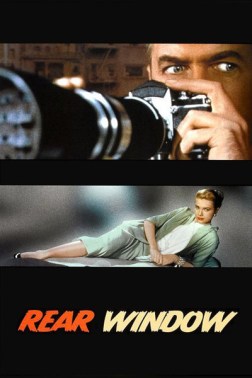
Classic Movie SpotlightREARAlfred Hitchcock’s suspense thriller “Rear Window” is revered by many as one of the director’s finest films. You would have a hard time getting me to disagree. “Rear Window” is a voyeuristic mystery picture that takes place in one single confined location and is all shown from the perspective of the main character. It’s an interesting approach to storytelling but one that’s very effective. There are many recognizable Hitchcockian touches throughout the picture yet it retains a uniqueness that separates it from most of his other films.
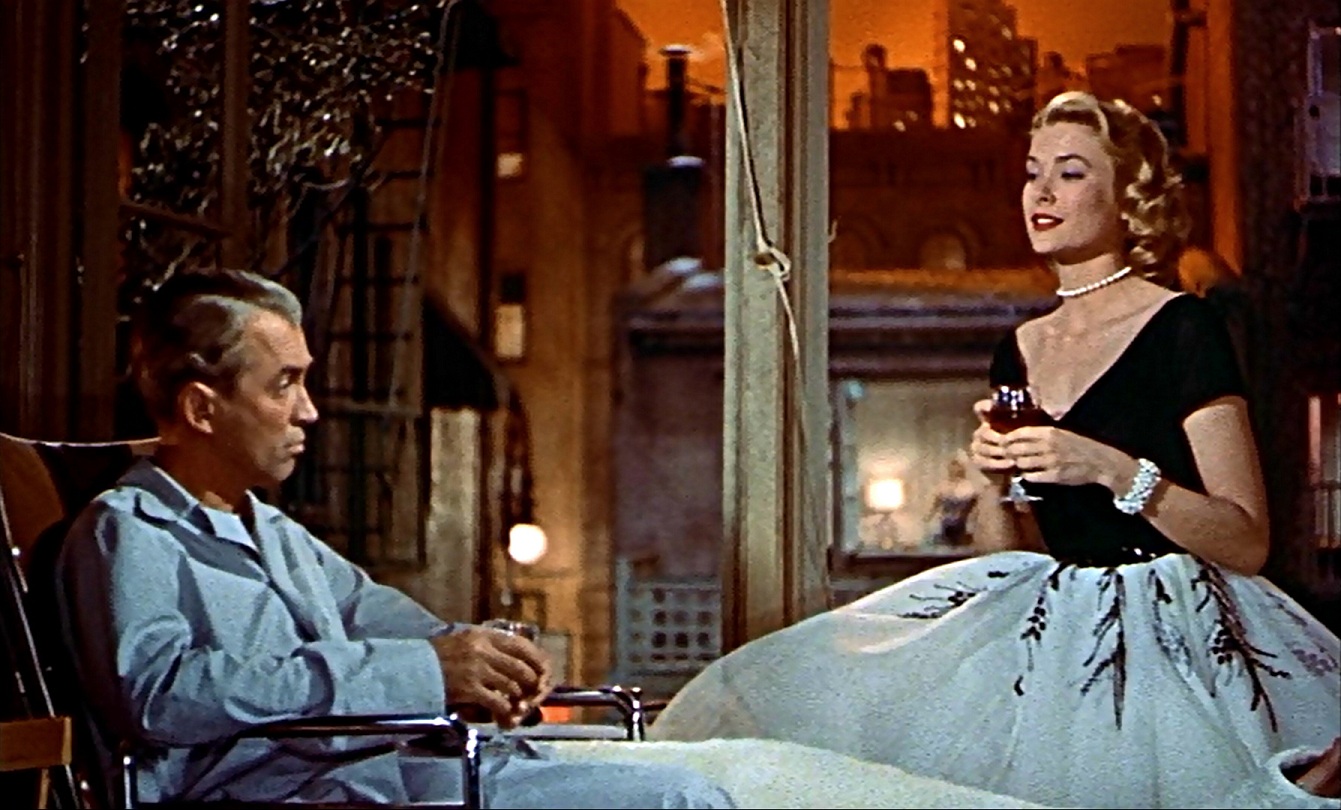

The story is seen through the eyes of L.B. “Jeff” Jeffries, an accomplished photographer who is confined to a wheelchair after breaking his leg while on assignment. He spends his time observing his neighbors through the window of his small Greenwich Village apartment. It grows into an obsession for him as he becomes infatuated with what he sees while peeping through their windows. Jeff is a man filled with insecurities and he seems more comfortable living out his life through the lens of his binoculars. In many ways he’s a sad individual who has so many good things within his grasp yet he lacks the confidence to reach out and take them. He begins to suspect a possible murder in one of the apartments and the second half of the film follows his attempt to either prove it or be disproved.

Hitchcock hits head-on the peeping tom mentality that certainly existed then but that’s even more prevalent in today’s reality tv-fueled society. Jeff crosses the boundaries of simple curiosity into full-blown voyeurism and we are right there with him. I found myself just as riveted by what’s on the other end of the binoculars as he was. Several people try to tell Jeff what he’s doing is wrong including his beautiful girlfriend Lisa (Grace Kelly) and his home nurse Stella (Thelma Ritter), but even they fall victim to this creepy temptation. Yet it’s hard to look down on these three characters. Hitchcock exposes some levels of the same voyeuristic compulsions within the audience as we watch things unfold with the same curiosity-driven intensity as Jeff, Lisa, and Stella. Hitchcock causes us to ask if we’re really that different from them?

REAR1

I was also intrigued with the way Hitchcock introduces and develops some of his characters. We get to know several people simply by watching them through Jeff’s window. There’s the beautiful Miss Torso, a dancer who occasionally practices in her undies and parties with several male suitors; Miss Lonelyhearts, a sad, depressed woman who has dinner dates with imaginary men; Mr. Thorvald and his bedridden wife; a struggling songwriter, a newlywed couple, and several others. What’s amazing is that we learn a lot about these characters simply by what we observe. It’s a beautiful method of storytelling that adds so much to the picture.

“Rear Window” was filmed on what was at the time the largest constructed set at Paramount. The entire picture takes place in this elaborate neighborhood and, with the exception of a small courtyard, it’s close-quartered construction gives it an almost claustrophobic feel. Hitchcock’s camera sleekly captures the characters as they move from window to window and down strategically placed hallways and alleys. Equally impressive is his skillful use of lighting combined with sound that’s centered around a natural ambiance. Simply put, “Rear Window” is a technically savvy picture that accomplishes a lot within a small compact environment.

For my money “Rear Window” is some of Hitchcock’s best work. It’s straightforward and mysterious at the same time and features characters that are more complex than they appear on the surface. It’s really a simple story that’s a little slow out of the gate but soon has you peeping over Jeff’s shoulder gazing into the living rooms of his neighbors. The intensity ratchets up in the final few scenes and the payoff is very satisfying. “Rear Window” is certainly near the top of Hitchcock’s resume and features a special brand of artistry that’s impossible to dislike.

VERDICT – 5 STARS

5 STARSs

5STAR K&M