REVIEW: “Southside with You”

southsideposter

There are a handful of moments in “Southside with You” where I saw glimpses of a different movie – a better movie hidden just under the surface. They are brief moments where we get small tastes of character depth, moments where the actors feel more natural and less scripted, moments where the film hints at developing its own unique identity. Unfortunately these are only ‘moments’ and they tease us with what this film could have been.

First time director Richard Tanne’s starry-eyed treatment of President Barack and Michelle Obama’s first date is a strange bit of bio-fiction but full of meaty potential. Tanne, who also wrote the screenplay, uses the familiar true framework of their first date and fills it in with inventions of his own. The problem is a big chunk of his fiction does more to hurt the film than to help.
southside2-2

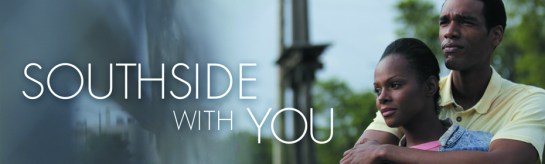
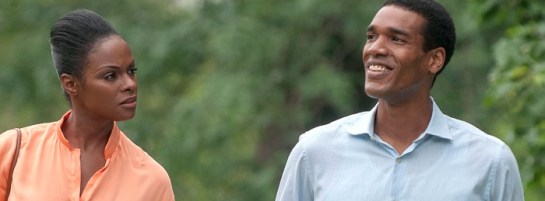
The movie begins on a warm summer Chicago day in 1989. Michelle Robinson (Tika Sumpter) is a Princeton grad and now lawyer at Chicago’s Sidley Austin law firm. She is assigned to mentor a Harvard man and summer associate named, you guessed it, Barack Obama (Parker Sawyers). Michelle is portrayed as ambitious and focused. Barack is more laid back and charismatic. Michelle is adamant about keeping their relationship professional but agrees to go out on a ‘not-a-date’ outing with the future leader of the free world.

Barack picks Michelle up in his beat-up yellow Datsun and the two spend the day in Chicago. They hit a museum for an art exhibit. They take a stroll and have lunch in a park. They attend a community event where Barack served as organizer before heading to Harvard. They hit a bar, watch a movie, and end it with ice cream and a kiss. I mention all of that because it doesn’t really spoil anything. Tanne wants this to be about what they say instead of where they go. He tries to emphasize the conversations and pulls heavily from Richard Linklater’s “Before” trilogy. Perhaps a bit too much.

The walk-and-talk formula works so well for Linklater because the conversations feel incredibly organic. Several things factor into that. First he has more seasoned actors. But the big difference is Hawke and Delpy contribute to those scripts. Their input helps make those exchanges their own. Many of Tanne’s conversations feels heavily scripted. Despite the best efforts of Sumpter and Sawyers, their dialogue is often dry and stilted. The actors are better than the material and there are moments where you see them rising above it and falling more comfortably into their characters. Sadly, the film doesn’t allow them to do it consistently.
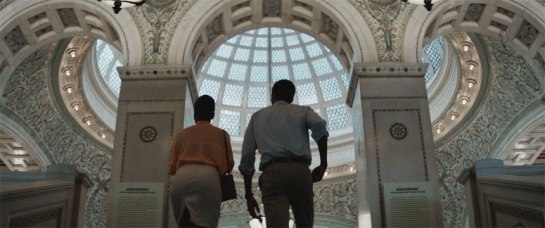
southside1-1

Back to Tanne’s inventions, one instance where it works is in the fictitious bar scene. Tanne slows things down and loosens his grip on his actors. It allows for the most open and authentic scene in the entire film. I loved it. But then we get moments such as the community event which probably happened some time later in their relationship but here is used as a pretty significant and obvious plot device. There is also an encounter outside of the movie theater that actually happened but Tanne significantly alters. The result is a noticeably clumsy and contrived scene that simply doesn’t work.

Sadly too many things don’t work. Perhaps I’m looking at it all wrong. Maybe it should only be viewed as a lightweight romantic date movie, but I’m not convinced it works through that lens either. I tried to imagine if the story or romance would hold an ounce of interest if the two involved weren’t the future president and first lady of the United States. Without their connection the answer was a resounding “No”. And even with their connection the movie doesn’t fare much better.

VERDICT – 2 STARS

2-stars

REVIEW: “Hidden Figures”

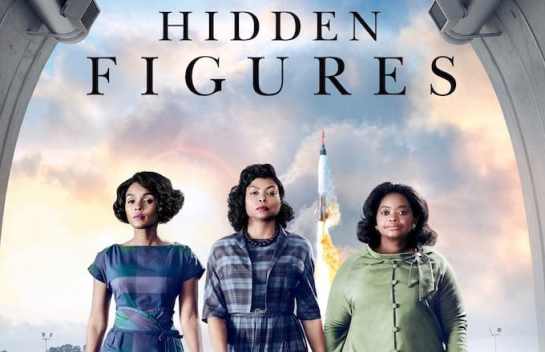
hidden-poster

The inspiring true story at the center of “Hidden Figures” is one aching to be told. Three brilliant mathematicians struggle to get their due in the fledgling NASA program. Why do they struggle? Because they dare to be African-American and women. It’s a spirited account of the persecution these women faced and the barriers they boldly broke. At the same time it’s a film aiming at being a crowdpleaser and packaged with a glossy coat of Hollywood influence.

“Hidden Figures” is adapted from Margot Lee Shetterly’s biography of the same name. The story begins in 1961 fresh after the Soviet Union’s successful Sputnik space mission. In full Cold War mode, the United States government begins pressuring NASA to catch up with the Soviets and put an American in space. To accomplish that in the pre-computer era NASA relied on human computers to put together equations and calculations. Many of these ‘computers’ were African-American woman who worked behind the scenes and without much credit.

hidden1

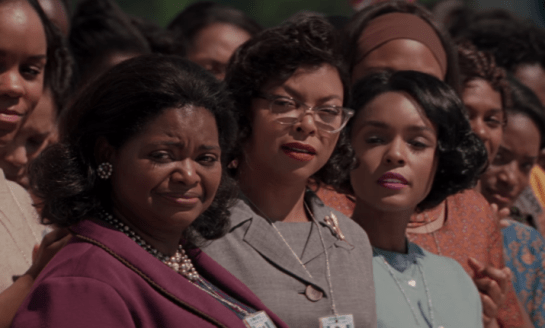
The film focuses on three of these women, brilliant mathematicians working in a back room at the segregated Langley NASA complex. Taraji Henson gets the starring nod playing Katherine Johnson, a mathematics genius from birth. Octavia Spencer co-stars as Dorothy Vaughan, the eldest of the three friends and an aspiring supervisor. Janelle Monáe plays Mary Jackson, a fiery engineer who is consistently denied the promotion she deserves. One of the film’s true pleasures is watching these three actresses work. Henson, Spencer, and Monáe have spectacular chemistry but they also bring an immense amount of truth individually, even when their scenes are a bit on the nose.

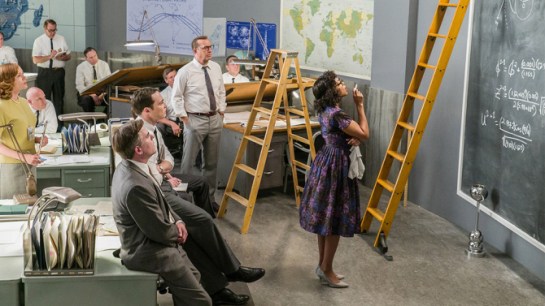
Each of these brilliant women are in line for promotions yet they all meet some sort of racial or sexist hurdle at every turn. Most notable is Katherine’s assignment to the Space Task Group, a team of white male engineers tasked with getting their astronauts into space and back down safely. Kevin Costner plays Al Harrison, the director of the group under intense pressure by the paranoid government. Harrison is all about results. He doesn’t see male or female, black or white. At the same time he’s impervious to the obstacles Katherine faces and the abuse she takes particularly by the wormy Paul Stafford (Jim Parsons).

Hidden Figures Day 42

Co-writers Allison Schroeder and Theodore Melfi (Melfi also directed) tell a powerful story but do so with splashes of fiction. Often this works in the movie’s favor but not always. Their additions may occasional take away from the real story, but they also give an honest depiction of the oppressive rules and attitudes of the time. Then you have Parson’s completely fictional character who is a conduit for those prejudices. The performance is fine but the character is scripted so tightly that it’s hard to believe in him. Kirsten Dunst has a similar fictional character but one that is handled much better.

“Hidden Figures” is a polished Hollywood movie through and through, but the power and importance of its story along with the three central performances easily overshadow any hiccups. I would even toss in Kevin Costner who offers up some of my favorite supporting work of the year. There is simply an irresistible quality to these characters that makes spending time with them a joy. And regardless of how predictable it may be, this is still an empowering, inspirational story that needs to be told.

VERDICT – 3.5 STARS

3-5-stars

Random Thoughts on the 2017 Golden Globes

globes

Awards season is upon us and the Golden Globes got the ball rolling. The Hollywood foreign press sparked several interesting storylines that we will be talking about all the way to Oscar night. It was a fun night will a few surprises and a few disappointments. Here are a handful of random thoughts:

  • Who had the best night? Do I even need to tell you? “La La Land” went a perfect 7/7 which was both wonderful and surprising.
  • The first surprise of the night came quick. Aaron Taylor-Johnson wins Best Supporting Actor for “Nocturnal Animals”. Hard to argue. It’s a great performance, but Michael Shannon was that film’s scene stealer and he didn’t even get nominated.
  • Predictably “Zootopia” wins Best Animated Film. I know I know, people love it. For me it was insanely heavy-handed. Great message but handled with bludgeoning subtlety.
  • Jimmy Fallon was an okay host. The opening musical riff on “La La Land” was a hoot. After that Fallon kinda disappeared.
  • Best Actor in a Comedy or Musical went to Ryan Gosling. Hmm. Well it was a weird group. The inclusion of Reynolds and Hill was baffling to me. And while Grant and Farrell are both good, they are hardly give Awards caliber performances. That’s why Gosling won. But he needn’t worry about giving an acceptance speech on Oscar night. He’s toast when tossed in with Washington and Affleck.

gosling

  • Speaking of Gosling, he gave my favorite speech of the night. It was humble and very personal. There was no doubt it came from the heart. Good job Ryan.
  • And then you have Meryl Streep’s speech. As unpopular as this may sound, I zoned out halfway through. I’m just tired of the political wrangling especially when both sides start repeating themselves. The speech will be heralded by the left and railed on by the right. Whatever. I would have MUCH rather heard her talk about what won her the award in the first place. Oh well, it was her time to spend.
  • The Debbie Reynolds and Carrie Fisher tribute was such a tender moment. Just a lovely montage.
  • “Elle” certainly turned some heads. Not only did it win the Best Foreign Language category but Isabelle Huppert wins Best Actress – Drama. Look out Oscars!
  • Steve Carell and Kristen Wiig – Best presenters of the evening (Seeing Rocky and Apollo together – a close second).
  • Amy Schumer and Goldie Hawn – Worst presenters of the evening.
  • Did anyone else notice the weird selective aggression when it came to the cut-off music. There was no rhyme or reason for it.
  • “Hidden Fences”?
  • Casey Affleck is a good actor. I’ll give him that. But you’ll be hard-pressed to find any better performance than Denzel Washington’s in “Fences”. Electrifying. I was hoping he would win.

viola

  • Speaking of “Fences”, Viola Davis. I can’t express how thrilled I was to hear her name called for a Best Actress-Drama. It was a stacked category but her performance was on an entirely different level. Pure brilliance.
  • I loved Damien Chazelle’s win for Best Director. “La La Land” was such a gutsy undertaking, but to then deliver the way he does. A truly magnificent accomplishment and a well deserved win.
  • Chazelle’s win for Best Screenplay. Well, that was a little surprising.
  • Did you guys notice all of the beards?  I mean beards were everywhere!
  • “Moonlight” winning for Best Picture-Drama was no surprise. While I prefer “Hacksaw Ridge” out of that group, “Manchester By the Sea” was the only real challenger for “Moonlight”. Up next, a showdown with “La La Land” on Oscar night. That should be fun to watch unfold.
  • Every time I saw Ryan Reynolds I just shook my head. Very likable guy and all, but “Deadpool” nominated for two Globes? Can’t see it.
  • Yes Meryl Streep was nominated again this time for “Florence Foster Jenkins”. It’s become a regular thing at this stage of her career (whether deserved or not) . I’m hoping the Academy doesn’t do the same. Don’t get me wrong. Streep gives a nice performance, but there are so many actresses who deserve it more this year. Hey Oscar, let’s give them a shot.

patel

  • Regardless of whether you prefer “La La Land” or “Moonlight”, everyone can agree that Dev Patel and Sunny Pawar were adorable!
  • How about that teleprompter malfunction? Could there have been a worse possible time for Jimmy Fallon? I felt for the guy.
  • Here’s hoping the internet doesn’t give “La La Land” the “Boyhood” treatment after such a big night. We may like one film more than the other and that’s okay. Winning at an awards show won’t change a film’s value to us. Let’s just be collectively happy that we have some really good films to talk about this season. That’s a good thing.

So there are just a few thoughts from last night’s big show. It was fun in a very Golden Globes-like way. So what did you think of the show, the winners, the losers, Casey Affleck’s hair? Share you thoughts in the comments section below.

2017 Blind Spot Series Lineup

[

2017blindspot

Last year was my first full year of doing this Blind Spot thing and it was a ton of fun. It compelled me to watch some films I should have already seen and to dive into classics that others have spoken so highly of. Now it’s a new year which means a new Blind Spot list. Here are the movies I’ll be seeing or seeing in full for the first time in 2017.

JANUARY – “Infernal Affairs” [REVIEW]

infernal

FEBRUARY – “In the Mood for Love” [REVIEW]

in-the-mood

MARCH – “Diabolique” [REVIEW]

Film and Television

APRIL – “Umberto D” [REVIEW]

umberto

MAY – “Days of Heaven” [REVIEW]

DAYS4

 JUNE – “Ikiru”

ikiru

JULY – “L’Argent”

largent

AUGUST – “Grave of the Fireflies” [REVIEW]

grave

SEPTEMBER – “The King of Comedy”

Film Tribeca Closing Night

OCTOBER – “The Passion of Joan of Arc”

passion

NOVEMBER – “The Fly” (1958)

fly

DECEMBER – “The Producers” [REVIEW]

producers

So that’s this year’s Blind Spot list. What do you think? Are any of your favorites included or are there some you still need to see? What do I have in store for me? Please share you thoughts in the comments section below.

REVIEW: “Loving”

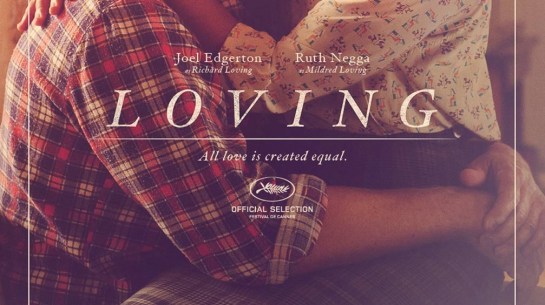
lovingposter

“Loving”, the fifth film (and second of 2016) from writer/director Jeff Nichols, continues the Arkansas-born filmmaker’s impressive streak of well-received movies. Through his films Nichols has revealed a unique and refreshing cinematic voice and has emerged as a true rural America storyteller. The Mark Twain influences are undeniable.

“Loving” examines the 1967 U.S. Supreme Court case that abolished state laws prohibiting interracial marriage. But the film does so not by stressing the court room. Instead it focuses on the love between Richard and Mildred Loving. Nichols trusts the potency of their story enough to keep his approach admirably subdued. It’s sometimes a bit too low-key, but there is no denying the film’s subtle power.

loving1

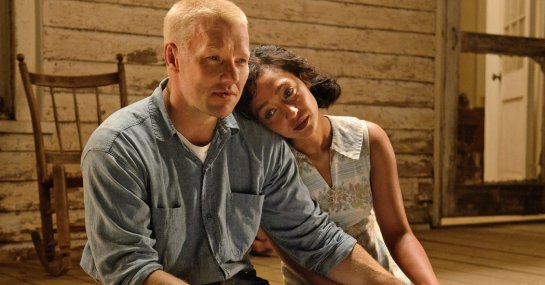
The performances from Joel Edgerton and Ruth Negga are superb. Edgerton’s Richard is a simple but devoted man who wants to love and take care of his wife. Negga portrays Mildred with a quiet grace and dignity. She’s both sweet and gentle, but she’s also Richard’s emotional anchor. The Lovings saw their lives turned upside down in the summer of 1958. In the dark of night the Caroline County sheriff (here played by Marton Csokas) and his deputies stormed their home and arrested the newlywed couple for breaking Virginia’s laws on interracial marriage.

What followed was a series of arrests and court appearances until their case finally reached the U.S. Supreme Court. Nichols doesn’t spend much time with the legal wranglings. He sets them up but mostly shows their effects. It’s a wise choice since they are when the film is at its weakest. Contributing to this is the odd casting of Nick Kroll as a young, green ACLU lawyer who takes the Lovings’ case. It’s a strangely stiff performance with Kroll routinely looking as if he’s holding in laughter. John Bass doesn’t fair much better as a constitutional law expert helping with the case.

There are some fantastic supporting turns though. Nichols favorite Michael Shannon has a small but fun role as a LIFE magazine photographer profiling the Lovings and their case. And I adored Sharon Blackwood’s performance as Richard’s straight-shooting midwife mother.

loving2

Perhaps my favorite thing about “Loving” is this – Richard and Mildred aren’t activists. They aren’t vocal, aggressive crusaders for a cause. They don’t seek the attention. They don’t want the press. The Lovings just want to live their lives together. That simple innocent desire highlights the despicable nature of the Virginia law far more effectively than if this had been a more pointed activism film. Through this emotionally detailed couple we learn all we need to know about the true rights and wrongs of the story and it invests us on a much more intimate level.

While it can be a bit slow at times and the approach may not be abrasive enough for some people, “Loving” gracefully and truthfully tackles an issue by putting its focus on the human element. Nichols’ delicate portrayal is slyly potent and speaks volumes about its subject without leaning on layers of dialogue. Instead Nichols asks his audience to watch, observe, and feel a closeness with his two central characters. If you do that the power of the message will be unavoidable.

VERDICT – 4 STARS

4-stars

The 5 Worst Films of 2016

5-worse

Sometimes we need to take a break from all of the excitement and celebrations of awards season and come back down earth. What better way to do that than by reminding ourselves that not every 2016 movie was a good one. In fact there were some real stinkers. To prove it I’m sharing what I thought were the five worst films of the past year.

Keep in mind I was fortunate enough not to see all of the cinematic dreck that funneled through theaters so you may notice a few missing. I consider that a blessing. Still these five movies more than hold their own against any others.

#5 – “The Purge: Election Year”

purge

I find something oddly intriguing about the Purge franchise’s concept despite its absolute absurdity. This third installment teases its potential but completely loses it in a mire of silliness and heavy-handed sermonizing. There wasn’t must subtlety in the political messaging of the first two films, but this installment is so laughably direct and it smothers out any hint of a decent story.

#4 – “Suicide Squad”

suicide

This epic blunder was the last thing DC Entertainment and Warner Brothers needed. It certainly doesn’t help them gain ground on Marvel’s cash cow. There is an interesting concept hidden somewhere within “Suicide Squad” but we never see it. Instead we get a pasted together mess filled with flat characters, dull action, and a bland, forgettable antagonist. In fact, that actually describes the movie perfectly – flat, dull, bland, and forgettable.

#3 – “Independence Day: Resurgence”

id4

You would think if someone was going to make a sequel some 20 years after the original film that they must have something good in mind. Nope. “ID: Resurgence” is basically a rehash minus any of the charm from the original. This film is a joyless slog featuring cheap, paper-thin characters and some of the worst performances of the year. And it doesn’t help to have a truly awful script at the center. I didn’t think this would be good, but I also didn’t think it would be this bad.

#2 – “Gods of Egypt”

gods

I have an incredibly high tolerance for cheesy fantasy, but even I couldn’t get over the myriad of problems with “Gods of Egypt”. This thing is filled to the brim with lame plot contrivances, mind-numbing action sequences, uninspired creatures, and some truly terrible performances. Even the effects (supposedly the film’s bread-and-butter) can be shockingly gaudy. Sadly we have come to expect this from a Gerard Butler movie, but talk about a crazy way for a studio to waste $140 million.

#1 – “The Do-Over”

doover

Expecting a decent movie from Adam Sandler has become an exercise in futility. He is content with churning out garbage and cashing his checks for it. This is one of his worst and that’s saying something. “The Do-Over” is yet another excuse for Sandler to take vacation with his buddies on Netflix’s dime. It’s stupid, juvenile, disgusting, and offensive yet it masquerades as comedy. I happily checked out before the end simply because there was nothing redeemable about this slop. Yet another new low for Sandler.

So there are my worst films of 2016. See one I miss? Have any thoughts on these? Please let me hear them.