REVIEW: “The Heiress”

HEIRESS POSTER

At times William Wyler’s “The Heiress” comes across as an extravagant stage production. That makes sense since it was adapted from the popular 1947 Broadway play. But the original story actually came from the the 1880 novel “Washington Square” by Henry James. Husband and wife playwrights Augustus and Ruth Goetz brought James’ book to the stage and were later convinced to write the film’s screenplay. Their familiarity with the material and their mellifluous writing style mixed perfectly with Wyler’s perfectionism. The result was a highly acclaimed that still garnered critical praise and several Academy Awards.

In many ways the film’s star Olivia de Havilland can be thanked for making the movie happen. She went to see the play based on a recommendation and before it was even finished she was making calls. She first convinced the wonderful William Wyler to direct the film. He was instrumental in getting studio support and in convincing Augustus and Ruth Goetz to write the script. Montgomery Clift added another popular face to the production and the wonderful Ralph Richardson, who had taken part in a London stage version, was also cast.

Heiress2

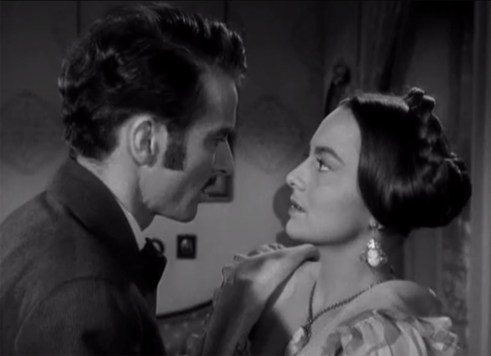
The story is set in 19th century New York City and focuses on a plain and reserved young woman (de Havilland) from the upper-class Washington Square neighborhood. She lives with her wealthy and proper father (Richardson) who does a poor job of hiding his disappointment. Her shyness and naivety draws her father’s insults and disenchantment and her feelings of self-worth are practically nonexistent. But their relationship takes a worse turn when she starts a relationship with a charming young man named Morris (Montgomery Clift). Her father thinks Morris is after her inheritance and he certainly doesn’t believe she’s capable of attracting a decent man. This three-way conflict makes up the core of this story.

“The Heiress” is unquestionably talky, but when the script is so fluid and its placed in the hands of such great performers, it’s easy to get lost in it. The Goetzs have no problem moving the story from stage to screen and Wyler’s directorial fingerprints are everywhere. His calculated long takes and his precise attention to detail are just some of the things you’ll notice. The film moves at a wonderful pace and it always keeps its focus. It also takes some pretty heavy subjects and treats them with respect.
HEIRESS1

And then again you have the marvelous performances. Olivia de Havilland is nothing short of fabulous and she would go on to win her second Academy Award for her performance. Ralph Richardson is simply perfect as the arrogant aristocratic father. His well-spoken eloquence and tinge of snobbery is exactly what the role demanded. And then we have Montgomery Clift who I think does marvelous work. Apparently he didn’t think so. It’s said that Clift disliked his performance so much that he left the premiere before the film ended. That is definitely a case of being your own worst critic because I thought he was excellent.

“The Heiress” is a true motion picture classic and it is crafted by the talents of some of the best filmmakers and performers to ever work in the business. It has a very stagey feel and rightfully so. But it’s great drama that dissects and exposes its characters while telling a dense and emotional story. This film may not draw the attention of some modern moviegoers but it should. If you love movies, treat yourself by seeing “The Heiress”.
VERDICT – 4.5 STARS

REVIEW: “Camera Buff”

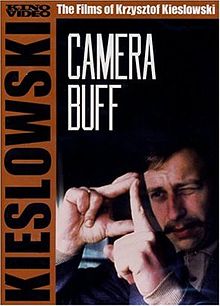
Camera Buff poster“Camera Buff” is a 1979 film from Polish director Krzysztof Kieslowski about an eccentric and reserved man and his infatuation with his newly purchased movie camera. Jerzy Stuhr brilliantly plays Filip, a loving and content husband who spends two weeks worth of salary on a small 8mm video camera in order to film his new baby girl. Filip is a nervous, circumspect man who you feel is perfectly happy with his quiet and confined life.

But things change when a local Communist Party boss assigns him the task of filming a celebration at the plant where he works. Filip reluctantly agrees. His film is deemed a success and eventually is entered into a competition at an amateur filmmaker’s festival where it wins third place. Filip’s films become his obsession and he grows impervious to the destructive effects that his new addiction is having on his crumbling marriage. He also fails to understand the serious consequences of unbridled enthusiasm.

In “Camera Buff”  Kieslowski touches on numerous weighty subjects including the oppressive nature of communism. The film takes place in Communist Poland sometimes during the 1970′s and you can really sense the heavy authoritarian feel. From the cinematography to the conversations, I really felt as if there was a bigger, ever-present enemy lurking in the background. Not just an enemy to the people but to their freedom of creation and expression. It’s brilliantly realized.

Camera Buff

Kieslowski also does a remarkable job showing the power of filmmaking. For example, Filip makes a film about a “dwarf” who has been working at the factory for years and is nearing retirement. We see the power of film as the man tells Filip how deeply moved he was by it. One of Filip’s neighbors seriously struggles with the death of his mother but recalls that Filip filmed him and his mom in a happier time. Filip shows him the film and it gives him a much needed level of comfort and peace. These things fuels Filip’s love for filming but it also clouds his vision and keeps him from seeing the damage it’s doing to his home life.

“Camera Buff” deals with an assortment of other themes and does so very effectively. As the film progressed, it had me wondering if I was witnessing a young filmmaker realizing and finding his dream or watching an obsessed husband and father heading down a path of self-destruction. The movie is marked by an amazing performance by Stuhr, a stimulating story, and strong direction, both handled by Kieslowski. It doesn’t shy away from emotional or even provocative material and is nearly perfect in it’s execution. This is a magnificent film and a nice introduction to Kieslowski’s work for anyone who hasn’t seen his pictures.

VERDICT – 4.5 STARS

5 Phenomenally Memorable Movie Ministers

movie_theatre - Phenom 5

Movies have portrayed ministers and/or preachers in a variety of ways. Some have been impressive while others…well, not so much. But looking through the history of cinema it’s easy to recognize a number of great characters who serve as ministers. That’s what I’m looking at today. Now it should be said that this isn’t a list of the greatest movie ministers. These are the most memorable meaning they may not fit the proper role of a minister. In fact, some may be down right evil. Either way, with so many great choices I wouldn’t call this the definitive list. But there is no denying that these five movie ministers were phenomenally memorable.

#5 – Jacob Fuller (“From Dusk Till Dawn”)

P DUSK

We first meet Jacob Fuller (Harvey Keitel) at a motor inn with his two kids. Jacob has stepped away from his role as a pastor after the tragic death of his wife leads him to question his faith. Little does he know that in the same motor inn are the Gecko brothers – two killers who kidnap Jacob and his family. Danger, death, and vampires alter the courses of all of their lives. For Jacob these events provide him the opportunity to find his faith and use it against the unholiest of creatures. Keitel is perfectly cast and watching his portrayal of a struggling minister in the middle of such craziness is a treat.

#4 – Reverend Oliver (“The Patriot”)

P patriot

Roland Emmerich’s historical drama finds its way back on a Phenomenal 5 list this time due to its character Reverend Oliver. While he is the shepherd of a small community church, Rev. Oliver still joins the local militia to help fight the British but also offer spiritual advice to his fellow soldiers. Rev. Oliver has several great scenes and he is brought to life by actor Rene Auberjonis. Star Trek fans will remember him as Otto from “Deep Space Nine” but he was also one of my favorite movie ministers.

#3 – Reverend Harry Powell (“Night of the Hunter”)

P hunter

As I hinted at above, not everyone on this list is the ideal minister. Reverend Harry Powell from the 1955 classic “Night of the Hunter” is a shining example. Robert Mitchum gives one of his best performances as a self-ordained preacher who is really a wanted serial killer. Mitchum is chilling as he unfolds this evil and manipulative character to a gullible small town. There are so many memorable moments sprinkled throughout this intense thriller. Director Charles Laughton’s style would influence a number of top tier modern directors. But it’s Mitchum and his despicable character that is the most memorable for me.

#2 – Preacher (“Pale Rider”)

P PALE

Clint Eastwood, western, preacher. Put those things together and I am instantly intrigued. In 1985’s “Pale Rider” Eastwood plays a mysterious stranger who appears to a group of persecuted minors seemingly as a result of an answered prayer. The character is known only as Preacher and very little else is ever known of him. He comes between a villainous corporate miner and a small group of families who mine a small portion of land to survive. And you know Clint, six-shooters pop and bullets fly as Preacher makes things right and protects the innocent families by any means necessary.

#1 – Father Barry (“On the Waterfront”)

P BARRY

One of Marlon Brando’s very best performances came in 1954’s “On the Waterfront”. But the movie wasn’t just about Brando. It was filled with great performances. One of those came from Karl Malden who played a burdened minister named Father Barry. He finds himself in the middle of a mob-controlled waterfront and the workers who are the victims. He struggles with balancing his clerical duties with pushing the bounds to end the mob’s violent grip on the docks. Malden is spectacular and he was nominated for a Best Supporting Actor Oscar. In fact, three of the five nominations in that category were from “On the Waterfront”. But for me Malden is right there with Brando in offering a pivotal performance that serves the classic well.

So there are my five phenomenal movie ministers. So many more are swirling in my mind including ministers from films like “Signs”, “Sleepers”, “Dead Alive” etc. etc. How about you? Agree or disagree with my picks? Please share your thoughts in the comments section below.

REVIEW: “My Favorite Wife”

FAVORITE WIFE POSTER

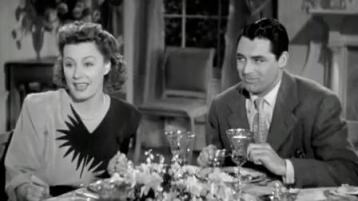
How can any true movie fan not love the screwball comedies of the 1930s and 1940s? The once popular genre was recognized for its witty rapid-fire dialogue, wacky situations, bold and brash female leads, occasional slapstick humor, and a feverish battle of the sexes. During this wonderful time for comedies many actors and actresses saw their careers flourish including Cary Grant. In “My Favorite Wife” Grant matches wits with Irene Dunne in what is a shining portrait of this great genre.

The movie starts with arguably the funniest courtroom scene ever filmed. Nick Arden (Grant) is before a judge seeking to have his wife Ellen (Dunne) declared legally dead after being missing at sea for seven years. He’s there with Bianca (Gail Patrick) who he plans to marry after the judge’s ruling. Everything goes as planned but as with all screwball comedies the harmony doesn’t last long. You see, Ellen isn’t dead and she shows up after being rescued from a deserted island.

FAVORITE WIFE1

When Ellen reveals herself to Nick things get pretty complicated. He’s crazy about her yet he doesn’t know how to end it with Bianca. It also doesn’t help that he’s a bit spineless and cowardly. He drags things out leading to one comedic complication after another. And that’s what makes this movie so great. The nutty situations, the back-and-forth banter, and the hilarious head-butting between the two leads.

One of the biggest strengths of “My Favorite Wife” lies in its screenplay. It’s sharp, funny, and void of any of the trappings that befall many of today’s “comedies”. You’re always running across a great scene or hilarious line. For instance take the opening courtroom scene. Veteran character actor Granville Bates plays the grumpy and cantankerous Judge Bryson. He steals the scene with his growls and impatience. It’s a perfect tablesetter for the fun and playful tone that carries through the entire picture.

FAVORITE2

Of course a movie like this has to have good performances from capable talents who can pull it all off. I’ve already talked about Cary Grant and as expected he is fabulous. He has his usual charisma but he also shows off his impeccable comedic timing. But the real star just may be Irene Dunne. Dunne has been called the greatest actress to never bring home Oscar. Watch her here and you may understand why. She matches Grant line for line and gag for gag. She gives a great performance and steals one scene after another. Randolph Scott and Gail Patrick are also a lot of fun in solid supporting roles.

“My Favorite Wife” is a really good film. It features a sharp and sometimes corny wit and some really fun performances. Even though it was nominated for three Academy Awards, the film is rarely mentioned among the list of the great screwball comedies. And while I’ll admit that it may be missing that special ‘something’ which may hold it back, I still think it’s a great picture that any lover of comedy or movies should see.

VERDICT – 4 STARS

Your Voices: On the Best Bruce Willis Movie (other than Die Hard)

your-voices

Your Voices is a simple concept created to encourage conversation and opinions between movie lovers. It works like this: I throw out a certain topic and I’ll take time to make my case or share my opinions. Then it’s time for Your Voices. Head to the comments section and let fellow readers and moviegoers know your thoughts on the topic for that day!

Sixth Sense

I can say without hesitation that I have always liked Bruce Willis and many of his movies hold a spot in my movie-watching heart. But the actor also hit a stage of his career where he seemed to take any small supporting part thrown his way. Lately he has shown signs of making smarter choices as evident by his work in films like “Moonrise Kingdom” and “Looper”. But for every one of those there is a G.I. Joe appearance or a downright bad movie like “The Cold Light of Day”. But still he is an actor I do enjoy even outside of his hugely successful “Die Hard” franchise.

So that got me to thinking, what is Bruce’s best movie outside of the “Die Hard” films? I’ve mentioned roles I have liked above, but there were a couple that stood out more than others. At the top of my list is “The Sixth Sense”. His turn as Dr. Malcolm Crowe still stands out as one of his best performances and one of his best movies. He drives the film with a perfectly measured performance that flows with the film’s creepy mood. It’s an easy choice for me. But what about you? Now it’s time for you to share your thoughts.

YOUR VOICES: What is your favorite non-Die Hard Bruce Willis movie?

Now it’s time for Your Voices. With so many Bruce Willis movies to consider, which one, other than the Die Hard films, would you consider his best? Please share Your Voices on today’s question. I’d love to hear from you in the comments section below.

REVIEW: “Enough Said”

ENOUGH poster

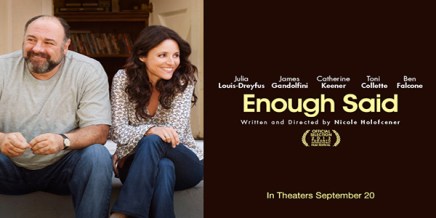
“Enough Said” is an interesting romantic comedy/drama from writer and director Nicole Holofcener. It’s one of those films that has magically latched onto critics who were giving it rave reviews. It has one of the highest aggregate scores on Rotten Tomatoes and it has found its way on numerous Top 10 lists from well respected critics. But what is it about this movie that has earned such high praise? Here are a few things that come to mind: charm, wit, an intelligent script, and two very strong lead performances.

The true magic of “Enough Said” starts with two fine leads. Julia Louis-Dreyfus plays Eva, a divorced single mother and self-employed masseuse. Her life is in a repetitive rut at least until she meets Albert played by James Galdolfini in the first of his final two roles before his death. He two is divorced with a young daughter. The two decide to go on a date which launches a very unlikely relationship. In some ways the two couldn’t be more different. She is a fit and attractive middle-aged woman while he is an overweight middle-aged regular Joe. The film points out these physical differences on numerous occasions and I feel it’s for a specific reason. At first Eva may be desperate to fill a void in her life but soon she sees beyond physical appearances to what really anchors a relationship.

ENOUGH1

“Enough Said” develops one of the purest depictions of an adult relationship you’ll see on screen. For years Hollywood has been fixated on divorcees when it comes to depicting relationships. That has fascinated and at times frustrated me. But here it is very pertinent to the story and more importantly to the characters themselves. Dreyfus and Gandolfini are fantastic and have a remarkable chemistry. You do root for them to make it and overcome their faults and past mistakes. Dreyfus has always had this infectious wit that I’ve been attracted to, and Gandolfini shows a brilliant range that many of us didn’t realize he had.

Holofcener’s script is smart and authentic but I have a few quibbles with it. There are a handful of subplots that are vaguely introduced but never really explored. A couple of them do reflect on our two main characters but others feel tacked on and unnecessary. There is also a twist with a character named Marianne (played by Catherine Keener). She and Eva become friends and they have some good moments together, but I couldn’t really buy into the overall idea behind the twist. I can see where it would work in a film a little more focused on straight comedy. But here it felt like a stretch.

Still, “Enough Said” is an intelligent and refreshing alternative to the bulk of what passes for romantic comedies these days. It’s mature in the sense of its middle-aged focus and it’s grounded in its portrayal of fallible and believable characters. But the biggest treat is watching Julia Louis-Dreyfus and James Gandolfini effortlessly embody these two characters. Both are fantastic and they are the real heart of the film. And for me, it’s their performances that are the biggest draw.

VERDICT – 4 STARS