REVIEW: “No Escape” (2015)

ESCAPE POSTER

No this isn’t Martin Campbell’s grungy 1994 sci-fi survival flick starring Ray Liotta. You remember, the one with the prison island and the two warring prisoner factions? Okay you probably don’t and it’s completely irrelevant anyway. This is the serious and stunningly intense “No Escape” starring (of all people) Owen Wilson and Lake Bell. I know, which idea sounds more outlandish, right?

Well actually this “No Escape” is quite the surprise – a tense and effective action thriller featuring two unexpectedly solid dramatic lead performances. It’s having to endure an almost fashionable smearing from some critics armed with absurd accusations of xenophobia and exploitation. But the movie is far from that. It doesn’t connect all of its dots and there are a couple of narrative hiccups, but to call this movie “xenophobic” is doing it a disservice.

ESCAPE2

Wilson and Bell play Jack and Annie Dwyer, a loving and committed couple (somewhat of a rarity in modern movie depictions) and parents of two lovely young daughters. Jack’s new corporate position has him moving his family to Southeast Asia. The move comes with its share of concern especially from Annie. But Jack remains optimistic, feeling this is the best way to provide for his family. The first person they meet is a crusty and scar-faced Pierce Brosnan. He plays Hammonds, a lush of the fellow who we immediately suspect isn’t who he says he is.

Things quickly go south when a violent coup erupts in the city. A Khmer Rouge-like army of rebels begin tearing the intentionally unnamed city apart killing innocent citizens and targeting foreigners. Jack sets out on a frantic and desperate attempt to keep his family safe and get them out of the bloody and chaotic political pressure cooker.

The film is written and directed by brothers John Erick and Drew Dowdle. John Erick is known for dabbling in the horror genre and we get subtle reflections of that in “No Escape”. He spends a lot of time playing with tension and finding ways to move his audience to the edges of their seats. And that’s essentially what this movie is – a terrified family moving from one harrowing situation to another. This linear approach does leave you wanting at times especially when the film tries to cram so much contextual and moral meaning into brief conversations. But in terms of exciting escapist entertainment, the approach works nicely.

ESCAPE

Now to the controversy. Labeling the Dowdle’s movie as “xenophobic”, “morally repugnant”, “reprehensible”, or any of the other similar adjectives I’ve read doesn’t accurately represent this film. Neither the Dowdle’s vision nor their approach is that simplistic. In fact, the film’s greater message touches on spoiled and privileged Western perspectives as well as Western political intervention. You could easily argue that the handling of this messaging is clunky, but at the same time the messages are there and they are very clear.

To go a bit further, the filmmakers took their inspirations from an actual uprising and the movie attempts to maintain a sensitivity to that. This isn’t a film about international meanness towards wholesome, white, middle-class Americans. The murder and brutality is mostly carried out against the people of the city. It’s true, none of citizens are fleshed-out, personal characters, but that doesn’t automatically relegate them to window dressing either and it doesn’t automatically equal exploitation. Instead they serve to highlight the indiscriminate brutality of the uprising while also clearly distinguishing the innocent victims from the perpetrators.

ESCAPE3

And I have to go back to Owen Wilson and Lake Bell, two solid performers who aren’t normally associated with this kind of emotionally and physically demanding material. They both give intensely committed performances and you never doubt their characters despite the situations they are in.  They each highlight a much greater range than I knew they possessed.

“No Escape” could have done a better job of giving context and defining the setting behind the violent turmoil that rages through most of the film. And it does spend more time showing Owen Wilson running than developing any character outside of the central family. But it sets its sights on being tightly focused thriller and it sticks to it. Thankfully it does what it does very well. It is a film loaded with thrilling moments and sequences sure to get your heart pounding and frazzle your nerves. “No Escape” makes it easy to overlook its shortcomings because you’ll be so fiercely absorbed in the next stressful encounter. That’s certainly how it was for me.

VERDICT – 4 STARS

4 Stars

REVIEW: “Stalingrad”


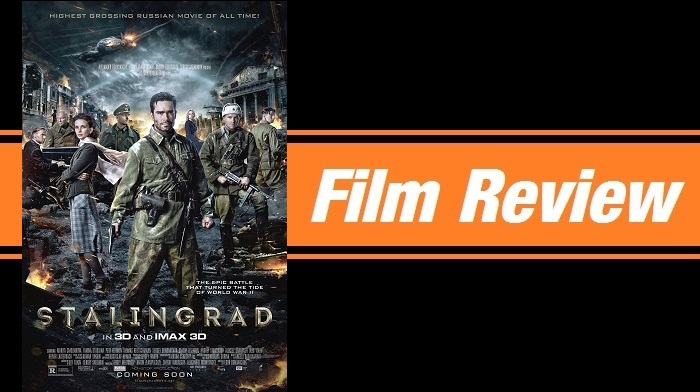
Sifting through the various layers of  “Stalingrad” can be difficult. The Russian war drama from director Fedor Bondarchuk is one of the most visually stunning war pictures you will ever see and there are several interesting and compelling narrative choices. At the same time it struggles with a bit of an identity crisis. It can be hard to determine what kind of movie “Stalingrad” wants to be. This and other story concerns have made it tough for some critics to fully embrace the film.

Me, I didn’t struggle with the story Ike some did. Shortcomings become obvious as the film moves along, but I was never pulled out of the story by them. Still I would be interested to see this film as it was originally meant to be. Ilya Tilkin wrote the original script and heavily based his vision on museum archives, personal diaries of those who were there, and other historical documents. Just days before filming was to begin Bondarchuk and screenwriter Sergey Snezhkin made major changes to the story. This could be why the movie feels a bit scattered and unfocused.

stalin1

The film opens in the wake of the 2011 earthquake and tsunami which devastated Japan. A Russian rescue worker attempts to calm trapped survivors by telling them the story of his mother and his five fathers. The story shifts to 1942 and The Battle of Stalingrad which has been referred to as the bloodiest battle in history. It was a turning point in World War II, but at the end of the conflict nearly 2 million Allied soldiers, Axis soldiers, and civilians were dead.

The story sets us down in the early stages of the five month battle where a handful of Russian soldiers seek refuge in a large five story apartment building. The soldiers were part of a bigger Russian force attempting to cross the Volga River but were scattered by a firey German ambush. Based loosely of the famous Pavlov’s House, the film focuses on five soldiers who lead the small force holed up in the building. With limited supplies and weapons they fortify the building to the best of their ability in hopes of holding out until reinforcements arrive.

STALIN2

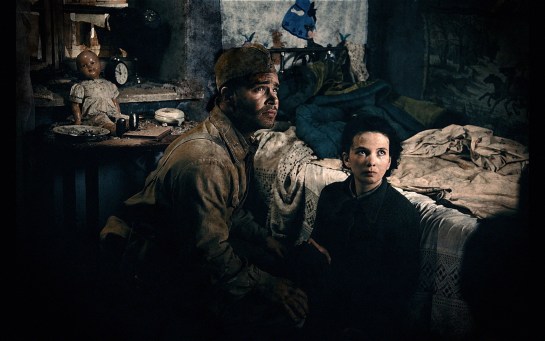
Adding to the drama is the presence of a 19-year old girl named Katya (Maria Smolnikova) they find holed up in the building. It’s her home and she refused to leave after her family was killed. One of the film’s central storylines involves the five soldiers (or the five fathers from the rescue worker’s story) and the relationship they form with Katya. The leader of the soldiers Captain Gromov (Pyotr Fyodorov) is frustrated with Katya’s stubbornness fearing that his men are no longer fighting for country but for her. It’s a really interesting angle but it’s also one part of the story that contribute to the film’s somewhat murky identity.

We also follow a decorated German officer named Kahn (Thomas Kretschmann) who is tasked with clearing the Russian soldiers out of the building. Kahn has grown frustrated with the war and with his badgering superior Colonel Henze (Heiner Lauterbach). Kahn becomes infatuated with a local Russian woman, much to the chagrin of Henze. Their complicated and uncomfortable relationship plays into the main story but it’s another story angle that contributes to the film’s identity issues.

Stalin3

While the various story threads may not harmoniously fit, it isn’t because any of them are bad. In fact they all offer some compelling drama. And that includes the incredible action sequences. “Stalingrad” has some of the most vividly arresting war sequences you will ever see on film. The visuals are a key component to the film. It’s the first Russian movie shot in IMAX and millions of dollars went into recreating the locations. The mind-blowing detail shows itself in every background, in every setting, and in every shot. And the war violence has an almost operatic quality to it. It’s intense and often brutal but never gratuitous.

“Stalingrad” has received various criticisms. In Russia some critics criticized for its lack of patriotic focus. In other areas critics felt it was too biased in its perspective. I don’t care to get into political criticisms. I look on it as a story that I really latched on to. It is a bit sentimental. It does lean heavily on its special effects. There are moments that feel a bit contrived. Still I found it to be a grand and ambitious production filled with great performances, intensely satisfying visuals, stylish action sequences, and sporadic yet compelling stories. Maybe “Stalingrad” is a flawed movie, but I appreciate any movie that sweeps me away like it did.

VERDICT – 4 STARS

4 Stars

2015 Blind Spot Series – “Paris, Texas”

PARISposter

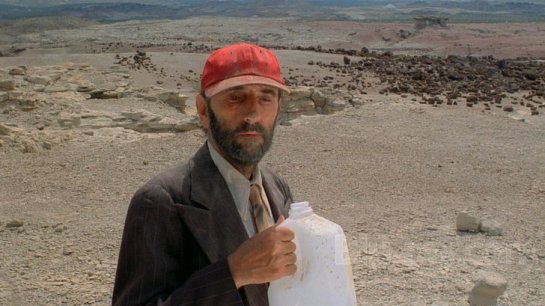
From the film’s first scene we know that “Paris, Texas” is something unique. A sprawling overhead camera combs a sparse desert landscape to the ominous twanging of an acoustic guitar. The camera settles on a thin, disheveled man with a straggly beard, dusty suit, tattered shoes, and a red ball cap. He drinks the last of his water from an old milk jug and then heads on his way.

Immediately we find ourselves asking a number of questions. Who is this man? Is he looking for something? Where has he been? Where is he going? He seems lost, like a wanderer. But at the same time he’s heading in a specific direction, his eyes fixated on the horizon. These early scenes highlighting the South Texas desert are filmed with an almost postapocalyptic perspective. The rugged and bleak terrain that Travis roams offers no sense of hope or life. This landscape is captivating and we are instantly drawn into the mystery of this man.

PARIS1

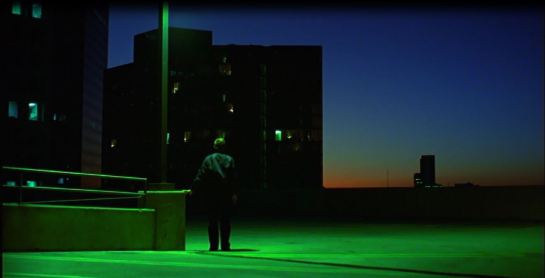
“Paris, Texas” was directed by German filmmaker Wim Wenders and written by “Kit” Carson and Sam Shepard. The film was a big winner at the 1984 Cannes Film Festival and over the years it has been heralded as a true film classic. The movie has often been singled out for its striking score from acclaimed guitarist Ry Cooder and its mesmerizing cinematography from long time Wenders collaborator Robby Müller.

After its brilliant setup, the story doesn’t leave us in the desert long. In a surprisingly brisk fashion the film begins feeding us morsels of information about this man whose name is Travis. He’s played by the great Harry Dean Stanton, an actor who has always been able to speak volumes through his expressive face. It turns out Travis disappeared four years ago and no one has seen him since. We learn that he had a wife and son but something happened and he lost them. In fact, in some ways this gets to the key focus of the film – loss, fear, insecurity, sacrifice.

PARIS2

The slow and methodical unveiling of information begins in the desert and then picks up when Travis is found by his brother Walt (Dean Stockwell). Walt, his wife Anne (Aurore Clément), and their son Hunter (Hunter Carson) each play a part in putting together this complex human puzzle that is Travis’ life. They are keys, each unlocking new portions of his backstory while also moving the narrative forward. Nastassja Kinski appears later to offer an even different layer to the Travis character.

The movie is basically broken down into three chapters. The first chapter follows the desert wanderer. The second chapter spotlights the time Travis spends with Walt and his family. The third chapter turns into an unexpected road trip. I won’t spoil a thing, but the film makes an interesting shift and the story sets its focus in a new direction while still maintaining its very grounded and cliche-free structure. The third act is the most fascinating and compelling even though it has a fairly glaring narrative hiccup and a couple of lapses in logic.


PARIS3

“Paris, Texas” has so many unique features that differentiated it from the majority of movies being made at that time. And the film’s captivating uniqueness still makes an impression today which is a testament to its quality. The cinematography is sublime, never using camera trickery or gimmicks. It visualizes truth and authenticity. The story is simple but emotionally rich and pure, again focusing on truth. It stumbles in a few places but never loses itself. Most of the performances hit every right note especially Stanton, Kinski, and young Carson. All of this is brought together under the management of Wenders who tells a living, breathing story free of contrivances and artifice.

The film never sets foot in Paris, Texas. It’s a mirage that sits in the back of Travis’ mind. It serves as a connection to his past. It serves as a small hope for a potential future. For a time it gives Travis a sense of direction, a purpose to follow. But over the course of the film we see Paris, Texas replaced. He finds a new purpose at least for a time. But Paris, Texas still lingers for Travis, and by the film’s end we fully understand its importance.

VERDICT – 4 STARS

4 Stars

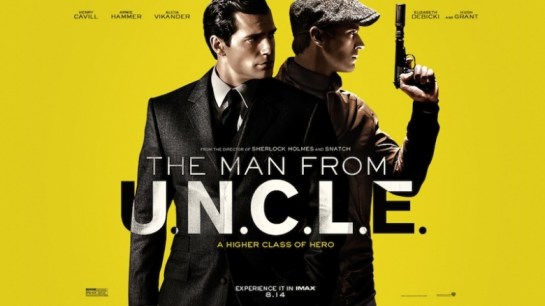
REVIEW: “The Man From U.N.C.L.E.”

UNCLE poster

“The Man From U.N.C.L.E.” debuted on NBC during the Fall of 1964. The campy and stylish spy-fi television series ran for only three and a half seasons but it has left a surprisingly lasting impression. That’s funny because during its short run the show struggled with its identity. It was at its peak of popularity when it was trying to be serious, but once the show started incorporating more humor the ratings dropped substantially.

So here we are, 47 years since the original show’s cancellation, and we have a big screen adaptation. The film embraces both the serious and the silliness that marked “The Man From U.N.C.L.E.” and its interesting television run. Guy Ritchie helms this wacky mélange of action, comedy, spy thriller, and a retro GQ photo shoot. On paper the movie calls for skepticism as it has all the ingredients to be a disaster. Thankfully it’s far from it. Instead Richie gives us a fun and zesty affair that quite exceeds the expectations I had.

UNCLE1

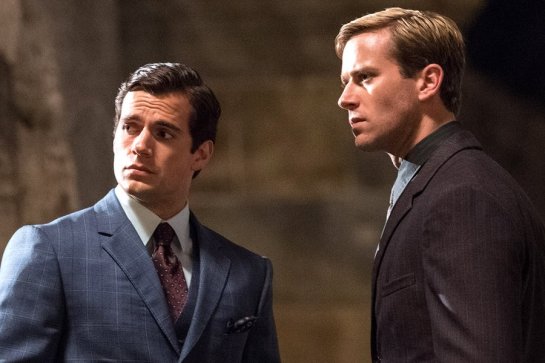
One of my causes for caution was rooted in the film’s two leads. Henry Cavill plays Napoleon Solo – a name so blatantly absurd yet tonally spot-on. He’s an accomplished thief turned reluctant CIA top agent. He’s quite confident and has a penchant for good fashion and even better hair. Then there is Armie Hammer playing KGB agent Illya Kuryakin. He’s a bit of a brute who is a by-the-book operative with a propensity towards fits of anger. Can you see where this is going? Two lone wolves forced to work together and all that stuff? Surprisingly the movie plays with that conceit without going too far.

Brimming with post-World War II and Cold War politics and atmosphere, “The Man From U.N.C.L.E.” is set in 1963 where our two good-looking stars meet while trying to nab at target for their respective countries. That target is Gaby Teller (played with sauce and spunk by Alicia Vikander). She’s the daughter of a nuclear scientist believed to be working on a nuclear bomb for a wealthy couple who also happen to be Nazi sympathizers. Solo and Kuryakin are ordered to join forces along with Gaby to foil the nefarious plot despite their differences.

There are several things the film could have done to derail itself. First there is the humor. “The Man From U.N.C.L.E.” doesn’t make the critical mistake of taking itself too seriously. At the same time it doesn’t bombard the audience with dopey, annoying gags and slapstick. Instead the movie relies on a very calculated dry wit. In many ways the characters are the gags with their ultra-serious personalities and corny bravado. We really see this in the film’s bromance innuendo that Solo and Kuryakin are completely impervious to.

Then there is the action. We certainly get a handful of snazzy action set pieces, but those expecting to see normal action-packed summer movie fare may leave disappointed. Ritchie doesn’t drown his movie in endless shootouts, fistfights, or car chases. He uses action but even it is presented with pinches of style and humor. There are a couple of action twists that feel a bit out of place but ultimately it is done well and in the right amounts.

But the film’s strongest point may be the fabulous recapturing of its 196os setting. Guy Ritchie, cinematographer John Mathieson, costume designer Joanna Johnston, and composer Daniel Pemberton all contribute to the film’s stylish and energetic sense of time. Everything including the fashion, the decor, the technology. The period flavored music which hearkens back to so many different 60’s era sounds. The film is very aware of its style and it could be said that Ritchie wallows in it, but certainly not to the point of making it any less impressive.

UNCLE3

Back to Cavill and Hammer. Some have criticized their performances and the lack of chemistry between the two stars. I actually enjoyed them particularly Cavill and his suave, cheesy overconfidence that is clearly spoofing early Bond. There are moments where Cavill seems to be posing more than acting and Hammer feels as stiff as a board on occasions. But as for their chemistry, it’s a bit hard to judge since they are playing two characters who actually have no chemistry. That’s kind of the point. Overall I think they pull it off. And then you have Vikander who is a lot of fun playing the roles the men visualize for her while being smarter than any off them think. I also really liked Elizabeth Debicki giving a playfully exaggerated performance as one of the film’s villains.

So what to make of “The Man From U.N.C.L.E.? There is a smugness to the whole proceeding that sometimes shows itself in the self-indulgent style and in Ritchie’s infatuation with how good his actors look. But there is also an undeniable allure. I loved the realization of the setting, the controlled but effective humor, and the well utilized smattering of action. Most importantly I had a lot of fun, something we don’t always get to say with these types of projects. Sadly the film’s unique flair hasn’t drawn big crowds at theaters, but I found it to be a welcome retreat that may not be flawless but is certainly entertaining.

VERDICT – 4 STARS
4 Stars

5 Phenomenal Movie Cities I Would Love to Visit

PHENOM 5

Don’t you love how movies can sweep you away to new, interesting, and imaginative places? Don’t you love being transported to cool and unusual locations brought to life through the power of visual creativity? Yep, me too and today’s Phenomenal 5 is spotlighting five great movie locations. Originally this was an insanely broad list so I first narrowed it down to movie cities. Then to narrow my search even more I decided to look at cities I would like to visit. For that reason places like Gotham City (which would have been my #1) doesn’t make the cut. Just too much crime. But there are plenty of movie cities worth visiting so I wouldn’t call this the definitive list. But there is no denying that these five movie cities are nothing short of phenomenal.

#5 – Asgard (“Thor”)

ASGARD

Being a comic book guy Asgard has long been an intriguing place. Seeing it brought to life in Marvel Studios’ 2011 film “Thor” made it all the more attractive. Asgard is pure visual splendor – a capitol city for the gods. The pomp, the gold, the rainbow bridge – how can you not be drawn to such a celestial sight? Now being a simple lowly little human I probably wouldn’t get the royal treatment, but that doesn’t mean the visit to Asgard wouldn’t be incredible.

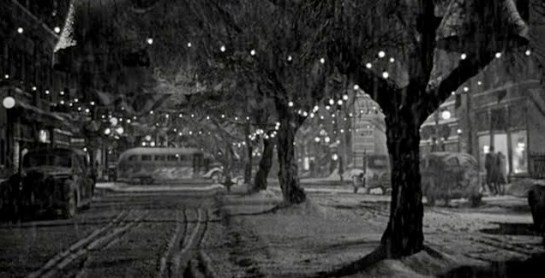
#4 – Bedford Falls (“It’s a Wonderful Life”)

BEDFORD

Nothing captures that heartwarming, idyllic, small town charm quite like Bedford Falls. Well, aside from mean old Mr. Potter. The quaint New York town from Frank Capra’s perennial classic features so many elements that are all but gone in today’s society. But for me I wouldn’t want to visit Bedford Falls as it would be today. Instead I want to visit the exact time and place we get in the film. I want to take the walk down the main street. I want to sit at the train station. I want to buy ice cream at Mr. Gower’s store. How can you not want to visit Bedford Falls?

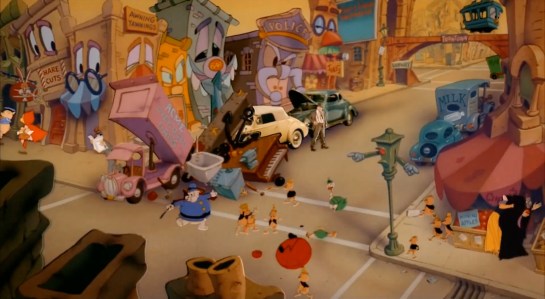
#3 – Toontown (“Who Framed Roger Rabbit”)

TOON

I have to admit, sharing spaces with cartoon characters could be a little jarring at first but wouldn’t it be crazy fun? I think at first I may have the same reaction as Bob Hoskins. Toontown does look a bit overwhelming. But just think of shooting the breeze with Bugs Bunny, Mickey Mouse, Tweety, Huckleberry Hound, Dumbo, and of course the sizzling Jessica Rabbit. Fabulous! Toontown would be an absolute blast although it certainly looks like a place I would want to visit but not live.

#2 – Emerald City (“The Wizard of Oz”)

EMERALD

Located somewhere over the rainbow and at the end of the yellow brick road lies the magical emerald city from the 1939 Victor Fleming classic. Perhaps the most iconic city in movie history, Emerald City is also the place of mystery and answers for young Dorothy and her group of friends. I happen to like the color green which is a good thing. In Emerald City green is everywhere. It’s a city with such renown I would have to visit. But there is one thing that keeps it from being tops on this list – it’s just a bit too weird.

#1 – Rivendell (“The Lord of the Rings”)

REVENDELL

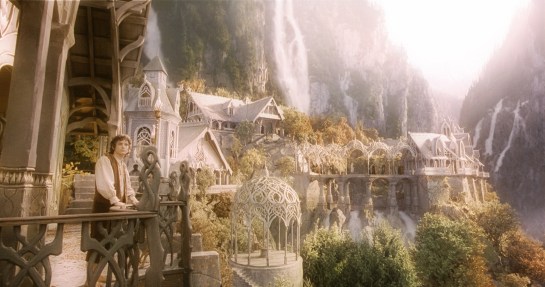
Cities, towns, and villages of Middle-Earth could probably find several places on this list. Minas Tirith, The Shire, just to name a couple. But the one place that always stood out for its unmatched beauty and elegance with the elven outpost of Rivendell. From its wooded mountain backdrop to the beautiful waterfalls that run through and around it, Rivendell’s glory is beyond words. The architecture lies in perfect harmony with the natural surroundings, and a simple walk through the city would be an amazing experience. The elves aren’t always socially outgoing and I’m not too keen on their choice of foods, but in terms of cities I would love to visit, Rivendell is #1.

So what do you think of my choices (and reasons behind them)? See any I missed? Please take time to share your thoughts on great movie cities worth visiting. I would love to hear them.

REVIEW: “Cop Car”


COP POSTER

Over time I’ve come to realize that often the best thrillers aren’t bigger budgeted movies with an attention grabbing cast. No, often the best thrillers are small budget pictures that take a strong concept and build on it with a smart, focused, and economical script. Look no further than last year’s fabulous “Blue Ruin”. In that same mold, this year we get “Cop Car”, a crafty, early Coen-esque styled thriller that earns its feelings of danger and discomfort.

“Cop Car” is directed and co-written by Jon Watts. He may not be a familiar name but that could change as he is slated to direct the next re-rebooted Spider-Man film. While that project doesn’t excite me, “Cop Car” certainly did. Within a tight and fluid 85 minutes, Watts spins his minimalist yarn across the expansive fields and long straight roads that surround his hometown of Fountain, Colorado. With a stressful patience he unfolds his story that starts with adolescence mischief but ends up in a much darker place.

Cop Car1

The story begins with two 10-year old boys Travis (James Freedson-Jackson) and Harrison (Hays Wellford) crossing a large field playing some weird game involving cursing (Not a good start for me as I normally hate when filmmakers require young children to spout obscenities). It appears as if the boys may have run away from home as they make a number of boyish miscalculations. One figures they have already walking 50 miles while the other speaks of rationing their Slim Jim beef jerky.

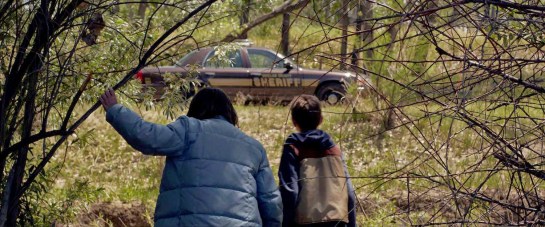
Neither Jackson or Wellford come across as trained young actors which is both good and bad. In some early scenes you sense the strong pull of the director while in others the children’s natural curiosity and playfulness play out perfectly. We see the latter when the boys stumble across a Quinlan County sheriff’s car in an isolated, sparsely wooded area. Their curious nature gets the best of them and soon they are driving the car across open fields and rural roads, screaming and laughing in a mix of childlike mischief and pre-teen rebellion.

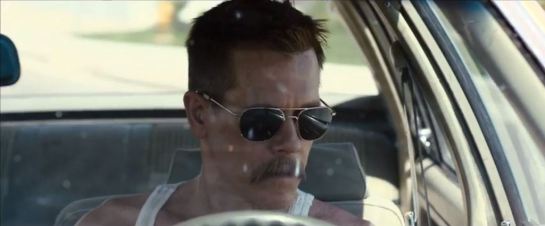
They are impervious to the real trouble they are in. In one scene that highlights their puerile logic, the boys ponder what they will do if caught with the car. One innocently and sincerely says ” We’ll just tell them we’re cops”. But the cop car belongs to Sheriff Kretzer. He’s played Kevin Bacon armed with thick mustached mug and a shady air about him. From the very first glimpse of Bacon we know his character is no good and we know the boys have stumbled into a dangerous mess. When finding his car missing, Sheriff Kretzer panics and sets out to get his car back at any cost.

COP2

“Cop Car” has its share of darkly funny moments that can be both humorous and unsettling. About midway through the film the story takes on a more serious and sinister tone and the humor becomes scarce. And I’m convinced that neither Jon Watts nor co-writer Christopher Ford (also known for the much tamer “Robot and Frank”) have children because of the torturous emotional wringer they run the kids through during the film’s second half. This isn’t necessarily a criticism. It just amps the tension up to panic-inducing levels for parents.

The movie ends on just the right note by leaving several specifics up in the air and several questions swirling in our minds. The story’s intensity boils to what seems like a satisfying crescendo only to hit us with a new set of stakes and then leave us on an emotional edge. It’s a satisfying conclusion to a solid movie that navigates a few hitches to still give us a potent, edge-of-your seat thriller. And then there is that tenacious performance from Kevin Bacon – one of my favorites of the year.

VERDICT – 4 STARS

4 Stars